Learn how to tell the difference between a real MS relapse and a pseudorelapse, what triggers each, and why steroids often aren't the right treatment. Know when to act-and when to cool down instead.
Read more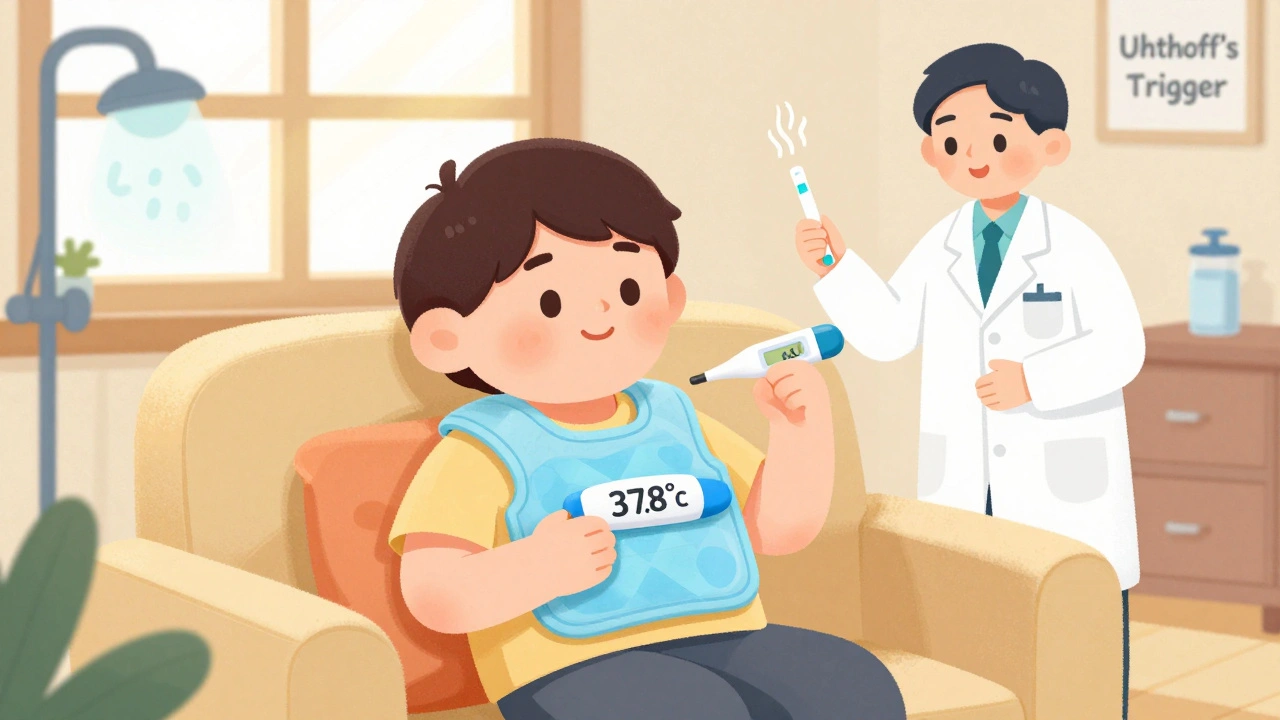
When your body gets too warm, your multiple sclerosis symptoms might suddenly get worse — even if your condition is otherwise stable. This is called Uhthoff's phenomenon, a temporary flare-up of MS symptoms triggered by an increase in body temperature. Also known as Uhthoff's sign, it’s not a new relapse or disease progression — just your nerves temporarily struggling to send signals under heat stress. It’s common in people with multiple sclerosis, affecting up to 75% of patients, and it can turn a simple walk in the sun or a hot shower into a frustrating experience.
This happens because damaged myelin — the protective coating around nerve fibers in MS — doesn’t conduct electrical signals well. When your body heats up, even by just one degree, those already weakened signals slow down or stop completely. That’s why you might suddenly feel more numb, blurry-eyed, weak, or dizzy when you’re sweating, exercising, or sitting in a hot room. The good news? Once your body cools down, the symptoms fade. No new damage is done. It’s like a temporary glitch, not a breakdown.
People with MS often learn to manage this by avoiding overheating. Simple steps like wearing cooling vests, staying in air-conditioned spaces, drinking cold fluids, and avoiding hot tubs or saunas make a big difference. It’s also why many notice symptoms get worse during fever, menstruation, or after a workout. Multiple sclerosis, a chronic autoimmune condition that attacks the central nervous system doesn’t cause Uhthoff’s phenomenon — but it makes you more vulnerable to it. And while heat sensitivity, a common and often overlooked symptom of neurological disorders isn’t listed in every MS guide, it’s one of the most disruptive for daily life.
What you’ll find in the posts below are real, practical insights from people managing MS and related conditions. You’ll see how drug absorption changes with body temperature, how chronic illness affects daily routines, and how small lifestyle tweaks can prevent unnecessary setbacks. These aren’t theoretical tips — they’re from people who’ve lived through heat-triggered flare-ups and found ways to stay in control. Whether you’re newly diagnosed or have been managing MS for years, understanding Uhthoff’s phenomenon helps you take back power over your symptoms — not let them control your day.
Learn how to tell the difference between a real MS relapse and a pseudorelapse, what triggers each, and why steroids often aren't the right treatment. Know when to act-and when to cool down instead.
Read more