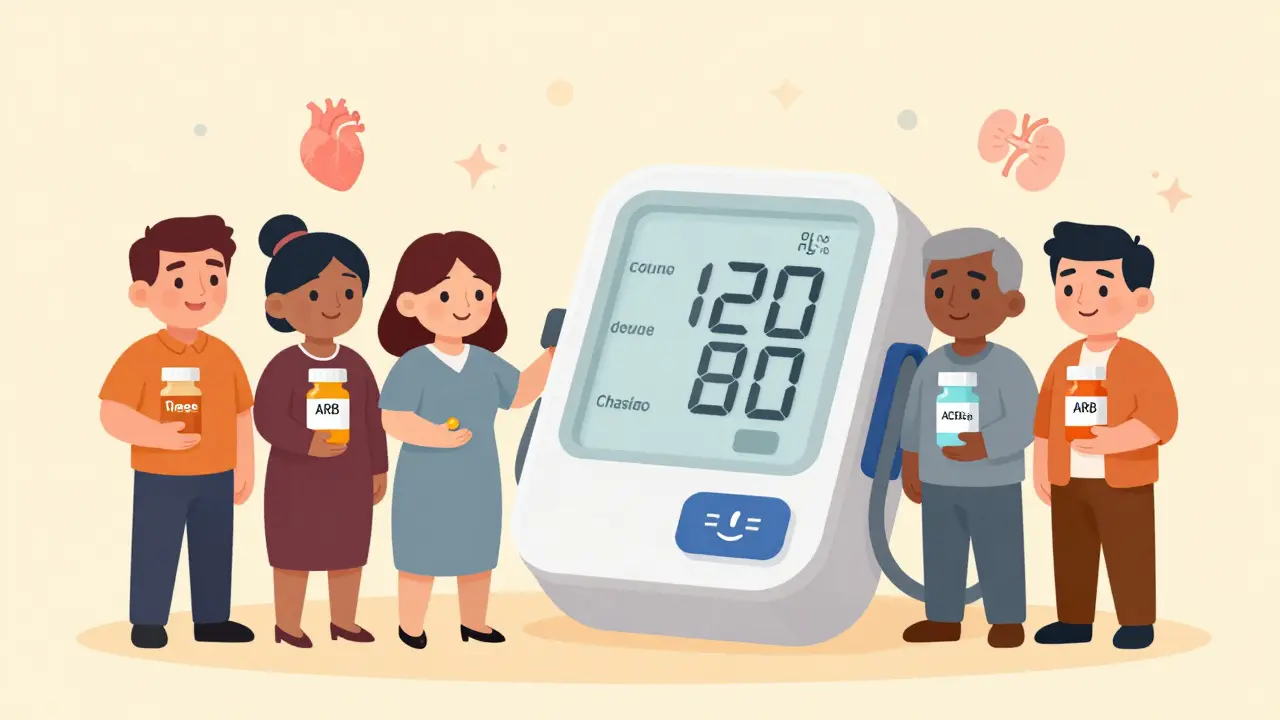
High blood pressure doesn’t come with warning signs. You might feel fine, but silently, it’s straining your heart, damaging your arteries, and raising your risk of stroke or kidney failure. That’s why millions take blood pressure medication every day - not because they’re sick, but because they need to stay that way. The right drug can save your life. The wrong one? It might leave you dizzy, tired, or worse. Understanding your options isn’t just helpful - it’s essential.
How Blood Pressure Medications Work
Blood pressure meds don’t just lower numbers. They target how your body controls pressure. Some reduce fluid volume. Others relax blood vessels. A few slow your heart. The goal? Keep pressure below 130/80 mmHg, as recommended by the American Heart Association. This isn’t arbitrary - studies show that keeping numbers in this range cuts stroke risk by nearly 40% and heart attack risk by 25%.
There are ten main classes of these drugs, each with a different job. Some are used first. Others are added when the first one doesn’t cut it. Most people need more than one pill to get their pressure under control. In fact, about 70% of patients require two or more medications. That’s not a failure - it’s normal.
First-Line Medications: What Doctors Start With
Not all drugs are created equal when it comes to starting treatment. Based on large trials like ALLHAT and guidelines from the American Heart Association, four classes are most commonly used as first-line options:
- Thiazide diuretics - like hydrochlorothiazide. These help your kidneys flush out extra salt and water, reducing blood volume. They’re cheap, effective, and backed by decades of data showing they reduce stroke and heart failure.
- Calcium channel blockers - such as amlodipine. These relax blood vessel walls by blocking calcium from entering muscle cells. They work well in older adults and people of African descent, who often respond better to these than to ACE inhibitors.
- ACE inhibitors - like lisinopril. These block a hormone that tightens blood vessels. They’re especially good if you have diabetes, heart failure, or kidney disease because they protect your kidneys.
- ARBs - like losartan. These do almost the same thing as ACE inhibitors but without the dry cough. They’re a solid alternative if you can’t tolerate an ACE inhibitor.
For Black patients, guidelines recommend starting with either a thiazide diuretic or a calcium channel blocker. ACE inhibitors and ARBs tend to be less effective on their own in this group, though they’re still useful if combined with another drug.
Other Classes and When They’re Used
Not everyone fits the standard mold. If you have other health issues, your doctor might pick something else.
- Beta-blockers - such as metoprolol - are no longer first choice for most people. But if you’ve had a heart attack, have heart failure, or have an irregular heartbeat, they’re lifesavers. They slow your heart and reduce its workload.
- Alpha-blockers - like doxazosin - are sometimes used if you have an enlarged prostate. They relax blood vessels and can help with urination.
- Alpha-2 agonists - such as clonidine - work on your brain to reduce nerve signals that raise blood pressure. They’re usually reserved for stubborn cases.
- Direct renin inhibitors - like aliskiren - are rarely used. They’re expensive and offer little extra benefit over ACE inhibitors or ARBs.
- Vasodilators - like hydralazine - are used in emergencies or when other drugs fail. They open arteries quickly but can cause side effects like rapid heartbeat or headaches.
Common Side Effects You Should Know
Side effects aren’t rare. They’re common. And they’re why so many people stop taking their meds. About half of patients quit within a year - not because they feel better, but because they feel worse.
Here’s what to watch for, by class:
- Diuretics - frequent urination, low potassium, dizziness, gout flare-ups. Drinking enough water helps, but don’t overdo it.
- Calcium channel blockers - swollen ankles, flushing, headaches, constipation (especially with verapamil). Amlodipine is the most common and usually well-tolerated.
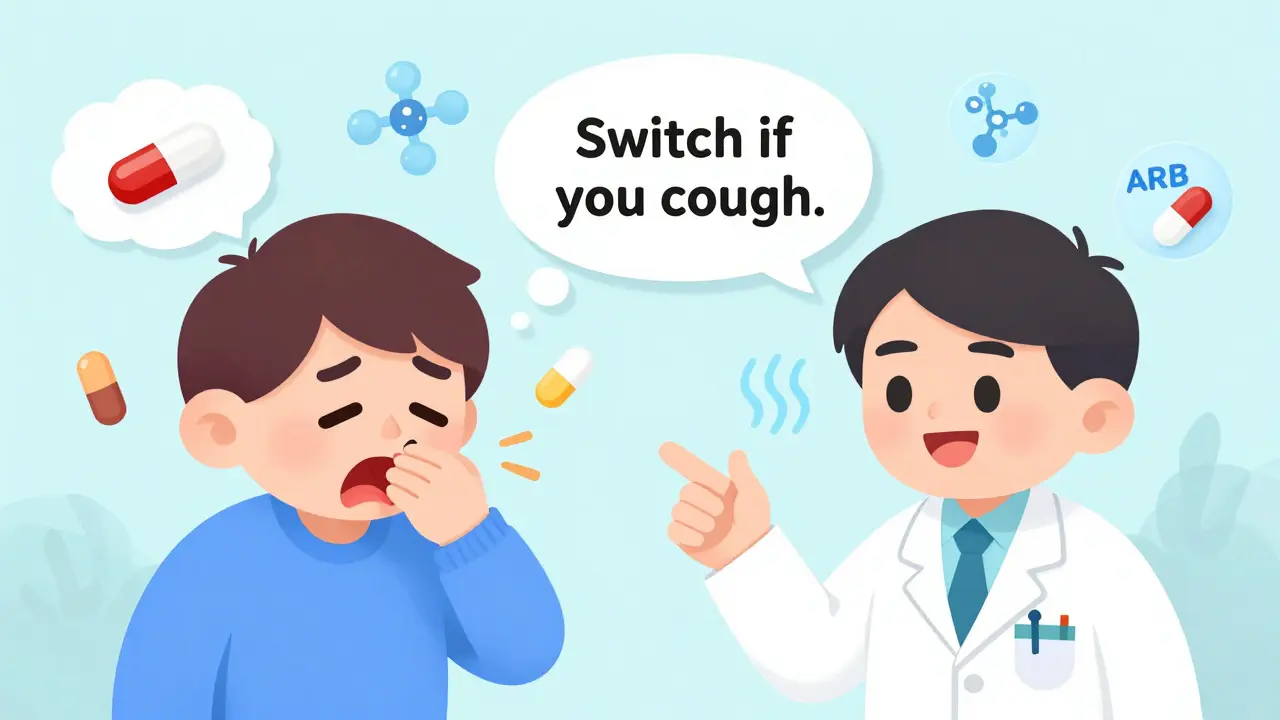
- ACE inhibitors - dry cough (happens in 10-20% of users), high potassium, rare but dangerous swelling of the face or throat (angioedema). If you get that cough, switching to an ARB usually fixes it.
- ARBs - similar to ACE inhibitors but without the cough. Still carry risk of high potassium and kidney issues.
- Beta-blockers - fatigue, cold hands and feet, trouble sleeping, slowed heart rate. They can hide signs of low blood sugar in diabetics - a dangerous combo.
- Alpha-blockers - dizziness when standing up, fainting, fast heartbeat. Start with a low dose and take the first dose at bedtime.
Some side effects are mild and fade after a few weeks. Others need to be addressed. Don’t just quit. Talk to your doctor. There’s almost always another option.
Drug Interactions and Hidden Risks
These drugs don’t live in isolation. They react - sometimes dangerously - with other medications, supplements, or even food.
- NSAIDs - like ibuprofen or naproxen - can make blood pressure meds less effective and hurt your kidneys. Use them sparingly.
- Combining ACE inhibitors and ARBs - never do this unless under strict supervision. It raises your risk of kidney failure and dangerously high potassium.
- Potassium supplements - if you’re on an ACE inhibitor, ARB, or diuretic that keeps potassium (like spironolactone), extra potassium can cause heart rhythm problems.
- St. John’s Wort - this herbal supplement can lower the effectiveness of some blood pressure drugs.
- Alcohol - it lowers blood pressure too. Combine it with meds and you risk fainting or falls.
Always tell your doctor what supplements, vitamins, or over-the-counter drugs you take. Even “harmless” ones can interfere.
Special Populations: Pregnancy, Elderly, and More
Not all drugs are safe for everyone.
Pregnancy - ACE inhibitors, ARBs, and direct renin inhibitors can cause severe birth defects. If you’re pregnant or planning to be, methyldopa and labetalol are the safest choices. Never stop your meds without talking to your doctor - uncontrolled high blood pressure during pregnancy is dangerous too.
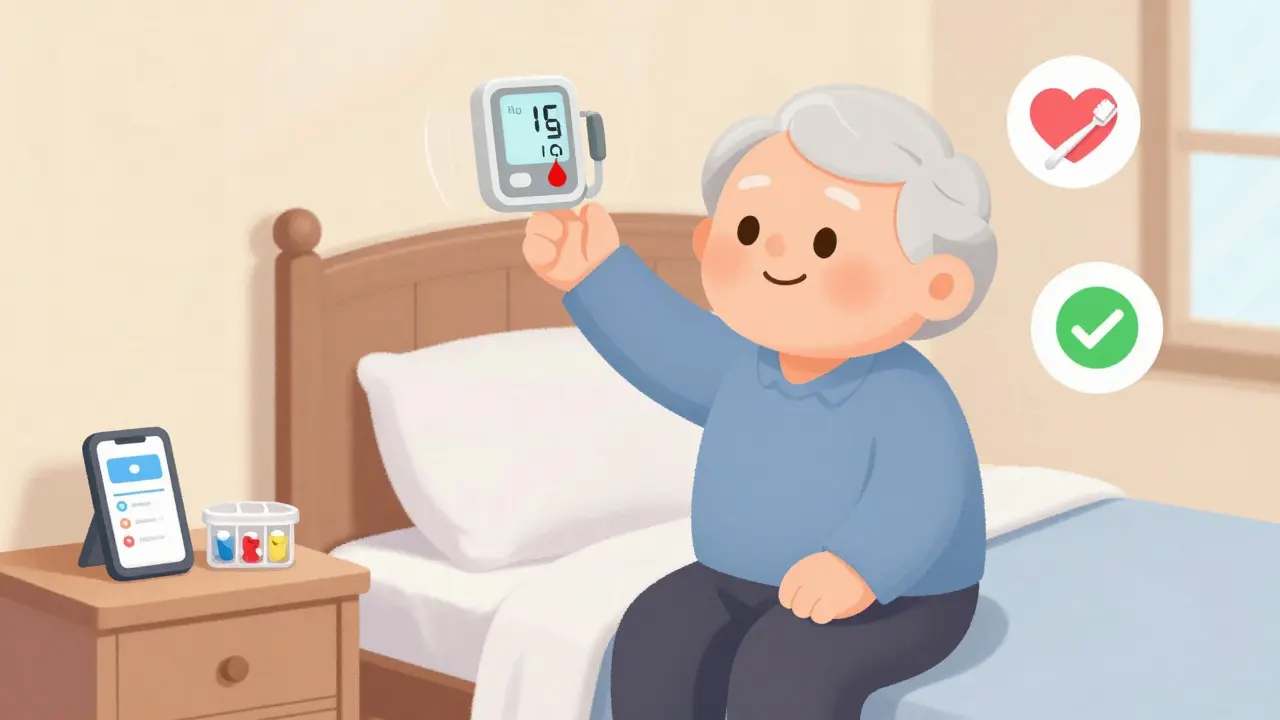
Elderly patients - older adults are more sensitive to blood pressure drops. Starting doses are often lower. Orthostatic hypotension (dizziness when standing) is a real risk. A simple trick: sit on the edge of the bed for a minute before standing.
Diabetics - ACE inhibitors and ARBs are preferred because they protect the kidneys. But beta-blockers can mask low blood sugar symptoms. Watch for sweating, shaking, or confusion - even if your heart doesn’t race.
People with kidney disease - these drugs are crucial. But they need careful monitoring. Your doctor will check your creatinine and potassium levels regularly.
What to Do If Your Meds Aren’t Working
It’s not unusual to need more than one drug. If your pressure stays high after 4-6 weeks on a single pill, your doctor will likely add another - not increase the dose. Why? Because combining drugs from different classes works better and often has fewer side effects.
For stage 2 hypertension (140/90 or higher), current guidelines recommend starting with two drugs right away. That’s not aggressive - it’s smart. Getting control early saves lives.
Don’t wait. If you’re not hitting your target, ask about combination pills. Some come as a single tablet with a diuretic plus an ACE inhibitor, or a calcium blocker plus an ARB. Fewer pills = better adherence.
Sticking With Your Treatment
High blood pressure doesn’t hurt. That’s the problem. You take your pill, feel fine, and think, “Maybe I don’t need this anymore.” But your pressure is still high. The damage is still happening.
Here’s what helps people stick with their meds:
- Use a pill organizer.
- Set phone reminders.
- Pair taking your pill with a daily habit - like brushing your teeth.
- Know why you’re taking it. It’s not about numbers. It’s about staying alive, active, and independent.
Studies show that using a medication reminder app improves adherence by 15-20%. That’s not just helpful - it’s life-changing.
Future Directions
The future of blood pressure treatment is personal. Researchers are studying how genes affect how you respond to different drugs. Some people metabolize beta-blockers faster. Others respond better to calcium blockers based on their DNA. Within the next decade, we may see genetic tests guide initial prescriptions.
Also, new drugs are being tested - like endothelin receptor blockers - for people whose blood pressure refuses to budge. But for now, the best tools we have are the ones already on the market: simple, proven, and effective.
The key isn’t finding the perfect drug. It’s finding the right one - for you. And sticking with it.
Can I stop taking my blood pressure medication if my numbers are normal?
No. Normal blood pressure on medication means the drug is working, not that you’re cured. Stopping suddenly can cause your pressure to spike back up - sometimes dangerously high. Always talk to your doctor before making changes. In rare cases, if you lose weight, exercise regularly, and cut salt for over a year, your doctor might consider reducing or stopping meds - but only under close supervision.
Why do some people get a cough from ACE inhibitors?
ACE inhibitors block an enzyme that breaks down a substance called bradykinin. When bradykinin builds up, it irritates the airways and causes a dry, tickly cough. This happens in about 10-20% of users, more often in women and people of Asian descent. If the cough is bothersome, switching to an ARB usually solves it - ARBs don’t affect bradykinin the same way.
Are generic blood pressure drugs as good as brand names?
Yes. Generic versions of lisinopril, amlodipine, hydrochlorothiazide, and losartan are just as effective as their brand-name counterparts. They’re held to the same FDA standards for purity, strength, and absorption. The only difference is cost - generics can be 80-90% cheaper. Unless your doctor has a specific reason to prescribe a brand, go generic.
Can I drink grapefruit juice while on blood pressure meds?
It depends. Grapefruit juice can interfere with some calcium channel blockers - especially felodipine and nifedipine - by increasing their levels in the blood, which can cause dangerously low pressure or side effects. Amlodipine is generally safe. If you take a calcium channel blocker, check with your pharmacist. When in doubt, avoid grapefruit juice entirely.
How long does it take for blood pressure meds to work?
Some drugs start working in hours, but it takes weeks to reach full effect. Diuretics may lower pressure within a few days. ACE inhibitors and ARBs often take 2-4 weeks. Calcium channel blockers and beta-blockers can take up to 2-3 weeks. Don’t panic if your pressure doesn’t drop right away. Consistency matters more than speed.
Do blood pressure medications cause weight gain?
Some can. Beta-blockers like metoprolol and propranolol may cause slight weight gain, often due to reduced metabolism and fluid retention. Calcium channel blockers like amlodipine can cause swelling in the ankles, which feels like weight gain. Diuretics usually cause weight loss by flushing out fluid. If you notice sudden weight gain - especially more than 2-3 pounds in a week - call your doctor. It could be fluid buildup from heart strain.

LiV Beau
So many people don’t realize how crucial consistency is with BP meds 😅 I was on the fence about mine until I started pairing it with my morning coffee - now it’s automatic. No more guessing! Also, that pill organizer tip? LIFE CHANGER. My grandma’s been stable for 2 years now thanks to this 💪❤️
Adam Kleinberg
They say generics are just as good but dont you think Big Pharma is just milking the system by pushing us to take 3 pills a day when 1 could do it if they werent so greedy? Also why are they not testing natural alternatives like garlic or hibiscus tea? Something smells fishy here 🤔
Denise Jordan
Ugh I hate taking pills. I just drink more water and hope for the best. My doc says I need meds but I feel fine so why bother?
David L. Thomas
The pharmacokinetic variability across ethnic populations is fascinating. The differential response to ACE inhibitors in individuals of African descent isn't just anecdotal - it's rooted in RAAS polymorphisms. That's why guidelines now recommend CCBs or thiazides as first-line. Precision medicine isn't the future - it's the present. We're just starting to map the epigenetic triggers that modulate drug efficacy. It's wild.
Alexander Erb
Love this breakdown. I was on lisinopril for years and the dry cough was killing me. Switched to losartan - poof, gone. Also, the grapefruit warning? Huge. My buddy took felodipine and drank juice every morning - ended up in the ER. Don’t be that guy. And yes, generics? 100% fine. Saved me $200/month. 🙌
Donnie DeMarco
bro i just take my pill and forget about it like its my daily dose of vibes 🌿 i used to stress over numbers till i realized my bp is chillin just like me. if u feel good and ur doc says u good? u good. dont let the algorithm make u paranoid. also i take mine with my morning smoke. works better than coffee lol
Tom Bolt
Let me be clear: The systemic abandonment of patient autonomy in hypertension management is a scandal. We are being herded into pill regimens based on population averages while ignoring individual physiology. The fact that 70% require multiple drugs isn’t ‘normal’ - it’s a failure of one-size-fits-all medicine. And don’t get me started on the suppression of non-pharmaceutical interventions. This isn’t healthcare. It’s pharmacological compliance theater.
Shourya Tanay
Thank you for this. As someone from India, I’ve seen too many patients stop meds because they think ‘feeling fine’ means cured. The cultural stigma around chronic illness here makes adherence harder. Your point about pairing meds with daily habits? Brilliant. We need more community education - maybe even local health workers using WhatsApp reminders. Small things, huge impact.
Gene Forte
High blood pressure is silent because we’ve stopped listening - to our bodies, to our habits, to our fears. The pill isn’t the cure. It’s a bridge. The real work is rebuilding your relationship with food, movement, rest, and peace. Medication buys you time. But the life you want? That’s built one mindful choice at a time. Stay steady. Stay present. You’ve got this.