
The goal is simple: get the right dose at the right time. When used correctly, these systems can slash missed doses by 32% and reduce accidental double-dosing by 18%. To get those results, you need a strict system, not just a plastic box. Let's look at how to turn your pill organizer is a compartmentalized container designed to help individuals manage multiple medications by time of day and day of week into a safety shield rather than a risk.
Choosing the Right Gear for Your Needs
Not all pill boxes are created equal. If you only take one pill a day, a basic 7-day single-dose organizer is plenty. But if you're managing a complex regimen with morning, noon, and night doses, you need a multi-dose daily organizer. For those who struggle with memory or have vision impairment, electronic organizers with alarms or those with Braille labeling are game-changers.
However, you must know what does not belong in these boxes. Some medications are simply incompatible with plastic compartments. If a drug needs to be refrigerated, it stays in the fridge. If it's a liquid, a chewable, or a soft gel capsule, keep it in the original packaging. Soft gels can stick together or degrade, and some pills disintegrate when they aren't protected by the original blister pack. If you put a moisture-sensitive pill in a cheap plastic box, you're risking the potency of your medicine.
| Type | Best For | Key Safety Feature | Typical Price Range |
|---|---|---|---|
| Basic Weekly | Simple, once-daily meds | Clear day labeling | $2.99 - $8.99 |
| Multi-Dose Daily | Complex schedules (AM/PM) | Time-of-day slots | $4.99 - $14.99 |
| Electronic/Smart | High-risk memory loss | Audible alarms & tracking | $24.99 - $99.99 |
The Golden Rule: Never Put "As Needed" Meds in the Box
This is where the most dangerous mistakes happen. There is a massive difference between a scheduled medication and a PRN medication, which is a drug taken only "as needed" (pro re nata) for symptoms like pain or anxiety. If you put an "as needed" painkiller in your daily slot, you might take it even when you aren't in pain, or worse, take an extra dose from the bottle because you forgot you already put one in the box.
Statistics show that 38% of accidental overdoses occur when patients confuse these as-needed doses with scheduled ones. Keep your PRN meds in their original bottles. If you need a headache pill, go to the bottle, take one, and leave your organizer alone. Mixing the two is a recipe for disaster.
The Safe Filling Protocol: A Step-by-Step Guide
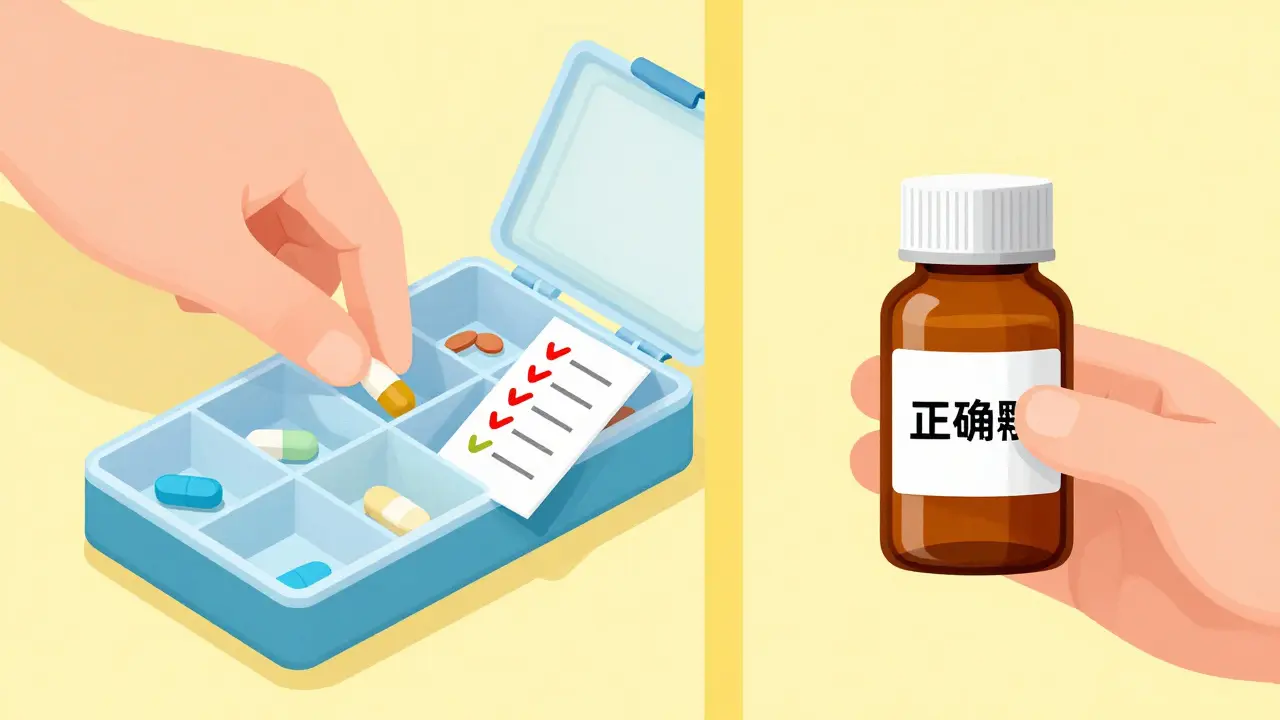
Filling your pill box shouldn't be a rushed chore. Treat it like a pharmacy operation. If you're just tossing pills in while the TV is on, you're inviting a mistake. The NHCHC Health Management Toolkit recommends a dedicated 15-minute window for this process. Here is the safest way to do it:
- Prep Your Space: Wash your hands with soap for 20 seconds. Clear a flat, well-lit surface.
- Gather Everything: Have your current, updated medication list and all original bottles present. Never rely on memory or old labels.
- One Medication at a Time: This is the most critical step. Pick up one bottle, fill that specific pill into every required slot for the week, and then put that bottle away. Do not jump between different bottles for the same day. This one habit can reduce double-dosing errors by 63%.
- Triple Verify: Check the list, check the bottle label, and then check the compartment.
- Final Audit: Once the box is full, do a visual scan of each day to ensure nothing looks out of place or overfilled.

Where You Store Your Box Matters
Your bathroom might seem like the most logical place for a pill organizer, but it's actually the worst. The steam from your shower creates a high-humidity environment that can destroy your medication. Some studies show that pills degrade 47% faster in high humidity. When medications break down, they can either become ineffective or, in some cases, chemically unstable.
Store your organizer in a cool, dry place-ideally below 86°F (30°C) and 60% humidity. A kitchen cabinet away from the stove or a bedside table is much safer. Also, if you have children or grandchildren visiting, ensure your organizer meets ASTM F3130-15 child-resistant standards. Standard plastic lids are easy for a toddler to pop open, which leads to a high number of pediatric poisoning cases.
Red Flags and Troubleshooting
How do you know if your system is failing? Keep an eye out for these warning signs:
- Similar Looking Pills: If you have two different white round pills, don't guess. Use a pill splitter with color-coding or keep them in separate organizers to avoid confusion.
- The "Leftover" Pill: If you find a pill in a compartment that should be empty, stop immediately. Do not take the next dose until you figure out why a pill was left behind. This is a clear signal of a dosing error.
- Outdated Labels: If your doctor changes a dose, do not just "adjust" the pills already in your box. Empty the box and start over using the new prescription instructions.
If you find the process too overwhelming, remember that 68% of U.S. pharmacies now offer professional organizer filling services. Having a pharmacist verify your doses can reduce error rates by 52%. It's a small price to pay for the peace of mind that you aren't accidentally risking an overdose.
Can I store my medications in a pill organizer for a whole month?
Most solid oral medications can be safely stored in organizers for up to 30 days, provided they are kept in a cool, dry place. However, you should always check with your pharmacist, as some medications are highly sensitive to light or air and must remain in their original blister packaging.
What should I do if I miss a dose and see a pill still in the box?
Do not double up on the next dose to "catch up." This is a leading cause of accidental overdosing. Instead, check the patient information leaflet that came with your medication or call your pharmacist to ask if you should take the missed dose immediately or wait until the next scheduled time.
Are smart pill organizers actually better than plastic ones?
Yes, for high-risk users. Smart organizers often include weight sensors and automatic alerts that trigger if a compartment is opened too many times in a short window, which can prevent accidental double-dosing. They are particularly helpful for those with cognitive impairment or very complex medication schedules.
Why can't I put my vitamins and prescriptions in the same box?
While most are fine together, some vitamins or supplements can interfere with how a prescription drug is absorbed. Additionally, mixing them can make it harder to identify which pill is which if you have a medical emergency and a first responder needs to know exactly what you're taking.
How often should I replace my plastic pill organizer?
Replace your organizer if the lids become loose, the plastic cracks, or the labels fade. Degraded compartments can allow moisture to seep in or cause pills to get stuck, which leads to dosing errors. If you've had the same box for a decade, it's time for an upgrade.