What’s Really Happening When Your MS Symptoms Flare Up?
When your legs suddenly feel heavy, your vision blurs, or you can’t hold onto a coffee cup like you used to, it’s natural to panic. Is this another relapse? Are you getting worse? The truth is, not every symptom spike means your MS is actively attacking your nervous system. Many people with MS experience something called a pseudorelapse-and it’s not the same thing as a real relapse. The difference matters a lot, especially when it comes to whether you need steroids or not.
True Relapse: New Damage, Not Just a Temporary Glitch
A true MS relapse happens when your immune system starts attacking the myelin sheath around your nerves again. This isn’t just your old symptoms flaring up-it’s brand-new inflammation causing fresh damage. You’ll notice new symptoms, or existing ones get significantly worse, and they stick around for at least 24 to 48 hours without any clear outside cause.
Doctors can often confirm this with an MRI. If there are new lesions or old ones lighting up with contrast dye, that’s a sign of active disease. These relapses can leave behind lasting effects. Even if you recover most of your function, there’s often a small amount of permanent damage left behind. That’s why each true relapse adds up over time, especially if they happen often.
When this happens, high-dose IV steroids like methylprednisolone are often used. A typical course is 1 gram a day for 3 to 5 days. About 70 to 80% of people see faster improvement with steroids, but only about half fully bounce back to their baseline. Steroids don’t stop the disease-they just calm the inflammation down so symptoms don’t drag on for weeks.
Pseudorelapse: Your Nerves Are Overloaded, Not Under Attack
A pseudorelapse looks just like a relapse-same symptoms, same intensity-but there’s no new damage. Your nerves are already scarred from past MS attacks, and now something is temporarily messing with how they send signals. Think of it like an old electrical wire that works fine until it gets too hot or wet. Then it shorts out for a bit.
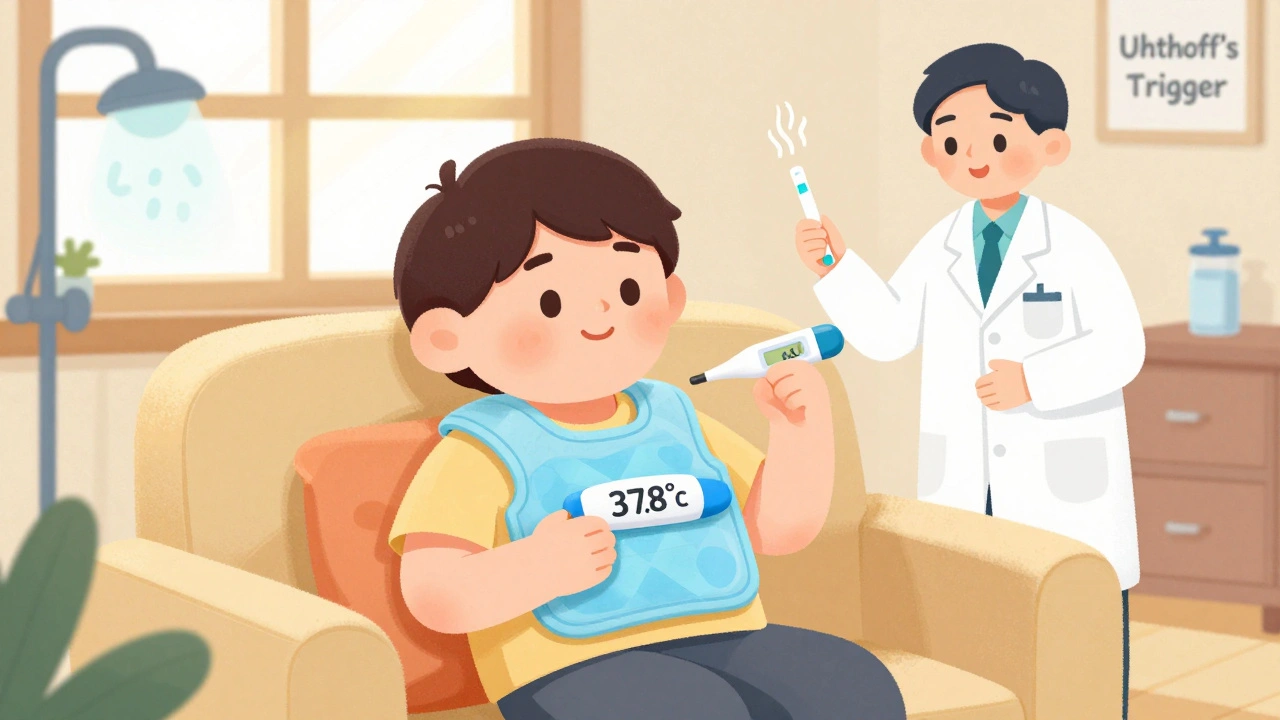
Common triggers? Heat is the big one. A hot shower, a sunny day, even a fever from a cold can do it. That’s called Uhthoff’s phenomenon, and it affects 60 to 80% of people who’ve had optic neuritis. Other triggers include urinary tract infections (the most common), stress, physical exhaustion, or even low sodium levels in your blood.
Here’s the key: pseudorelapses usually last less than 24 hours. Once the trigger is gone-your fever breaks, your UTI clears, you cool down-your symptoms vanish. No new lesions show up on MRI. No new damage is done. That’s why steroids don’t help. Giving them to someone with a pseudorelapse is like putting out a fire with a water hose when the fire is just a smoke alarm going off.
Why Misdiagnosing Pseudorelapses Is Dangerous
Doctors get it wrong more often than you’d think. Studies show that 25 to 35% of people in community clinics are wrongly treated for a relapse when it’s actually a pseudorelapse. That’s not just a mistake-it’s risky.
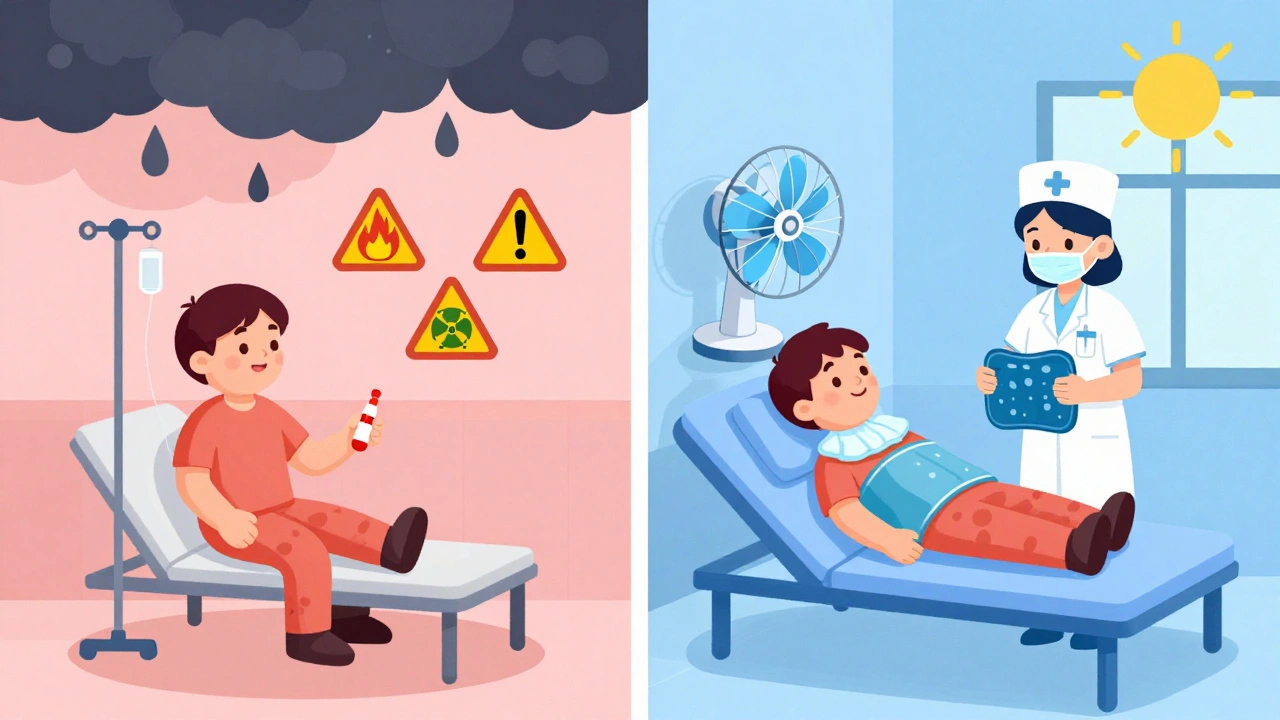
High-dose steroids come with real side effects: high blood sugar (25% of patients), trouble sleeping (40%), mood swings or even anxiety and psychosis (30%), and a higher chance of infections. One nurse on Reddit shared that a patient she saw got IV steroids for a UTI-triggered pseudorelapse… and ended up in the hospital with steroid-induced psychosis.
And it’s expensive. The National MS Society estimates that unnecessary steroid treatments for pseudorelapses cost the U.S. healthcare system over $12 million every year. That’s money spent on drugs, hospital stays, and managing side effects that could’ve been avoided with better education.
How to Tell the Difference: A Simple Checklist
Here’s what you can do to figure out what’s really going on:
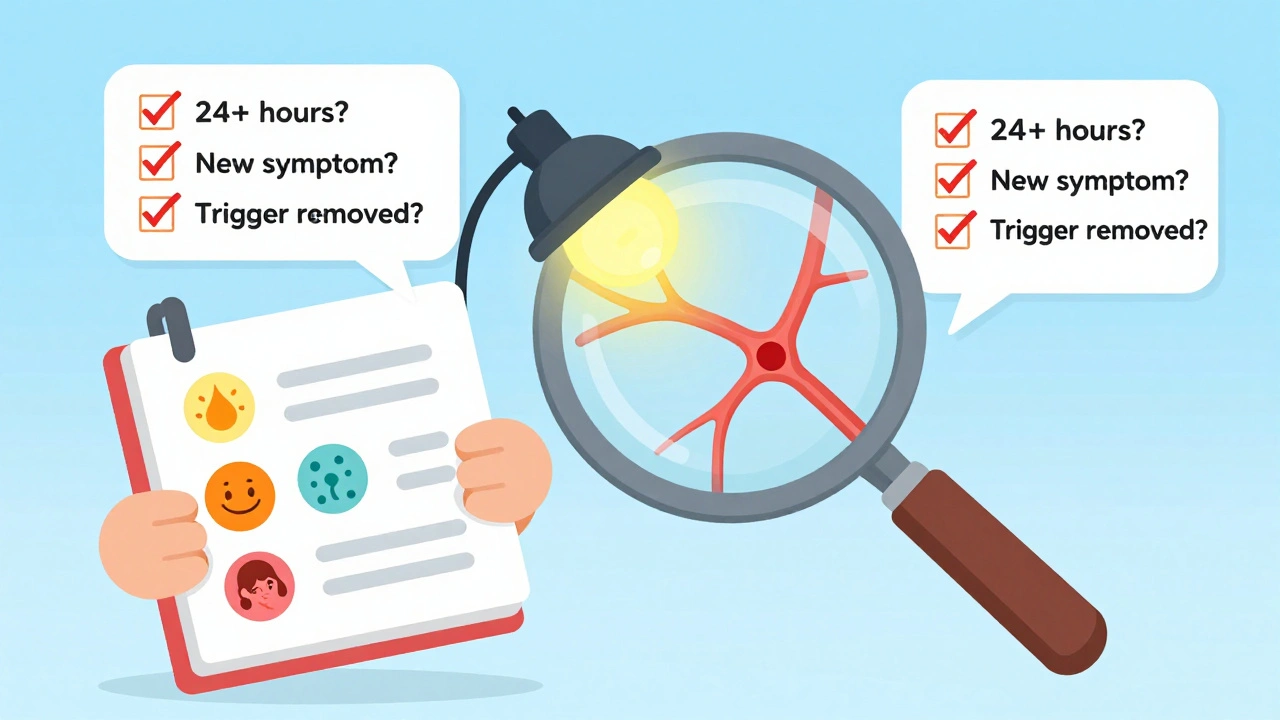
- How long have the symptoms lasted? If they’ve been going for less than 24 hours, it’s likely a pseudorelapse.
- What changed recently? Did you get sick? Have a fever? Sit in the sun too long? Take a hot bath? These are red flags for pseudorelapse.
- Did your symptoms get better after cooling down or treating the infection? If yes, it’s probably not a true relapse.
- Is there a new symptom? True relapses often bring something completely new-like sudden numbness on one side or trouble walking that wasn’t there before.
If you’re still unsure, your neurologist might order an MRI or check your blood for signs of infection or metabolic imbalance. Some clinics now use tools like the MS-Relapse Assessment Tool (MS-RAT), which looks at symptom duration, temperature, and functional impact to give a probability score. It’s 92% accurate at spotting true relapses.
What to Do When You Think It’s a Pseudorelapse
Don’t rush to the ER for steroids. Instead:
- Check your temperature. If it’s above 37.8°C (100°F), you likely have an infection.
- Get a urine test if you’re feeling pressure, burning, or frequent urges to pee. UTIs are the #1 trigger.
- Use cooling strategies: cold packs, cooling vests, air conditioning, or even a lukewarm (not hot) shower.
- Rest. Don’t push through fatigue-your nerves are already stressed.
- Keep a symptom diary. Note triggers, duration, and what helped. This helps your doctor spot patterns.
One woman in Brisbane told her neurologist her leg weakness returned during a heatwave. He recognized it as Uhthoff’s phenomenon right away. She used a cooling vest and was back to normal in two hours. No steroids. No hospital visit.
Who’s Most at Risk for Pseudorelapses?
Pseudorelapses are more common in people who’ve had MS longer. Why? Because over time, your nervous system accumulates more damage. Those damaged pathways become more sensitive to heat, stress, or infection.
Older adults-especially over 55-are more likely to have lingering functional decline after a pseudorelapse, not because of new damage, but because their bodies can’t bounce back as easily. About 15% of these patients don’t fully return to their baseline function, even after the trigger is gone. That’s why staying active, hydrated, and cool is so important as you age with MS.
What Experts Say
Dr. Fred Lublin, a leading MS specialist, calls distinguishing true relapses from pseudorelapses one of the most common challenges in MS care. He’s not alone. The American Academy of Neurology’s 2021 guidelines say: before calling it a relapse, you must rule out fever, infection, and metabolic issues.
Specialists who focus only on MS get it right 85% of the time. General neurologists? Around 60%. Primary care doctors? Only 45%. That’s why knowing the difference yourself can save you from unnecessary treatment-and help your doctor make the right call faster.
Final Thought: Knowledge Is Your Best Medicine
You don’t need to fear every twitch or tremor. But you do need to know the signs. A pseudorelapse isn’t your MS getting worse-it’s your body sending a signal that something else is off. Treat the trigger, not the symptom. And never assume steroids are the answer.
The more you understand your body’s patterns, the less power these flare-ups have over you. Keep track. Stay cool. Test for infections. And talk to your neurologist before you agree to any treatment. You’re not just a patient-you’re the expert on your own body.
Can a pseudorelapse turn into a true relapse?
No, a pseudorelapse itself doesn’t turn into a true relapse. They’re two different things. A pseudorelapse is caused by temporary stress on already damaged nerves, while a true relapse is caused by new inflammation. But having frequent pseudorelapses can mean your nervous system is more vulnerable, which might make you more sensitive to triggers that could lead to a true relapse if you’re not careful.
Do I need an MRI every time my symptoms flare up?
Not always. If your symptoms clearly match a known trigger-like heat or a UTI-and they improve quickly, an MRI isn’t needed. But if symptoms last more than 48 hours, are new or severe, or don’t improve after removing triggers, your doctor will likely order an MRI to check for new lesions.
Can stress cause a pseudorelapse?
Yes. Psychological stress can trigger a pseudorelapse by raising your body’s stress hormones, which can interfere with nerve signaling in already damaged areas. It doesn’t cause inflammation, but it can make your symptoms worse temporarily. Managing stress through sleep, breathing exercises, or therapy can help reduce these episodes.
Why don’t steroids work for pseudorelapses?
Steroids reduce inflammation, but pseudorelapses aren’t caused by inflammation-they’re caused by temporary nerve dysfunction due to heat, infection, or fatigue. Giving steroids in this case is like using a fire extinguisher on a smoke alarm. It doesn’t fix the real problem and just adds unnecessary side effects.
How can I prevent pseudorelapses?
Stay cool: use cooling vests, avoid hot showers, and keep your home air-conditioned. Prevent infections by washing hands, getting flu shots, and treating UTIs early. Manage stress with regular sleep, gentle exercise, and mindfulness. Keep a symptom diary to spot your personal triggers. Small habits make a big difference.
Next Steps
If you’ve had a recent flare-up, start by checking your temperature and urine. If you’re feverish or have signs of a UTI, treat that first. If symptoms last more than two days, call your neurologist-not the ER. Ask about the MS-Relapse Assessment Tool or whether an MRI is needed. Keep a simple log: date, symptoms, triggers, duration, what helped. Bring it to your next appointment. You’re not just reporting symptoms-you’re helping your doctor understand your body’s patterns.

John Biesecker
man i thought i was the only one who got that weird leg weakness after hot showers 😅 turns out it’s uhthoff’s phenomenon?? this post just saved me from a steroid nightmare. i’ve been avoiding showers like they’re lava since last summer. now i know it’s not my ms getting worse-just my nerves being dramatic 🥲
Doug Hawk
the steroid thing is wild. i had a pseudorelapse last winter after a bad sinus infection. doc ordered iv methylprednisolone like it was aspirin. turned out my temp was 100.2, i had a uti, and my symptoms vanished in 8 hours after antibiotics. steroids gave me insomnia and a sugar crash that felt like a demon rode my spine. never again. docs need to stop treating ms like it’s a one-size-fits-all disease.
Michael Campbell
they're lying. steroids are just a cover-up for pharma's real agenda. why do you think they push them so hard? because they make billions. pseudorelapses? nah. it's all controlled by the medical-industrial complex. they don't want you to know you can heal naturally. they want you hooked on chemicals. check the data. it's all rigged.
Victoria Graci
this is the most beautiful breakdown of ms flare-ups i’ve ever read. it’s like someone finally translated the chaos inside my body into poetry. pseudorelapses aren’t weakness-they’re your nervous system waving a tiny, exhausted flag saying ‘hey, i’m overloaded!’ and instead of shouting ‘take steroids!’ we should be whispering ‘rest, hydrate, cool down.’ the body’s not broken. it’s just tired. and maybe, just maybe, we’ve been treating it like a machine instead of a living, breathing thing.
Saravanan Sathyanandha
as someone from India where summer temperatures often exceed 45°C, this resonates deeply. many of my friends with ms here suffer pseudorelapses during monsoon season-heat + humidity + poor AC access. we’ve started community cooling centers with fans and chilled towels. simple, low-cost, and effective. no steroids needed. education is the real medicine. thank you for highlighting this.
alaa ismail
i used to panic every time my hand tingled. now i just check if i’m hot, tired, or sick. if yes → cool down, sleep, drink water. if no → call neuro. life’s so much calmer now. also, cooling vest is a game changer. i wear it while cooking. my wife thinks i’m weird. i don’t care.
Eddy Kimani
the ms-rat tool is legit. we implemented it in our clinic last year. sensitivity was 94%, specificity 89%. cut down unnecessary steroid use by 68%. the real win? patients feel empowered. they stop showing up with ‘i think i’m relapsing’ and start saying ‘i think i have a uti, can we test?’ that shift-from fear to agency-is the real therapeutic win.
Chelsea Moore
I CAN'T BELIEVE HOW MANY PEOPLE ARE STILL GETTING STEROIDS FOR PSEUDORELAPSES!! THIS IS MEDICAL NEGLIGENCE!! MY FRIEND GOT PSYCHOSIS FROM IT-SHE THOUGHT THE WALLS WERE TALKING TO HER!! AND NOW SHE HAS DIABETES FROM THE STEROIDS!! THIS IS A SCANDAL!! WHY ISN'T THIS ON THE NEWS??!!
Genesis Rubi
Honestly, if you can’t even tell the difference between a relapse and a pseudorelapse, maybe you shouldn’t be treating ms at all. I mean, come on. This is basic neurology. I’m surprised your neurologist didn’t know this. I read this in my med school neuro textbook in 2012. Maybe you need a better doctor.
John Morrow
The systemic failure here is not just clinical-it’s epistemological. The medical establishment’s reliance on binary diagnostic frameworks-relapse vs. pseudorelapse-ignores the spectrum nature of neuroinflammatory pathology. The MRI-centric paradigm, while useful, is reductive. We’re pathologizing physiological vulnerability as pathology. The real issue is the absence of dynamic, biomarker-guided, personalized monitoring systems. Steroids are a blunt instrument applied to a nuanced problem because we lack the infrastructure to measure real-time neural resilience. Until we shift from categorical thinking to continuous assessment models, we’re just managing symptoms while pretending we’re treating disease.
Kristen Yates
I’ve had ms for 18 years. I keep a notebook. Heat. Stress. Coffee. Sleep. I know my triggers. I don’t need a tool. I just need to listen. And sometimes, I just need to sit still.