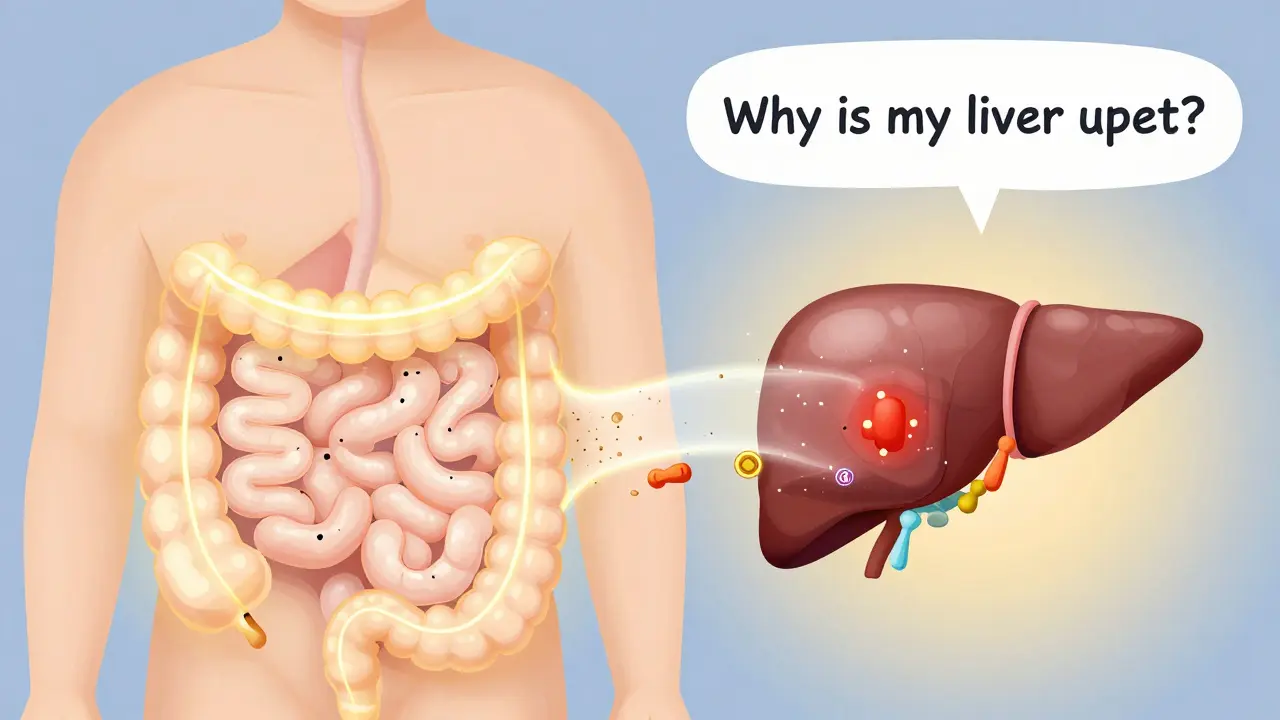
When someone is diagnosed with celiac disease, the focus is usually on the gut - bloating, diarrhea, weight loss. But what if your liver is showing signs of trouble too? Many people don’t realize that celiac disease doesn’t just attack the small intestine. It can quietly damage the liver, often without any obvious symptoms. In fact, up to 40% of untreated celiac patients have abnormal liver tests. And here’s the twist: once they go gluten-free, most of those liver issues disappear. This isn’t a rare side effect. It’s a core part of how celiac disease works.
Why Does Celiac Disease Affect the Liver?
Celiac disease is an autoimmune disorder. When someone with celiac eats gluten, their immune system attacks the lining of the small intestine. But that’s not the end of it. The same immune confusion can spill over into other organs - including the liver. Researchers now believe there are three main ways this happens.
First, increased intestinal permeability - also called "leaky gut" - lets toxins and bacteria from the gut flow straight into the liver through the portal vein. The liver, which normally filters these substances, gets overwhelmed. Second, there’s autoimmune cross-reactivity. The immune system, already confused by gluten, starts mistaking liver proteins for foreign invaders. This is why celiac disease often shows up alongside autoimmune liver conditions like autoimmune hepatitis. Third, malabsorption plays a role. Without healthy gut villi, the body can’t absorb fat-soluble vitamins like A, D, E, and K. These vitamins help protect liver cells. When they’re missing, the liver becomes more vulnerable to damage.
It’s not just theory. A 2007 study of 67 biopsy-confirmed celiac patients found that 36.7% had abnormal liver enzymes, compared to only 19.3% in people without celiac. And in 70% of those with liver issues, both ALT and AST - the two main liver enzymes - were elevated together. That pattern is a red flag.
What Liver Problems Are Common in Celiac Disease?
The most common sign is elevated liver enzymes - especially ALT and AST. These are simple blood tests, often done during routine checkups or when someone goes in for unexplained fatigue. In celiac patients, these levels are usually only 2 to 5 times higher than normal. That’s mild compared to viral hepatitis or alcohol-related damage, which can spike much higher. Because the rise is subtle, doctors often overlook celiac disease as the cause.
More serious liver conditions linked to celiac include:
- Autoimmune hepatitis - The liver attacks itself. About 4-6.4% of people with autoimmune hepatitis also have undiagnosed celiac disease.
- Primary biliary cholangitis - A rare disease where bile ducts in the liver slowly get destroyed.
- Primary sclerosing cholangitis - Inflammation and scarring of the bile ducts.
- MASLD (Metabolic Dysfunction-Associated Steatotic Liver Disease) - Formerly called NAFLD. This is the most common type of fatty liver in the general population, but it’s also rising fast in celiac patients.
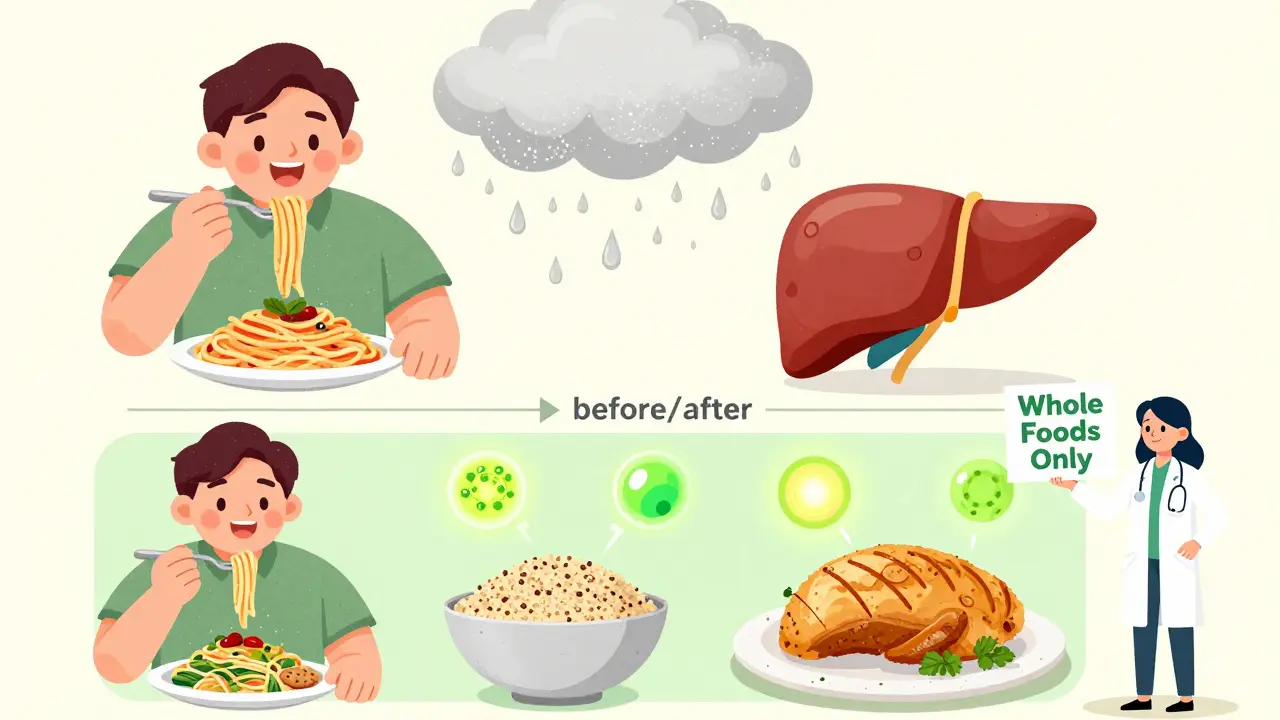
Here’s the paradox: after going gluten-free, many celiac patients gain weight. Why? Because gluten-free processed foods - cookies, breads, pastas - are loaded with sugar and unhealthy fats to replace the texture gluten once provided. That weight gain can lead to MASLD. So, even though the gluten-free diet heals the gut and normalizes liver enzymes in most cases, it can accidentally trigger fatty liver if not managed well.
How Often Does It Happen - And Is It Reversible?
A 2024 study from BeyondCeliac.org found that celiac patients have double the risk of chronic liver disease compared to their siblings without the condition. That’s not a small difference. And in a group of people with cryptogenic cirrhosis - liver scarring with no known cause - nearly 5% were later found to have undiagnosed celiac disease. Once they went gluten-free, their liver function improved dramatically.
The good news? Most liver abnormalities in celiac disease are reversible. Dr. Daniel Leffler’s research from 2015 showed that 79% of patients with elevated liver enzymes saw them return to normal within 12 to 18 months of strictly avoiding gluten. A 2023 study from the Celiac Disease Foundation found that those who worked with a celiac-specialized dietitian normalized their liver enzymes 30% faster than those who didn’t.
But timing matters. The longer someone eats gluten before diagnosis, the more damage accumulates. That’s why early screening is critical. If you have unexplained fatigue, mild nausea, or just odd liver test results - get tested for celiac. It’s simple: a blood test for tTG-IgA antibodies, followed by a biopsy if positive.
What Should You Do If You Have Celiac and Liver Issues?
If you’ve been diagnosed with celiac disease and your liver enzymes are high, here’s what to do:
- Go 100% gluten-free. No exceptions. Even small amounts of gluten - from cross-contamination in restaurants or shared toasters - can keep liver enzymes elevated.
- Get your liver enzymes checked every 3 to 6 months. Most normalize within a year. If they don’t, your doctor should check for autoimmune liver diseases.
- Work with a dietitian who knows celiac. Avoid processed gluten-free junk. Focus on whole foods: vegetables, fruits, lean meats, eggs, legumes, quinoa, brown rice, and gluten-free oats. This prevents MASLD from developing.
- Don’t ignore symptoms. Fatigue, nausea, or unexplained weight gain aren’t "just part of celiac." They could signal ongoing liver stress.
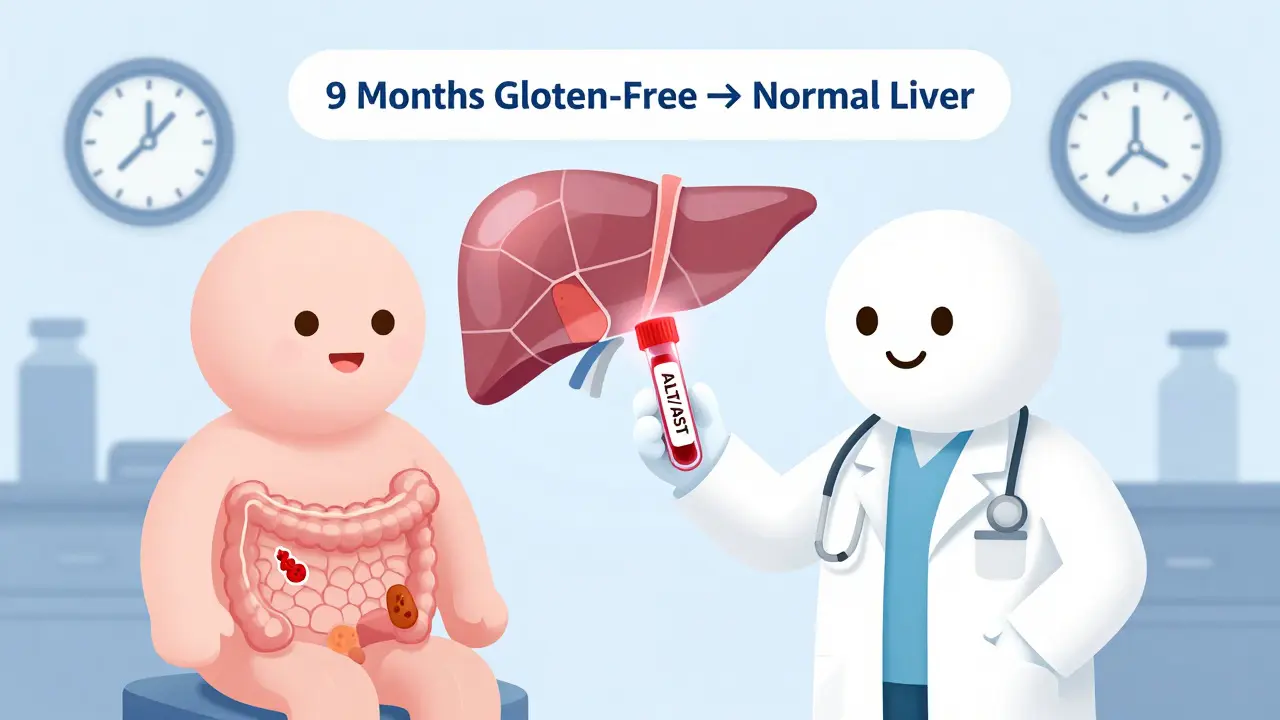
One patient from the Celiac Disease Foundation’s online forum shared: "My ALT was 142 when I was diagnosed. Everyone thought it was fatty liver. Then they found my tTG antibodies. After 9 months gluten-free, my ALT dropped to 28. I didn’t even know the two were connected."
What’s Changing in Medical Practice?
Just ten years ago, liver tests weren’t routinely ordered for celiac patients. Now, 92% of diagnostic workups include them - up from just 65% in 2015. That’s progress. And guidelines have shifted too. In June 2024, the European Association for the Study of the Liver recommended screening all patients with cryptogenic cirrhosis for celiac disease. Why? Because 4.7% of them have it.
Researchers are also digging deeper. A study at the University of Helsinki is tracking 500 celiac patients over 10 years to see if longer gluten exposure leads to worse liver damage. Meanwhile, Mayo Clinic is studying genetic markers. Preliminary data suggests that people with two copies of the HLA-DQ2 gene (homozygous) are 2.3 times more likely to develop liver abnormalities than those with just one copy.
Pharmaceutical companies are paying attention too. Takeda Pharmaceutical completed a Phase II trial in late 2023 testing an enzyme therapy designed to break down gluten before it reaches the gut. If successful, it could reduce not just gut damage - but also the liver inflammation that follows.
What You Need to Remember
Celiac disease isn’t just a digestive problem. It’s a whole-body condition. The liver is one of its most common targets - and one of the easiest to fix. If you have celiac and abnormal liver tests, don’t panic. Don’t assume it’s alcohol, obesity, or viral hepatitis. The answer might be simpler than you think: a strict gluten-free diet, with real food, not processed substitutes.
And if you’ve been gluten-free for months and your liver enzymes still don’t normalize? That’s a signal. It’s time to look for something else - maybe autoimmune hepatitis, maybe MASLD from poor diet choices. But don’t give up. The liver is resilient. With the right approach, it can heal.
Can celiac disease cause liver damage even if I don’t have digestive symptoms?
Yes. Many people with celiac disease have "silent" or "asymptomatic" forms - meaning they don’t get bloating or diarrhea, but still suffer damage to their intestines and other organs, including the liver. Elevated liver enzymes are often the first clue. That’s why screening is important even if you feel fine.
How long does it take for liver enzymes to return to normal after going gluten-free?
Most people see improvement within 3 to 6 months. Normalization typically happens within 12 to 18 months. A 2015 study found 79% of patients had normalized liver enzymes after 1.5 years of strict gluten-free diet adherence. Those who work with a celiac-specialized dietitian often see faster results.
Is it safe to eat gluten-free processed foods if I have liver issues?
Not ideally. Many gluten-free products are high in sugar, refined starches, and unhealthy fats - ingredients that promote fat buildup in the liver (MASLD). For people with celiac and liver abnormalities, it’s better to focus on whole, unprocessed foods: vegetables, fruits, lean proteins, legumes, and naturally gluten-free whole grains like quinoa and brown rice. Avoid gluten-free cookies, crackers, and pastas unless they’re part of a balanced diet.
Should I get tested for celiac disease if I have unexplained elevated liver enzymes?
Yes - especially if you have other risk factors like family history of celiac, fatigue, weight loss, or iron deficiency. A 2024 study found that 4.7% of people with cryptogenic cirrhosis had undiagnosed celiac disease. Screening is simple: a blood test for tTG-IgA antibodies. If positive, a biopsy confirms it. Treating celiac can reverse liver damage - something you can’t do with other causes of liver disease.
Can celiac disease lead to permanent liver damage?
It’s rare, but possible - especially if celiac goes undiagnosed for years. Long-term inflammation can lead to fibrosis (scarring) in about 10-15% of cases. If fibrosis progresses to cirrhosis, the damage becomes harder to reverse. That’s why early diagnosis and strict gluten avoidance are critical. The liver can regenerate, but only if the trigger - gluten - is removed before scarring becomes advanced.