Imagine feeling a sudden, unexplained jitteriness that quickly spirals into confusion, shivering, and a racing heart. For some, this isn't just a panic attack or a bad flu-it's a medical emergency called serotonin syndrome is a potentially life-threatening drug reaction caused by an excessive accumulation of serotonin in the body . While serotonin is a vital chemical for regulating mood and sleep, too much of it acts like a system overload, pushing your brain and muscles into a state of hyper-excitation. Whether it's caused by an accidental overdose or a dangerous mix of prescriptions, knowing how to spot the signs can literally save a life.
How Serotonin Overload Happens
Most people think of this condition as a result of taking too many pills at once. While that is one cause, it often happens through "polypharmacy," where two or more medications that increase serotonin are taken together. In fact, about 78% of cases involve more than one interacting drug. The danger is that some of these triggers aren't even antidepressants.
Common culprits include Selective Serotonin Reuptake Inhibitors ( SSRIs), which account for 62% of cases, and Serotonin-Norepinephrine Reuptake Inhibitors ( SNRIs). However, the risk spikes when these are mixed with Monoamine Oxidase Inhibitors ( MAOIs). To avoid a disaster, FDA guidelines mandate a 14-day "washout period" when switching from an MAOI to an SSRI to let the system clear out.
You might also find serotonergic properties in unexpected places: certain pain meds like tramadol or fentanyl, migraine treatments known as triptans, and even some over-the-counter cough syrups containing dextromethorphan. When these overlap, your brain's serotonin receptors are flooded, leading to the rapid onset of symptoms-often within just 6 hours of a dose change.
The Three Warning Sign Clusters
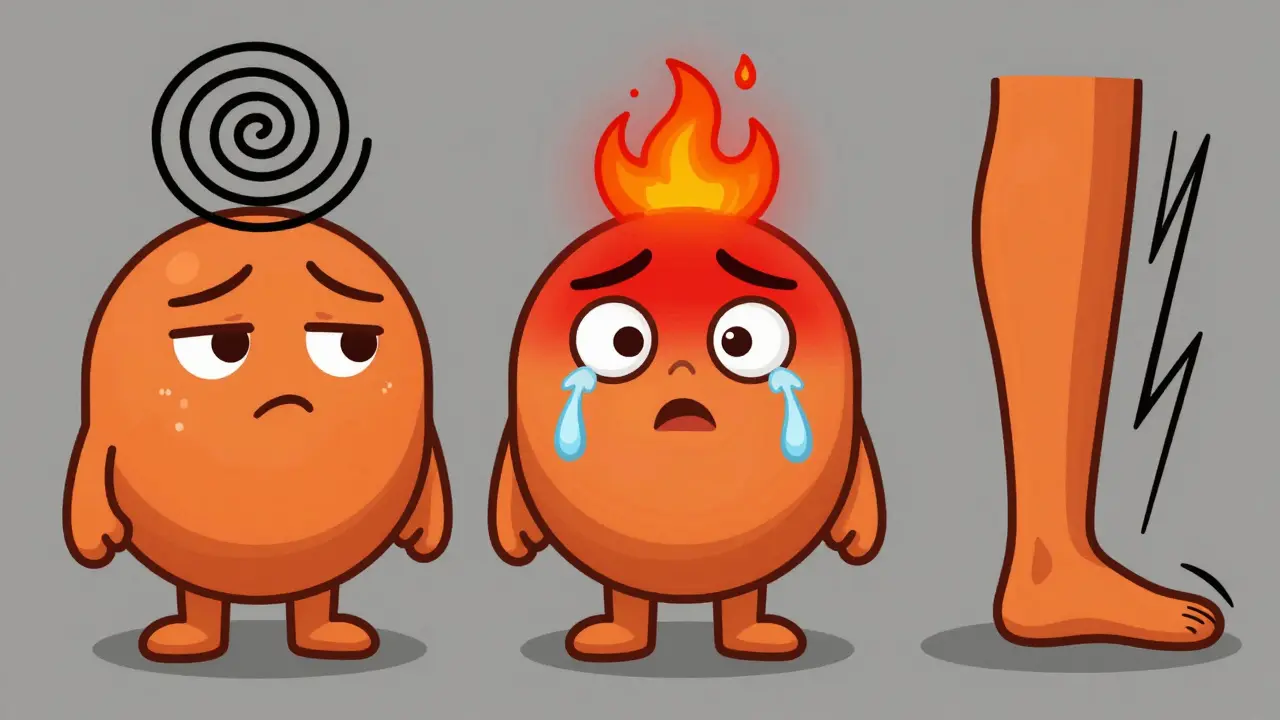
Doctors don't look for just one symptom; they look for a triad of clinical features. If you or a loved one are showing signs in all three of these areas, it is time to head to the emergency room.
1. Mental State Changes
The first red flags are often psychological. Confusion is the most frequent report, seen in 78% of cases. You might notice a person becoming unusually anxious, agitated, or completely disoriented. In severe cases, this progresses to hallucinations or total unconsciousness, where the Glasgow Coma Scale score drops below 8.
2. Autonomic Hyperactivity
This is your body's "fight or flight" system going into overdrive. Watch for these physical markers:
- Heart Rate: Tachycardia (heart rate over 100 bpm) occurs in 83% of cases.
- Blood Pressure: Hypertension, specifically systolic readings above 160 mmHg.
- Temperature: A fever starting at 38°C (100.4°F) and potentially climbing to a critical 41.1°C (106°F).
- Other Signs: Profuse sweating (diaphoresis), dilated pupils (mydriasis) measuring 5-8mm, and rapid breathing.
3. Neuromuscular Abnormalities
The most telling sign is often found in the muscles. Clonus-which is an involuntary, rhythmic muscle contraction-is considered the cardinal sign, appearing in 92% of confirmed cases. You might also see tremors, muscle twitching, or hyperreflexia (overactive reflexes). In the most severe presentations, muscles become rigid, which can lead to rhabdomyolysis, where muscle tissue breaks down and damages the kidneys.
| Feature | Serotonin Syndrome | Neuroleptic Malignant Syndrome (NMS) | Anticholinergic Toxicity |
|---|---|---|---|
| Onset Speed | Rapid (Hours) | Slow (Days/Weeks) | Rapid |
| Muscle Response | Hyperreflexia & Clonus | "Lead-pipe" Rigidity | Normal/Variable |
| Bowel Sounds | Increased (Hyperactive) | Decreased | Decreased/Absent |
| Skin/Mucosa | Sweaty/Moist | Variable | Dry (Dry mouth/skin) |
The Danger Zones: When It Becomes Critical
While mild cases can be managed with a quick medication adjustment, severe antidepressant overdose reactions require immediate ICU intervention. A critical situation is usually defined by a temperature exceeding 101.3°F (38.5°C) or the appearance of seizures, which occur in 29% of severe cases. When the body hits this threshold, multi-organ failure becomes a real risk.
Diagnosis is tricky. About 25% of clinicians miss the diagnosis initially because it looks like a flu or a bad anxiety attack. To solve this, medical professionals use the Hunter Serotonin Toxicity Criteria. This tool looks for specific combinations-like tremor plus hyperreflexia-to provide a diagnostic accuracy rate of 97% specificity.
What Happens at the Hospital?
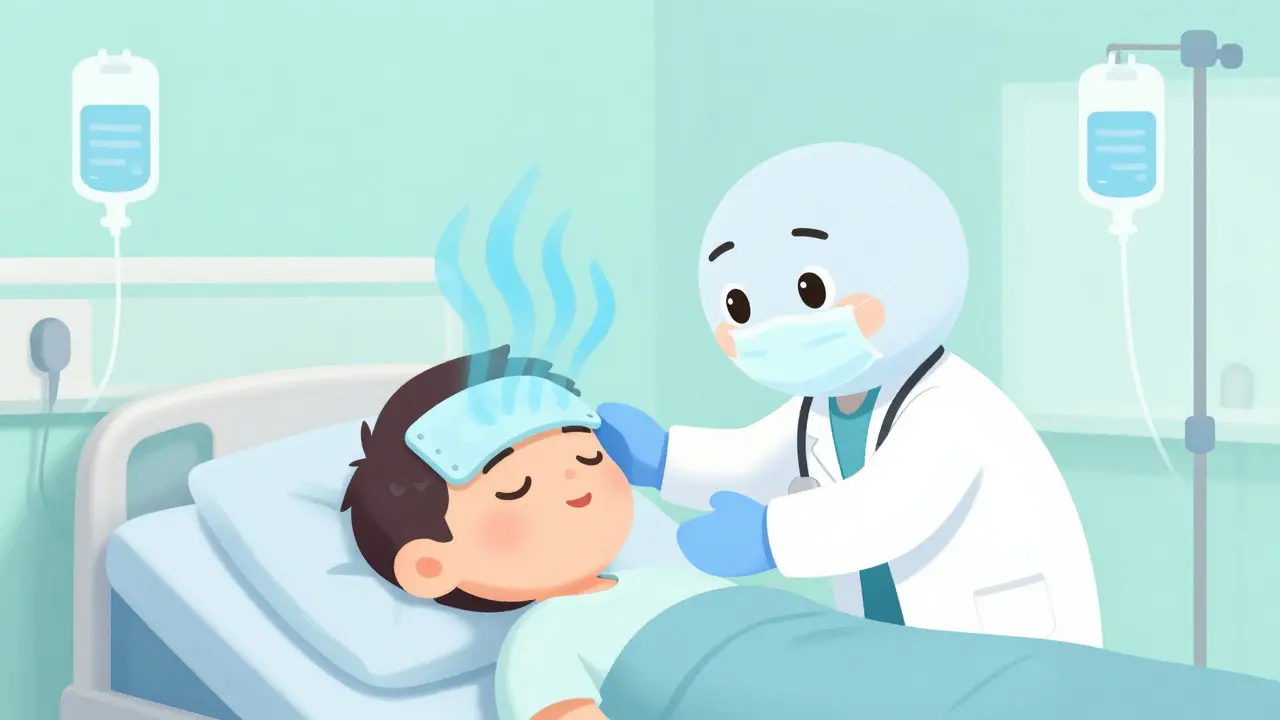
The first and most non-negotiable step is the immediate discontinuation of any serotonergic agents. Once the trigger is gone, the focus shifts to supportive care to stabilize the body.
- Temperature Control: External cooling methods are used to drop the body temperature by 1-2°C per hour to prevent brain damage.
- Hydration: IV fluids are pumped in (usually 150-200mL/hour for adults) to protect the kidneys from muscle breakdown toxins.
- Sedation: Benzodiazepines, such as Lorazepam, are administered to stop muscle rigidity and calm agitation.
- The Antidote: In severe cases, doctors use Cyproheptadine. This specific medication blocks serotonin receptors. An initial dose of 12mg is typically given, followed by smaller doses every two hours until the patient stabilizes.
How to Protect Yourself and Others
The rise in these cases-up 38% between 2015 and 2022-is largely due to more people taking complex cocktails of medications. You don't have to live in fear of your medication, but you do need to be your own advocate.
Start with strict medication reconciliation. This means having one single doctor or pharmacist review every single thing you take, including supplements and cough medicine. This practice alone can reduce the risk of a reaction by 62%. If you are starting a new medication, ask your provider specifically: "Does this interact with my current antidepressants?" Many patients on forums like Reddit report that 68% of them were never told about this risk when they first got their prescription.
How quickly do symptoms start?
Symptoms usually develop very fast, typically within 24 hours of a medication change. Specifically, 30% of people show signs within 1 hour, and 60% within 6 hours of taking the trigger medication.
Can I get serotonin syndrome from over-the-counter meds?
Yes. Certain OTC cough syrups containing dextromethorphan can interact with antidepressants to trigger serotonin syndrome, even if the dose seems small.
What is the most reliable early warning sign?
The most common initial symptom is a tremor-a shaking or jittery feeling. This is often followed by muscle twitching, sweating, and agitation.
Is it always fatal?
No. While the mortality rate ranges from 0.5% to 12%, most people make a full recovery within 48 to 72 hours if they receive prompt medical attention and the triggering medication is stopped.
How is it different from a panic attack?
While both involve anxiety and racing hearts, serotonin syndrome includes physical markers like high fever, dilated pupils, and specific muscle contractions (clonus) that are not present during a panic attack.