When you’re stuck in a low mood for weeks-no matter how hard you try to shake it off-you’re not just feeling sad. You might be dealing with major depressive disorder (MDD). It’s not a character flaw. It’s a medical condition that affects about 15.5% of U.S. adults every year, according to the National Alliance on Mental Illness (NAMI). And here’s the truth: most people who get the right treatment see real improvement. Not magic. Not overnight. But real, lasting change.
There are two main paths forward: antidepressant medications and psychotherapy. Some people use one. Some use both. And for moderate to severe depression, using both together often works better than either alone. The goal isn’t to fix you. It’s to help you rebuild your life, one step at a time.
What Exactly Is Major Depressive Disorder?
MDD isn’t just having a bad week. It’s when low mood, loss of interest, and fatigue last for at least two weeks and mess with your work, relationships, or daily tasks. You might sleep too much-or not at all. You might feel worthless. You might lose appetite or gain weight. Sometimes, there’s a clear trigger-like a breakup, job loss, or illness. Other times, it just shows up with no reason at all. That’s normal too.
The DSM-5, the standard guide doctors use to diagnose mental health conditions, laid out the rules back in 1980. Since then, we’ve learned it’s not just about brain chemistry. It’s about how your thoughts, behaviors, relationships, and biology all interact. That’s why treatment needs to be more than just a pill.
Psychotherapy: The Talking Cure That Actually Works
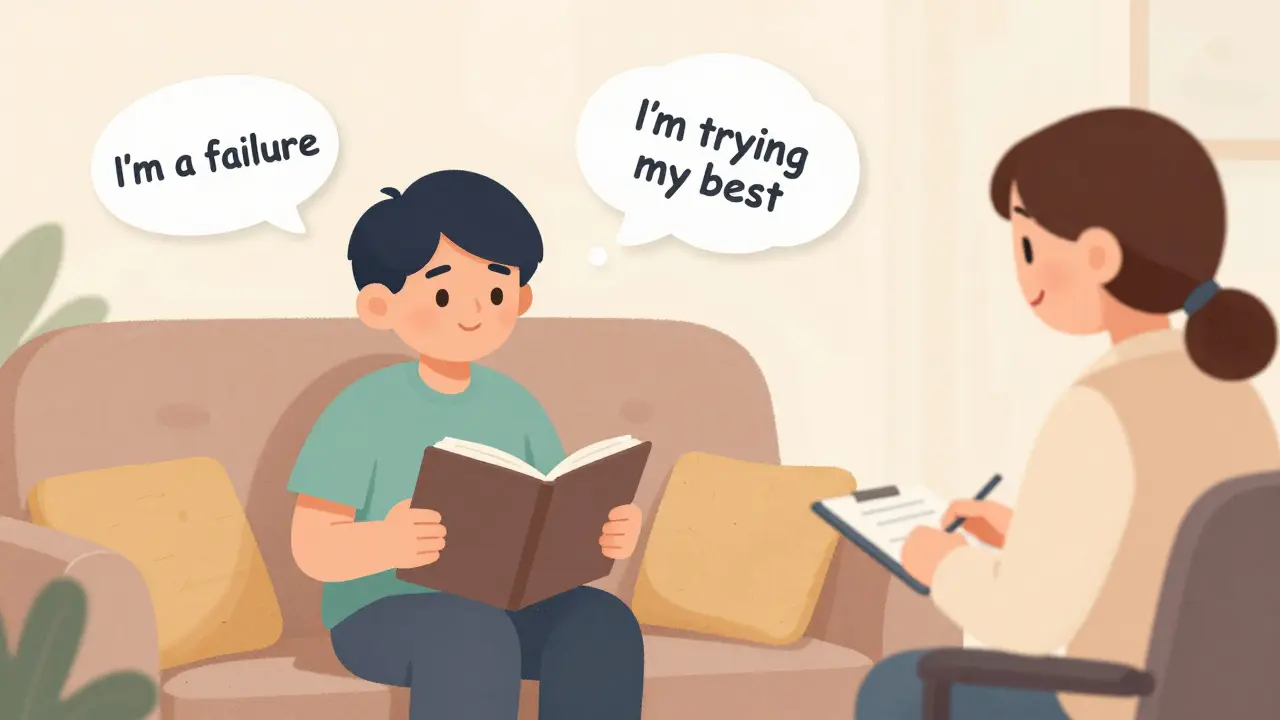
Psychotherapy isn’t about lying on a couch and talking about your mom. It’s structured, evidence-based, and focused on changing how you think and act. The most proven type is Cognitive Behavioral Therapy (CBT). It works by helping you spot distorted thoughts-like “I’m a failure” or “Nothing will ever get better”-and replace them with more realistic ones. You don’t just talk. You do homework. You track your mood. You try new behaviors. And over time, your brain learns different patterns.
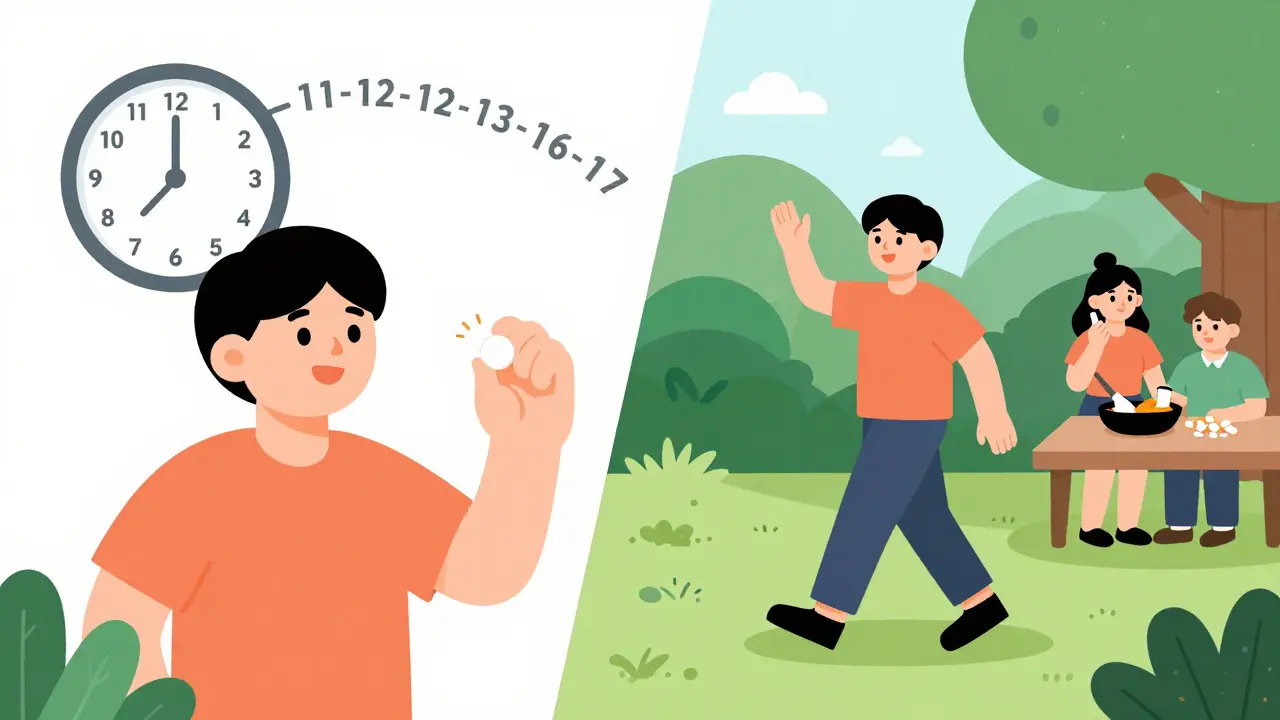
Another option is Behavioral Activation. It’s simpler. If depression pulls you into isolation, this therapy gently pushes you back into small, enjoyable activities-walking outside, calling a friend, cooking a meal. The idea? Action changes mood. Not the other way around.
Interpersonal Therapy (IPT) focuses on relationships. If your depression is tied to grief, conflict, or loneliness, IPT helps you rebuild connections. It’s especially useful for people who feel stuck in unhealthy patterns with family, partners, or coworkers.
Then there’s Acceptance and Commitment Therapy (ACT). Instead of fighting negative thoughts, ACT teaches you to notice them without getting hooked. You learn to live according to your values-even when you don’t feel like it. It’s not about feeling happy. It’s about living fully despite the pain.
And yes, therapy can happen online. Computerized CBT (CCBT) delivers structured lessons via apps or websites. It’s great for people in rural areas, those with mobility issues, or anyone who prefers privacy. But it’s not a replacement for human connection. The best outcomes still come from working with a trained therapist who listens, adjusts, and holds space for you.
Antidepressants: What They Do-and What They Don’t
Antidepressants don’t make you “happy.” They help your brain function more normally again. Think of them like insulin for diabetes. They don’t cure the disease. They restore balance so your body can heal.
The most common first-choice medications are SSRIs (Selective Serotonin Reuptake Inhibitors). These include drugs like escitalopram, sertraline, and fluoxetine. They’re generally well-tolerated and safe for long-term use. If SSRIs don’t work-or cause side effects-doctors often try SNRIs (Serotonin-Norepinephrine Reuptake Inhibitors), like venlafaxine or duloxetine. These can be more effective for severe depression, especially when paired with CBT.
Other options include mirtazapine (which helps with sleep and appetite) and amitriptyline (an older tricyclic, still used for tough cases). But here’s the catch: antidepressants take time. You might notice small improvements in energy or sleep after one or two weeks. But full relief? That usually takes 6 to 12 weeks. And yes, some people feel worse before they feel better. Nausea, weight gain, sexual side effects, or emotional numbness can happen. That’s why dose adjustments and open communication with your doctor matter.
For treatment-resistant depression-when nothing else works-Electroconvulsive Therapy (ECT) is still one of the most effective options. It’s not scary like movies show. You’re under anesthesia. A tiny electric current triggers a brief seizure. It resets brain activity. And for many, it’s life-saving.
Combination Therapy: Why Two Tools Beat One
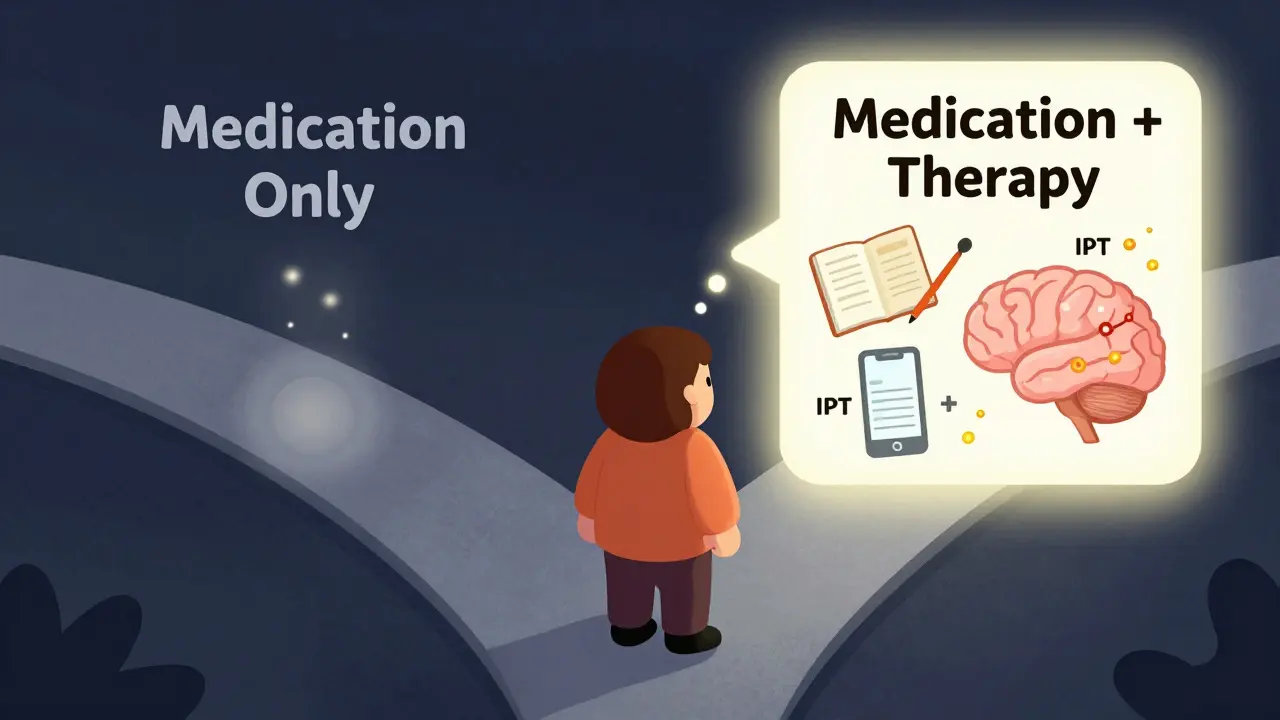
Studies show that antidepressants and psychotherapy are about equally effective on their own. But when you combine them? The results jump. A 2025 review in Nature found that people using both CBT and an SSRI had significantly better outcomes than those using either alone-especially for moderate to severe MDD.
Why? Because they attack the problem from different angles. Medication helps stabilize your brain chemistry. Therapy helps you rebuild your thinking, habits, and relationships. One gives you breathing room. The other gives you tools to stay well long after the medication stops.
For mild depression, therapy alone or even active monitoring (checking in regularly with your doctor) might be enough. But if your PHQ-9 score is 16 or higher (a clinical measure of severity), guidelines from NICE and AAFP strongly recommend starting both.
What Works for One Person Might Not Work for Another
There’s no one-size-fits-all here. A 32-year-old teacher might respond brilliantly to CBT and paroxetine. A 58-year-old retiree might need mirtazapine for sleep and weekly IPT to deal with loneliness after losing his spouse. Your age, past treatment history, physical health, job, and even your support system all matter.
Some people hate side effects. Others can’t afford weekly therapy. Some find online therapy more comfortable. Others need the safety of a face-to-face session. Your doctor shouldn’t push one option. They should help you weigh pros and cons.
Reddit threads from r/depression show real experiences: “SSRIs made me emotionally numb but functional,” wrote one user. Another said, “CBT taught me skills I still use five years later.” Both are true. And both are valid.
Barriers to Getting Help
Even with all the science, access is still a problem. Waiting lists for public therapy programs can stretch for months. Rural areas often have zero psychologists. Insurance doesn’t always cover enough sessions. And stigma? It’s still real.
Telehealth has helped. Online CCBT platforms are now part of standard care in the UK’s NHS. In the U.S., 83% of large employers cover mental health services. But there’s still a gap between what’s available and what people actually get.
Cost isn’t the only hurdle. Some people can’t engage in therapy because their depression is too heavy. Others struggle with digital access. And many don’t know where to start. That’s why primary care doctors play a key role. They’re often the first-and sometimes only-point of contact.
What to Expect When You Start Treatment
If you’re starting therapy, expect 12 to 20 weekly sessions. You’ll talk. You’ll do exercises. You’ll be asked to try things outside sessions. It’s work. But it’s work that builds skills you’ll use for life.
If you’re starting medication, expect to take it daily, even if you feel better. Stopping too soon can bring symptoms back. Most doctors recommend staying on antidepressants for at least 6 to 12 months after symptoms improve. Some stay on longer to prevent relapse.
Side effects? They’re common at first but often fade. If they don’t, your doctor can switch you to another medication. There are dozens of options. You don’t have to suffer through the wrong one.
What’s Next? Personalized Treatment Is Coming
Right now, finding the right treatment is still a trial-and-error process. But research is moving fast. Scientists are testing genetic tests to predict who responds best to which drug. Early results? Mixed. Not reliable enough yet.
More promising? AI tools that analyze speech patterns, sleep data, and mood logs to predict who’s likely to respond to CBT vs. medication. We’re not there yet-but we’re closer than ever.
One thing’s certain: depression won’t go away on its own. But it also doesn’t have to define you. With the right combination of support, science, and time, recovery isn’t just possible. It’s common.
Can antidepressants cure depression?
No, antidepressants don’t cure depression. They help restore balance in brain chemistry so your body can heal. They reduce symptoms, but they don’t fix underlying causes like negative thought patterns or relationship stress. That’s why therapy is often needed alongside medication.
How long does it take for antidepressants to work?
You might notice small changes-like better sleep or more energy-in 1 to 2 weeks. But full improvement usually takes 6 to 12 weeks. Some people feel worse before they feel better, especially in the first few weeks. That’s why sticking with the medication and talking to your doctor is critical.
Is therapy better than medication for depression?
Neither is universally better. For mild depression, therapy alone often works well. For moderate to severe cases, research shows combining therapy with medication gives the best results. Therapy builds long-term skills. Medication provides quicker symptom relief. The best choice depends on your symptoms, history, and preferences.
What if I can’t afford therapy or medication?
Many options exist. Community health centers often offer sliding-scale fees. Online CCBT platforms like MoodGYM or Beating the Blues are low-cost or free. In the U.S., the 988 Suicide & Crisis Lifeline connects callers to local resources. Some pharmacies offer generic antidepressants for under $10/month. Don’t assume help is out of reach.
Can I stop taking antidepressants once I feel better?
No-not without talking to your doctor. Stopping suddenly can cause withdrawal symptoms or cause depression to return. Most doctors recommend staying on medication for at least 6 to 12 months after symptoms improve. For people with recurrent depression, long-term use may be necessary. Never adjust your dose on your own.
Is online therapy as effective as in-person therapy?
For many people, yes. Studies show computerized CBT and video therapy can be just as effective as in-person sessions, especially for depression. But they work best when you’re motivated, have reliable internet, and can engage consistently. They’re not ideal if you need deep emotional support or have complex trauma. In those cases, face-to-face therapy is still preferred.
What if therapy doesn’t work for me?
It’s not you-it’s the fit. Different therapists use different approaches. If CBT didn’t help, try IPT or ACT. If one therapist felt dismissive, find another. It can take trying a few before you find the right match. Also, therapy often works better when combined with medication. Don’t give up after one attempt.

tamilan Nadar
In India, therapy is still seen as something for the rich or the crazy. But I’ve seen friends take SSRIs and slowly come back to life. No magic, just science. And yes, CBT works-if you stick with it. We need more of this talk here.
Adam M
Antidepressants don’t cure anything. They’re just chemical bandaids.
Emma Deasy
Let me just say-I’ve been on three different SSRIs, tried CBT, ACT, and even online CCBT-and let me tell you, the journey is not linear. There were weeks I couldn’t get out of bed. Weeks I cried during Zoom sessions. Weeks I thought, ‘This is it-I’m broken.’ But then, slowly, almost imperceptibly, I started making my bed again. Then I called a friend. Then I cooked a meal without crying. It wasn’t dramatic. It was quiet. And that’s what recovery looks like: not a breakthrough, but a thousand tiny rebuildings.
And yes, the side effects? The emotional numbness? The weight gain? The insomnia? All real. All brutal. But not permanent. I switched to sertraline after fluoxetine made me feel like a zombie. My therapist said, ‘You’re not failing-you’re adjusting.’ That phrase saved me.
Also, therapy isn’t about talking about your mom. It’s about noticing how you talk to yourself when you’re alone at 3 a.m. That inner voice? It’s been lying to you for years. CBT taught me to catch it. To challenge it. To replace it. Not with positivity. With truth.
And for those saying ‘just exercise’ or ‘get sunlight’-yes, those help. But they’re not replacements. They’re supplements. Like vitamins for the soul. You still need the medicine. You still need the structure. You still need someone who doesn’t flinch when you say, ‘I don’t want to live.’
I’m five years out. I still take a low dose. I still go to therapy monthly. I still have bad days. But now I know: they’re not the end. They’re just weather. And I’ve learned how to build a shelter.
Noluthando Devour Mamabolo
As someone from Johannesburg, I’ve seen how stigma kills. We don’t even have the word for ‘depression’ in Zulu that’s not tied to ‘spiritual attack.’ But my sister took escitalopram + IPT and now she runs a support group. 💪🧠 #MentalHealthIsHealth
Leah Dobbin
It’s amusing how this post presents SSRIs as if they’re benign. Have you considered that pharmaceutical companies fund 90% of the ‘evidence’? The FDA has approved drugs with higher suicide rates than placebo. And therapy? It’s a $150/hour luxury for those who can afford to take time off. Meanwhile, the real issue is capitalism’s erosion of meaning. But no-let’s just pop pills and journal.
Ali Hughey
Did you know the DSM-5 was written by psychiatrists with ties to Big Pharma? 🤔 The entire framework of ‘MDD’ is a construct designed to sell meds. ECT? That’s lobotomy 2.0. And online CBT? Controlled by corporations that harvest your mood data. This isn’t healing-it’s surveillance capitalism with a serotonin twist. Wake up.
My cousin was forced into SSRIs after a breakup. Now she’s on five meds and says she doesn’t feel anything-not joy, not grief. That’s not treatment. That’s chemical suppression.
And why no mention of trauma? PTSD looks like MDD. But no-let’s pathologize pain instead of addressing the root: abuse, neglect, systemic oppression.
They want you medicated. Quiet. Productive. Not questioning. Not angry. Not alive.
Alex MC
Been on sertraline for 3 years. Started therapy after my dad died. Took 8 weeks to feel anything. Took 6 months to feel like myself again. Not ‘happy’-just present. That’s enough. And yeah, therapy’s hard. But it’s the only thing that taught me I’m not broken. Just tired.
PS: If you’re reading this and thinking ‘I can’t afford it’-reach out. There are free options. You’re not alone.
rakesh sabharwal
CBT is just Western individualism disguised as science. In my village, we heal through community, ritual, and ancestral connection-not through worksheets and cognitive distortions. This post is a colonial tool. Depression is not a disorder-it’s a response to a sick system. Stop medicalizing suffering.
Aaron Leib
I’ve been a primary care doc for 18 years. I’ve prescribed SSRIs. Referred to therapists. Seen patients get better. And I can tell you-this post is 100% accurate. The science is solid. The barriers? Real. But progress? Also real. Don’t give up. Your doctor isn’t your enemy. They’re your ally.
Dylan Patrick
My brother tried 4 meds before one stuck. Took 3 therapists before he found one who didn’t make him feel like a project. Now he’s a therapist. Don’t quit. It’s worth it. I swear.
Kathy Leslie
I was diagnosed last year. Took me 6 months to even say it out loud. I thought I was just lazy. Turns out, I was sick. Therapy helped. Medication helped. But what helped most? My dog. She just sat with me. No advice. Just presence. Sometimes that’s all you need.
Amisha Patel
Can someone explain how ACT differs from mindfulness? I’ve tried meditation but it felt like another task to fail at. Does ACT make it easier?
Elsa Rodriguez
I tried therapy. It made me cry every session. I hated it. Then I tried meds. I felt like a zombie. Then I quit both. Now I drink. And I’m fine. Why do people need to fix what isn’t broken? Maybe depression isn’t a disease. Maybe it’s wisdom in disguise.
Rosemary Chude-Sokei
As someone who has both lived with MDD and trained as a clinical psychologist, I want to emphasize: the data is unequivocal. Combination therapy is not just ‘often better’-it’s the gold standard for moderate to severe cases. The effect size is robust. The durability is unmatched. And yes, accessibility remains a crisis-but that does not invalidate the science. We must advocate for structural change without dismissing evidence-based care. The two are not mutually exclusive. In fact, they are symbiotic.
Therapy isn’t a luxury. It’s a skill-building process. Medication isn’t a crutch. It’s a neurochemical reset. To pit them against each other is to misunderstand the biopsychosocial model entirely. We don’t choose between biology and behavior. We integrate them.
And to those who say ‘just meditate’ or ‘get more sunlight’-you are not helping. You are minimizing. Depression is not a mindset. It is a physiological state that alters neural pathways, cortisol regulation, and immune function. To reduce it to ‘positive thinking’ is not just inaccurate-it is dangerous.
My patients who combine CBT with an SSRI have a 70% remission rate at 12 months. Those on monotherapy? 45%. That’s not opinion. That’s meta-analysis. Let’s not confuse ideology with evidence.
And to the person who said, ‘It’s capitalism that’s broken’-yes. But your pain is real right now. And you deserve relief, not philosophical debate. You deserve care. Today.