Fasted State Testing: What It Is, Why It Matters, and How It Affects Your Medications
When you hear fasted state testing, a medical procedure where you avoid food and drink (except water) for 8–12 hours before a test. It's not just about blood sugar—it affects how your body absorbs almost every medication you take. Whether you're getting a cholesterol panel, checking your liver enzymes, or monitoring your diabetes meds, what you eat—or don’t eat—before the test changes the numbers. And if you're taking generics, this matters even more because small differences in absorption can tip the scale between effective and ineffective.
Medication absorption, how your body takes in drugs through the digestive tract isn’t the same when your stomach is full. Some drugs, like certain antibiotics or thyroid meds, need an empty stomach to work right. Others, like statins or blood pressure pills, might be absorbed better with food. The blood tests fasting, the standard practice of testing after no food intake to get consistent baseline readings exists because food can mask or mimic disease signs. For example, eating before a lipid panel can make your triglycerides look 2–3 times higher than they really are. That’s not just inaccurate—it can lead to wrong diagnoses or unnecessary prescriptions.
And here’s the catch: if you’re on generic drugs, drug efficacy, how well a medication performs in real-world conditions compared to its brand-name version can depend on whether you took it fasted or fed. Bioequivalence studies—the ones the FDA uses to approve generics—often test under fasted conditions. But real life isn’t a lab. If you take your generic metformin after a big breakfast, your blood sugar might not drop like it should. That’s not the drug’s fault. It’s a mismatch between how it was tested and how you’re using it.
Fasting isn’t just for diabetics or people with high cholesterol. It’s part of routine checks for thyroid function, kidney health, and even mental health meds. Some antidepressants and mood stabilizers have absorption rates that shift by up to 40% depending on food. If your doctor adjusts your dose based on a test taken after you ate breakfast, you could end up under- or over-medicated. And if you’re skipping doses because you forgot to fast? You’re not just messing up your lab results—you’re messing up your treatment.
What you’ll find in the posts below are real stories and science-backed guides on how fasting impacts your meds, why some generics behave differently when taken with food, and how to avoid common mistakes that lead to bad test results. From how to prep for a lipid panel to why your thyroid med needs to be taken on an empty stomach, these articles cut through the noise. No fluff. No jargon. Just what you need to know to make sure your meds work the way they’re supposed to—no matter what’s on your plate.
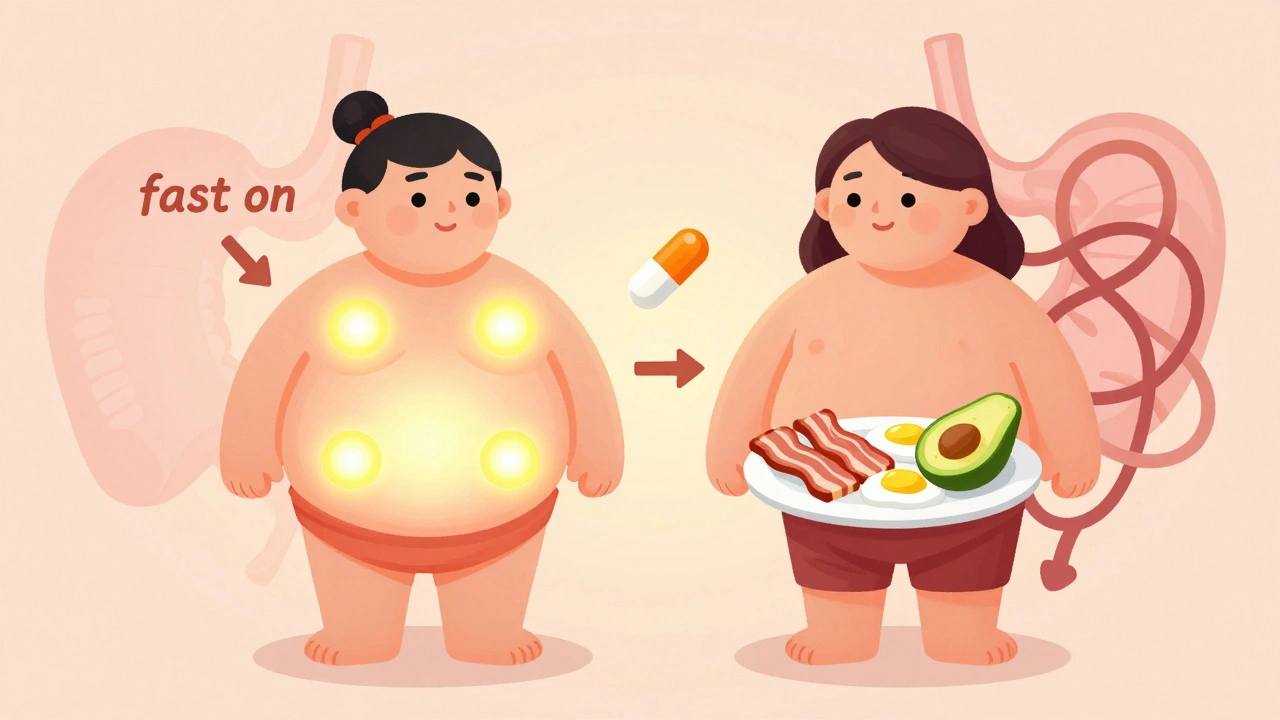
Fasted and fed state testing reveal how food affects drug absorption and exercise performance. Understanding both conditions is critical for safe medication use and effective training. Neither state is universally better-context determines the right choice.
Read more