Clinical studies show generic drugs are just as effective as brand-name versions for most conditions. But for drugs with narrow therapeutic windows, small differences can matter. Here's what the data really says.
Read more
When you pick up a generic pill, you’re trusting that it does the same thing as the brand-name version—and bioequivalence studies, controlled tests that compare how quickly and completely a drug enters the bloodstream. These studies are the reason your $10 generic blood pressure pill doesn’t leave you worse off than the $100 brand. Without them, there’d be no way to know if a cheaper version actually works the same way. It’s not about the label—it’s about what happens inside your body.
These tests don’t just check if the drug gets absorbed. They measure bioavailability, how much of the drug actually reaches your system—and whether food changes that. That’s why some pills are tested in a fasted state, when your stomach is empty, and others in a fed state, after you’ve eaten. One study might show a drug works fine on an empty stomach, but if you take it with breakfast and it doesn’t absorb well, you’re not getting the full dose. That’s not a small detail—it’s the difference between control and crisis.
And it’s not just about absorption. Pharmaceutical equivalence, when two drugs have the same active ingredient, strength, and dosage form is just the starting point. Two pills can look identical, but if one dissolves slower or has a different coating, your body might not get the same results. That’s why regulators don’t just rely on ingredients—they require real human data. These studies involve healthy volunteers, blood draws, and precise timing. No shortcuts. No guesses.
What you’ll find in the posts below isn’t just theory. You’ll see how bioequivalence connects to real problems: why some generic drugs disappear from shelves, how expiration dates affect absorption, and why certain medications need special handling. One post explains how a generic version of Paxil might be cheaper but still meet strict bioequivalence standards. Another shows how food changes how drugs like statins or thyroid meds work. There’s even a piece on how steroid eye drops and contact lenses interact—not because of the drug itself, but because of how it’s delivered and absorbed.
This isn’t about science jargon. It’s about making sure your money doesn’t cost you your health. If you’ve ever wondered why your doctor says, "This generic is fine," or why your pharmacist switched your pill without asking, it’s because of bioequivalence studies. They’re the invisible guarantee behind every affordable prescription you take. And now, you know what they’re really checking for.
Clinical studies show generic drugs are just as effective as brand-name versions for most conditions. But for drugs with narrow therapeutic windows, small differences can matter. Here's what the data really says.
Read more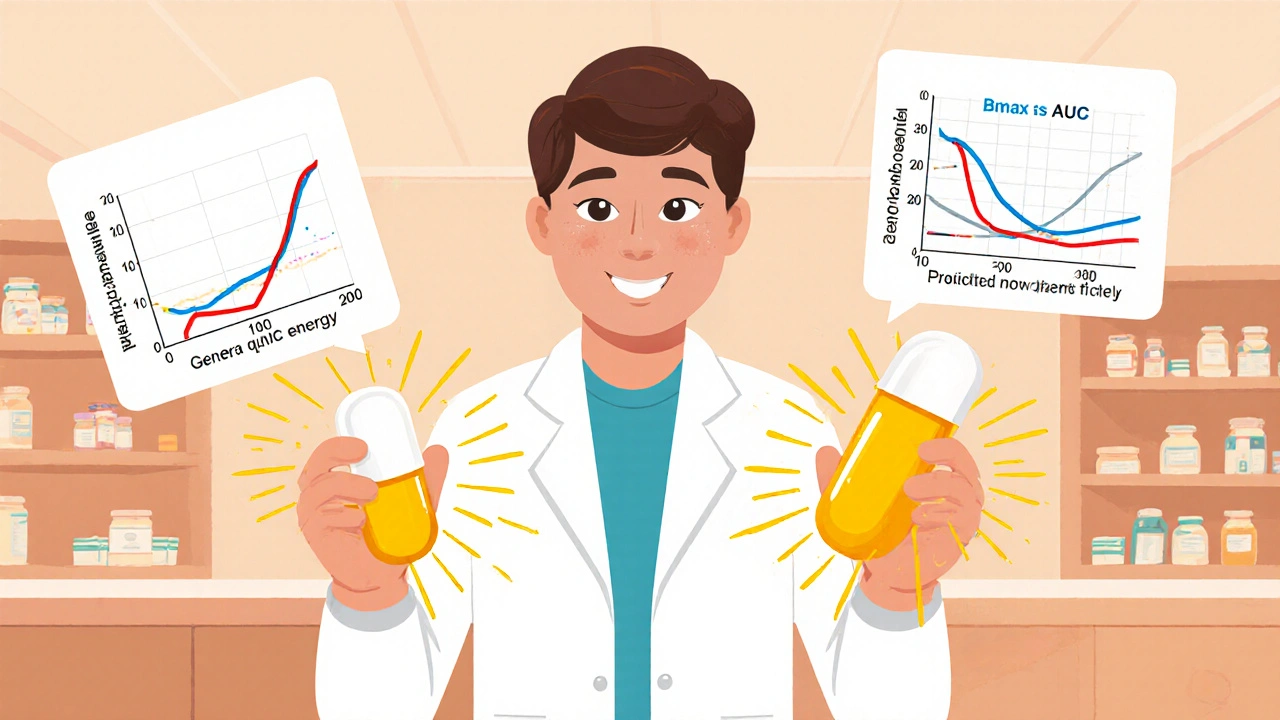
The FDA requires generic drug manufacturers to prove bioequivalence through strict pharmacokinetic studies to ensure their products match the brand-name version in absorption and effectiveness. Learn how the 80/125 rule, biowaivers, and product-specific guidances make generics safe and affordable.
Read more