Medication-Food Interaction Checker
Check Your Medication's Food Interaction
Enter your medication name or select from common examples to learn how food affects absorption and potential interactions.
Recommended
Important Food Interactions
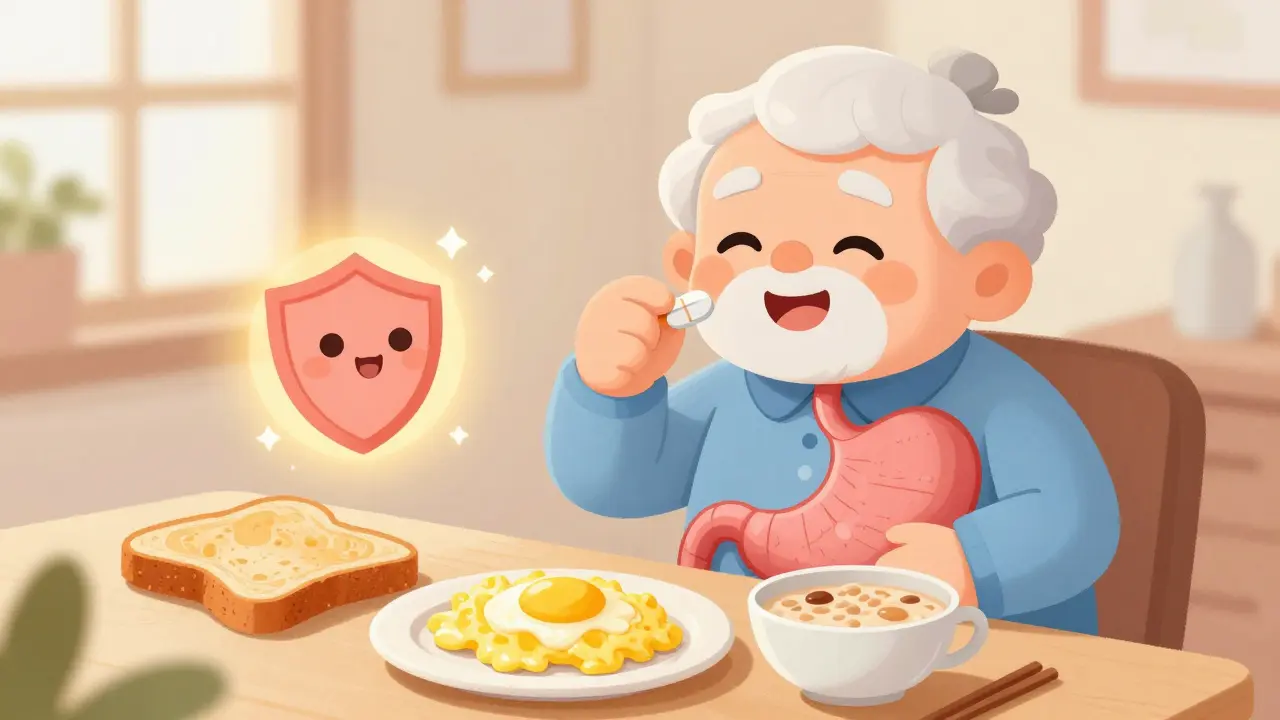
Many people pop pills without thinking about what’s on their plate. But what you eat - or don’t eat - when taking medication can make the difference between feeling better and feeling worse. It’s not just about stomach upset. Food can change how your body absorbs drugs, turn a safe dose into a dangerous one, or even stop the medicine from working at all. The truth? Taking medication with food isn’t a suggestion - it’s often a medical necessity.
Why Food Changes How Medicines Work
Your digestive system isn’t just a pipe for food. It’s a complex chemical environment that interacts with every pill you swallow. When you eat, your stomach produces acid, slows down emptying, and releases enzymes. All of this affects how drugs enter your bloodstream. For some medications, food helps. It creates a buffer that protects your stomach lining. For others, food blocks absorption entirely. Take non-steroidal anti-inflammatory drugs (NSAIDs) like ibuprofen. On an empty stomach, they irritate the stomach lining and can cause bleeding. Studies show that 38% of people who take NSAIDs without food develop microscopic stomach damage within 24 hours. That number drops to 12% when taken with a meal. The food doesn’t cure the problem - it just shields your stomach. Then there are drugs like griseofulvin, an antifungal. When taken with a high-fat meal, its absorption increases by up to 30%. Without that fat, the drug barely gets into your system. It’s not that the pill is bad - it’s that your body needs the right conditions to use it.The Hidden Traps: Foods That Fight Medicines
Not all food helps. Some foods actively interfere. Grapefruit juice is the most notorious offender. It blocks an enzyme called CYP3A4 in your gut - the same enzyme that breaks down over 50% of common medications. One glass can turn a normal dose of cyclosporine into a toxic one, boosting blood levels by 300-500%. That’s not a myth. It’s documented in Mayo Clinic research. Calcium is another silent saboteur. Found in dairy, fortified orange juice, and supplements, it binds to antibiotics like tetracycline and ciprofloxacin. The result? Up to 50% less drug gets absorbed. If you take your antibiotic with yogurt or a glass of milk, you’re not helping your infection - you’re fighting your own treatment. Even leafy greens matter. Warfarin, a blood thinner, works by blocking vitamin K. If you eat a salad one day and no greens the next, your INR levels swing wildly. A study in the New England Journal of Medicine showed that inconsistent vitamin K intake caused 20-30% drops in warfarin effectiveness. That’s not just inconvenient - it’s life-threatening.When Food Makes Medicines Work Better
Some drugs simply won’t work without food. Metformin, the most common diabetes medication, causes nausea and diarrhea in 63% of patients when taken on an empty stomach. That number drops to 18% when taken with meals. The food doesn’t make metformin stronger - it just slows its release, letting your gut adjust. Antipsychotics like clozapine behave the same way. High-fat meals boost blood levels by 40-60%. That sounds good - until you realize it means more drowsiness, dizziness, and risk of fainting. Patients on these drugs need to eat consistently, not just to reduce side effects, but to avoid dangerous spikes. Even thyroid medication has a food rule. Levothyroxine must be taken on an empty stomach. Calcium, iron, soy, and even coffee can reduce its absorption by 30-55%. If you take it with breakfast, your body doesn’t get enough hormone. That means your TSH levels stay high, your energy stays low, and your doctor keeps increasing your dose - all because you ate too soon.
What “With Food” Really Means
When your doctor says “take with food,” they don’t mean “take with a sip of coffee.” The FDA defines it as at least 250-500 calories. That’s a sandwich, a bowl of oatmeal with nuts, or scrambled eggs with toast. A banana and a handful of almonds won’t cut it. On the flip side, “take on an empty stomach” means 1 hour before or 2 hours after eating. That’s strict. Even a small snack can interfere. A patient at Cleveland Clinic admitted to taking levothyroxine with her morning coffee and toast. Her dose had to be increased by 25% just to reach therapeutic levels.Who’s Most at Risk?
Older adults. People on five or more medications. Anyone with chronic illness. These groups are the most vulnerable. A Mayo Clinic study found that 68% of patients over 65 didn’t know the food rules for their meds. Only 22% got clear instructions from their doctor. Meanwhile, 68% of medication-related hospitalizations come from food-drug timing errors. That’s not just bad luck - it’s a system failure. Polypharmacy patients - those on multiple prescriptions - face the worst. One drug needs food. Another needs an empty stomach. A third can’t touch calcium. Juggling all of that is hard. A 2023 CMS report found that 34% of Medicare beneficiaries struggle with conflicting food requirements. They’re not careless. They’re overwhelmed.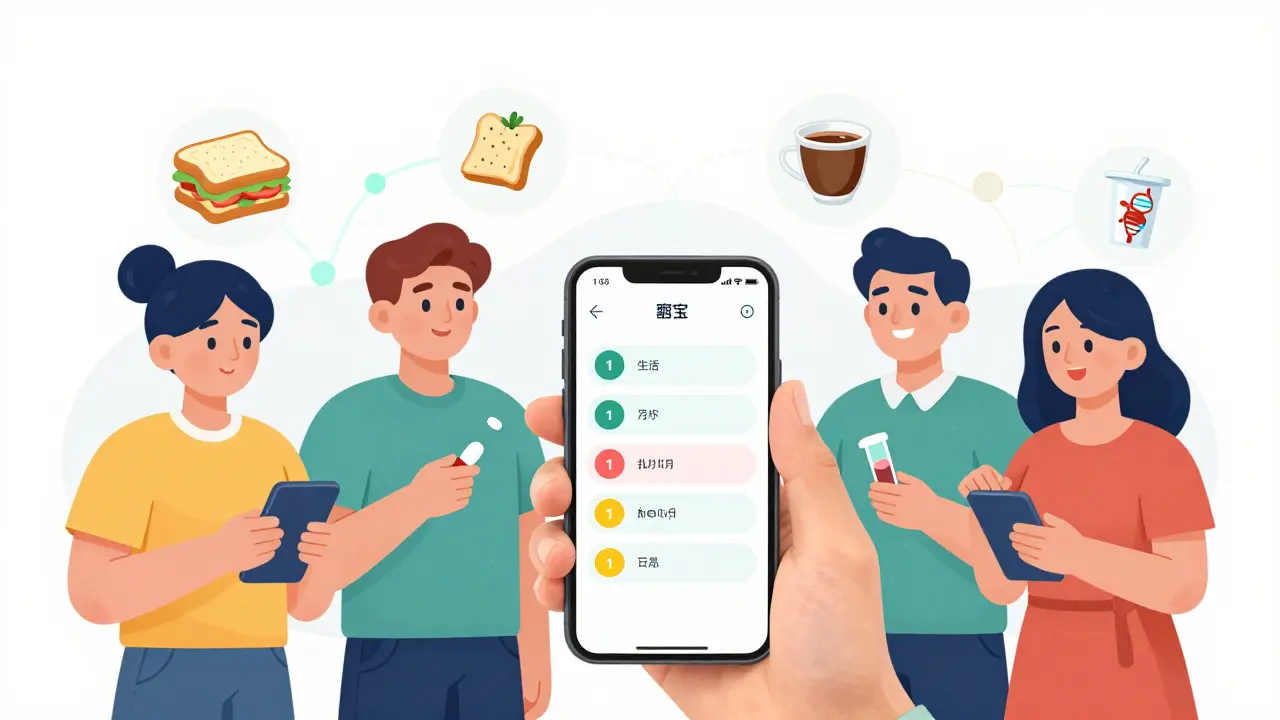
How to Get It Right
Start with your pharmacist. They’re the experts on food-drug interactions - not your doctor, not your nurse. Pharmacists at UCSF and CVS now use color-coded charts to label meds: green for “must take with food,” red for “must take empty,” and yellow for “flexible.” Use a medication app. Medisafe, for example, sends alerts: “Take your metformin with lunch in 10 minutes.” Clinical trials show it cuts errors by 37%. Keep a food-med log. Write down what you ate and when you took your pills. If you feel off, you’ll see the pattern. Did your nausea start after you had yogurt with your antibiotic? That’s your clue. Ask three questions every time you get a new prescription:- Should I take this with food or without?
- Is there a specific food I need to avoid?
- What happens if I get this wrong?
The Future: Personalized Food-Med Plans
The future of medication isn’t just about pills. It’s about your diet, your genes, and your gut. In March 2024, the FDA approved Abilify MyCite - a smart pill that tracks when you take it and whether you’ve eaten. Early data shows a 32% drop in food-related side effects. Companies like Vitagene now offer DNA tests that tell you how your body processes caffeine, alcohol, and medications. For $149, you get a report saying: “Avoid grapefruit with simvastatin. Take your statin with dinner.” The NIH is spending $15.7 million to study how gut bacteria affect drug absorption. The goal? To one day say: “Your microbiome breaks down this drug faster - take it with a high-fat meal.” But here’s the catch: processed foods are getting more complex. Additives, emulsifiers, and hidden sugars are changing how drugs behave. Without better education, experts warn that food-drug errors could rise by 15-20% in the next decade.Bottom Line
Taking medication with food isn’t about convenience. It’s about safety, effectiveness, and control. A simple change - eating before your pill - can cut nausea by half, prevent hospital visits, and make your treatment work as intended. Don’t assume your doctor told you everything. Don’t trust memory. Don’t guess. Ask. Write it down. Use an app. Your body is listening - make sure you’re speaking clearly.
Vicki Yuan
Finally, someone breaks this down without jargon. I’ve been taking metformin with a protein shake for months thinking it was ‘light’ enough - turns out I was just making my stomach revolt worse. This post saved me from a trip to the ER. Thank you.
Now I eat oatmeal with nuts before my pills. No more nausea. No more guilt. Just science.
Also - grapefruit juice is officially banned from my kitchen. Not even as a ‘treat.’
jigisha Patel
While the general advice is sound, the article lacks critical nuance regarding pharmacokinetic variability across ethnic populations. For instance, CYP3A4 expression in South Asian populations is, on average, 22% lower than in Caucasians, per a 2021 Pharmacogenomics Journal meta-analysis - meaning grapefruit interactions may be even more pronounced in Indian patients. This is not addressed.
Additionally, the FDA’s 250–500 calorie definition is outdated; it derives from 1980s fed-state models and ignores modern low-carb, high-fat dietary patterns. A 300-calorie avocado and egg meal may be more pharmacologically relevant than a bagel with jam.
Further, the reliance on apps like Medisafe ignores digital literacy disparities in elderly and low-income populations - a structural oversight.
Jennifer Glass
I never realized how much my thyroid meds were sabotaged by my morning coffee habit. I’ve been taking levothyroxine with my coffee and toast for three years. My doctor kept upping my dose… and I kept feeling tired.
Just switched to taking it at bedtime instead - no food, no coffee, just water. My energy levels improved in three days.
Why isn’t this common knowledge? Why do we assume patients will just ‘figure it out’?
Joseph Snow
Let’s be real - this is all corporate propaganda. Big Pharma doesn’t want you to know that food interactions are exaggerated to sell more pills. The ‘300% increase’ with grapefruit? That’s in lab rats on single-dose studies. Real humans don’t drink a whole grapefruit juice bottle daily.
And why do they say ‘take on empty stomach’? So you’ll forget, take it wrong, and come back for more. It’s a business model.
My grandfather took warfarin with his eggs for 40 years. He’s 94. Alive. Healthy. No hospital visits.
Trust your body. Not the pamphlets.
Uzoamaka Nwankpa
I’ve been on five medications since my diagnosis. The food rules? They’re a nightmare. One needs food, another can’t have dairy, the third hates fiber, the fourth needs fat, and the fifth says ‘nothing for two hours.’
I used to cry in the kitchen trying to plan meals. I’m not lazy. I’m not careless. I’m just… broken by the system.
No one ever asks how hard this is. They just say ‘follow the instructions.’
But I’m still here. So I guess that’s something.
Chris Cantey
Food is not just fuel. It’s a language. The body interprets pills through the context of digestion - a silent dialogue between chemistry and biology.
We treat medication like a bullet fired into the void. But it’s more like a whisper in a crowded room. The food? It’s the echo.
And yet, we demand precision from a system built on chaos.
Perhaps the real failure isn’t the patient. It’s the illusion that we can control biology with a label.
Abhishek Mondal
…And yet, you didn’t mention that soy protein - yes, tofu, soy milk, edamame - inhibits levothyroxine absorption by up to 55%, as per the Journal of Clinical Endocrinology & Metabolism (2020). Nor did you address that even green tea, consumed within two hours, reduces absorption by 30% due to catechins.
Also - your ‘250–500 calorie’ FDA definition is a myth. The FDA never defined it that way. You’re misquoting a 1999 guidance document that was withdrawn in 2012. This is sloppy journalism.
And why are you promoting Medisafe? Do you get affiliate revenue?
…I’m not angry. I’m just… disappointed in the lack of rigor.
Oluwapelumi Yakubu
My mama used to say, ‘If the medicine don’t like your food, your body will tell you - in the bathroom.’ She never read a study, but she knew the truth.
She took her antibiotics with rice and beans, never milk. Said the ‘white stuff’ made the pills ‘sleep.’ She was right.
And she’d always say, ‘If your stomach growls louder than your doctor, you’re doing it wrong.’
Simple. Wise. No app needed.
Jacob Milano
This is the kind of post that makes me believe people still care about real health - not just quick fixes.
I used to think ‘take with food’ meant ‘don’t take it while fasting.’ Now I know it’s about creating the right chemical environment. That’s wild.
And the part about warfarin and greens? I’m changing my salad routine tomorrow. I’ve been swinging my INR like a pendulum for months.
Thank you for writing this. Not just for the info - but for the care behind it.
Angie Rehe
Let’s not sugarcoat this - the healthcare system is designed to make patients fail. Why? Because when you mess up your meds, you come back. More tests. More prescriptions. More $$$.
And who gets blamed? The patient. The one who’s juggling five drugs, a job, kids, and no time to read 12-page pamphlets in 8-point font.
They don’t want you to succeed. They want you to keep coming back.
And don’t even get me started on ‘color-coded charts.’ That’s a Band-Aid on a gunshot wound.
Akshaya Gandra _ Student - EastCaryMS
wait so if i take metformin with my breakfast i wont get sick? 😳 i thought i was just bad at taking pills lol
also grapefruit juice?? i drink it every morning?? 😭
en Max
It is imperative to underscore the clinical significance of pharmacodynamic variability in response to food-drug interactions. The gastrointestinal transit time, pH modulation, bile secretion, and enterohepatic recirculation are all dynamically modulated by dietary macronutrient composition - particularly lipid content and fiber density.
Furthermore, the temporal alignment of medication ingestion with circadian rhythm-regulated enzyme expression (e.g., CYP3A4, P-glycoprotein) may represent an underutilized therapeutic lever.
Recommendation: Standardized, evidence-based, patient-tailored dietary protocols should be integrated into electronic health records as dynamic, algorithm-driven alerts - not static printed handouts.
melissa cucic
Thank you for citing the NEJM study on warfarin - that’s the kind of evidence that matters. I’m a nurse, and I’ve seen patients hospitalized because they had a kale smoothie one day and nothing the next.
But I want to add: consistency matters more than perfection. You don’t need to eat the same salad every day - just the same *amount* of vitamin K. One cup of spinach daily is better than three cups one day and none the next.
Also - don’t forget that alcohol, even moderate, affects liver metabolism of many drugs. It’s not just food. It’s everything you put in your mouth.
And yes - pharmacists are your best friends. Talk to them. They’re not just the people who hand you the pills.
Terri Gladden
I took my blood pressure med with my avocado toast this morning and now I feel like I’m floating… but not in a good way. My head is spinning. My heart is racing. I think I just died.
…Wait, no, I’m still here. But I’m calling my doctor. And I’m never eating avocado again. Or toast. Or food. Ever.
Also, who designed these rules? A sadist?