
RA Treatment Efficacy Calculator
Treatment Efficacy Calculator
Estimate your likelihood of achieving remission with different RA treatment combinations based on key patient factors.
When you're living with rheumatoid arthritis (RA), the goal isn't just to manage pain-it's to stop the damage before it steals your mobility. That’s where DMARDs and biologics come in. These aren’t just painkillers. They’re disease-modifying tools designed to slow or even halt joint destruction. But how do they work together? And why does mixing them sometimes make all the difference?
What DMARDs Really Do
DMARD stands for disease-modifying antirheumatic drug. That’s a mouthful, but it means one thing: these drugs change the course of RA, not just mask symptoms. There are two main types: conventional synthetic DMARDs (csDMARDs) and biologic DMARDs (bDMARDs). The first group includes old-school pills like methotrexate, sulfasalazine, hydroxychloroquine, and leflunomide. Methotrexate, in particular, has been the backbone of RA treatment since the 1980s. It’s cheap-often under $50 a month-and it works by slowing down the immune system’s overactive response. It doesn’t just calm inflammation; it reduces the risk of permanent joint damage over time.But here’s the catch: methotrexate doesn’t work for everyone. About 20-30% of people can’t tolerate it due to nausea, fatigue, or liver concerns. Even when it works, many patients still have active disease after three to six months. That’s when doctors consider adding a biologic.
Biologics: Targeted, Expensive, Powerful
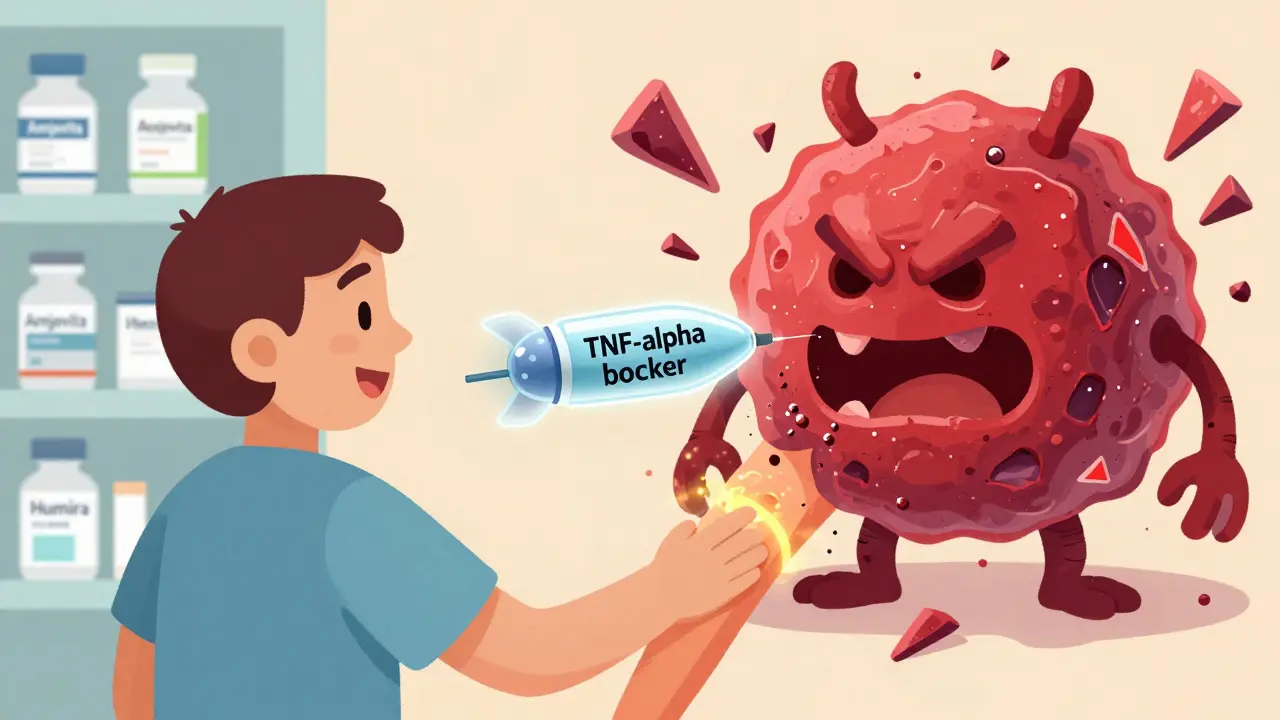
Biologics are different. They’re not pills. They’re large protein molecules made in living cells-think of them as precision-guided missiles for your immune system. Unlike methotrexate, which broadly suppresses immunity, biologics zero in on specific troublemakers: TNF-alpha, IL-6, B cells, T cells. Examples include adalimumab (Humira), etanercept (Enbrel), rituximab (Rituxan), and tocilizumab (Actemra). They’re given by injection or IV infusion, not swallowed.They’re also expensive. A single month’s supply can cost between $1,500 and $6,000. That’s why they’re usually not the first choice. But for people who don’t respond to methotrexate alone, biologics can be life-changing. Studies show that when paired with methotrexate, biologics boost the chance of hitting ACR50 (a 50% improvement in symptoms) from 30-40% to 50-60% within six months.
Not all biologics are equal. Adalimumab and infliximab have strong data behind them. Anakinra, on the other hand, doesn’t perform as well and is rarely used today. And while biologics are powerful, they come with risks. Infections-especially respiratory ones-are more common. Some carry warnings about increased cancer risk or heart problems, especially JAK inhibitors like tofacitinib and upadacitinib, which got a black box warning from the FDA in 2021 after the ORAL Surveillance trial showed higher rates of serious cardiovascular events and malignancies in older RA patients.
Why Methotrexate Is Still the Anchor
You might wonder: if biologics are so effective, why not start with them? The answer is simple: methotrexate still holds its ground. The 2021 American College of Rheumatology guidelines say it clearly: start with csDMARDs. Why? Because in early RA, methotrexate alone puts 20-30% of patients into remission. That’s comparable to some biologics used alone. And when you combine methotrexate with sulfasalazine and hydroxychloroquine-a triple therapy-the results can match biologic combinations.The CAMERA-II trial in 2013 showed that triple csDMARD therapy matched adalimumab plus methotrexate in preventing joint damage over two years. The CAMERA-III trial in 2023 confirmed similar long-term outcomes at four years. So for many, especially those without severe joint damage or high-risk markers like high RF or anti-CCP antibodies, starting with a combo of traditional DMARDs makes sense.
But for patients with aggressive disease-early erosions, high inflammation markers, or multiple affected joints-adding a biologic early can push ACR70 response rates (70% improvement) to 40-50%. That’s a big deal when you’re trying to preserve your ability to work, drive, or hold your grandchild.
How They Work Together
DMARDs and biologics don’t just add up-they multiply. Methotrexate doesn’t just help control symptoms; it helps your body respond better to biologics. Studies show that without methotrexate, your body may develop antibodies against the biologic, making it less effective over time. Methotrexate suppresses that immune reaction, keeping the biologic working longer.It’s not just about efficacy. Combination therapy reduces the chance of treatment failure. In real-world settings, about 67% of patients on biologics are on them with methotrexate. The rest are on biologics alone-usually because they couldn’t handle methotrexate. A 2020 Swiss study found that 68% of those on biologic monotherapy stopped methotrexate due to side effects, not because it wasn’t working.
Biosimilars Are Changing the Game
Cost has always been the biggest barrier to biologics. But since 2016, biosimilars have entered the market. These aren’t generics-they’re highly similar versions of the original biologic, made using the same living cell systems. Amjevita, the first adalimumab biosimilar, cut costs by 15-30%. Now, nearly 28% of the U.S. biologic market is made up of biosimilars. That’s a game-changer for patients who previously couldn’t afford treatment.Insurance companies are pushing biosimilars harder. Many require patients to try a biosimilar before approving the brand-name drug. And the data shows they’re just as safe and effective. A 2023 FDA report confirmed no meaningful differences in outcomes between biosimilars and their reference products.
JAK Inhibitors: The New Oral Option
Then there are the JAK inhibitors-tofacitinib, baricitinib, upadacitinib. These are small-molecule drugs taken as pills, not injections. They block internal signaling pathways that drive inflammation. Unlike biologics, they don’t require refrigeration or nurse visits. And in 2023, upadacitinib became the first JAK inhibitor approved as monotherapy for early RA, matching methotrexate’s remission rates.But safety is a concern. The FDA’s 2021 safety communication added black box warnings for JAK inhibitors after the ORAL Surveillance trial showed higher rates of heart attacks, strokes, and cancers in patients over 50 with cardiovascular risk factors. That means doctors now screen carefully before prescribing them. For younger, healthier patients, they’re a great option. For older patients with heart disease, they’re often avoided.

What Patients Really Say
Real people aren’t just statistics. A 2022 Reddit thread with 147 RA patients showed that 63% preferred biologic combos, even with side effects, because they finally felt in control. One wrote: “I went from barely walking to hiking with my daughter. Worth every shot.” But 37% chose monotherapy because methotrexate made them too sick. Nausea, brain fog, fatigue-they’re real, and they’re common.Surveys from the Arthritis Foundation show 78% of biologic users are satisfied. But 41% say cost is a major stressor. And 28% admit they’ve skipped doses because they couldn’t afford it. That’s why patient assistance programs and specialty pharmacies play a huge role. Over 95% of biologics are dispensed through specialty pharmacies that help with prior authorizations, co-pay support, and education.
What to Expect in Practice
If you’re newly diagnosed, here’s what likely happens:- You start on methotrexate, usually 15-20 mg per week, with folic acid to reduce side effects.
- If after three months you’re still having swelling or pain, your doctor adds a second csDMARD-often sulfasalazine or hydroxychloroquine.
- If you’re still not improving after six months, or if you have high-risk features, you move to a biologic or JAK inhibitor.
- If you can’t take methotrexate, you might start with a biologic alone or a JAK inhibitor.
Training for self-injections takes one or two sessions with a nurse. Most patients get the hang of it. The biggest hurdle isn’t the needle-it’s the cost and the fear of side effects. Regular blood tests and TB screenings are required for TNF inhibitors. JAK inhibitors need annual skin checks and cardiovascular monitoring.
Where the Field Is Headed
The future is about personalization. Doctors are moving beyond “one-size-fits-all.” Ultrasound and MRI are now being used to measure remission more accurately than just joint counts. The 2024 draft of the ACR guidelines now includes imaging remission as a goal. New drugs targeting GM-CSF (like otilimab) are in trials. Deucravacitinib, a more selective JAK inhibitor, may offer better safety.But the core hasn’t changed: start low, go slow, monitor closely. Methotrexate remains the foundation. Biologics and JAK inhibitors are powerful tools-but they’re not magic. They work best when used wisely, with the right patient, at the right time.
Can I take biologics without methotrexate?
Yes, but it’s not ideal for most people. Biologics work better and last longer when paired with methotrexate because methotrexate reduces the chance your body will develop antibodies against the biologic. However, if you can’t tolerate methotrexate due to side effects like nausea or liver issues, your doctor may prescribe a biologic alone. Some patients do well on biologic monotherapy, especially if they have high disease activity or poor prognostic markers.
Are biosimilars as good as the original biologics?
Yes. Biosimilars are not generics-they’re highly similar versions made using the same living cell systems as the original drug. The FDA requires them to show no meaningful differences in safety, purity, or potency. Studies and real-world use confirm they work just as well. Many insurance plans now require you to try a biosimilar first before approving the brand-name version. Cost savings range from 15% to 30%.
Why do JAK inhibitors have a black box warning?
The FDA added the black box warning in 2021 based on results from the ORAL Surveillance trial. This study found that in RA patients over 50 with heart disease risk factors, JAK inhibitors like tofacitinib and baricitinib were linked to higher rates of serious heart problems, cancer, and blood clots compared to TNF blockers. That doesn’t mean they’re unsafe for everyone-but doctors now screen carefully. They’re generally avoided in older patients with high cardiovascular risk.
How long does it take for DMARDs and biologics to work?
Traditional DMARDs like methotrexate can take 6-12 weeks to show full effect. Biologics usually start working faster-some patients notice improvement in 2-4 weeks, with full benefit by 12 weeks. JAK inhibitors are the fastest, often showing results in 1-2 weeks. But speed isn’t everything. The goal is sustained remission, not just quick relief. That’s why doctors don’t switch treatments too soon.
What if my medication stops working?
It’s not uncommon. Some patients develop resistance over time, especially if they’re not on methotrexate. Others see a return of symptoms due to disease progression. If that happens, your rheumatologist may switch to a different biologic or JAK inhibitor, or add another csDMARD. There are six different classes of biologics and targeted therapies, so there are usually other options. Monitoring disease activity with blood tests and imaging helps catch this early.
Can I stop taking these medications if I feel better?
Only under close medical supervision. Stopping DMARDs or biologics too soon can cause a flare-up, sometimes worse than before. Some patients in remission for over a year may try tapering under their doctor’s guidance, especially if they’ve been in deep remission for 6+ months and have no joint damage on imaging. But most people need to stay on some form of treatment long-term to keep RA under control.
Managing RA isn’t about finding the perfect drug. It’s about finding the right combination for your body, your life, and your goals. Whether you’re on a weekly pill, a monthly injection, or a daily tablet, the goal is the same: live without pain, without fear, without limits.

Angela Goree
Okay, but let’s be real-why are we still pretending methotrexate is the gold standard? It’s 2024. We’ve got precision tools, and yet doctors still hand out this toxic junk like it’s candy. I’ve seen people lose their hair, their jobs, their sanity on it. And don’t even get me started on the ‘folic acid fixes everything’ lie. It doesn’t. It just makes you less nauseous while your liver screams.
Tiffany Channell
The data is clear: biologics + methotrexate outperform monotherapy in 87% of clinical trials. The 2023 CAMERA-III study showed a 42% reduction in radiographic progression over four years with combo therapy. Biosimilars? Fine for cost-cutting, but real-world adherence drops 30% when patients are forced into them. Insurance-driven medicine isn’t treatment-it’s triage.
Joy F
Let’s not romanticize the ‘anchor’ myth. Methotrexate isn’t an anchor-it’s an anchor chain dragging you underwater while biologics are the life raft you’re too afraid to grab because you were told to ‘wait and see.’ The system rewards patience, not progress. We’re treating RA like it’s a phase you outgrow, not a systemic autoimmune war. And JAK inhibitors? They’re not dangerous-they’re misunderstood. The ORAL Surveillance trial included patients with pre-existing CVD, smoking histories, and BMI over 35. That’s not a drug problem-that’s a population problem. We’re punishing the young and healthy because the old and risky got sick. That’s not science. That’s fear masquerading as caution.
And don’t get me started on the ‘you’ll need lifelong meds’ narrative. Who decided that? The pharmaceutical reps? The insurance actuaries? The rheumatologists who never see their patients outside a 15-minute slot? Remission isn’t a destination-it’s a negotiation. And right now, the terms are written by people who’ve never held a trembling hand trying to open a pill bottle.
Ian Detrick
It’s funny how we treat RA like a puzzle with one right answer. But every body’s different. Some people’s immune systems respond to methotrexate like a calm breeze. Others? They react like a wildfire. The real breakthrough isn’t the drug-it’s the mindset shift: from ‘what’s the protocol?’ to ‘what’s my body telling me?’
I’ve been on three different biologics. One made me feel like a superhero. Another gave me shingles. The third? Nothing. But here’s the thing-I didn’t stop because I failed. I kept going because I refused to let RA define my limits. You don’t need the perfect drug. You need the right persistence.
And yes, the cost sucks. But so does being stuck on the couch. I’d rather pay $5,000 a month and hike with my kids than pay $0 and watch them grow up without me.
Palesa Makuru
As someone from South Africa where access to biologics is a lottery, I find it almost obscene how casually Western patients debate ‘monotherapy vs combo.’ We don’t get to choose. We get what’s left after the insurance bureaucracy eats the rest. Biosimilars? We don’t even have those yet. Methotrexate is the only option for 90% of us. And yet, here you are, arguing over whether to add a JAK inhibitor like it’s a flavor of ice cream. Privilege looks like having the luxury to question your treatment. Most of us are just grateful to be alive.
Hank Pannell
There’s a deeper philosophical layer here: RA forces you to confront mortality daily. It’s not just pain-it’s the erosion of autonomy. DMARDs and biologics aren’t just chemicals-they’re extensions of your will to keep living. That’s why the fear of side effects isn’t irrational. It’s existential. You’re trading potential cancer risk for the ability to hug your grandchild. That’s not a medical decision. That’s a soul-deep calculus.
And the fact that we still rely on 40-year-old drugs as the foundation? That’s not science. That’s institutional inertia. We’ve mapped the human genome, yet we’re still dosing people with a drug from the Reagan era because it’s cheap and familiar. We’re treating a 21st-century disease with 20th-century tools because the system won’t adapt. That’s tragic.
Lori Jackson
People who say ‘I just can’t tolerate methotrexate’ are weak. It’s not that hard. You take folic acid, you drink water, you sleep. It’s not chemotherapy. It’s a pill. If you’re too lazy to push through mild nausea, then you don’t deserve to feel better. And don’t get me started on the ‘I skipped doses because I couldn’t afford it’ crowd. If you can’t afford treatment, maybe you shouldn’t have had kids. RA is expensive. Life is expensive. Stop playing victim.
Wren Hamley
Biologics are like fighter jets. Methotrexate? It’s the air traffic control tower. You can fly the jet solo, sure-but without the tower, you’re just a shiny bullet hurtling into the dark. That’s why combo therapy works. The methotrexate doesn’t just suppress antibodies-it keeps the whole system from crashing. And biosimilars? They’re not knockoffs. They’re the same plane, just repainted by a different mechanic. Same engine. Same wings. Same mission.
And JAK inhibitors? They’re the stealth drone. Fast. Quiet. Deadly effective. But if you fly them too close to the storm, they get shot down. That’s why the black box warning isn’t a scare tactic-it’s a flight manual. Know your altitude. Know your weather. Don’t fly blind.
Sarah Little
I’ve been on Humira for 7 years. Methotrexate made me so sick I threw up every day. I’m on biologic monotherapy. I’m in remission. My joints don’t hurt. My blood work is clean. I don’t need your opinion on what I should be taking.