
When you pick up a prescription, you might see a different name on the bottle than what your doctor wrote. That’s not a mistake-it’s a generic drug. And chances are, you’ve taken one already. About 90% of all prescriptions filled in the U.S. are for generics. They’re cheaper, often by 80-85%, and they’re everywhere. But do they work the same?
Do generic drugs really work like brand-name ones?
The short answer: yes, for most people, most of the time. The U.S. Food and Drug Administration (FDA) doesn’t just approve generics based on wishful thinking. They require proof-hard, scientific proof-that the generic version delivers the same amount of active ingredient into your bloodstream at the same rate as the brand-name drug. This is called bioequivalence.
To meet this standard, generic manufacturers run studies on 24 to 36 healthy volunteers. These are crossover trials: half take the brand first, then the generic; the other half switch the order. Researchers measure two key things: how high the drug peaks in your blood (Cmax) and how much total drug your body absorbs over time (AUC). The FDA says the generic’s results must fall within 80% to 125% of the brand’s. That’s not a wide gap-it’s tight enough to ensure consistent effects.
A 2013 analysis of over 2,000 FDA-approved bioequivalence studies found no meaningful difference between generics and brand-name drugs in absorption rates. And it’s not just one study. A 2020 review of Austrian health data covering nearly all insured people found that for 11 out of 17 chronic disease medications, patients on generics had fewer major heart events and lower death rates than those on brand-name versions. The data didn’t show generics underperforming-it showed them matching or even outperforming.
What about the scary stories?
You’ve probably heard them: someone switched to a generic and their seizures came back. Or their thyroid levels went wild. Or their blood pressure spiked. These aren’t myths-they’re real cases. And they matter.
The problem isn’t that generics are fake. It’s that some drugs have a narrow therapeutic index. That means the difference between a dose that works and one that’s dangerous is tiny. For these drugs, even a small change in how fast or how much the drug enters your blood can cause problems.
Drugs like levothyroxine (for thyroid), warfarin (for blood thinning), phenytoin and lamotrigine (for seizures), and cyclosporine (for transplants) fall into this category. A 2023 study in Epilepsia found that switching between different generic versions of levetiracetam led to an 18% higher chance of seizure recurrence. That’s not because generics are bad-it’s because the body is sensitive to tiny shifts in concentration.
One patient in a 2013 study had persistent symptoms on a generic version of levofloxacin. When they switched back to the brand-name Tavanic®, their symptoms disappeared within 10 days. That’s rare-but it’s enough to make doctors cautious.
Are generics safer? Or riskier?
It’s not just about effectiveness. Safety matters too. A 2017 Canadian study looked at over 136,000 seniors taking blood pressure meds like losartan and valsartan. After generics hit the market, reports of side effects like dizziness and low blood pressure went up. That doesn’t mean generics caused harm-it might mean more people were taking the drugs because they were cheaper, so more side effects were noticed. Or maybe there were subtle differences in how the body processed the drug.
Then there’s the 2021 valsartan recall. A contaminant called a nitrosamine was found in several generic versions of the drug. The brand-name version wasn’t affected. That’s not about efficacy-it’s about manufacturing quality. The FDA cracked down hard after that. But it shows that not all generic manufacturers are equal. Some cut corners. And while the FDA inspects facilities, global supply chains make oversight harder.
What do real patients say?
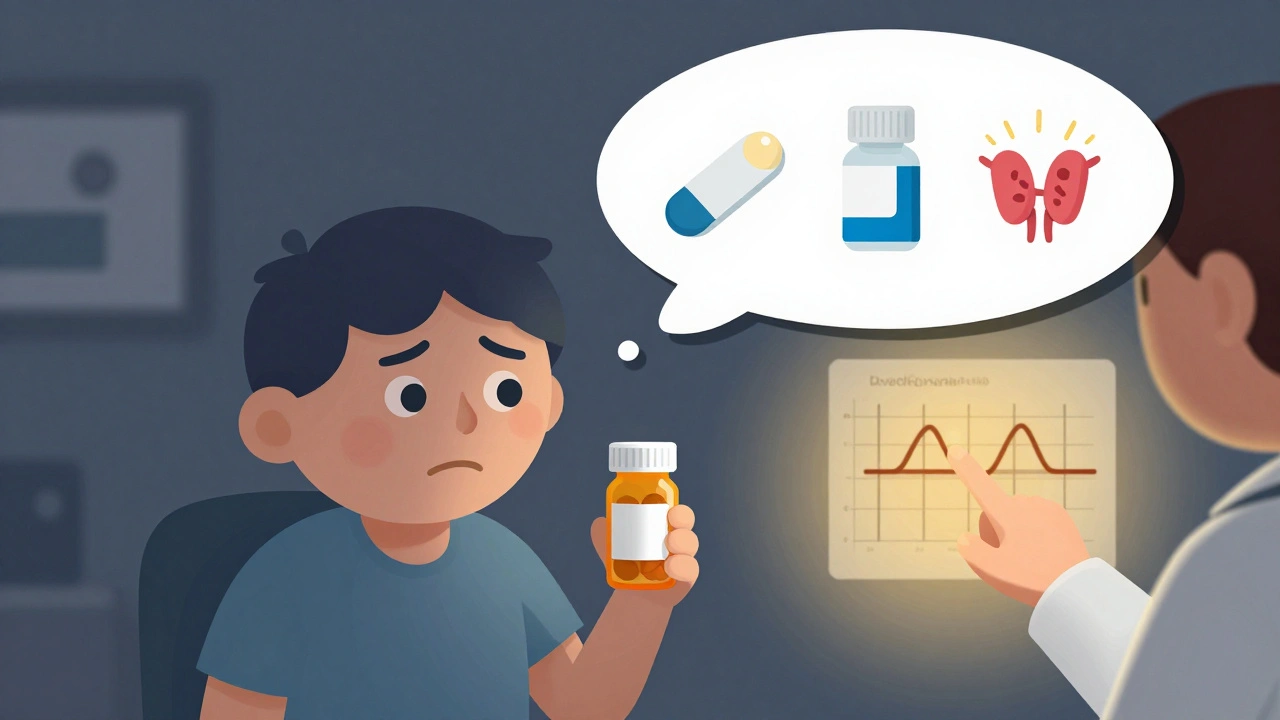
Surveys tell a mixed story. A 2021 Medicare survey found that 68% of seniors on generic heart meds said they felt no difference from the brand. Another 22% reported minor side effects that went away after a few weeks. But 10% said they stopped taking the generic because it didn’t work or made them feel worse.
Online forums are full of stories. On Reddit’s r/pharmacy, users report switching between different generic brands of levothyroxine and finding only one version keeps their TSH levels stable. Pharmacists confirm this: they’ve seen patients who swear one generic works and another doesn’t-even if both are labeled the same.
But here’s the catch: the same patients often don’t realize they’ve been switched. Pharmacists are legally allowed to substitute generics unless the doctor writes “dispense as written.” That happens in less than 3.2% of cases. So a patient might be on a different generic every refill without knowing it.
What do doctors think?
Most doctors trust generics. A 2020 survey found that 87% of physicians have confidence in their effectiveness. But specialists-neurologists, endocrinologists, cardiologists-are more hesitant. Why? Because they see the consequences when things go wrong.
A neurologist told Pharmacy Times: “We’ve seen breakthrough seizures in patients switched between generic versions of lamotrigine.” That’s not a fluke. It’s a pattern. For drugs with narrow therapeutic windows, consistency matters more than cost.
Still, for the vast majority of drugs-antibiotics, statins, diabetes pills, antidepressants-the data is clear. A 2019 study of 3.5 million patients found no difference in outcomes between generics and brands for drugs like amlodipine, glipizide, alendronate, and escitalopram. In fact, for amlodipine, patients on the generic had a 9% lower risk of heart attacks and strokes.
What does the FDA say now?
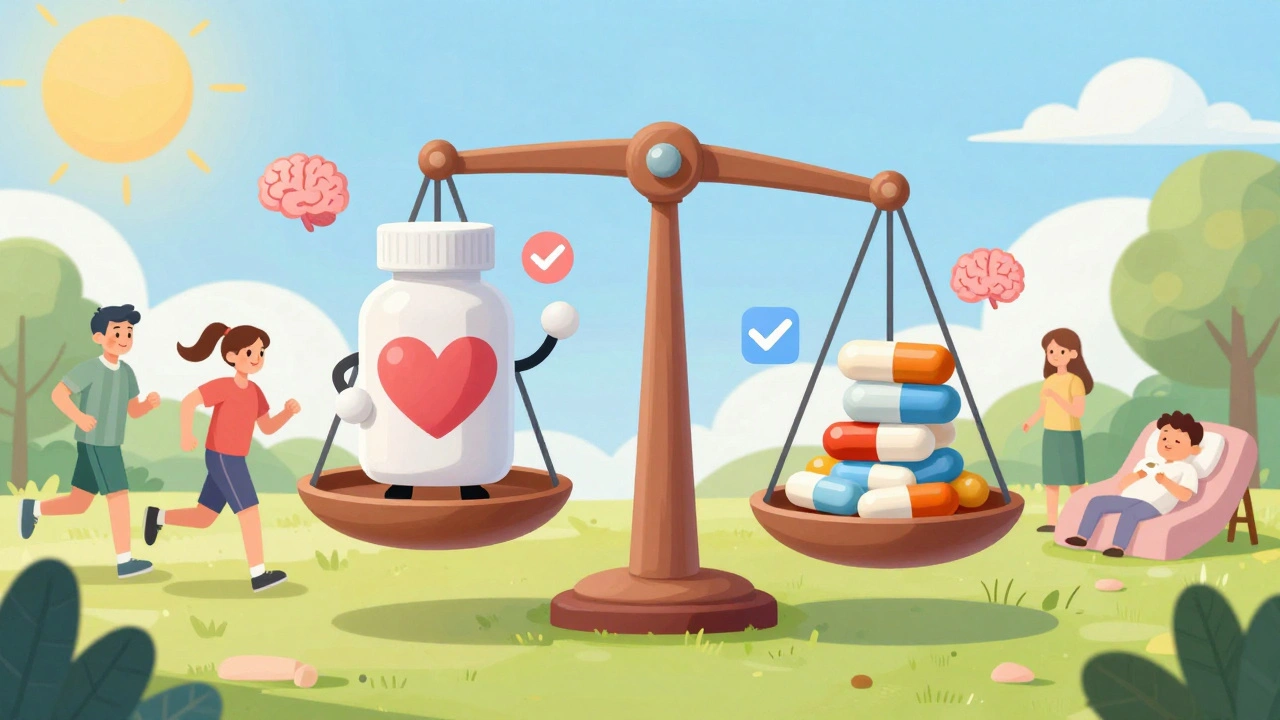
The FDA’s position hasn’t changed: generics must work the same. They’re not second-rate. They’re held to the same standards. But they’re also being more careful with complex drugs.
In 2022, the FDA released draft guidance for testing complex generics-things like inhalers, patches, and long-acting injectables. These aren’t simple pills. Their delivery systems matter. A generic inhaler might have the same active ingredient, but if the particle size or spray pattern is different, it won’t reach the lungs the same way.
That’s why the FDA is requiring more in vivo studies for these drugs by 2025. It’s not because generics are failing-it’s because science is getting better at spotting subtle differences.
When should you stick with the brand?
You don’t need to avoid generics. But you should be smart about it.
- Stick with the brand if you’re on a narrow therapeutic index drug and you’ve been stable on one version. Don’t switch unless your doctor says so.
- Ask your pharmacist if they’re switching your generic between refills. You have the right to know.
- Track your symptoms. If you feel different after a switch-worse sleep, more anxiety, dizziness, tremors-tell your doctor. It might not be in your head.
- Don’t assume all generics are the same. Two generics of the same drug can come from different manufacturers. One might work for you; another might not.
And if cost is the issue? Talk to your doctor. Sometimes, a different brand-name drug-maybe one with a lower copay or a patient assistance program-can be cheaper than a generic you’re reacting to.
Bottom line
Generic drugs save the U.S. healthcare system over $377 billion a year. They’re safe, effective, and essential. For most people, switching to a generic is a smart, cost-saving move with no downside.
But for a small group-people on thyroid meds, seizure drugs, blood thinners, or immunosuppressants-the difference between one generic and another can be real. It’s not about quality control failures. It’s about biology. Our bodies are precise machines. For some drugs, even small changes in how the drug is absorbed can throw off the balance.
The science doesn’t lie. Generics work. But the human body sometimes does. Listen to it. And if something feels off after a switch, don’t ignore it. Talk to your doctor. You’re not imagining it. And you’re not alone.
Are generic drugs as effective as brand-name drugs?
Yes, for the vast majority of drugs and patients. The FDA requires generics to prove they deliver the same active ingredient at the same rate and amount as the brand-name version. Studies involving millions of patients show no meaningful difference in outcomes for drugs like blood pressure medications, diabetes pills, and antidepressants. However, for drugs with a narrow therapeutic index-like levothyroxine, warfarin, or lamotrigine-even small differences in absorption can matter, and some patients report changes when switching.
Why do some people say generics don’t work for them?
Some patients notice changes after switching to a generic, especially with drugs where blood levels must stay very precise. This can happen due to differences in inactive ingredients, how the pill breaks down in the body, or even psychological factors. In rare cases, switching between different generic manufacturers can cause fluctuations in drug levels. For example, patients on levothyroxine often report that only one specific generic brand keeps their thyroid levels stable. It’s not that generics are ineffective-it’s that individual biology responds differently to slight formulation changes.
Can pharmacists switch my generic without telling me?
Yes, unless your doctor writes “dispense as written” on the prescription. Pharmacists are legally allowed to substitute a generic for a brand-name drug in over 96% of cases. Many patients don’t realize they’ve been switched, especially if the pill looks different or the name on the bottle changes. If you notice new side effects or a change in how you feel after a refill, ask your pharmacist if the generic manufacturer changed.
Are there any drugs where generics are not recommended?
The FDA does not ban generics for any drug, but doctors often advise caution with narrow therapeutic index drugs: levothyroxine, warfarin, phenytoin, carbamazepine, cyclosporine, and some antiepileptics. These require very stable blood levels. Switching between generics-or even between different batches-can lead to loss of control. For these, sticking with one manufacturer or using the brand-name version may be safer, especially if you’ve been stable.
How can I find out which generic manufacturer I’m getting?
The name of the manufacturer is printed on the pill bottle or packaging. You can also ask your pharmacist directly. The FDA’s Orange Book lists which generics are rated as therapeutically equivalent to brand-name drugs, but it doesn’t list manufacturers. If you find one generic works best for you, keep the bottle and ask for that specific manufacturer next time. Some pharmacies can special-order a specific generic if you request it.

patrick sui
Let’s be real - bioequivalence thresholds (80-125%) sound scientific, but that’s a 45% swing in absorption. For a drug like warfarin, that’s the difference between a clot and a stroke. FDA standards are baseline, not gold. We’re treating humans like lab rats with Gaussian distributions. We’re not.
I’ve seen patients on the same generic from two different batches with wildly different INRs. It’s not placebo. It’s pharmacokinetic variance. And yeah, the system works for 90% - but the 10%? They’re the ones in the ER.
And don’t get me started on the “inactive ingredients.” Talc, lactose, dyes - all of it can alter dissolution rates. Especially in GI-sensitive folks. This isn’t just chemistry. It’s biology with a side of corporate cost-cutting.
Also, why do we assume all generics are equal? The same molecule, same dose, different manufacturer = different pill. It’s like saying all BMWs are the same because they all have four wheels.
And yes, I’ve had patients swear their levothyroxine only works if it’s the Teva version. No, they’re not crazy. Their TSH levels prove it. The FDA doesn’t track manufacturer-specific outcomes. That’s a systemic blind spot.
PS: 🤔
Declan O Reilly
so i read this whole thing and like… are we just pretending that drugs are magic pills? like, the body isn’t a machine, it’s a living, breathing mess of feedback loops. one person’s ‘bioequivalent’ is another’s ‘i feel like a zombie’.
also why do we always assume the brand name is better? maybe it’s just because it’s more expensive and we’ve been conditioned to think price = quality. like buying a nike shoe vs a no-name sneaker. the laces are the same, but the brand makes you feel like you’re running faster.
also, i think we need to stop calling them ‘generics’. they’re not generic. they’re just… cheaper versions of the same thing. like a knockoff handbag. it holds your stuff, but you know it’s not the same leather.
and if you’re on a narrow index drug? stick with one brand. period. your body remembers the pill. it’s not you being dramatic. it’s your liver being clingy.
also, pharmacists switching without telling you? that’s wild. imagine if your car mechanic swapped your engine without asking. you’d flip out. but for meds? ‘oh it’s still the same drug’.
we need transparency. like, a barcode on the bottle that tells you who made it. and a history. like ‘this pill was made in india, batch #123, tested on 27 people in 2023’.
also, i’m not anti-generic. i’m pro-awareness. 🤷♂️
Conor Forde
Ohhhhh here we go - the FDA’s ‘scientifically proven’ lie wrapped in a lab coat and sold to the public like it’s a miracle cure. Let me guess - the same FDA that let Purdue Pharma turn OxyContin into a national opioid nightmare is now our trusted guardian of pill purity? 🤡
And let’s not forget the 2021 valsartan recall. Nitrosamines? Carcinogens? In generics? But the brand-name? ‘Oh no, we didn’t have that issue.’ Funny how that works, huh? Maybe because they didn’t outsource production to some basement lab in Bangalore.
And don’t even get me started on the ‘68% feel no difference’ survey. That’s not evidence - that’s corporate PR. Most people don’t know what their TSH level is. They just know they feel ‘off’ after switching. And they’re told, ‘It’s all in your head.’
Meanwhile, neurologists are seeing breakthrough seizures. Endocrinologists are watching TSH levels skyrocket. And the FDA? Still saying ‘it’s bioequivalent.’
Let me be clear: generics are not evil. But the system that treats them like interchangeable widgets? That’s a death sentence for some people. And we’re all just scrolling past it while buying our $4 prescriptions like it’s a bargain bin at Walmart.
And the worst part? The people who suffer? They’re too poor to afford the brand. So they suffer silently. Because the system doesn’t care. 💀
Matt Dean
Look, I’m not a doctor, but I’ve read a lot of studies. And the data is crystal clear: generics work. Period. If you’re having issues, it’s either non-compliance, placebo effect, or you’re one of the 0.5% who have a weird metabolic quirk.
Stop romanticizing the brand-name drugs. They’re overpriced because of marketing, not science. The FDA doesn’t play games. If it passed bioequivalence, it’s good. Full stop.
And yes, pharmacists can switch. That’s the law. You want consistency? Ask your doctor to write ‘DAW’ on the script. But don’t blame the system because you’re too lazy to advocate for yourself.
Also, ‘I feel different’ is not medical evidence. That’s anecdotal. The science says otherwise. Get your facts straight before you panic.
And if you’re on levothyroxine and your TSH is stable? Don’t switch. But don’t act like every generic is poison. That’s fearmongering. 💪
Louise Girvan
They’re lying. EVERYTHING is a lie. The FDA, the drug companies, the pharmacists - they’re all in on it. You think they care if you have a seizure? No. They care about the bottom line. Generics are cheaper because they’re made in factories with no oversight. The pills are filled with fillers that cause inflammation. That’s why you get anxiety, brain fog, weight gain. It’s not ‘your body’ - it’s the poison.
And don’t tell me about ‘bioequivalence.’ That’s a joke. The studies are funded by the same companies that make the generics. They pick the volunteers - healthy college kids who don’t have chronic conditions. Of course it looks fine.
They’re testing on people who don’t need the drug. They’re not testing on people who actually take it. That’s the fraud.
And the nitrosamine recall? That was just the tip. There are hundreds of unreported contaminants. They’re in your thyroid meds. Your blood thinners. Your antidepressants. And they’re not telling you. Why? Because if you knew, you’d stop buying them.
Don’t trust anyone. Not your doctor. Not your pharmacist. Not the FDA. Not even this post. They’re all part of the machine.
soorya Raju
Bro, you think this is bad? In India, generics are sold in open-air markets with no labels. People buy them like snacks. One guy took a ‘generic’ for diabetes and ended up in a coma because the pill had no active ingredient. Just sugar and chalk.
And the FDA? They inspect factories? LOL. Most are in China or Bangladesh. The inspectors fly in, get a tour of the ‘clean room’ (which is only clean for the visit), and sign off. The real production? Happens in the back. With untrained workers. No gloves. No masks.
And you think your ‘bioequivalent’ pill is safe? That pill might have been made in a building where the sewage runs next to the production line.
Generics? They’re not medicine. They’re gambling. And you’re the sucker.
And don’t even get me started on the ‘same active ingredient’ lie. The molecule might be the same. But the crystal structure? The coating? The dissolution rate? That’s all different. And your body knows. Your body remembers. And it’s screaming.
Wake up. This isn’t science. It’s capitalism with a stethoscope.
Dennis Jesuyon Balogun
Let me speak as someone who’s worked in African public health for 18 years. We don’t have brand-name drugs. We have generics. And we have no choice. But here’s the thing - when you give a child a generic antimalarial, and they live? That’s not luck. That’s science.
Yes, there are bad batches. Yes, some manufacturers cut corners. But the solution isn’t to fear generics - it’s to demand better regulation, better supply chains, better oversight.
And yes, for narrow therapeutic index drugs, consistency matters. But in places where people die because they can’t afford insulin? We don’t have the luxury of waiting for perfect.
The real issue isn’t generics. It’s inequality. The fact that in the U.S., a diabetic pays $300 for insulin while in Nigeria, it’s $2 - and both are generics.
So yes, generics work. And they save lives. But we need global accountability. Not fear. Not conspiracy. Just justice.
And if you’re in the U.S. and you’re worried about switching? Ask for the manufacturer. It’s your right. Don’t be ashamed. Be informed.
Grant Hurley
so i switched to a generic for my blood pressure med last year and honestly? i didn’t notice a thing. still feel fine. still have my energy. still sleep okay.
but i do get weird when they change the pill shape or color. like, i’ll stare at it for 5 minutes thinking ‘is this the same thing?’ and then i remember - it’s the same molecule. same dose. same everything.
also, i asked my pharmacist once and she said ‘yeah, we got a new batch from Teva this week’ - and i was like ‘cool, thanks for telling me.’ that’s the kind of transparency we need.
and honestly? if i can save $80 a month on my meds? i’m all for it. i’m not rich. i’m just a guy trying to stay alive.
but yeah, if you’re on something like warfarin? yeah, stick with one. don’t mess with it. i get that.
but for most people? it’s fine. don’t panic. 🤙
Lucinda Bresnehan
I’ve been a pharmacist for 22 years, and I’ve seen it all.
Patients come in crying because their generic levothyroxine made them anxious. They swear it’s different. And guess what? It often is. Not because it’s ‘bad’ - because the inactive ingredients change the dissolution rate. One brand uses corn starch. Another uses microcrystalline cellulose. That tiny difference can alter absorption in sensitive people.
I’ve had patients who can only tolerate one specific manufacturer of lamotrigine. I keep their bottle on file. I write ‘Do Not Substitute’ on the script. And I call the doctor if they try to switch it.
And yes - pharmacists can switch. But we don’t have to. If a patient asks for consistency? We can order the same brand. It takes 2 days. And it’s worth it.
Don’t assume your doctor knows what’s on your bottle. Ask. Be your own advocate. You’re not being ‘difficult.’ You’re being smart.
And if you feel off after a switch? Track it. Write down your symptoms. Bring it to your doctor. Don’t let them dismiss you. You’re not imagining it.
Generics are great. But they’re not magic. They’re medicine. And medicine deserves respect.
Kshitij Shah
Bro, you’re treating this like a science class. It’s not. It’s capitalism with a pill bottle.
Brand-name drugs? They spent $2 billion on R&D. Generics? They spent $2 million to reverse-engineer it. And now they’re selling it for $5. Who’s the real villain here?
And don’t tell me ‘it’s safe.’ You think the FDA inspects every factory in India? Nah. They inspect one. The rest? ‘Oh, they’re certified.’ Like a fake diploma from a diploma mill.
But hey - if you want to save $80 a month? Go ahead. But don’t pretend it’s the same. It’s not. It’s a knockoff. And sometimes, knockoffs break.
Also, why do you think the brand-name versions have better packaging? Because they know people are scared. And they’re selling peace of mind. Not medicine.
So yeah. Save money. But don’t be stupid. Know your manufacturer. Keep the bottle. And if you feel weird? Don’t be quiet. Speak up.
And if you’re rich? Buy the brand. You deserve it. If you’re poor? You’re stuck with the gamble. And that’s the real problem.
Shashank Vira
It’s fascinating how we reduce the human body to a mathematical model. ‘Bioequivalence’ - a term so sterile, so clinical, it forgets that we are not test tubes. We are beings shaped by trauma, diet, stress, sleep, microbiome, and ancestry.
A generic may have the same molecular formula as a brand-name drug. But the body doesn’t read formulas. It reads experience. It remembers the pill that made you feel alive. And the one that made you feel hollow.
The FDA doesn’t measure quality of life. It measures AUC and Cmax. But what about the tremor? The insomnia? The emotional numbness? These are not ‘side effects’ - they are signals. And we ignore them at our peril.
Generics are not evil. But the system that treats human biology as a variable to be optimized? That’s the real tragedy.
And when you say ‘most people don’t notice a difference’ - you’re not speaking for the ones who do. The ones who are silent. The ones who stop taking the pill. The ones who die quietly because no one believed them.
We need not more data. We need more humility.
Eric Vlach
Look, I’m not a doctor but I’ve been on generics for 10 years. No issues. No problems. My blood pressure is stable. My cholesterol is down. I feel fine.
People who say they feel different? Maybe they’re just anxious. Or they switched too many times. Or they’re not taking it consistently.
The FDA doesn’t approve junk. If it’s on the shelf, it’s good.
And if you’re worried about the manufacturer? Ask your pharmacist. It’s easy. You don’t need to be a scientist to know what’s in your bottle.
Stop making this into a drama. It’s a pill. It’s not a magic spell. It’s not a conspiracy. It’s medicine.
And if you’re saving $100 a month? That’s money for food. For rent. For your kid’s shoes. Don’t throw that away because you’re scared of a label.
Souvik Datta
Let’s talk about the elephant in the room - we treat medicine like a commodity. But it’s not. It’s a lifeline.
Generics are essential. They make healthcare accessible. But accessibility doesn’t mean indifference. We need to demand better standards - not just for bioequivalence, but for manufacturing transparency.
Every pill should have a traceable origin. Not just the active ingredient. The excipients. The factory. The batch. The inspector. The date.
And if a patient says ‘this generic doesn’t work for me’ - we should listen. Not because it’s ‘in their head’ - but because biology is personal.
Doctors, pharmacists, regulators - we’re all part of the system. But we’re not above it. We’re in it. And we have a duty to protect the vulnerable.
For most drugs? Generics are perfect. For a few? They’re a gamble. And that’s okay - as long as we give people the power to choose. To know. To speak up.
Knowledge is the real generic. And it’s free.
Jack Arscott
Been on generic levothyroxine for 3 years. Switched brands 3 times. Each time, my TSH jumped. I didn’t feel ‘off’ - I felt like I was slowly drowning. Fatigue. Weight gain. Brain fog.
Finally asked my pharmacist - ‘Can you get me the same one?’ She said yes. Took 3 days. Now I’m stable. 😌
So yeah - it’s real. Not placebo. Not ‘in my head.’ Just biology.
And if you’re on a narrow index drug? Don’t be shy. Ask for the same manufacturer. It’s your right. And your health.
Also - 🤝
Walker Alvey
Wow. So much drama over a pill. You people are exhausting.
The FDA approves generics. End of story. If you’re having problems, maybe you’re just weak. Or you don’t know how to take your meds. Or you’re just looking for attention.
Generics save billions. You’re complaining because you’re too lazy to deal with a different pill shape.
Next you’ll be saying your iPhone charger is different because it’s not the Apple one.
Grow up.
Louise Girvan
Walker, you’re the reason people die.
It’s not about ‘weakness.’ It’s about biology. And you don’t get to dismiss people’s suffering because it doesn’t fit your ideology.
Some of us aren’t ‘lazy.’ We’re dying.
And if you think this is ‘attention-seeking’ - you’ve never had your thyroid levels crash because a pharmacist switched your pill without telling you.
Go read the Epilepsia study. Read the valsartan recall. Read the 2023 levetiracetam data.
Then come back and tell me it’s all in our heads.