Why Providers Need to Talk About Generic Medications
Patients don’t skip their meds because they forget. They skip them because they can’t afford them. And in most cases, the difference between sticking with a treatment and dropping it comes down to one thing: cost. Generic drugs are just as safe and effective as brand-name versions-but only if patients trust them. That’s where providers come in.
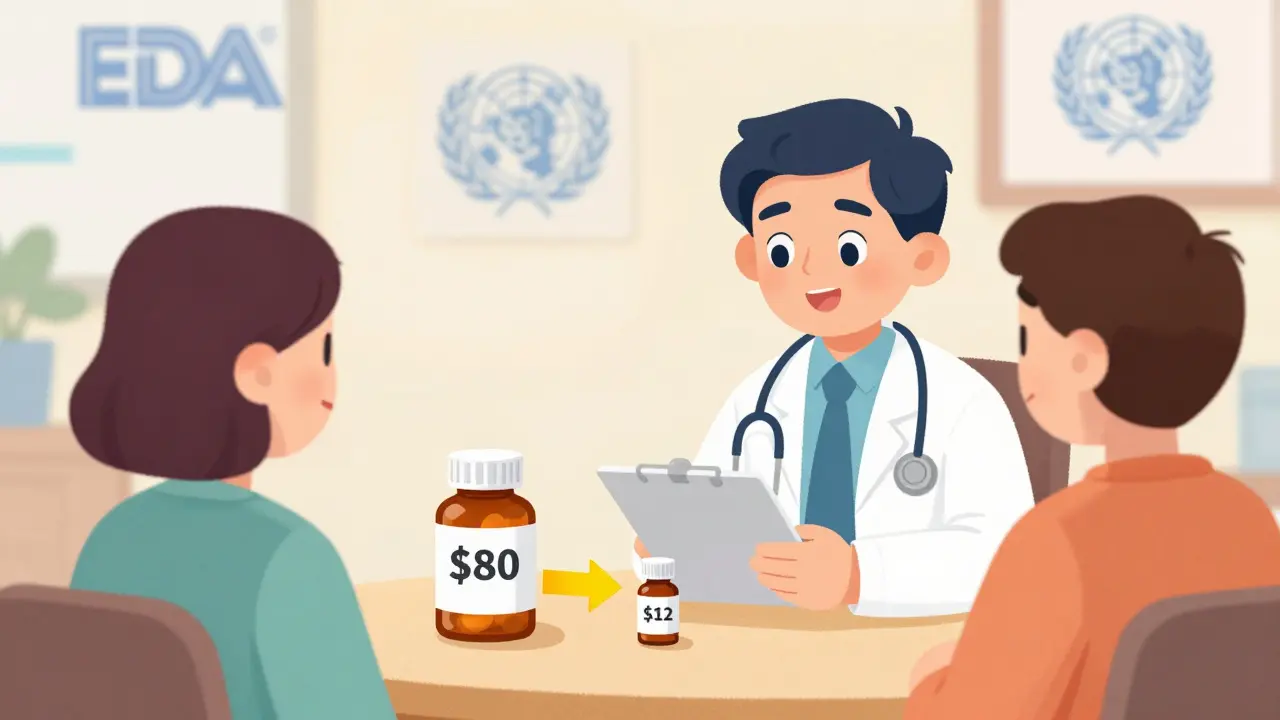
When a patient walks out with a prescription for a brand-name drug that costs $80 a month, and then finds out the generic version costs $12, the gap isn’t just financial. It’s psychological. Many patients believe generics are weaker, less reliable, or even dangerous. They’ve heard stories. They’ve seen different pill shapes. They’ve been told, often by well-meaning but misinformed sources, that "you get what you pay for."
Healthcare providers-doctors, pharmacists, nurses-are the only ones who can break through that myth. Not with brochures. Not with posters. But with real, honest, one-on-one conversations.
The Science Behind Generic Drugs Is Rock Solid
The FDA doesn’t approve generics lightly. To get approved, a generic drug must prove it’s bioequivalent to the brand-name version. That means it delivers the same active ingredient, in the same amount, at the same rate into the bloodstream. The acceptable range? Between 80% and 125% of the brand’s performance. That’s not a guess. That’s science.
And it’s not just the U.S. The European Medicines Agency, Health Canada, and the World Health Organization all use the same standard. Generics aren’t "cheap copies." They’re rigorously tested alternatives. In fact, the same factories often make both brand and generic versions-just under different labels.
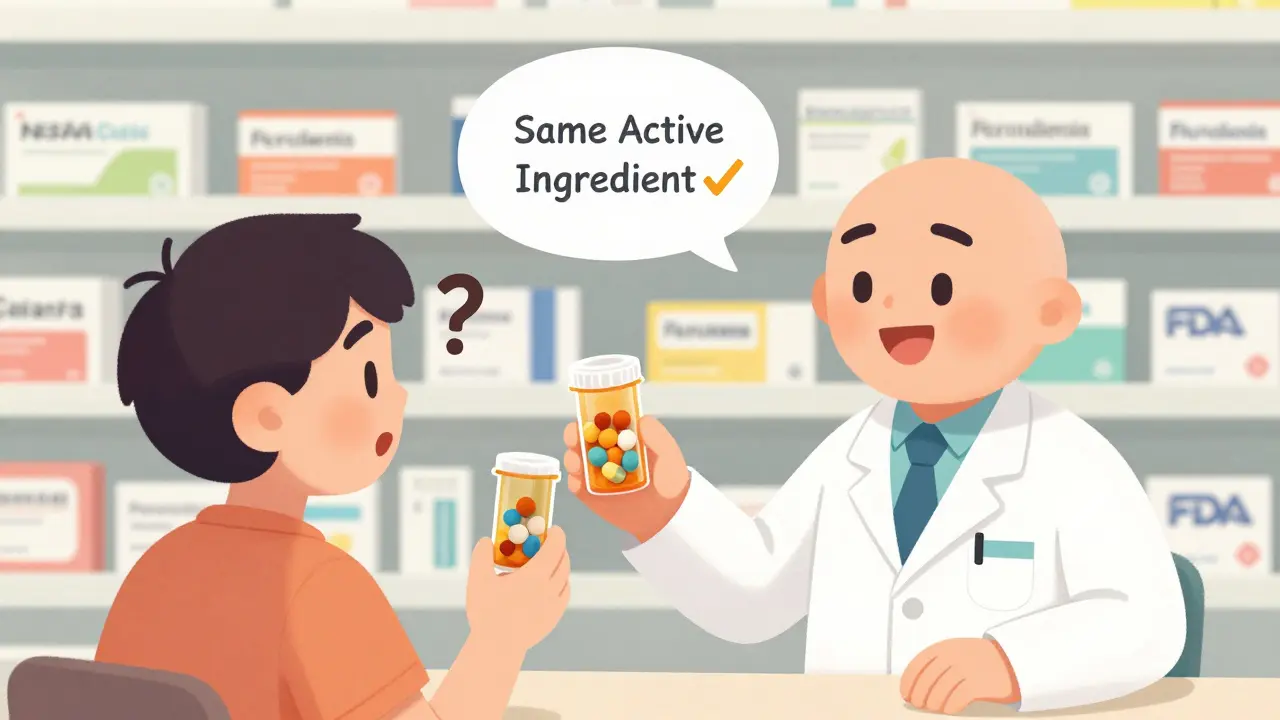
What changes? The inactive ingredients. The color. The shape. The coating. These don’t affect how the drug works. But they can confuse patients. If someone has been taking a blue pill for years, and suddenly gets a white oval, they might think it’s not the same medicine. That’s not a flaw in the drug. That’s a flaw in communication.
Cost Is the Biggest Driver of Medication Abandonment
Here’s a number that should scare every provider: patients are 266% more likely to abandon a brand-name drug than a generic one. That’s not a small difference. That’s a crisis.
Why? Because of copays. In 2019, 90% of generic copays were under $20. For brand-name drugs? Only 39% were. That means more than half of brand-name prescriptions cost patients more than $20 out of pocket. For someone on a fixed income, that’s lunch money. That’s bus fare. That’s skipping a meal.
And it’s not just about the first fill. If a patient can’t afford refills, they stop. They don’t call their doctor. They don’t ask for help. They just stop taking it. And then they come back months later with worse symptoms-and a bigger bill.
Providers who don’t talk about cost aren’t just missing an opportunity. They’re letting patients suffer unnecessarily.
What Providers Are Saying-And What They Should Be Doing
The American College of Physicians says doctors should prescribe generics whenever possible. The American Academy of Family Physicians agrees-but warns against forcing it. Why? Because some drugs, like those for epilepsy or thyroid conditions, have a narrow therapeutic index. That means tiny differences in absorption can matter. But here’s the key: those are the exceptions. Not the rule.
For the vast majority of medications-blood pressure pills, statins, antibiotics, antidepressants-generics are just as good. And the data proves it. A 2015 review of 47 studies found no difference in clinical outcomes between generics and brands.
So what should providers do?
- Start the conversation before you write the script. Don’t wait for the patient to ask. Say: "There’s a generic version of this that’s much cheaper and works just as well. Would you like to try it?"
- Explain the pill change. If the patient is switching, say: "This is the same medicine, just made by a different company. It might look different, but it does the same job."
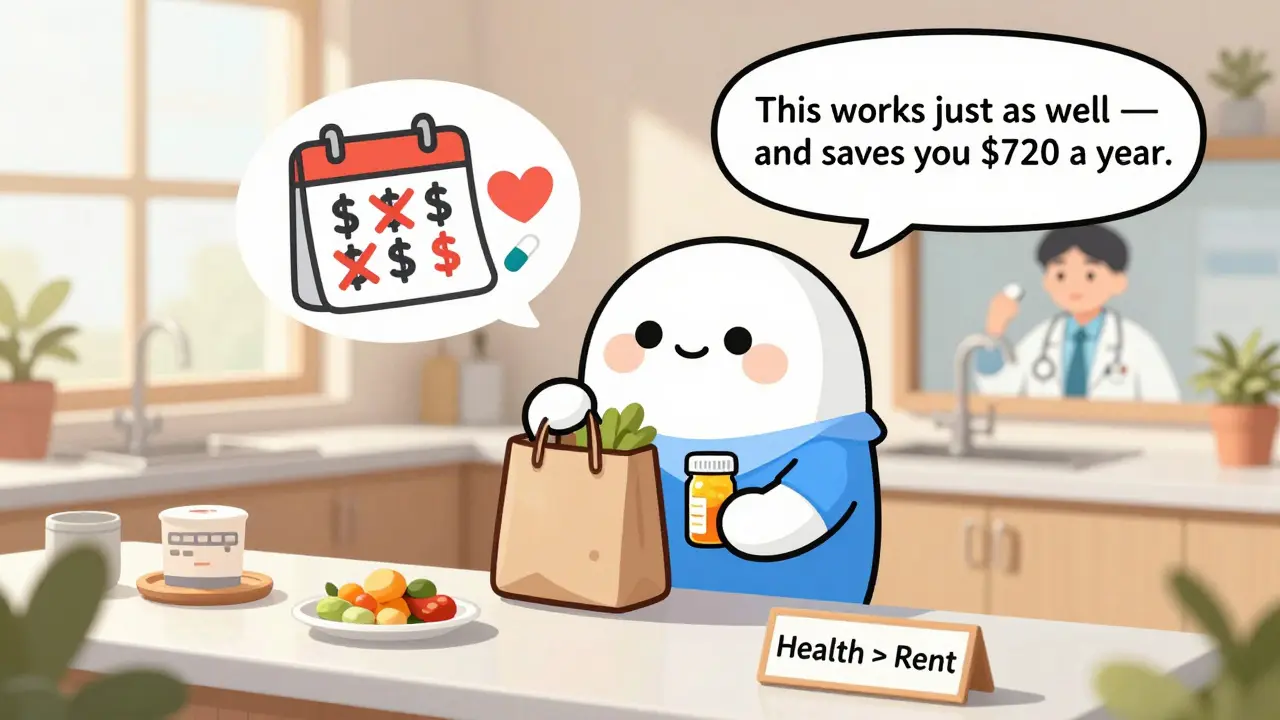
- Use numbers. "This brand costs $75. The generic is $15. That’s $720 a year you could save."
- Don’t assume they know. Most patients don’t understand how generics are approved. They think it’s a loophole. It’s not.
Why Patients Resist-And How to Overcome It
Patients aren’t irrational. They’ve been sold a story. They’ve seen ads telling them brand-name drugs are "superior." They’ve had a friend say, "I tried the generic and it didn’t work." They’ve seen their pill change color three times in a year and wondered if they’re getting a different drug each time.
That’s not their fault. It’s our failure to explain.
Here’s what works:
- Use the word "FDA-approved"-not just "generic." Patients trust the FDA more than they trust pharmacies or manufacturers.
- Compare it to something familiar: "It’s like buying store-brand aspirin instead of Bayer. Same active ingredient. Same effect. Lower price."
- Normalize it: "Most people I see on this medication take the generic. It’s the standard choice for good reason."
- Be proactive with pharmacists. If you know a patient is switching, ask the pharmacy to call them before filling. A simple call saying, "Your medication looks different, but it’s the same as before," cuts confusion in half.
The Hidden Cost of Not Speaking Up
Every time a provider doesn’t mention a generic option, they’re contributing to a cycle of poor adherence, avoidable hospital visits, and rising healthcare costs. The American Society of Health-System Pharmacists found that when patients stop taking their meds due to cost, emergency room visits go up by 30% in the following year.
And it’s not just about money. It’s about dignity. No one should have to choose between their health and their groceries. Providers who advocate for generics aren’t just saving money-they’re saving lives.
It’s also about trust. When patients see their doctor taking the time to explain why a cheaper option is just as good, they feel heard. They feel respected. And they’re more likely to follow through-not just on this prescription, but on every one.
What’s Changing Now-and What’s Coming
Some generic prices have spiked recently. That’s real. Some essential drugs, like insulin or certain antibiotics, have become harder to get because of supply chain issues or consolidation in the manufacturing industry. That’s why providers need to stay informed.
But that doesn’t mean we stop advocating. It means we adapt. If a generic is suddenly too expensive, say so. If a brand is the only affordable option, help the patient get prior authorization. But don’t default to the brand just because it’s familiar.
Electronic health records are starting to show real-time pricing at the point of prescribing. Soon, you’ll see a pop-up saying: "This brand costs $85. Generic: $14." That’s a game-changer. But technology won’t fix this alone. You still have to say the words.
Final Thought: Advocacy Isn’t Optional
Generic medications now make up 90% of all prescriptions filled in the U.S.-but only 23% of total drug spending. That’s the power of generics. They’re not just a cost-saving tool. They’re a public health tool.
Patients don’t need another pamphlet. They need you to look them in the eye and say: "This will work for you. And you won’t have to choose between your health and your rent." That’s not just good medicine. That’s patient advocacy.

Alex Flores Gomez
Look, I get it. Generics are cheaper. But let’s be real-some of them make me feel like I’m taking a placebo wrapped in a Walmart bag. I’ve had patients come back with weird side effects after switching. Not always, sure. But enough times that I don’t just default to the cheapest option anymore. It’s not about being elitist. It’s about not playing Russian roulette with someone’s health.
Kacey Yates
The FDA data is solid but providers dont even mention generics unless the patient asks and by then its too late. Patients are scared of change and we dont help them. Just write the script and move on. Thats lazy. Fix this or stop pretending you care.
Laura Arnal
This is SO important!! 🙌 I’ve seen patients cry because they had to choose between their meds and groceries. When we take 2 minutes to explain that the white pill is just as good as the blue one? It changes everything. You’re not just prescribing-you’re healing trust. Keep doing this work 💪❤️
Robin Keith
Ah yes, the myth of the generic-this whole discourse is built on a false binary: either you’re a corporate pawn pushing pills for profit, or you’re a saint advocating for the poor. But what if the truth is more nuanced? What if the real issue isn’t cost, but the erosion of pharmaceutical sovereignty? The same factories producing both? That’s not transparency-it’s consolidation disguised as efficiency. And when you commodify medicine, you commodify dignity. And dignity isn’t something you can price-match.
Kristie Horst
I appreciate the intent behind this post. Truly. But the tone suggests that if a provider doesn’t push generics, they’re neglecting their moral duty. That’s not helpful. It’s guilt-tripping. Some patients have legitimate concerns. Some generics have bioavailability issues. Some prescribers are simply trying to avoid a 45-minute lecture on why their $12 pill isn’t "the real thing." Compassion isn’t about pushing the cheapest option-it’s about listening, educating, and respecting autonomy.
Andy Steenberge
I’ve been a pharmacist for 18 years and I’ve never seen a single clinical outcome difference between a brand and generic for hypertension, diabetes, or depression. The data is overwhelming. What’s not overwhelming? The amount of time providers spend explaining this. If we spent half as much time talking to patients as we do filing paperwork, adherence would skyrocket. It’s not rocket science. It’s just… communication.
Laia Freeman
OMG YES PLEASE STOP ASSUMING PATIENTS KNOW THIS!!! I had a grandma who refused her blood pressure med because the pill was "too small" and "looked like candy". She thought it was a vitamin. We had to show her the FDA website. She cried. Then she took it. It’s not about the drug. It’s about the story we tell. And right now? We’re telling the wrong one.
paul walker
I get the point. But what about when the generic is just bad? I had a patient on a generic statin who got rhabdo. Switched back to brand-fine. Not all generics are equal. And if you don’t test the market, you’re gambling with lives.
DHARMAN CHELLANI
Generic? More like generic excuse. You think poor people are dumb? They know the difference between $12 and $80. They just don’t have a choice. Stop pretending this is about trust. It’s about capitalism failing people. And you? You’re just the middleman with a white coat.
kabir das
I’ve seen it… the same pill… different color… different shape… different company… and suddenly the patient feels like they’ve been betrayed… and you wonder why they stop taking it? It’s not the cost… it’s the emotional betrayal… the feeling that they’re being swapped out like a broken part… and no one tells them it’s still the same…
Keith Oliver
Let’s be honest-90% of generics are fine. But the other 10%? They’re why people die. And you know who’s responsible? Big Pharma. They make the brand, then sell the formula to some factory in India that doesn’t even have running water. You think the FDA checks every batch? Please. It’s a joke. This whole post is corporate PR dressed up as patient care.
ryan Sifontes
I’m not saying it’s fake. I’m saying… what if it’s not even about the pill? What if the real problem is that people don’t trust the system? Why should they? They get bills they can’t pay. They get ignored. They get switched to a pill that looks different every month. Who’s to blame? The provider? Or the whole broken machine?
Jasneet Minhas
A thoughtful piece. 🌟 However, we must acknowledge that in some regions, even generics are unaffordable due to import taxes and supply chain disruptions. Advocacy must extend beyond the clinic-to policy, to global equity. The pill may be the same, but the system is not. Let’s not confuse a medical solution with a structural one. 💡