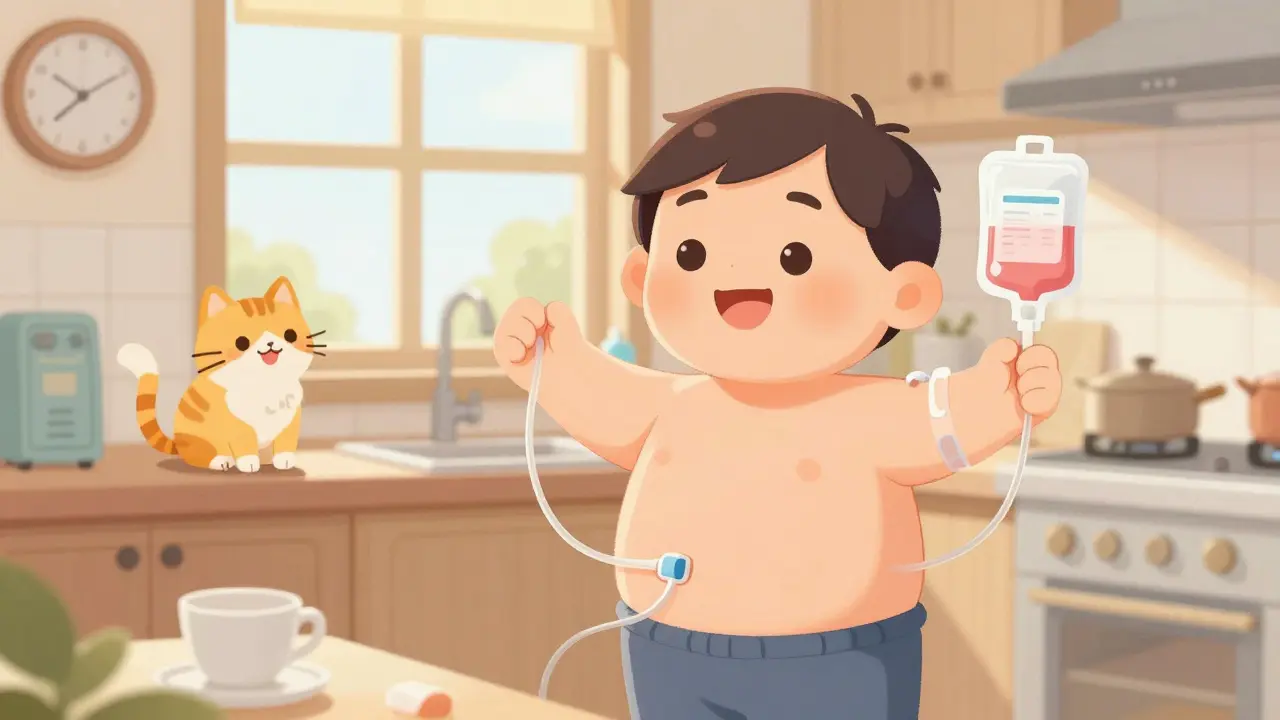
When your kidneys fail, you don’t just need treatment-you need a lifeline. That’s where dialysis comes in. Two main types exist: hemodialysis and peritoneal dialysis. Both do the same job-cleaning your blood when your kidneys can’t-but they do it in completely different ways. Choosing between them isn’t about which is better overall. It’s about which fits your life, your body, and your goals.
How Hemodialysis Works
How Peritoneal Dialysis Works
Peritoneal dialysis uses your own belly lining-the peritoneum-as a natural filter. A soft tube called a Tenckhoff catheter is placed in your abdomen during a minor surgery. After a healing period of 10-14 days, you start filling your belly with dialysis fluid. This fluid sits for 4-6 hours, pulling out waste and extra fluid through your peritoneal membrane. Then you drain it out. You repeat this process 3 to 5 times a day. That’s Continuous Ambulatory Peritoneal Dialysis (CAPD).
Or, if you prefer, you can use a machine called a cycler while you sleep. That’s Automated Peritoneal Dialysis (APD). The machine does the exchanges automatically, usually over 8-10 hours at night. You wake up with a clean abdomen and go about your day without any tubes or bags hanging around.
Clearance: Speed vs. Steadiness
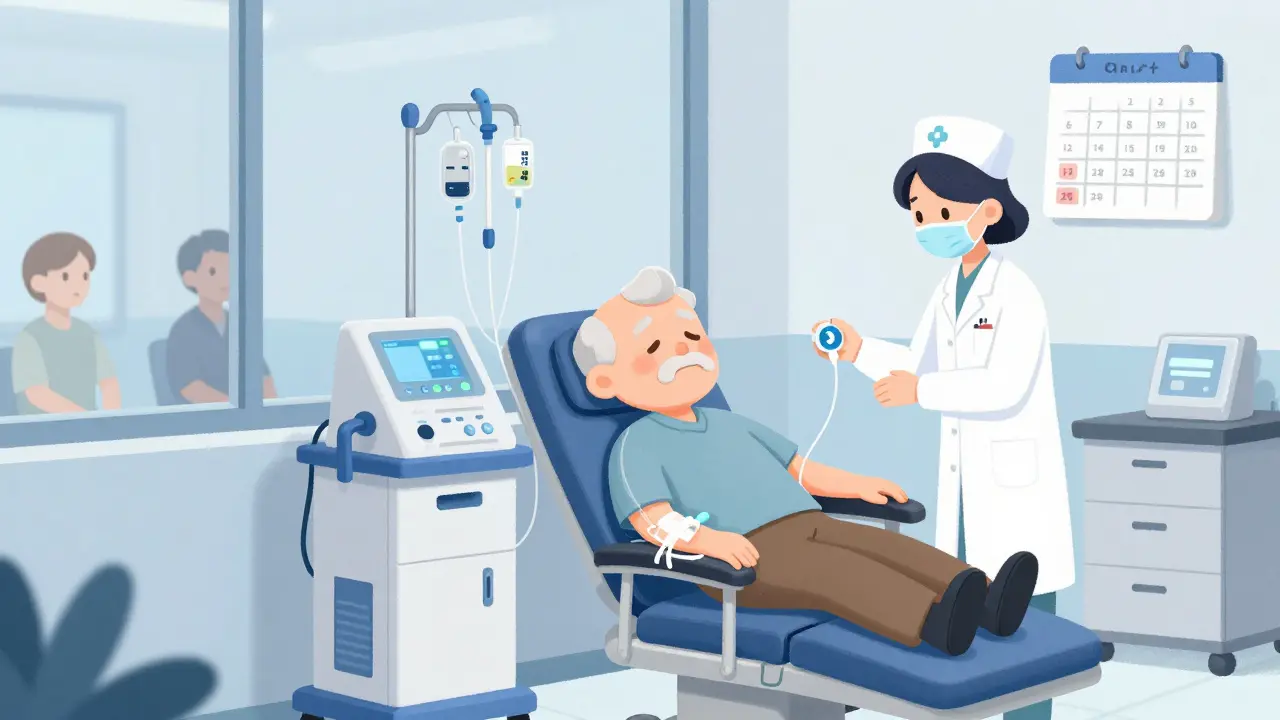
Hemodialysis clears toxins fast. In a single 4-hour session, it removes a lot of urea, potassium, and fluid all at once. That’s measured as a Kt/V of 1.2-1.4 per session. But because it’s done only three times a week, waste builds up between sessions. You might feel bloated, tired, or shaky before your next treatment.
Peritoneal dialysis doesn’t clear as much at once, but it works all day, every day. The weekly Kt/V target is 1.7-2.1. Because it’s continuous, your blood chemistry stays more stable. Studies show PD patients have fewer spikes in potassium and less fluid overload between treatments. This means less stress on your heart and blood vessels.
Impact on Blood Pressure and Heart Health
One of the biggest advantages of peritoneal dialysis is how gently it treats your body. A 2023 study from the First People’s Hospital of Tonglu County followed 151 patients-74 on hemodialysis and 77 on peritoneal dialysis. The PD group had significantly lower systolic and diastolic blood pressure after treatment. Their heart rate stayed steadier. Their levels of intact parathyroid hormone (iPTH), a marker for bone and mineral problems, dropped more than in the HD group.
Hemodialysis, by contrast, pulls fluid and waste out quickly. That sudden shift can cause low blood pressure during treatment. Many patients feel dizzy, nauseated, or even faint. Over time, this stress contributes to heart damage. In fact, cardiovascular disease is the leading cause of death among hemodialysis patients.
Who Is a Better Candidate for Each?
Peritoneal dialysis works best for people who are medically stable, have good manual dexterity, and want to avoid frequent clinic visits. It’s often recommended for younger patients, those with mild to moderate heart problems, and people who value independence. But it’s not for everyone. If you’ve had major abdominal surgery, have severe obesity (BMI over 35), or can’t handle sterile technique, PD can be risky. Infection-specifically peritonitis-is the biggest concern. Rates are 0.3 to 0.7 episodes per patient per year, and each one can be serious.
Hemodialysis is often chosen for older patients, those with unstable blood pressure, or people with very advanced kidney failure. It’s also the default option in places where home dialysis infrastructure is weak. But it requires reliable vascular access. Most people get an arteriovenous (AV) fistula-a connection between an artery and vein in the arm. It takes 6-8 weeks to mature. If that’s not possible, a graft or central line is used, but those carry higher infection and clotting risks.
Quality of Life: Flexibility vs. Routine
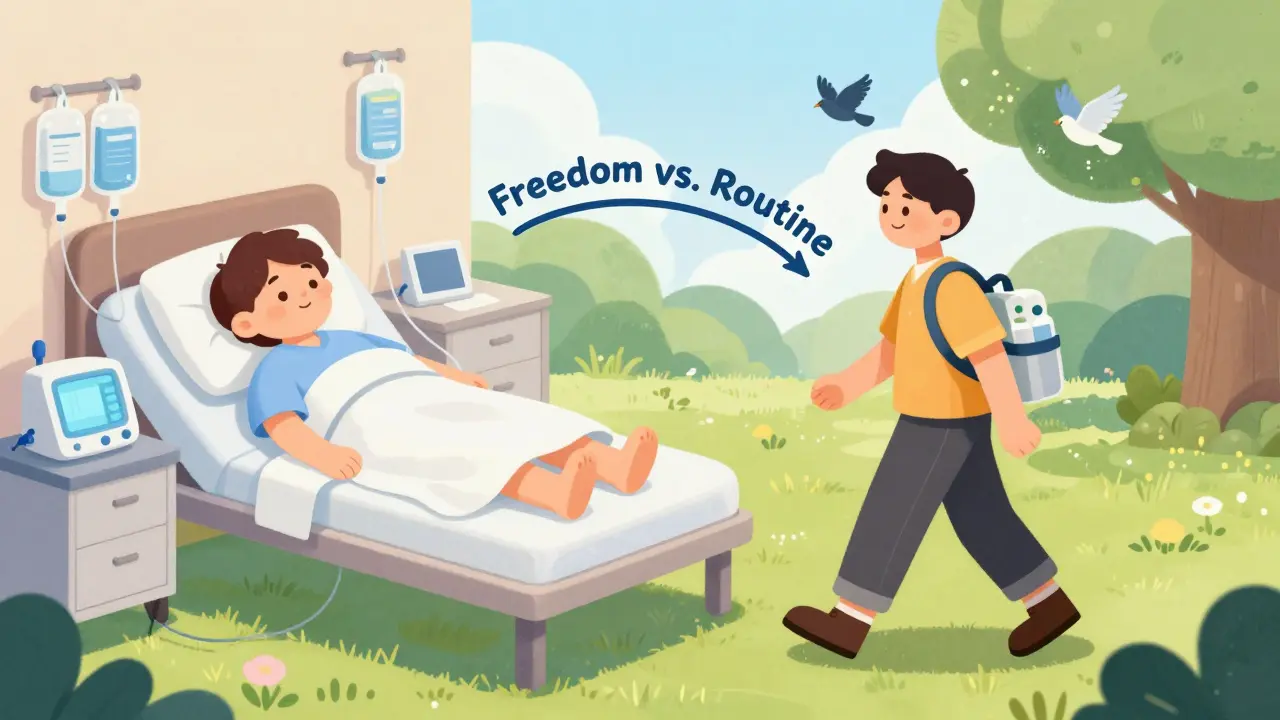
If you hate schedules, peritoneal dialysis wins. You can do exchanges at home, at work, or even while traveling. Many patients say they feel more in control. A 2022 National Kidney Foundation survey found 68% of PD users were satisfied with their treatment flexibility. Only 32% of HD users felt the same.
But PD comes with a steep learning curve. You need to be trained for 10-14 days on how to connect lines, avoid contamination, and recognize signs of infection. You’re responsible for your own care. Some patients find that overwhelming. Reddit users on r/kidneydisease reported that 78% of PD users felt the catheter was a constant reminder of their illness. And 65% worried about peritonitis.
Hemodialysis patients often say they feel wiped out for hours after treatment. Ninety-seven percent of commenters on Reddit complained about rigid clinic schedules. You’re tied to a machine three times a week, usually for 3-5 hours. Missing a session isn’t an option.
Cost and Accessibility
Peritoneal dialysis is cheaper per patient-year. The Journal of Peritoneal Therapy and Clinical Practice (2023) found PD offers better value for money. It doesn’t require expensive machines during treatment, and it reduces hospital visits. But the upfront cost of catheter placement and training can be high.
Hemodialysis dominates the market-70% of U.S. dialysis patients use it. Why? Because clinics are everywhere, and doctors are more familiar with it. But that’s changing. The Centers for Medicare & Medicaid Services (CMS) now incentivizes home dialysis. By 2025, they want 80% of new patients to be educated on home dialysis or transplant options.
Geographic differences tell a story too. In Hong Kong, 77% of dialysis patients use PD. In the U.K., it’s 22%. In the U.S., it’s just 12%. That’s not because PD is less effective. It’s because training, infrastructure, and reimbursement policies favor hemodialysis.
What’s Changing in 2025?
Technology is making PD better. New dialysis fluids like icodextrin allow longer dwell times without damaging the peritoneal membrane. Glucose-sparing regimens reduce the risk of weight gain and diabetes complications. The American Journal of Kidney Diseases predicts PD use in the U.S. will rise to 18-22% by 2027.
But barriers remain. Only 34% of U.S. nephrology fellows get proper PD training. Many doctors still believe PD is “less effective”-even though studies show comparable long-term survival rates. The truth? Neither modality is superior in survival. But PD gives you better blood pressure control, less strain on your heart, and more freedom.
Real Talk: What Patients Say
One patient on Reddit wrote: “I did HD for two years. I hated being tied to a machine. I started PD and felt like I got my life back.” Another said: “I’m scared to do the exchanges myself. What if I mess up and get an infection?”
There’s no perfect choice. But there is a right choice-for you.
If you’re active, independent, and want to avoid frequent hospital visits, PD might be your best bet. If you’re frail, have heart issues, or don’t feel confident managing your own care, HD might be safer. Talk to your nephrologist-not just about numbers, but about your life.
And remember: dialysis isn’t the end. It’s a tool. The goal isn’t just to survive. It’s to live.
Which dialysis is safer: hemodialysis or peritoneal dialysis?
Safety depends on your health and lifestyle. Peritoneal dialysis is safer for your heart and blood pressure, with fewer episodes of low blood pressure during treatment. But it carries a risk of peritonitis, an abdominal infection that can be serious. Hemodialysis has risks tied to vascular access-like clotting, infection, or poor blood flow. Neither is universally safer. The best choice depends on your body, your ability to manage care, and your medical history.
Can I switch from hemodialysis to peritoneal dialysis?
Yes, many patients switch, especially if they’re struggling with the schedule or side effects of hemodialysis. But switching requires evaluation. Your peritoneal membrane must be healthy enough to work as a filter. If you’ve had major abdominal surgeries or infections, PD may not be possible. Your care team will check your anatomy, infection history, and ability to perform exchanges before approving the switch.
How long does it take to start peritoneal dialysis after catheter placement?
You typically wait 10-14 days after the catheter is placed before starting peritoneal dialysis. This gives your body time to heal and reduces the risk of leakage or infection. During this time, you’ll undergo training on how to do exchanges, handle equipment, and recognize signs of trouble. Some centers start with a few exchanges during this healing period under supervision.
Is peritoneal dialysis better for preserving kidney function?
Yes. Multiple studies, including one from the First People’s Hospital of Tonglu County (2023), show that peritoneal dialysis helps preserve residual kidney function longer than hemodialysis. Because PD removes waste more gently and continuously, it puts less stress on the remaining kidney tissue. This can delay the need for higher dialysis doses and improve overall outcomes.
Does hemodialysis shorten your life compared to peritoneal dialysis?
No, long-term survival rates are similar between the two. A 2023 analysis in the Journal of Peritoneal Therapy and Clinical Practice found no consistent survival advantage for either modality in the general ESRD population. However, PD may lead to better quality of life, fewer hospitalizations, and less cardiovascular stress-factors that can indirectly improve longevity. The key is matching the treatment to your individual needs, not assuming one is inherently longer-lasting.
Can I travel with peritoneal dialysis?
Yes, and many patients do. For CAPD, you can carry dialysis fluid in small bags and do exchanges in clean hotel rooms, restrooms, or even at a friend’s house. For APD, portable cyclers are available and can run on battery power. You’ll need to plan ahead-pack extra supplies, know where to get fluids locally, and have a backup plan in case of power outages or equipment issues. Most dialysis centers can help coordinate supplies if you’re traveling internationally.
What are the biggest downsides of peritoneal dialysis?
The biggest downsides are the risk of peritonitis (abdominal infection), the need for daily self-care, and the constant presence of the catheter. You must follow strict sterile technique every time you exchange fluid. If you have arthritis, tremors, or poor eyesight, this can be very hard. Some patients also report feeling bloated or uncomfortable with fluid in their belly. And unlike hemodialysis, there’s no medical team monitoring you during treatment-you’re on your own.
How often do I need to go to the clinic for peritoneal dialysis?
You typically visit your dialysis center once a month for lab tests, catheter checks, and training reviews. Some patients go every 2-3 weeks in the beginning. After that, as long as your blood work is stable and you’re not having infections, monthly visits are common. This is far less than hemodialysis, where you go three times a week. But you’re still expected to call your team if you have fever, cloudy fluid, or pain-signs of possible infection.

Fabio Raphael
Man, I never realized how much the heart takes a beating with hemodialysis until I read this. My uncle did HD for 5 years and always came home looking like he’d been hit by a truck. The way PD keeps things steady? That’s the kind of gentle care people deserve.
Amy Lesleighter (Wales)
pd is freedom but also a full time job. i did it for 2 years. the catheter never leaves your mind. you check it before you pee, before you sleep, before you even think about going out. its not glamorous but it kept me alive. no regrets.
Becky Baker
Why are we even talking about this like it’s a choice? In the US, HD is the default because it’s what the system was built for. PD is cheaper, better for your heart, and lets you live-but hospitals and insurance make it hard. It’s not about what’s better. It’s about what’s profitable.
Natasha Sandra
So many people think dialysis is the end… but it’s really just the start of a new kind of life 😊 I did PD for 3 years and traveled to 7 countries with my fluid bags. Life doesn’t stop. You just adapt 💪❤️
Erwin Asilom
The data on residual kidney function preservation with peritoneal dialysis is consistent across multiple cohorts. The continuous nature of toxin removal reduces hemodynamic stress, which in turn slows the decline of native nephron function. This is not anecdotal-it’s physiologically grounded.
Sumler Luu
I respect that some people need HD. But if you’re young, mobile, and have support? PD gives you back control. Just don’t go into it thinking it’s easy. You need discipline. And you need to talk to someone who’s been there-not just a doctor.
sakshi nagpal
In India, PD is rare because most people can't afford the training or the supplies. But I know a nurse who did it at home for her father-clean hands, sterile gloves, no fancy machines. It worked. Sometimes the best care is the simplest. We need to stop assuming PD is only for the wealthy.
Sandeep Jain
my bro did hd for 4 years then switched to pd. he said the first week was hell but after that… he slept better, ate better, stopped feeling like a zombie. the catheter? yeah its weird. but its better than the machine.
Steven Destiny
Stop romanticizing PD. Yes, it’s flexible-but peritonitis doesn’t care if you’re ‘in control.’ I’ve seen people die from a single infection because they missed a step. HD is brutal, yes. But when you’re in the chair, trained nurses are watching you. PD? You’re alone. And if you mess up? You might not wake up. Don’t sell this like it’s a wellness trend. It’s life or death every single day.