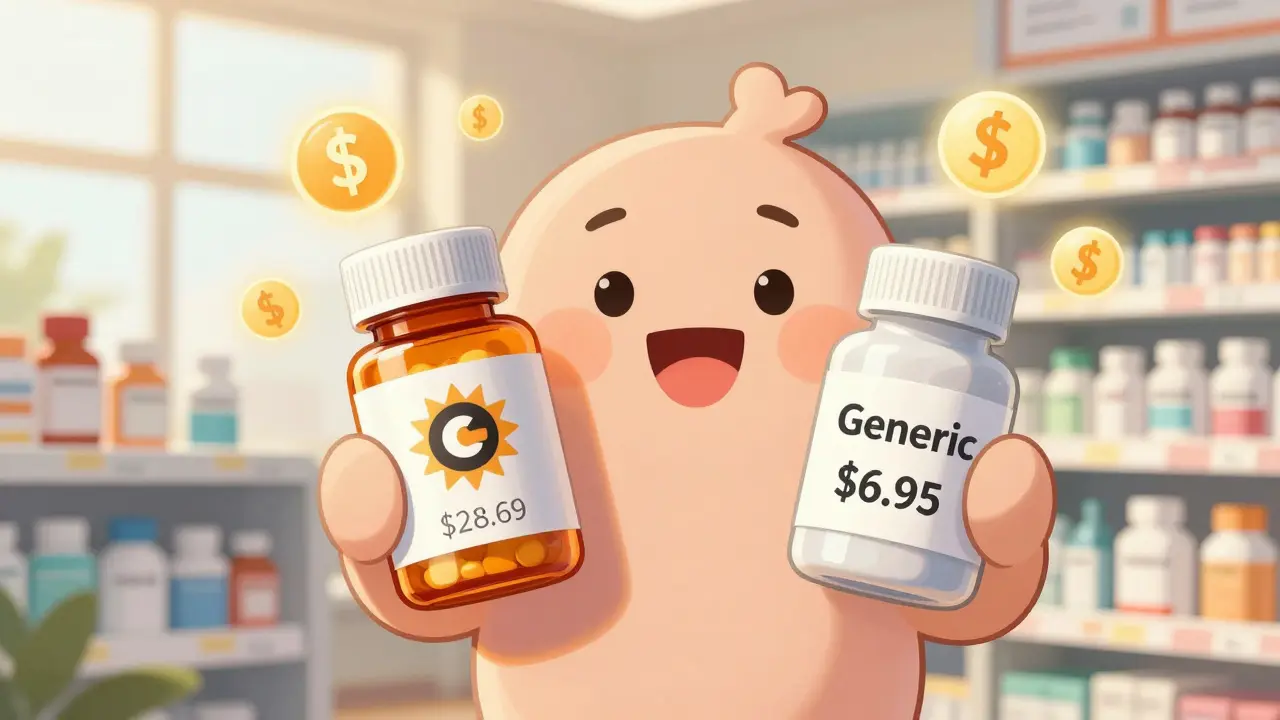
When you pick up a prescription, do you ever wonder why two pills that do the exact same thing cost so differently? One might be $30. The other, $7. They have the same active ingredient. Same dose. Same effect. The only real difference? One has a fancy logo on it. That’s the gap between brand-name drugs and generics-and it’s not just about branding. It’s about billions in savings, hidden patterns in pricing, and a system that works for patients… if you know how to use it.
What Exactly Is a Generic Drug?
A generic drug isn’t a cheaper copy. It’s not a knockoff. It’s the exact same medicine, approved by the FDA to work identically to the brand-name version. Same active ingredient. Same strength. Same way it’s taken-pill, injection, cream. Same safety profile. The only differences are in the inactive ingredients (like fillers or dyes) and the packaging. The FDA requires generics to be bioequivalent, meaning they deliver the same amount of medicine into your bloodstream at the same rate as the brand. In over 99% of cases, they work just as well. The system that made this possible started in 1984 with the Hatch-Waxman Act. Before that, generic manufacturers had to repeat expensive clinical trials just to prove their drug worked. The law changed that. Instead, they could prove bioequivalence-saving time, money, and ultimately, billions for patients. Today, there are more than 16,000 generic drugs available in the U.S. That’s nearly every brand-name drug you’ve ever been prescribed, now available at a fraction of the cost.The Real Cost Difference: Numbers That Matter
Let’s cut through the noise. Here’s what the data actually shows:- In 2024, Americans filled 3.9 billion generic prescriptions.
- They filled just 435 million brand-name prescriptions.
- Generics made up 90% of all prescriptions filled.
- Yet, they accounted for only 12% of total prescription drug spending.
Biosimilars: The Next Wave of Savings
Biosimilars are the generic version of biologic drugs-complex medicines made from living cells, like those used for cancer, autoimmune diseases, and rheumatoid arthritis. These used to be prohibitively expensive. A single dose of a brand-name biologic could cost over $10,000 a year. Now, biosimilars are changing that. Since they entered the market, they’ve saved the U.S. healthcare system $56.2 billion. In 2024, that year alone, they saved $20.2 billion. One example: Stelara, a drug for Crohn’s disease and psoriasis, had nine biosimilars approved by mid-2025. Prices dropped as much as 90% compared to the original. Suddenly, thousands of patients who couldn’t afford treatment could access it. Oncology biosimilars have cut the growth rate of cancer drug spending nearly in half since 2019. In 2020, they saved $18 billion on cancer medicines alone. Yet, even with these wins, biosimilars still make up less than 30% of the volume in markets where they’re available. That means there’s still massive room for savings-if patients and doctors know to ask for them.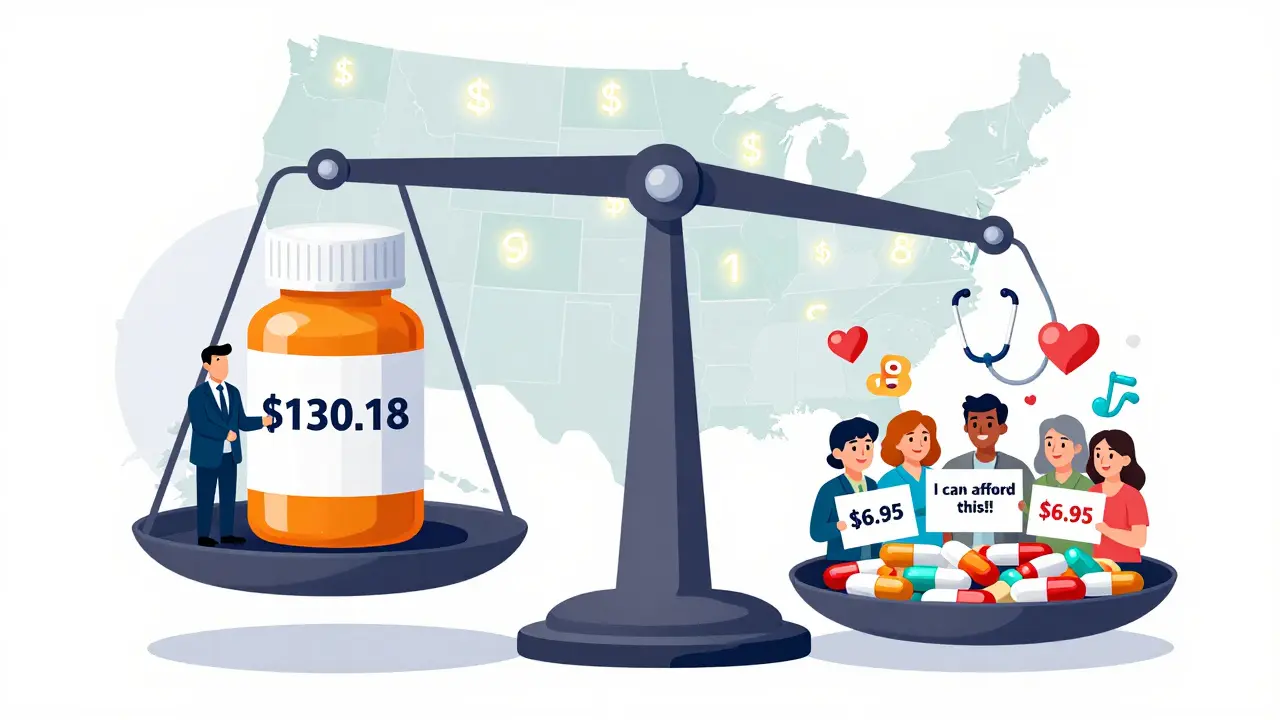
Why Do Brand-Name Drugs Cost So Much?
You might think brand-name drugs are expensive because of research and development. That’s part of it. But here’s the real story: once a patent expires, the cost of making the drug drops to pennies. The high price isn’t about production. It’s about monopoly. Big pharma uses legal tactics to delay generics. One common trick? Patent thickets. Instead of one patent, companies file dozens-sometimes over 75-on minor changes like coating, dosage timing, or packaging. One drug originally set to lose patent protection in 2016 got its monopoly extended to 2034 through this method. That’s 18 extra years of high prices. Another tactic is “product hopping.” A company slightly modifies a drug-say, changes it from a pill to a liquid-and then pushes doctors to switch patients to the new version. Then they pull the old version off the market. Patients are forced into the new, expensive version, and generics can’t enter until the new patent expires. These practices cost consumers billions. Blue Cross Blue Shield estimates “pay-for-delay” deals-where brand companies pay generic makers to hold off on launching-cost patients $3 billion a year. And that’s just one slice of the problem.What’s Changing in 2025?
2025 is shaping up to be a landmark year for generic savings. Three blockbuster drugs are losing patent protection:- Entresto (heart failure) - $5.4 billion in sales in 2023
- Tradjenta (diabetes) - $1.7 billion in sales
- Opsumit (pulmonary hypertension) - $1.5 billion in sales
Barriers to Getting Generics
Even with all the savings, you might still get a brand-name prescription. Why? It’s not always about your doctor. It’s about the system. Only 42 states have updated their pharmacy laws to allow pharmacists to automatically substitute generics unless the doctor says no. In the other eight, you might need a new prescription just to switch. Pharmacy benefit managers (PBMs)-the middlemen between insurers and pharmacies-often push brand drugs because they get higher rebates from manufacturers. That’s why some plans require you to try a brand first before covering a generic. That’s called “step therapy,” and it’s designed to maximize profits, not lower your costs. And then there’s the lack of awareness. Many patients don’t know generics are just as effective. Some worry they’re “inferior.” But the FDA says otherwise. Less than 1% of adverse events reported for generics are due to effectiveness issues-and most of those involve narrow therapeutic index drugs (like warfarin or levothyroxine), where tiny differences matter. Even then, switching between generic manufacturers is usually safe.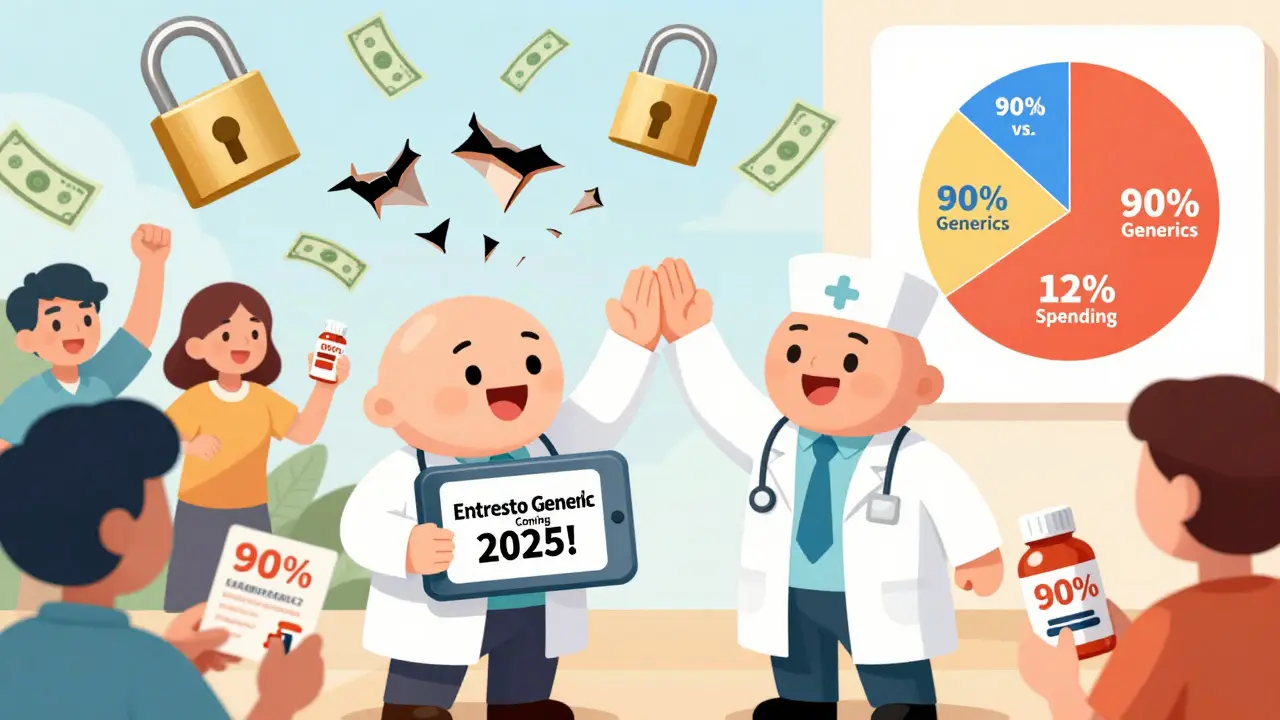
How to Save on Your Prescriptions
You don’t need to wait for policy changes to save money. Here’s what you can do today:- Ask your doctor: “Is there a generic version?” Always. Even if they say no, ask why. Sometimes it’s habit, not science.
- Ask your pharmacist: “Can you substitute?” Pharmacists are trained to know which generics are approved and interchangeable. In most states, they can do it automatically.
- Use discount programs. GoodRx, Blink Health, and SingleCare often offer generics for under $5-even if you’re uninsured.
- Check your plan’s formulary. If your drug isn’t on the preferred list, ask your insurer for an exception. You might get it covered at generic cost.
- For biologics: Ask about biosimilars. If you’re on a drug like Humira, Enbrel, or Stelara, there’s likely a biosimilar now that costs 70-90% less.
The Bigger Picture: Why This Matters
This isn’t just about saving a few dollars on a monthly script. It’s about access. When a patient can’t afford their blood pressure medicine because the brand costs $150, they skip doses. That leads to hospital visits. That leads to higher costs for everyone. Generics keep people healthy. They keep people out of emergency rooms. They keep Medicare and Medicaid from going broke. The Congressional Budget Office projects that without generics, drug spending would grow at 6.8% a year. With them? It’s capped at 3.2%. That’s the difference between a system that’s breaking and one that’s sustainable. The data is clear. Generics work. They save money. They save lives. The problem isn’t the drugs. It’s the system that tries to hide them.Are generic drugs really as effective as brand-name drugs?
Yes. The FDA requires generic drugs to be bioequivalent to their brand-name counterparts. That means they deliver the same amount of active ingredient into your bloodstream at the same rate. Over 99% of the time, they work just as well. The FDA monitors adverse events closely, and less than 1% of issues reported are linked to effectiveness problems-mostly in a small group of drugs with very narrow therapeutic windows.
Why do some doctors still prescribe brand-name drugs?
Sometimes it’s habit. Other times, it’s influence from pharmaceutical reps or outdated information. Some doctors assume patients expect the brand name, or they’re unaware a generic exists. In rare cases, they may believe a specific brand works better for a complex condition-but that’s usually not supported by evidence. Always ask: “Is there a generic?” and “Why not?”
Can I switch between different generic manufacturers?
For most medications, yes. The FDA ensures all approved generics meet the same standards. However, for drugs with a narrow therapeutic index-like warfarin, lithium, or thyroid meds-small differences in absorption can matter. If you’re on one of these, stick with the same manufacturer unless your doctor or pharmacist advises otherwise. Most people won’t notice a difference, but if you do, speak up.
Why are biosimilars harder to find than regular generics?
Biosimilars are more complex to develop and approve than regular generics. They’re made from living cells, not chemicals, so they’re harder to replicate exactly. That means higher development costs and longer approval times. Also, brand manufacturers use patent strategies to delay biosimilar entry. But once they’re approved, prices drop fast. Ask your doctor or pharmacist if a biosimilar is available for your biologic drug.
Do insurance plans cover generics?
Yes-most do, and they often require you to use them. As of January 2025, 87% of commercial health plans in the U.S. mandate generic substitution when available. If your plan doesn’t cover a generic, it’s likely an error. Call your insurer and ask for a formulary update or exception. You’re entitled to the lowest-cost effective option.
How can I find out when a brand-name drug will go generic?
Check the FDA’s Orange Book, which lists patent and exclusivity information for approved drugs. You can also use tools like GoodRx or Drugs.com, which track upcoming generic launches. Many pharmacies also notify patients when a generic becomes available. If you’re on a long-term medication, set a reminder to check every 6-12 months.
What’s Next?
The future of drug pricing depends on two things: competition and transparency. More generics and biosimilars mean lower prices. But only if they’re allowed to enter the market. Laws targeting patent thickets and product hopping are moving through Congress in 2025. If passed, they could unlock hundreds of billions in additional savings. Until then, the power is in your hands. Ask. Switch. Compare. Don’t assume the expensive version is better. The numbers don’t lie. Generics work. They save money. And they’re the reason millions of Americans can afford to stay healthy.
Lance Nickie
Generics are just placebo with a different label. I took one and my blood pressure went nuts. Coincidence? I think not.
John Pope
Let’s be real-this whole generic narrative is a neoliberal fantasy wrapped in FDA jargon. The system doesn’t ‘save’ money-it externalizes risk onto patients while Big Pharma restructures its rent-seeking architecture through patent thickets and PBM kickbacks. The 90/12 paradox isn’t a win-it’s a symptom of a market that commodifies health while pretending to optimize it. We’re not talking about pills; we’re talking about biopolitical control disguised as cost-efficiency.
And don’t get me started on biosimilars. They’re not ‘cheaper alternatives’-they’re regulatory loopholes engineered to maintain monopoly rents under a veneer of innovation. The FDA’s bioequivalence standard? A statistical mirage. Real-world pharmacokinetic variance? Ignored. Patient outcomes? Anecdotal. The data doesn’t lie-it just gets sanitized by institutional capture.
Meanwhile, your $6.95 generic? That’s the price of your silence. The real savings aren’t in your wallet-they’re in the quarterly earnings reports of CVS Health and UnitedHealth. You think you’re winning? You’re just the last node in a supply chain that turns suffering into shareholder value.
And yet… here we are. Still swallowing the pills. Still trusting the system. Still believing that if we just ask nicely, the algorithm will fix our insulin.
Priyanka Kumari
This is such an important breakdown-thank you for making the data so clear! I’ve been using generics for my thyroid medication for years, and I’ve never had an issue. The FDA’s standards are strict, and pharmacists are trained to ensure safety. It’s heartbreaking that so many people still believe generics are inferior-especially when they’re the only reason someone can afford to stay alive.
For those in India or other countries reading this: please know that access to affordable generics has saved millions here too. My father couldn’t afford his heart meds until generics arrived. Now he’s walking his granddaughter to school every morning. That’s the real impact.
Keep asking your doctor. Keep asking your pharmacist. And if your insurance pushes you toward a brand? Push back. You have rights.
Nelly Oruko
Generics work. I’ve been on them for 12 years. No issues. But people panic because they don’t understand bioequivalence. It’s not magic-it’s math. And the FDA doesn’t play games.
vishnu priyanka
Man, I remember in Mumbai, my aunt paying $200 for a heart pill… then finding the same thing for $3 at a local pharmacy with a different label. She thought it was fake. Turned out it was the exact same pill, just made in India. The whole system is wild. Like paying $15 for a Coke and then seeing the same recipe sold for $1 next door.
Angel Tiestos lopez
Generics = 💯. Biosimilars = 🚀. Big Pharma = 😤💸
Why are we still letting them get away with this? I switched to a biosimilar for my RA last year and saved $1,200/month. My dog even got a treat. 🐶
Alan Lin
Let me be blunt: if you’re still taking brand-name drugs without a documented medical necessity, you’re not just wasting money-you’re enabling a corrupt system. The data is irrefutable. Generics are equivalent. The FDA is not a puppet. The savings are real. Your refusal to switch isn’t caution-it’s complicity. You’re paying for lobbyists, not medicine. Stop being a passive consumer. Demand the generic. File a complaint with your insurer. Write to your representative. This isn’t a suggestion-it’s a moral obligation.
Trevor Whipple
Bro, I tried a generic for my anxiety med and felt like a zombie for a week. So no. Not all generics are equal. Some people just can’t handle the fillers. The FDA doesn’t care about your weird body. They just want the numbers to add up.
John Pope
And yet, the FDA’s post-market surveillance shows that 99.8% of adverse events linked to generics are due to patient non-adherence, not formulation differences. The ‘zombie’ effect? Probably withdrawal from the brand’s inactive ingredients-like dyes or binders-that your body had grown dependent on psychologically. You didn’t react to the medicine. You reacted to the *idea* of change. That’s not pharmacology. That’s placebo in reverse.
And before you say ‘but my doctor said…’-ask them if they’ve ever read the bioequivalence study for that specific generic. Most haven’t. They just repeat what the rep told them.