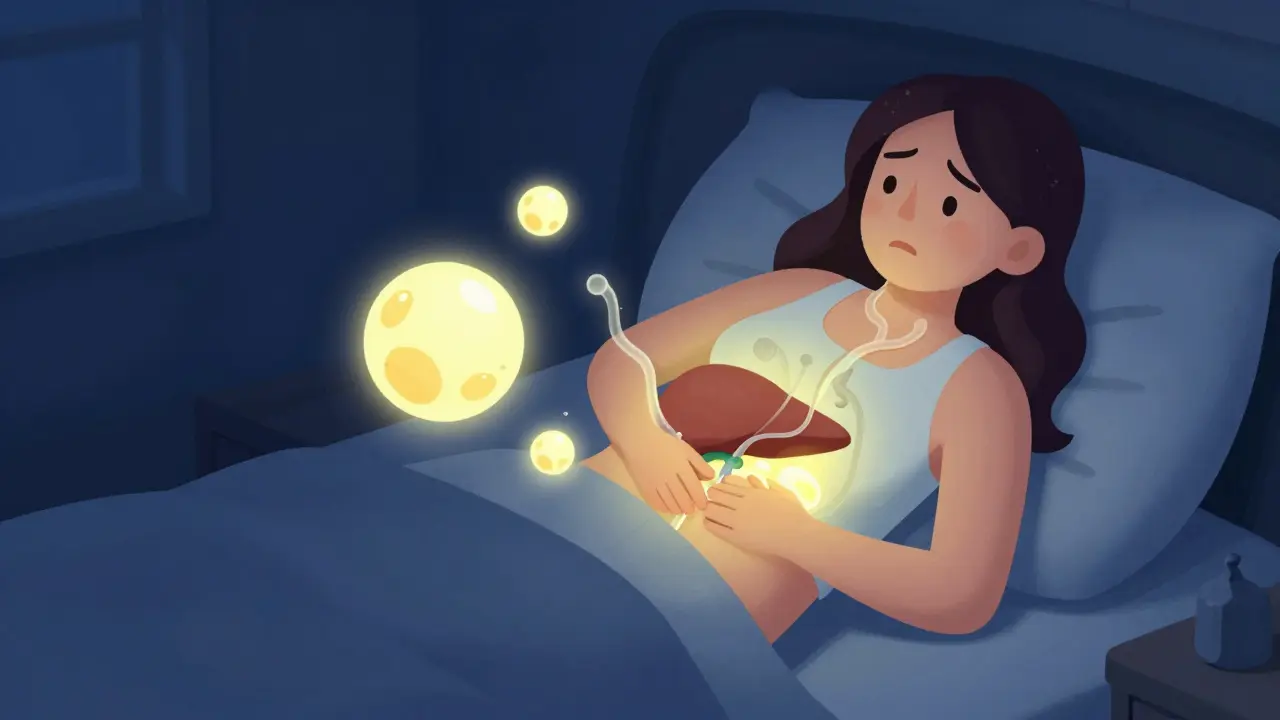
When your gallbladder stops working right, the pain doesn’t just come and go-it hits like a sledgehammer. Imagine waking up in the middle of the night with sharp, unrelenting pain under your right ribs, nausea, and a yellow tint to your skin. This isn’t just indigestion. It’s gallbladder and biliary disease in action. And for millions of people, especially women over 40, it’s a reality they didn’t see coming.
What Are Gallstones, and Why Do They Form?
Gallstones are hardened deposits of bile that form inside the gallbladder. About 80% of them are made of cholesterol, while the rest are pigment stones, mostly bilirubin. They can be as small as a grain of salt or as big as a golf ball. The gallbladder stores bile, a fluid your liver makes to help digest fat. When bile gets too rich in cholesterol or bilirubin, or when the gallbladder doesn’t empty properly, crystals start forming-and they grow.It’s not random. Women are 2.1 times more likely to get gallstones than men. If you’re overweight, diabetic, or have lost weight too fast-like more than 1.5 kg a week-you’re at higher risk. Native Americans, especially Pima Indians, have the highest rates globally, with up to 64% affected. In the U.S., over 20 million people have gallstones, and 14.2 million of them are women. Most of these people never know they have them. That’s because about 80% of gallstones cause no symptoms at all.
But when they do? That’s when trouble starts. A stone blocking the cystic duct causes acute cholecystitis-inflammation of the gallbladder. If it moves into the common bile duct, it can trigger cholangitis or pancreatitis. These aren’t minor issues. They’re emergencies. Together, these complications send about half a million people to the hospital each year in the U.S.
Cholangitis: When the Bile Ducts Get Infected
Cholangitis is an infection of the bile ducts. It happens when a stone, tumor, or scar tissue blocks the duct and bacteria from the intestines back up into the liver. It’s dangerous-and it doesn’t sneak up. It hits hard.The classic signs, called Charcot’s triad, are:
- Severe pain in the upper right abdomen (70% of cases)
- Fever and chills (85% of cases)
- Yellowing of the skin and eyes (jaundice, seen in 60-70% of cases)
If you add low blood pressure and confusion, that’s Reynolds’ pentad. This means the infection has turned into sepsis. At this point, you’re in intensive care territory. Cholangitis kills about 5-10% of patients if not treated fast.
What makes it worse? Delayed diagnosis. Many people think the pain is just a bad stomach bug or gallbladder attack. But if you have jaundice and fever along with pain, it’s not a gallstone-yet. It’s an infection that needs antibiotics and immediate drainage. Waiting even 24 hours can cost you your life.
ERCP: The Lifesaving Procedure That Finds and Removes Stones
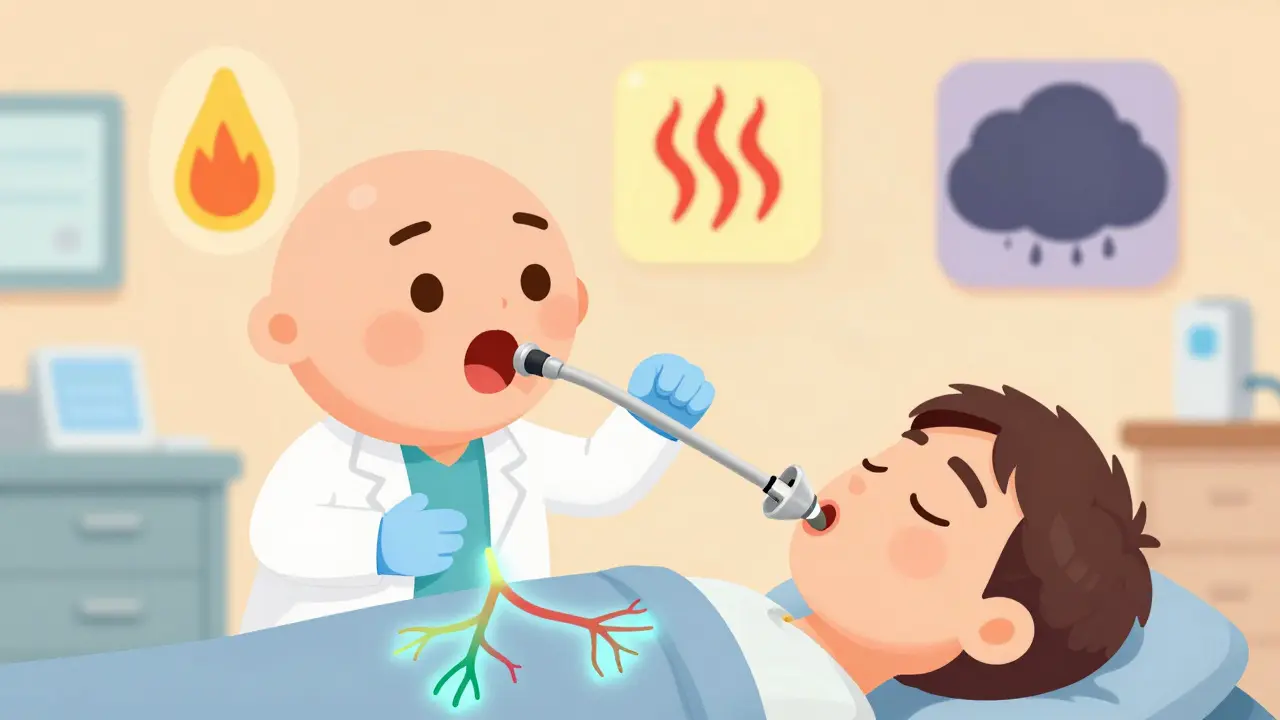
Endoscopic Retrograde Cholangiopancreatography (ERCP) is the go-to tool when a stone is stuck in the bile duct. It’s not a surgery. It’s a procedure done through your mouth. A thin, flexible scope with a camera is passed down your throat, into your stomach, and then into the first part of your small intestine. There, the doctor finds the opening where the bile duct enters-the ampulla of Vater.Once they locate it, they inject dye and take X-rays to see the ducts clearly. Then, they use tiny tools to cut the muscle around the opening (sphincterotomy), grab the stone with a basket, or break it up with a laser. Over 90% of the time, it works.
But ERCP isn’t perfect. About 3-10% of patients develop post-ERCP pancreatitis. That’s when the procedure accidentally inflames the pancreas. It’s the most common complication-and it’s serious. The risk goes up if you’ve had pancreatitis before, have Sphincter of Oddi dysfunction, or if the doctor is inexperienced. High-volume centers (those doing over 100 ERCPs a year) have 20% fewer complications than low-volume ones.
And here’s the catch: ERCP shouldn’t be used just to look. It’s a treatment tool. If you’re suspected of having a bile duct stone, doctors should start with an MRI scan called MRCP. It’s non-invasive, has 95% accuracy, and carries zero risk. Only if they see a stone should they move to ERCP. Yet, studies show many patients still get ERCP as a first step-unnecessarily exposing them to risk.
When Do You Need Surgery? The Truth About Gallbladder Removal
If you have symptoms from gallstones, the standard treatment is laparoscopic cholecystectomy-removing the gallbladder through small belly incisions. It’s safe, effective, and the gold standard since the 1990s. Over 90% of gallbladder removals today are done this way.Recovery is quick. Most people go home the same day or the next. Pain is mild. You’re back to desk work in a week. Compare that to the old open surgery, which meant a 4-6 week recovery and a big scar down your abdomen.
But here’s the problem: too many people get their gallbladders removed even when they have no symptoms. About 20% of the 600,000 cholecystectomies done each year in the U.S. are for people who aren’t even in pain. That’s against guidelines. As one Cleveland Clinic doctor puts it: “Asymptomatic gallstones don’t need surgery. The risk of complications from the operation is higher than the chance they’ll ever cause trouble.”
For those with symptoms, the results are great. Eighty-seven percent of patients report major pain relief within 30 days. But not everyone is fine after. About 12% develop post-cholecystectomy syndrome-ongoing pain, bloating, or diarrhea. Why? Because the gallbladder isn’t just a stone bag. It’s a reservoir that helps regulate bile flow. Without it, bile drips constantly into the intestine, which can irritate the gut. Some people need to stay on a low-fat diet long-term. Others take bile-binding meds like cholestyramine. And yes, some still need another ERCP if stones were missed.
What About Medications? Can You Dissolve Gallstones Without Surgery?
You’ve probably heard about pills that dissolve gallstones. Ursodeoxycholic acid (UDCA) is real. It works-sometimes. For small cholesterol stones under 15mm, it can dissolve them in 6-12 months. But only 30-40% of patients respond. And if you stop taking it? The stones come back in 5 years for half of them.It’s useless for pigment stones. And it doesn’t help if you have symptoms. So, it’s only an option for about 10-15% of people with gallstones-and only if they’re not good surgical candidates. Shock wave therapy used to be tried, too. But it’s outdated now. It breaks stones into pieces, but they often stay in the duct and cause blockages. Recurrence rates hit 50%.
Bottom line: pills aren’t a cure. They’re a temporary fix for a tiny group. Surgery and ERCP are still the real solutions.
What’s New in 2025?
Technology is moving fast. In 2023, the FDA approved a new duodenoscope with a fully disposable elevator mechanism. Why? Because old designs were linked to over 100 outbreaks of deadly drug-resistant infections between 2013 and 2018. Now, the part that touches the bile duct is single-use. No more cross-contamination.Another breakthrough: intraductal ultrasonography (IDUS). It’s a tiny ultrasound probe passed through the ERCP scope. It can spot stones smaller than 5mm that standard X-rays miss. Sensitivity jumps from 75% to 92%. That means fewer missed stones and fewer repeat procedures.
Researchers are also working on new drugs to dissolve pigment stones-the kind that don’t respond to UDCA. These are common in Asian populations and in people with liver disease. Right now, there’s no medical treatment. That’s about to change.
Telehealth is helping, too. After ERCP or surgery, virtual check-ins have cut 30-day hospital readmissions by 18% in pilot programs. Patients get guidance on diet, signs of infection, and when to call their doctor-all without leaving home.
What Should You Do If You Think You Have This?
If you have recurring right-upper-abdomen pain after eating fatty meals, especially with nausea or vomiting, see your doctor. Start with an ultrasound. It’s cheap, quick, and catches 84% of gallstones.If your doctor suspects a stone in the bile duct, ask for an MRCP before jumping to ERCP. Don’t let them rush you into a procedure that carries risk. If you’re told you need surgery, ask: “Are my symptoms clearly from gallstones? Or could it be something else?”
If you’ve had your gallbladder removed and still have pain or diarrhea, don’t assume it’s normal. Talk to a gastroenterologist. You might need bile acid binders or another test to rule out retained stones.
And if you’ve had an ERCP and feel worse afterward-especially with abdominal pain or fever-go to the ER. Post-ERCP pancreatitis can sneak up fast.
Most people with gallbladder disease don’t need to live in pain. The tools to fix it exist. But knowing when-and how-to use them makes all the difference.

Hannah Taylor
so i read this and now i’m convinced the government is putting chalk in our food to make us all need gallbladder removals. they’ve been doing it since the 90s. why else would 80% of women over 40 just suddenly start getting stones? it’s not cholesterol, it’s fluoride. and don’t get me started on the ‘disposable’ endoscopes - they’re still reusing them. i know a guy.
mukesh matav
Interesting read. In India, we see a lot of pigment stones due to chronic infections and malnutrition. Not many people here know about MRCP before ERCP - doctors often go straight to the procedure. It’s expensive, but safer options exist.
Peggy Adams
i swear the medical industry just wants to cut stuff out. why not just drink lemon water and pray? my aunt did that and now she’s ‘healed’. also, why do they always say ‘laparoscopic’ like it’s magic? it’s just tiny cuts. i’m suspicious.
Jay lawch
The systemic failure in Western medicine is staggering. They reduce the human body to a plumbing system - stones as clogs, ducts as pipes - and then surgically excise the ‘faulty’ organ. But the root cause? Poor diet, environmental toxins, the erosion of ancestral wisdom. We’ve forgotten that bile is not merely a digestive fluid - it is the embodiment of the liver’s spiritual detoxification. To remove the gallbladder is to sever a sacred conduit. And ERCP? A ritual performed by technicians who know not what they wield. The rise in post-ERCP pancreatitis is not coincidence - it is divine retribution for hubris.
Southern NH Pagan Pride
i’ve been reading up on sphincter of oddi dysfunction and honestly? the diagnostic criteria are a mess. if you’ve had a cholecystectomy and still have pain, it’s SOOD until proven otherwise - even if your labs are clean and your ultrasound is normal. the docs just shrug and hand you a zofran. they don’t want to admit they removed a perfectly functional organ because you had a couple of bad nights after tacos.
Cameron Hoover
this was actually really helpful. i didn’t realize how common asymptomatic stones are. i thought everyone with them was in agony. learning that 80% don’t even know they have them… kind of puts things in perspective. also, the disposable endoscope thing? huge win for patient safety. finally, someone’s listening.
Christina Weber
It is scientifically and ethically indefensible to perform cholecystectomies on asymptomatic patients. The American College of Gastroenterology guidelines are clear: no intervention unless symptoms are present. Yet, the financial incentives in the healthcare system continue to drive unnecessary procedures. This is not medicine - it is commodification of the human body. Shame on the institutions that permit this.
Dan Adkins
The precision of modern endoscopic technology is a testament to Western scientific rigor. However, the over-reliance on invasive procedures in the absence of comprehensive diagnostic imaging reflects a systemic deficit in clinical judgment. In Nigeria, where resources are limited, we rely on ultrasound and clinical correlation - and outcomes remain comparable. The overuse of ERCP in affluent nations is not innovation - it is over-treatment masked as advancement.
Grace Rehman
so we remove the gallbladder like it’s a bad app update... but then we wonder why people get diarrhea for the rest of their lives? like bro... it’s not a stone factory it’s a bile reservoir. you don’t just yank out the battery and expect the phone to work the same. also... why is everyone so shocked that bile just drips everywhere now? we knew this was gonna happen. we just didn’t care enough to warn people
Jerry Peterson
As someone who grew up in a household where turmeric in warm milk was the cure for everything, I’m glad to see science catching up. But I also know that in many cultures - like mine - the gallbladder isn’t just an organ. It’s tied to emotional health. Stress, anger, resentment - all said to ‘harden the bile.’ Maybe there’s something there beyond biochemistry.
Meina Taiwo
MRCP before ERCP. Always. Save the invasive procedure for confirmed cases.
Adrian Thompson
they say ERCP has a 90% success rate. yeah, right. that’s just the number they give you before they bill you $20k. the real success rate? 60% if you’re on medicaid and 95% if you have private insurance. same procedure. different outcome. welcome to healthcare.
Swapneel Mehta
I’ve seen patients in rural India with pigment stones from chronic malaria and liver flukes. They don’t even have access to ultrasound, let alone MRCP. It’s heartbreaking. We need low-cost diagnostic tools - not just fancy scopes. Maybe portable ultrasound + AI could help?
Sarah Williams
this is the kind of post that saves lives. thank you for sharing. if you’re reading this and you’ve had your gallbladder out and still feel off - you’re not crazy. it’s real. find a GI who gets it. you’re not alone.