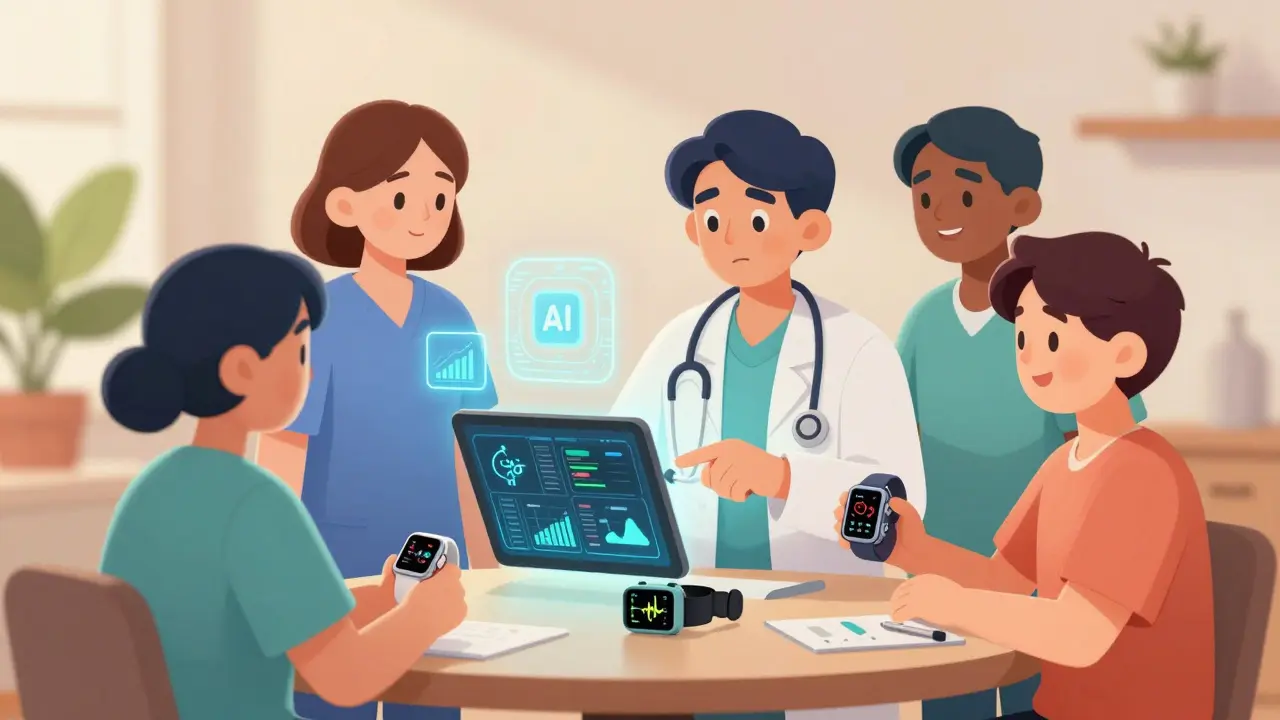
Healthcare providers aren’t just adapting to change-they’re redefining what it means to deliver care. By 2026, the old model of the doctor as the sole decision-maker in a closed room is gone. Patients arrive with data from their smartwatches, wearables, and health apps. They’ve already researched their symptoms. They expect their providers to know what’s going on before they even sit down. And providers? They’re no longer resisting this shift. They’re building systems around it.
From Resistance to Reliance: Technology Is Now Part of the Job
Five years ago, many clinicians saw AI and digital tools as optional extras-something nice to have if the budget allowed. Today, it’s non-negotiable. Over half of Americans now own a wearable device that tracks heart rate, sleep, or blood oxygen. That data isn’t sitting on a phone. It’s being shared with providers, and patients expect it to be used. According to NIH research from early 2025, physicians who ignore consumer-generated health data are falling behind. Those who use it can diagnose faster, catch early warning signs, and tailor treatments in ways that weren’t possible before. This isn’t just about gadgets. It’s about infrastructure. Providers are investing in systems that pull together data from wearables, electronic health records, and even pharmacy refill histories. AI tools now help flag anomalies-like a sudden drop in activity levels in an elderly patient or irregular heart rhythms detected by a smart ring. But here’s the catch: technology alone doesn’t work. The biggest failure point isn’t the software. It’s the culture. Forrester’s 2025 report found that many clinics roll out AI tools but don’t train staff on how to use them responsibly. Instead of learning, employees are punished for mistakes. That breeds fear, not innovation. The winning approach? Train. Don’t penalize. Providers who create clear guidelines for AI use, hold regular workshops on interpreting data, and reward curiosity are seeing better outcomes. Nurses who understand how to read a glucose trend from a continuous monitor aren’t just doing their job-they’re preventing hospitalizations. Doctors who know how to interpret sleep data from a Fitbit aren’t just being tech-savvy-they’re catching sleep apnea before it leads to heart failure.The Patient Is No Longer a Passive Recipient
The doctor-patient relationship has flipped. In the past, patients came with vague complaints: “I feel tired.” Now, they come with screenshots: “My Apple Watch says my resting heart rate spiked to 112 last night. I’ve been dizzy since.” This change isn’t just inconvenient-it’s transformative. Providers who treat this as a challenge are struggling. Those who treat it as a partnership are thriving. IPG Health’s 2025 analysis found that patients who bring their own data are more engaged, ask better questions, and follow treatment plans more closely. Why? Because they feel heard. They’re not just giving information-they’re co-creating their care. That’s why leading practices are building “digital front doors.” These are online portals where patients can schedule appointments, upload wearable data, message their care team, pay bills, and even watch short videos explaining their diagnosis-all before stepping into the clinic. PwC reports that clinics using these systems see a 30% drop in no-shows and a 25% reduction in administrative calls. But more importantly, patients report higher satisfaction. They feel like active participants, not passive recipients. This shift also means providers need new skills. It’s not enough to know medicine. You need to know how to interpret data from a non-clinical source. You need to explain what a 10% drop in overnight oxygen saturation means without overwhelming the patient. You need to decide when a trend is meaningful and when it’s noise. That’s a new kind of expertise-and it’s becoming part of every provider’s training.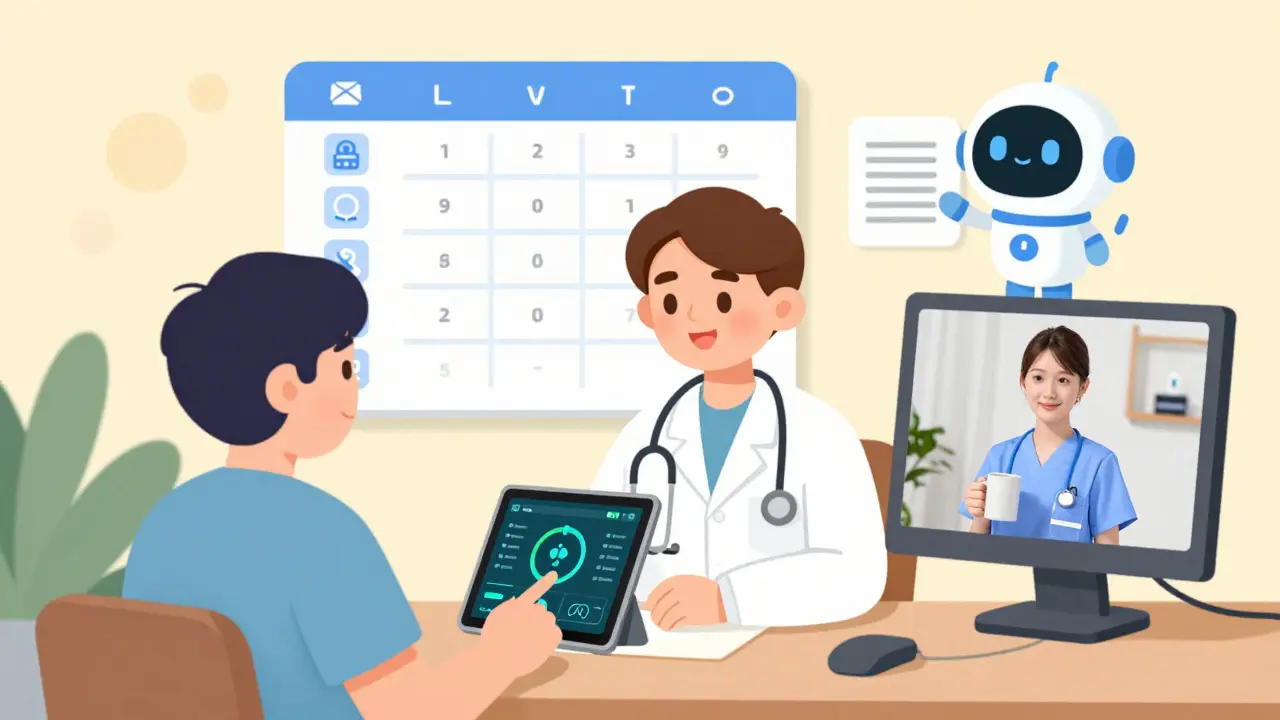
The Workforce Is Changing-And So Are the Rules
There’s a quiet revolution happening behind the scenes. The days of relying solely on doctors and nurses to carry the load are over. Allied health professionals-medical assistants, pharmacy technicians, phlebotomists-are no longer support staff. They’re essential partners. The National Healthcareer Association (NHA) found that 70% of employers now require certifications for these roles. That’s up from 45% just five years ago. And it’s not just about credentials. Employers are paying more. Over 71% have increased wages for staff who earn certifications. Why? Because they’ve seen the results. Certified medical assistants can handle pre-visit screenings, manage patient intake, and flag red flags before the doctor even walks in. That saves time. Reduces errors. And makes the whole system run smoother. But it’s not just about titles. It’s about structure. Clinics are moving away from rigid 9-to-5 shifts. With virtual care and remote monitoring, providers are working in flexible teams. A nurse practitioner might manage a panel of patients remotely from home one day, then lead an in-person group session the next. A physician assistant might handle chronic disease follow-ups via video while the MD focuses on complex cases. This isn’t just convenient-it’s necessary. With 53% of healthcare employers citing employee retention as their biggest challenge, flexibility is no longer a perk. It’s a survival tool. And let’s not forget the rise of AI agents. These aren’t robots replacing humans-they’re digital assistants that handle scheduling, prior authorizations, and data entry. That frees up clinicians to do what they trained for: care for patients. The providers who embrace this are seeing lower burnout rates and higher job satisfaction. The ones who resist? They’re losing staff faster than they can hire them.Human Connection Isn’t Optional-It’s the Competitive Edge
Here’s something surprising: as technology gets smarter, patients crave more humanity. IPG Health found that patients can tell when content is AI-generated. They don’t trust it. They don’t feel seen. That’s why the most successful clinics are doubling down on authentic communication. A provider who writes a personalized note after a virtual visit-not a template-builds trust. A clinic that shares real stories from patients who managed their diabetes with support-not just stats-creates connection. Transparency about what AI does and doesn’t do builds confidence. Saying, “This tool flagged a possible issue, but I’m reviewing it with you,” is more powerful than saying, “The algorithm says you’re at risk.” McKinsey’s 2025 Wellness Survey shows that not all patients want to be deeply involved. Some are “wellness shirkers”-they just want the basics, low cost, and minimal effort. Others are “health enthusiasts” who track every step and meal. The smart provider doesn’t treat everyone the same. They tailor their approach. For one patient, it’s a quick check-in and a prescription. For another, it’s a 45-minute coaching session with a nutritionist and a wearable data review. This level of personalization isn’t just nice-it’s profitable. Clinics that match their services to patient preferences see higher retention, fewer no-shows, and better outcomes. It’s not about having the most advanced tech. It’s about using what you have in a way that feels human.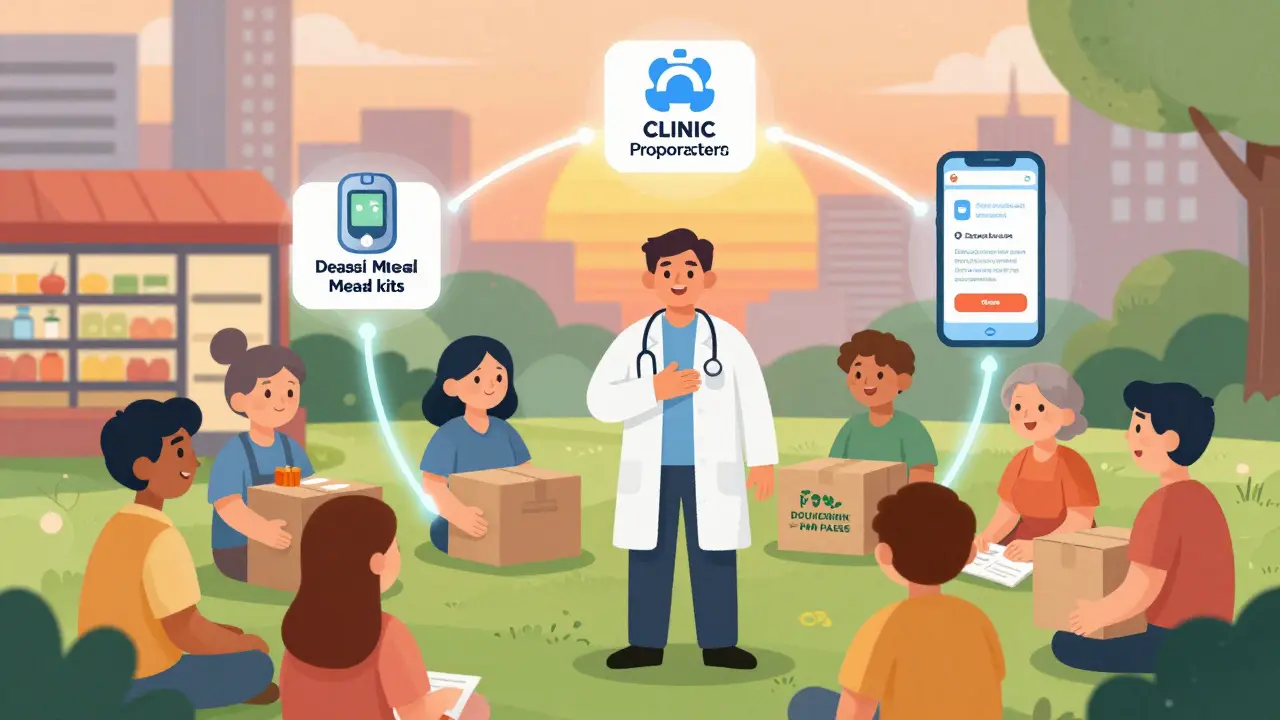
The Bigger Picture: Ecosystems, Not Just Clinics
By 2026, healthcare won’t be about hospitals and doctor’s offices alone. It’ll be about ecosystems. PwC predicts a $1 trillion shift away from traditional providers toward new players: tech giants, AI startups, community organizations, and even grocery chains offering health screenings. Providers who see this as competition are losing. Those who see it as collaboration are winning. A clinic in Ohio now partners with a local food bank to provide medically tailored meals for diabetic patients. A hospital in Texas works with a fitness app to offer discounted gym memberships to patients with heart conditions. These aren’t charity programs-they’re care extensions. They reduce ER visits. Lower medication costs. Improve long-term outcomes. This requires a mindset shift. You’re not just a provider. You’re a coordinator. Your job isn’t just to treat illness. It’s to connect people to the resources they need-food, housing, transportation, mental health support. That’s the new standard.What This Means for You
If you’re a provider, here’s what you need to do right now:- Learn to use data-not just from charts, but from wearables and apps. Start small. Pick one patient with a smartwatch and review their trends together.
- Train your team-not just on new tools, but on how to talk about them. If your staff fears AI, they’ll sabotage it.
- Build flexibility-offer remote options, staggered hours, and team-based care. Retention starts with respect.
- Be human-your voice, your empathy, your authenticity matter more than ever. No algorithm can replace that.
- Look beyond the clinic-partner with community groups. You don’t have to do it all alone.
Will AI replace doctors in the future?
No. AI won’t replace doctors-it will augment them. Tools like AI-powered diagnostics can flag potential issues faster, but they can’t build trust, understand emotional context, or make ethical decisions. The best outcomes happen when AI handles data and humans handle care. Providers who use AI as a support tool, not a replacement, are seeing better patient satisfaction and lower burnout.
Why are certifications becoming so important for allied health staff?
Certifications prove competency, reduce errors, and improve patient safety. Employers have seen that certified medical assistants and pharmacy technicians make fewer mistakes, handle more tasks independently, and contribute to smoother operations. Over 70% of employers now require certifications, and 71% increase pay for certified staff because they’re more reliable and reduce training costs in the long run.
How can small practices keep up with tech trends?
Start small. Use free or low-cost tools like patient portals with built-in wearable data integration. Focus on one area-like remote monitoring for chronic conditions-before expanding. Partner with local health networks or regional clinics to share resources. You don’t need to build everything from scratch. Many platforms offer plug-and-play solutions designed for small practices.
Is patient-generated data reliable enough to make clinical decisions?
It’s not perfect-but it’s valuable. Wearables can’t replace lab tests, but they show trends over time. A rising heart rate over weeks, irregular sleep patterns, or inconsistent glucose levels can signal problems before symptoms appear. The key is using this data alongside clinical judgment, not instead of it. Leading providers now treat consumer data as a complementary tool, not a primary diagnostic source.
What’s the biggest mistake providers are making right now?
Trying to do everything at once. Many clinics rush to adopt AI, launch digital portals, and overhaul staffing-all in the same quarter. That leads to burnout and failure. The most successful providers focus on one change at a time: maybe starting with patient data integration, then adding flexible scheduling, then training staff on AI tools. Progress, not perfection, is the goal.

Amanda Eichstaedt
The shift from doctor-as-god to doctor-as-coach is long overdue. I’ve watched my mom’s cardiologist go from sighing at her Fitbit data to asking her, 'What were you doing when your heart spiked?' That single question changed everything. It’s not about the gadget-it’s about the conversation it starts. We’re not patients anymore. We’re partners. And honestly? It feels like the first time in decades that anyone’s actually listening.
Jessica Bnouzalim
YES. YES. YES. I work in a clinic and we just rolled out wearable data integration-first week, a nurse caught a pattern in a patient’s overnight oxygen drops that led to a diagnosis of early sleep apnea. No symptoms. No complaints. Just data. And now we’re training everyone-not just docs-to read it. We’re not scared anymore. We’re excited. This is what healthcare should’ve been all along.
laura manning
While the sentiment expressed herein is ostensibly laudable, the underlying assumption-that consumer-grade biometric data is clinically actionable-remains empirically unvalidated in a majority of peer-reviewed studies. The FDA has issued multiple warnings regarding the false-positive rates of consumer wearables. To conflate correlation with causation, as this article does, constitutes a dangerous oversimplification of clinical decision-making.
Bryan Wolfe
Look, I get why Laura’s nervous-data is messy, and we’re not trained to read it. But here’s the thing: we don’t have to be statisticians. We just have to be curious. I started asking my diabetic patients to send me their glucose trends every Friday. One guy sent me a spike after his Sunday church dinner. Turns out, he was eating fried chicken with syrup on it. We didn’t shame him. We talked about it. Now he brings his own meal logs. That’s not tech. That’s trust. And trust? That’s what saves lives.
Sumit Sharma
Let’s be clear: the proliferation of unregulated consumer devices is creating a data deluge that overwhelms primary care workflows. Without standardized interoperability protocols, validated clinical thresholds, and mandatory certification for data interpretation, we are not improving care-we are increasing liability. The NHA certification requirement is a step forward, but it’s insufficient. We need mandatory CEUs in digital health literacy for all licensed providers, enforced by state medical boards. Otherwise, this is just digital theater.
Lawrence Jung
People think tech is the future but it's just the same old hierarchy with better apps. Doctors still decide. Patients still obey. The real revolution? When someone says 'I don't know' and actually means it. That's rarer than a quiet ER shift.
Alice Elanora Shepherd
I’ve been a nurse for 22 years, and I’ve seen every trend come and go. This one? It’s different. Why? Because it’s not about the tools-it’s about the tone. When we stopped treating patients like problems to solve and started treating them like people with stories, everything changed. I now have a 78-year-old who sends me her Apple Watch screenshots every morning with a little emoji of a cat. I reply with a cat emoji back. It’s silly. It’s human. And it’s working.
Christina Widodo
What about patients who don’t own wearables? Or can’t afford them? Or live in rural areas with no cell service? Is this future only for the tech-savvy, middle-class, urban patients? Because if so, we’re just building a new kind of inequality-and calling it innovation.
Cassie Widders
My GP started using my Fitbit data last year. Didn’t say much. Just asked, 'You sleep better now?' I said yeah. He nodded. Didn’t even look at the screen. Just smiled. That’s all I needed. Sometimes the tech is just the quiet middleman.