Asthma & COPD Medication Safety Checker
Check Your Medications for Dangerous Interactions
This tool identifies potentially dangerous combinations of asthma/COPD medications with other common drugs. It's not a substitute for professional medical advice, but can help you identify risks to discuss with your healthcare provider.
When you’re managing asthma or COPD, your inhaler isn’t the only thing that affects your breathing. Many of the medications you take for other conditions - pain, sleep, allergies, even heart issues - can quietly make your lung disease worse. Some combinations can land you in the hospital. Others might not cause immediate symptoms, but slowly chip away at your lung function over time. The truth is, medication safety in asthma and COPD isn’t just about using your inhaler correctly. It’s about understanding what else is in your medicine cabinet - and what you shouldn’t mix with it.
How Bronchodilators Work - and Why Mixing Them Wrong Can Backfire
Asthma and COPD treatments mostly fall into two big categories: bronchodilators and anti-inflammatories. Bronchodilators open up your airways. They come in short-acting (for quick relief) and long-acting (for daily control). Common ones include albuterol (SABA), salmeterol and formoterol (LABAs), and tiotropium or glycopyrrolate (LAMAs). These drugs don’t all work the same way. LABAs stimulate beta-2 receptors in your lungs. LAMAs block muscarinic receptors. That’s why combining them - like in Anoro Ellipta (vilanterol + umeclidinium) or Bevespi Aerosphere (formoterol + glycopyrrolate) - often gives better results than either drug alone. But not every combo works. Research shows ensifentrine, a newer dual-action drug, boosts lung function when paired with LAMAs - but not with albuterol. Mixing the wrong drugs doesn’t just waste money. It can give you a false sense of control while your lungs keep deteriorating.The Hidden Dangers: Opioids, Benzodiazepines, and Respiratory Depression
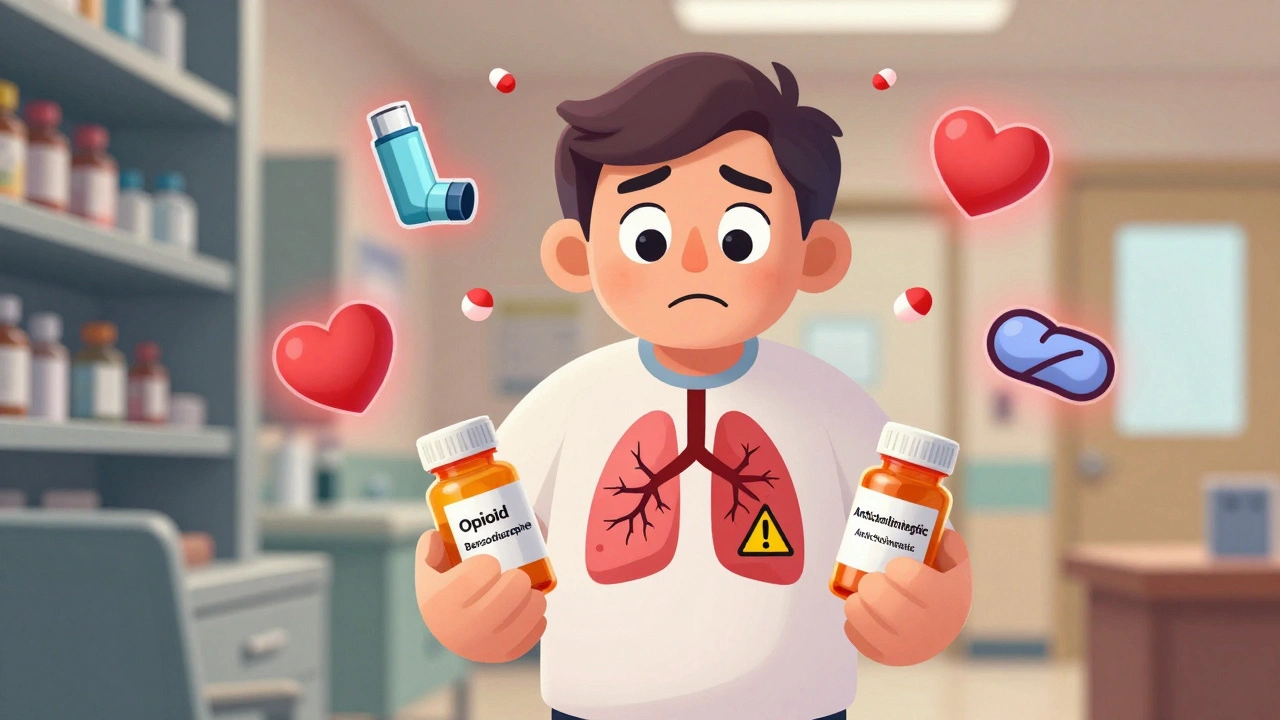
If you have COPD, your lungs are already working harder just to get air in and out. Add opioids like oxycodone, hydrocodone, or codeine - even in low doses - and you’re putting your breathing at serious risk. These drugs slow down your brain’s drive to breathe. For someone with healthy lungs, that’s manageable. For someone with COPD, it can be deadly. The danger gets worse when opioids are mixed with benzodiazepines like diazepam or alprazolam. Studies show this combo increases the risk of severe respiratory depression by 300% in COPD patients. One patient on Reddit shared how combining oxycodone with diphenhydramine (an OTC sleep aid) dropped his oxygen saturation to 82% - enough to require emergency oxygen. That’s not rare. Between 2020 and 2022, 17% of opioid-related adverse events in COPD patients reported to the FDA involved anticholinergic or sedating drugs.Nonselective Beta-Blockers: A Silent Trigger for Asthma Attacks
Beta-blockers are common for heart conditions, high blood pressure, and even migraines. But not all are safe. Nonselective beta-blockers like propranolol and nadolol block both beta-1 (heart) and beta-2 (lungs) receptors. Blocking beta-2 in the lungs causes bronchospasm - tightening of the airways. That can trigger a full-blown asthma attack. Studies show these drugs can reduce FEV1 (a key measure of lung function) by 15-25% in people with asthma. One patient on r/asthma described a severe attack after taking propranolol for anxiety - even though she’d never had one before. She thought it was just stress. It wasn’t. It was the drug. The good news? Selective beta-blockers like metoprolol and atenolol mostly target the heart. Research from the BLOCK-COPD trial found that using metoprolol in COPD patients with heart disease actually reduced moderate-to-severe flare-ups by 14%. Still, even these should be started at low doses and monitored closely. Never assume a beta-blocker is safe just because your doctor prescribed it.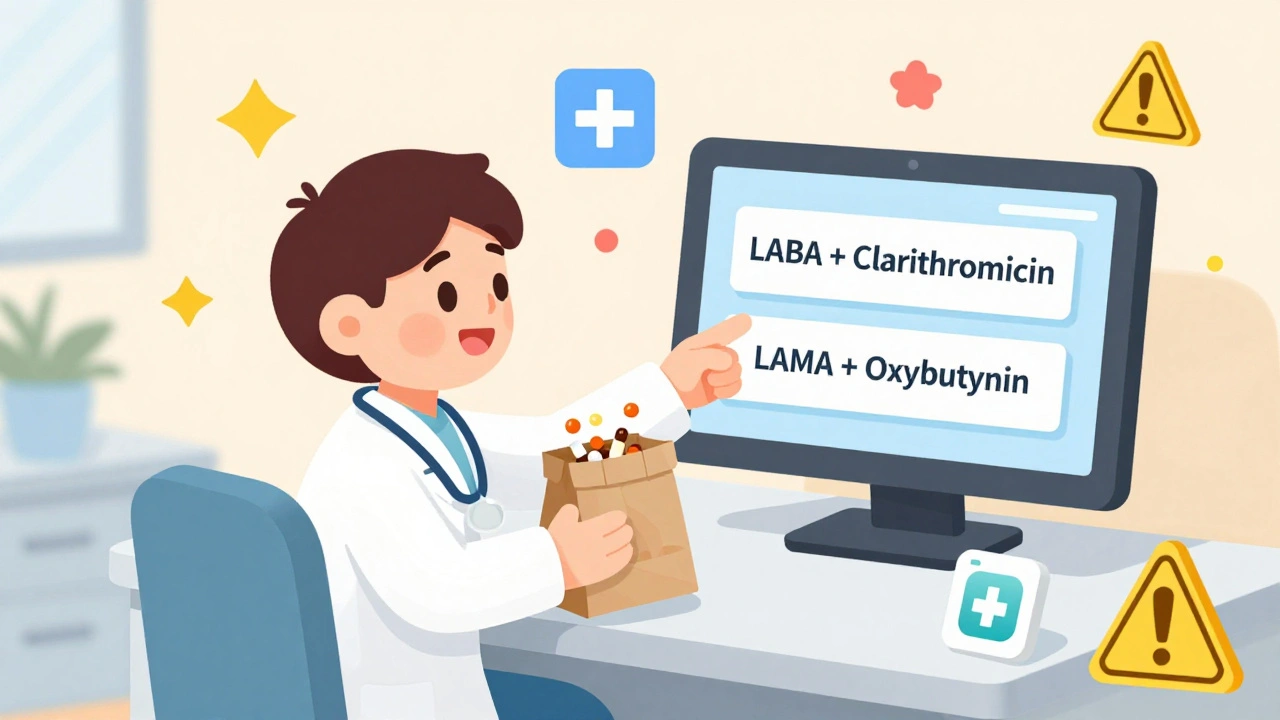
NSAIDs and Aspirin: The Sneaky Triggers You Might Not Suspect
If you have asthma - especially with nasal polyps or chronic sinusitis - ibuprofen, naproxen, or aspirin might be a ticking time bomb. About 10% of adult asthmatics react to these common pain relievers. Symptoms can hit within 30 to 120 minutes: wheezing, chest tightness, even anaphylaxis. One woman in the UK reported a near-fatal asthma attack after taking ibuprofen for a headache. She’d taken it before with no problem. But over time, her sensitivity grew. That’s not unusual. NSAID-induced asthma isn’t an allergy - it’s a pharmacological reaction tied to how your body processes prostaglandins. If you’ve ever had a reaction, you need to avoid all NSAIDs permanently. Acetaminophen (Tylenol) is usually a safer alternative - but always check with your doctor first.Anticholinergic Overload: When Your Bladder Meds Hurt Your Lungs
LAMAs like tiotropium are powerful tools for COPD. But they’re also anticholinergics - meaning they block a chemical that causes muscle contraction. That’s great for your airways. But if you’re also taking oxybutynin for an overactive bladder, diphenhydramine for allergies, or amitriptyline for nerve pain, you’re doubling down on anticholinergic effects. The result? Dry mouth, constipation, blurry vision - and worse, urinary retention. A 2023 European Respiratory Society study found a 28% higher risk of acute urinary retention in male COPD patients taking both a LAMA and a bladder medication. That’s not just uncomfortable. It can lead to infections, kidney stress, and hospitalization. This isn’t about avoiding bladder meds. It’s about awareness. Tell your pulmonologist and urologist what you’re taking for both conditions. There are alternatives - like mirabegron - that don’t have anticholinergic effects.Antibiotics, Antifungals, and the CYP3A4 Trap
Some antibiotics and antifungals don’t directly affect your lungs - but they mess with how your liver breaks down your asthma and COPD meds. Clarithromycin, ketoconazole, and itraconazole are strong inhibitors of CYP3A4, an enzyme that metabolizes many bronchodilators, especially LABAs like salmeterol and formoterol. When this enzyme gets blocked, those drugs build up in your system. That can lead to tremors, rapid heartbeat, or even heart rhythm problems. One study showed that patients on LABAs who took clarithromycin had a 2.5x higher risk of cardiac events. That’s why your pharmacist should always check for drug interactions when you get a new prescription - even if it’s for a cold or a fungal infection.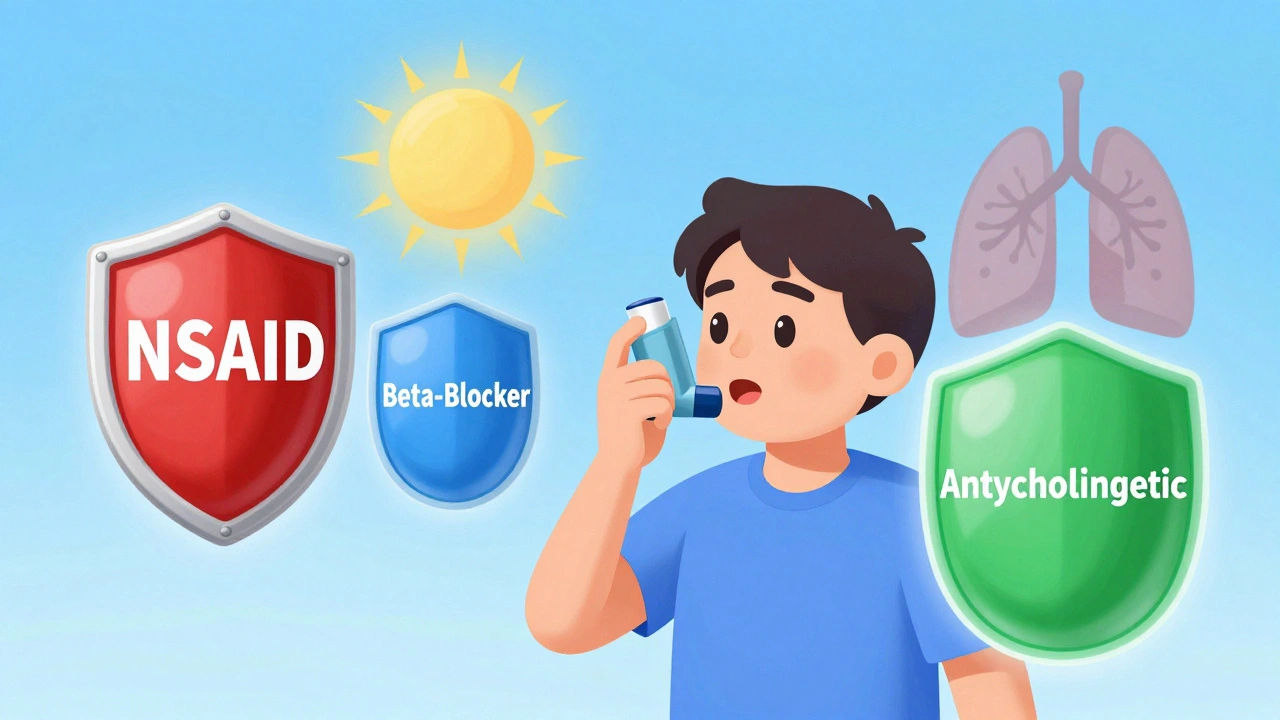
What You Can Do: A Practical Medication Safety Plan
You don’t need to be a pharmacist to protect yourself. Here’s what actually works:- Keep a real-time list of every medication you take - including OTC drugs, vitamins, and supplements. Update it after every doctor’s visit.
- Bring everything in a brown bag to every appointment. This “brown bag test” is recommended by GOLD 2023 guidelines and catches things even you forget.
- Ask your pharmacist to run a full interaction check every time you get a new prescription. Most pharmacies offer this for free.
- Use the COPD Medication Safety App (launched in 2023). It checks over 95% of common drugs and flags dangerous combos in seconds.
- Know your warning signs: worsening shortness of breath, chest tightness, dizziness, confusion, or sudden fatigue after starting a new drug.
When to Call Your Doctor Immediately
Don’t wait for a scheduled appointment if you notice any of these after starting a new medication:- Sudden wheezing or coughing that doesn’t improve with your rescue inhaler
- Heart rate over 120 beats per minute without exercise
- Difficulty urinating or complete inability to pass urine
- Extreme drowsiness, slurred speech, or confusion
- Oxygen levels below 90% (if you monitor them)
The Future of Medication Safety
New tools are emerging. Electronic health records now include respiratory-specific interaction alerts - and studies show they cut dangerous prescriptions by nearly 30%. The FDA’s Sentinel Initiative is actively tracking drug combos that harm lung patients. And researchers are moving toward personalized risk scores - not just population guidelines. In the next few years, your doctor might use your genetic profile, kidney function, and current meds to calculate your personal risk of a bad interaction. Until then, your best defense is knowledge and vigilance. Don’t assume a drug is safe just because it’s prescribed for something else. Your lungs are already working overtime. Don’t let other meds make them work harder.Can I take ibuprofen if I have asthma?
About 10% of adults with asthma - especially those with nasal polyps or chronic sinusitis - can have severe reactions to ibuprofen and other NSAIDs. These reactions can cause wheezing, chest tightness, or even an asthma attack within minutes to hours. If you’ve ever had a reaction, avoid all NSAIDs. Acetaminophen (Tylenol) is usually safer, but always check with your doctor first.
Are beta-blockers safe for people with asthma?
Nonselective beta-blockers like propranolol and nadolol can trigger dangerous bronchospasm in asthma patients by blocking lung receptors. They should be avoided. Selective beta-blockers like metoprolol are generally safer and may even reduce COPD flare-ups in patients with heart disease. But even these should be started at low doses under medical supervision. Never start or stop a beta-blocker without talking to your doctor.
Can I use diphenhydramine (Benadryl) if I have COPD?
Diphenhydramine is an anticholinergic and can worsen COPD symptoms by increasing mucus thickness and reducing airway clearance. It also increases the risk of respiratory depression when combined with opioids or sedatives. For allergies, non-sedating antihistamines like loratadine or cetirizine are safer choices. Always check with your doctor before using any OTC sleep or allergy aid.
What should I do if I’m on multiple medications for asthma and COPD?
Keep a complete, up-to-date list of all medications - including prescriptions, OTC drugs, vitamins, and supplements. Bring everything in a brown bag to every doctor visit. Ask your pharmacist to run an interaction check every time you get a new prescription. Consider using the COPD Medication Safety App for real-time alerts. Never assume a drug is safe just because it’s for a different condition.
Do electronic health records help prevent dangerous drug interactions?
Yes. Studies show that EHR systems with built-in respiratory-specific interaction alerts reduce dangerous prescribing combinations by about 29%. These alerts flag risky combos like opioids with benzodiazepines, clarithromycin with LABAs, or LAMAs with bladder meds. But they’re not foolproof. Always double-check with your pharmacist and keep your own medication list updated.
What’s the most dangerous drug combo for COPD patients?
The most dangerous combo is opioids (like oxycodone) with benzodiazepines (like alprazolam) or sedating anticholinergics (like diphenhydramine). This combination can cause severe respiratory depression, leading to oxygen levels dropping dangerously low. Studies show this combo increases the risk of life-threatening breathing problems by up to 300% in COPD patients. Always tell your doctor if you’re taking any of these - even occasionally.
Medication safety isn’t a one-time conversation. It’s an ongoing practice. Your lungs are your lifeline. Protect them - one pill, one interaction, one question at a time.

Ignacio Pacheco
So let me get this straight - we’re telling people to avoid ibuprofen because it might trigger an asthma attack, but it’s totally fine to take oxycodone with Benadryl? That’s not safety, that’s Russian roulette with a nebulizer.
And don’t even get me started on the ‘brown bag’ advice. My grandma still uses a brown paper bag to carry her pills because she thinks it keeps them ‘fresh.’ She’s not wrong, but neither is the FDA.
Also, why is the COPD app called ‘COPD Medication Safety App’? Sounds like a rejected superhero name. ‘COPD-Man: Protecting Your Lungs Since 2023.’
Jim Schultz
Let’s be unequivocally clear: the pharmacological landscape of respiratory disease management is not merely complex-it is a labyrinthine, multidimensional minefield where even the most seemingly benign OTC agents can precipitate catastrophic, life-altering, and-yes-I will say it-*preventable* respiratory failure.
Moreover, the notion that ‘acetaminophen is safer’ is, frankly, an oversimplification bordering on dangerous complacency: its hepatic metabolism, particularly in the context of concomitant CYP3A4 inhibition (see: clarithromycin), may induce hepatotoxicity, which, in turn, compromises systemic oxygenation via albumin dysregulation and metabolic acidosis-both of which synergistically exacerbate hypoxemic burden in COPD.
And let’s not forget: anticholinergic burden is not merely a ‘side effect’-it’s a neuropharmacological siege on the parasympathetic nervous system, inducing urinary retention, cognitive fog, and-most insidiously-a progressive decline in mucociliary clearance, which, in chronic smokers, is the very mechanism that keeps the lungs from becoming a bacterial stew.
Bottom line? If you’re on more than three medications, you’re not managing your disease-you’re just waiting for the next adverse event to be logged in FAERS.
And yes, I’ve reviewed every single FDA MedWatch report from 2020–2023. You’re welcome.
Kidar Saleh
There’s something profoundly human about how we treat our lungs like they’re just another organ to be managed with pills.
In the UK, we have a saying: ‘Your breath is your freedom.’ And when you’re told to avoid ibuprofen because it might shut you down, or that your sleep aid could stop you breathing, it doesn’t feel like advice-it feels like grief.
I’ve sat with men in their 60s who’ve stopped playing with their grandchildren because they’re scared to take a painkiller. That’s not medical care. That’s survival with a side of fear.
But here’s the thing: knowledge is power. The brown bag trick? Brilliant. The app? Lifesaving. And asking your pharmacist? That’s not being difficult-it’s being dignified.
Don’t let the complexity make you silent. Ask. Again. And again.
Your lungs remember every breath you give them.
Chloe Madison
Okay, real talk: if you’re on a LAMA for COPD and also taking oxybutynin for your bladder, you are NOT fine.
I’ve seen patients go from ‘just a little dry mouth’ to full-on urinary retention in under 72 hours. It’s not ‘uncommon’-it’s predictable. And it’s avoidable.
Here’s what you do: write down every single thing you take-even that gummy vitamin with diphenhydramine you take ‘just for sleep.’ Bring it to your pharmacist. Ask: ‘Could this be hurting my lungs?’
And if your doctor says, ‘It’s probably fine,’ ask them to check the EHR interaction alert. If they don’t know what that is, find a new doctor.
You are not being paranoid. You are being proactive.
And yes, I’m a nurse. I’ve seen what happens when people wait. Don’t be that person.
Vincent Soldja
Don't mix drugs. Check with pharmacist. Avoid NSAIDs if asthmatic. Beta-blockers risky. Opioids bad with benzos. App helps. Brown bag good.
Done.
Makenzie Keely
Let me just say this with absolute clarity: the combination of opioids and benzodiazepines in COPD patients isn’t just dangerous-it’s a public health crisis that’s been quietly unfolding for over a decade.
And yet, we still prescribe them together like it’s a coffee order: ‘One oxycodone, extra alprazolam, hold the lung function.’
The FDA data is not ambiguous. The 300% increase in respiratory depression? That’s not a statistic-that’s someone’s father, their sister, their neighbor.
And while we’re at it: diphenhydramine is not a ‘sleep aid.’ It’s a chemical restraint for the nervous system, and it’s especially toxic when layered with anticholinergics.
Please, for the love of every breath you’ve ever taken-ask your pharmacist. Write it down. Bring the bag. Use the app. You are not overreacting. You are surviving.
And if you’re reading this and you’re scared? You’re not alone. We’re all just trying not to suffocate in a world that treats our lungs like afterthoughts.
Francine Phillips
My mom took propranolol for anxiety and ended up in the ER with a full asthma attack. She didn’t know it could do that. She thought it was just stress.
Now she only takes metoprolol. And she still doesn’t trust any new meds.
I just wish more doctors would say this stuff out loud.
Also, the brown bag thing is weird but I’m doing it now.
Thanks for the post.
Katherine Gianelli
I’ve spent years watching people with COPD try to be ‘good patients’-taking every pill, never complaining, never asking questions.
But here’s the truth: your lungs don’t care if you’re polite. They only care if you’re safe.
That time you took Benadryl for allergies because ‘it’s just one pill’? That’s not harmless. That’s a quiet sabotage.
And that time you didn’t mention your sleep aid because you didn’t think it counted? Yeah, that’s the exact moment your doctor’s system missed the red flag.
You’re not being difficult. You’re being brave.
Bring the bag. Ask the pharmacist. Say ‘no’ to the combo. Your breath is worth fighting for.
And if you’re tired of being scared? You’re not broken. You’re just tired. Rest. Then fight again.
Joykrishna Banerjee
Typical Western medical reductionism. You think a pill can fix a broken system? The real issue is environmental toxins, poor diet, and sedentary lifestyles-none of which are addressed here.
Also, the ‘COPD Medication Safety App’? A corporate placebo. Real medicine is in Ayurveda and breathwork-things you’ve never heard of because you’re too busy scrolling through your EHR alerts.
And why are we still using beta-blockers at all? In India, we treat hypertension with yoga and turmeric. Your ‘selective’ beta-blockers are just chemical crutches.
Also, 95% of drug interactions are avoidable if you stop taking everything. 🙏
Stop trusting Big Pharma. Start trusting your body. The lungs heal when you stop poisoning them.
And no, I don’t need to see your brown bag.
Peace.
-Joykrishna, B.Sc. (Pharmacology), IIT Delhi (2005)