Anticoagulant Bleeding Risk Calculator
Patient Risk Factors
Risk Assessment Results
For low-risk patients, continue current anticoagulation with standard monitoring. For moderate or high-risk patients, consider dose reduction, additional monitoring, or alternative strategies to minimize bleeding risk.
Why Blood Thinners Can Be Dangerous - And How to Keep Patients Safe
Anticoagulants save lives. They prevent strokes in people with atrial fibrillation, stop deadly clots in the legs and lungs, and protect those with mechanical heart valves. But every time a doctor prescribes a blood thinner, there’s a quiet risk: bleeding. Not just a nosebleed or a bruise - major, life-threatening hemorrhage. In fact, 1 in 50 people on anticoagulants will have a serious bleed each year. That’s not rare. It’s predictable. And it’s preventable.
What Are Anticoagulants, Really?
Anticoagulants - often called blood thinners - don’t actually make blood thinner. They slow down the clotting process. That’s the point. But it’s also the danger. There are three main types used today:
- Warfarin: The old-school option. It’s been around since the 1950s. Works by blocking vitamin K, which your body needs to make clotting factors. Needs regular blood tests (INR) to check if the dose is right.
- DOACs (Direct Oral Anticoagulants): Newer drugs like apixaban, rivaroxaban, dabigatran, and edoxaban. They work faster, don’t need routine blood tests, and are easier to take. But they’re expensive and harder to reverse if someone bleeds.
- Heparins: Injected drugs like enoxaparin or unfractionated heparin. Used in hospitals, during surgeries, or for short-term treatment. They act fast but can cause a rare but dangerous condition called heparin-induced thrombocytopenia (HIT).
Warfarin is still the go-to for people with mechanical heart valves - especially mitral valves - because DOACs have failed in these cases. For most others, DOACs are now preferred. Why? Fewer food interactions, no weekly blood draws, and a lower risk of major bleeding overall.
The Real Risk: Bleeding Isn’t Random - It’s Predictable
Not everyone on blood thinners bleeds. But some people are far more at risk. Here’s who:
- People over 75: Their bodies process drugs slower. Their blood vessels are more fragile. Bleeding risk doubles or even triples.
- Those with kidney problems: Most DOACs are cleared by the kidneys. If creatinine clearance (CrCl) drops below 30 mL/min, drug levels build up. Rivaroxaban needs dose reduction at CrCl <50. Apixaban needs it at CrCl <25.
- People on other blood-thinning meds: Taking aspirin, clopidogrel, or NSAIDs like ibuprofen with a blood thinner? That increases bleeding risk by 50-70%. Dual therapy should be avoided unless absolutely necessary.
- Those with uncontrolled high blood pressure: High pressure bursts weak vessels. It’s a silent partner in hemorrhage.
- Patients with a history of prior bleeding: If you’ve bled before on anticoagulants, you’re far more likely to bleed again.
One study showed that each 10% drop in the time a patient spends in the correct INR range (for warfarin) leads to a 15% higher chance of major bleeding. That’s why consistency matters - not just the dose, but the control.
How to Prevent Bleeding Before It Starts
Prevention isn’t just about the drug. It’s about the whole picture.
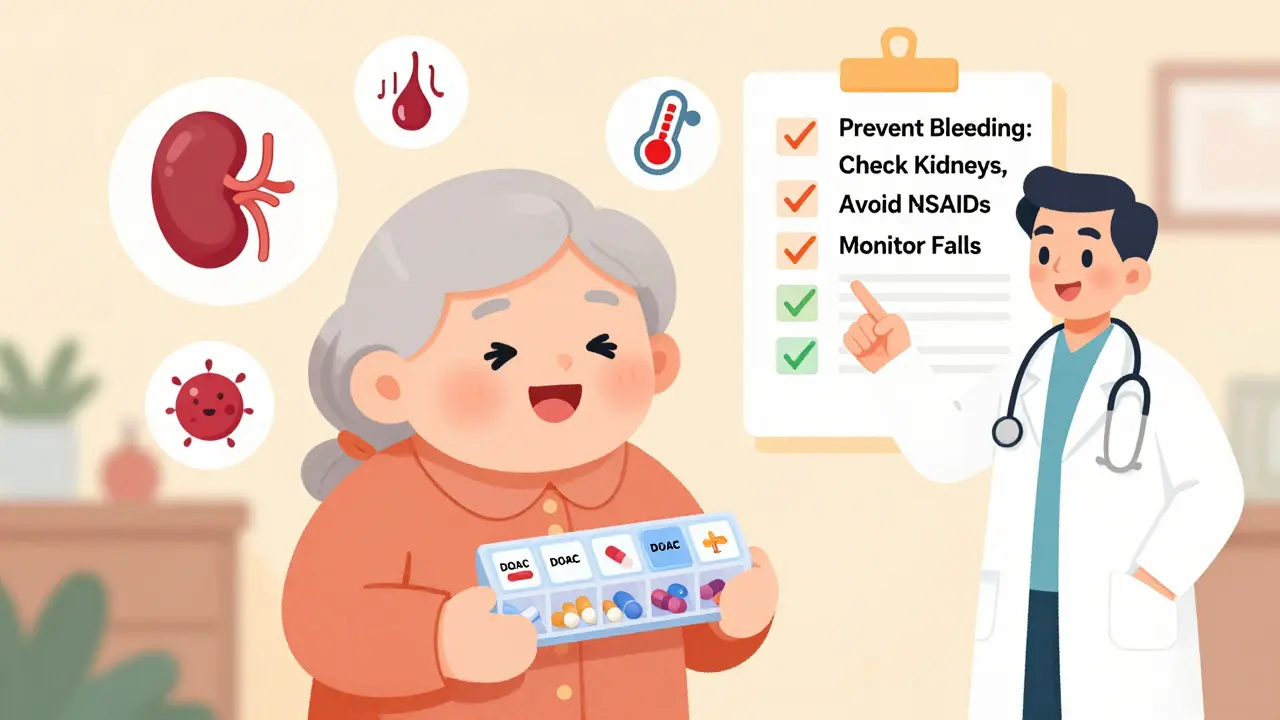
- Test kidney function before starting: Always check CrCl. Don’t assume normal function in older adults. A simple blood test can prevent overdose.
- Review all medications: Look for NSAIDs, SSRIs, herbal supplements like ginkgo or garlic, and even some antibiotics that can interact. Remove anything unnecessary.
- Use the lowest effective dose: Especially for DOACs. Apixaban 2.5 mg twice daily is just as effective as 5 mg for many elderly patients with atrial fibrillation - and cuts bleeding risk by 31%.
- Monitor INR for warfarin users: Aim for TTR (time in therapeutic range) above 70%. If it’s below 60%, the patient is at high risk. Consider switching to a DOAC if appropriate.
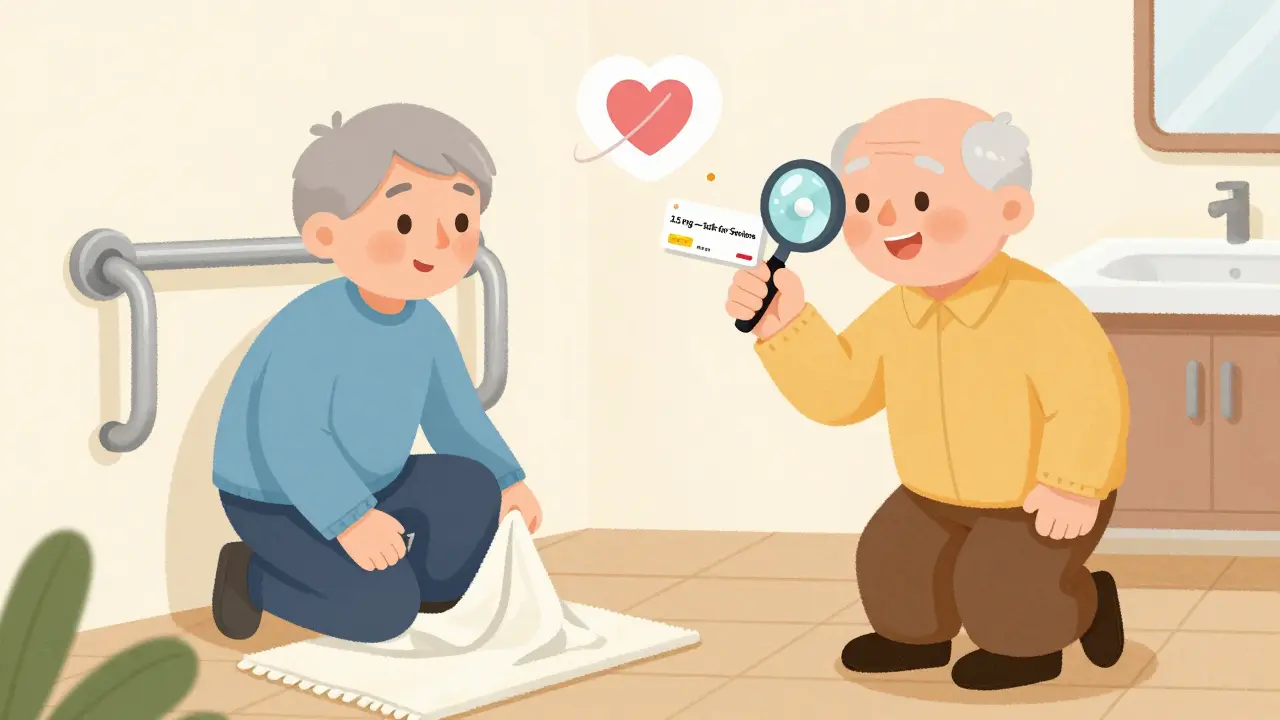
- Teach fall prevention: Most major bleeds in the elderly start with a fall. Remove rugs, install grab bars, check vision, review sedatives. A head injury on a blood thinner can be fatal.
What Happens When Bleeding Occurs?
It’s not a matter of if - it’s when. And how you respond makes all the difference.
For warfarin: Use 4f-PCC (four-factor prothrombin complex concentrate). It fixes the clotting problem in 15 minutes. Fresh frozen plasma takes hours and is less effective. Give vitamin K too - but don’t rely on it alone in emergencies.
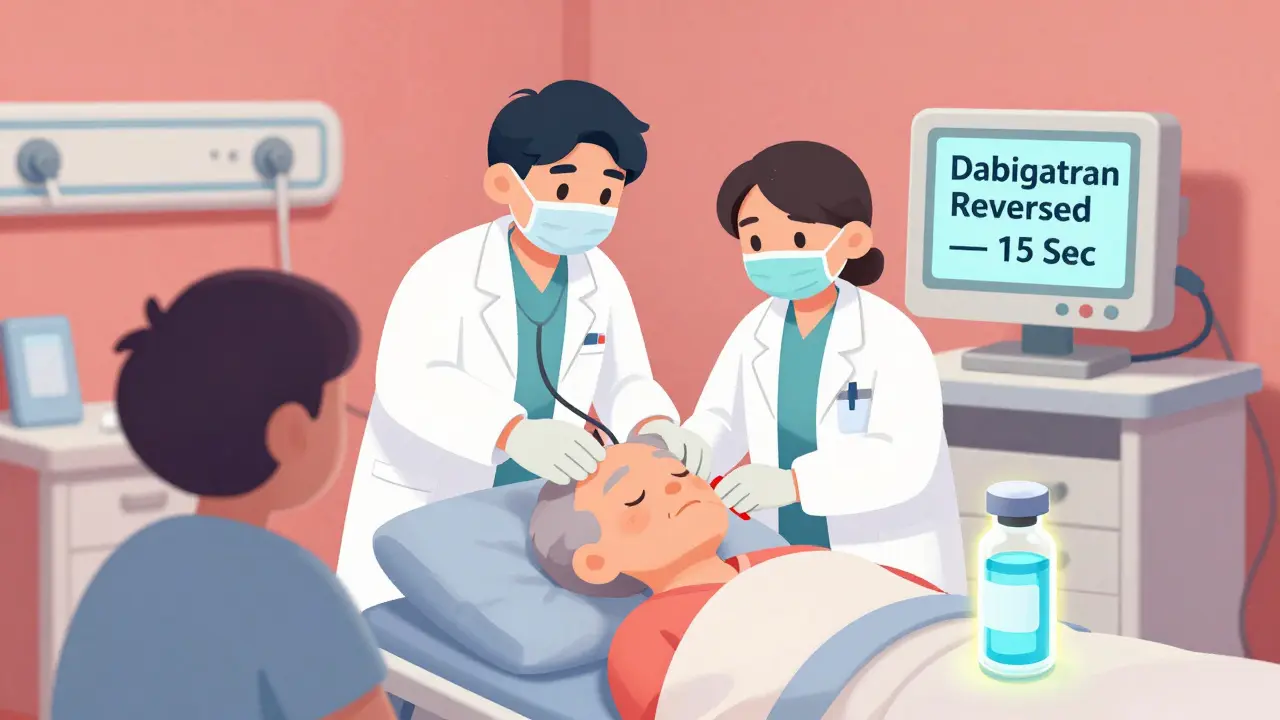
For dabigatran: Use idarucizumab. It’s a specific antidote. It reverses the drug in minutes. It’s expensive, but so is a brain bleed.
For apixaban, rivaroxaban, edoxaban: Use andexanet alfa. It’s the only approved reversal agent for factor Xa inhibitors. But it costs about $13,000 per dose. Many hospitals don’t stock it. Know your facility’s policy.
For heparin: Protamine sulfate is the antidote. It neutralizes unfractionated heparin well. But it only reverses about 60% of low molecular weight heparin. Don’t expect miracles.
Never wait for a CT scan to confirm bleeding. If someone is unstable - low blood pressure, confused, vomiting blood, or has a sudden headache - treat the anticoagulation first. Reverse the drug. Then find the source.
When to Restart After a Bleed
Many doctors stop anticoagulants after a bleed - and never restart. That’s often the wrong call.
For someone with atrial fibrillation and a CHA₂DS₂-VASc score of 5 (high stroke risk), stopping anticoagulation means a 10% chance of stroke in one year. That’s worse than the bleeding risk.
Guidelines now say: restart as soon as it’s safe. For minor bleeds (like a nosebleed or small bruise), restart within days. For major bleeds (like a brain or GI bleed), wait 1-4 weeks depending on the cause and risk of recurrence.
Studies show patients who restart anticoagulation after a GI bleed have lower death rates than those who don’t - even if they bleed again. The benefit of preventing stroke or pulmonary embolism outweighs the risk.
Special Cases: Pregnancy, Surgery, and Elderly Patients
Anticoagulation in pregnancy? Heparins only. DOACs cross the placenta. Warfarin causes birth defects. Low molecular weight heparin is the standard for women with mechanical valves or history of clots.
For surgery? Hold DOACs 1-3 days before, depending on kidney function and bleeding risk. Hold warfarin 5 days before, and bridge with heparin only if the clotting risk is very high. Most people don’t need bridging.
For the elderly? Start low. Go slow. Use apixaban 2.5 mg twice daily. Avoid NSAIDs. Check kidneys every 3-6 months. Educate caregivers. Falls are the #1 cause of major bleeding in this group.
The Future: Better Tools on the Horizon
Scientists are working on a universal reversal agent called ciraparantag. It could reverse all major anticoagulants - DOACs, heparins, even warfarin - with one shot. It’s in trials now.
Point-of-care tests for DOACs are also coming. Right now, we don’t know if a patient’s rivaroxaban level is too high unless we send blood to a lab. Soon, a finger-prick test could tell us in minutes - like an INR for warfarin. That could cut bleeding events by 15-20%.
Bottom Line: It’s Not About Avoiding Blood Thinners - It’s About Using Them Right
Anticoagulants aren’t the enemy. Misuse is. The goal isn’t to stop them. It’s to use them smarter.
Start with the right patient. Use the right drug. Dose it properly. Monitor kidney function. Remove other bleeding risks. Know how to reverse it. Restart when safe.
For every 100 people on anticoagulants, about 80 will live longer and avoid stroke or clot. About 1-3 will bleed badly. That’s the trade-off. But with better practices, we can turn those 3 into 1 - or even zero.
Can I take ibuprofen while on a blood thinner?
No, not safely. Ibuprofen and other NSAIDs increase bleeding risk by 50-70% when combined with anticoagulants. Use acetaminophen (paracetamol) instead for pain. If you need an anti-inflammatory, talk to your doctor about alternatives that don’t affect platelets or the stomach lining.
Do DOACs really have less bleeding than warfarin?
Yes - overall, they do. Clinical trials show DOACs reduce major bleeding by 19-20% compared to warfarin. Apixaban has the best safety record, with 31% lower major bleeding risk than warfarin in the ARISTOTLE trial. But they’re not risk-free. GI bleeding can be more common with some DOACs, and reversal is harder without specific antidotes.
What if I miss a dose of my blood thinner?
If you miss a dose of a DOAC, take it as soon as you remember - but only if it’s within half the dosing interval (e.g., if you take it twice daily and you remember within 6 hours, take it). If it’s too late, skip it and take your next dose on time. Never double up. For warfarin, missing a dose is less urgent - just report it to your anticoagulation clinic. Never guess your next dose. Always call your provider.
Can I drink alcohol while on anticoagulants?
Moderate alcohol is usually okay - one drink per day for women, two for men. But heavy drinking increases bleeding risk by disrupting liver function and clotting factors. It also raises the chance of falls. If you drink regularly, your INR can become unstable. Talk to your doctor about your habits - don’t hide them.
Is there a natural alternative to blood thinners?
No. Things like garlic, ginger, fish oil, or turmeric may have mild effects on clotting, but they are not substitutes for prescribed anticoagulants. Relying on them puts you at serious risk of stroke or pulmonary embolism. If you want to reduce medication, work with your doctor to adjust your treatment - don’t self-medicate with supplements.
How often should kidney function be checked on DOACs?
At least once a year for healthy adults. But if you’re over 75, have diabetes, high blood pressure, or known kidney issues, check every 3-6 months. DOACs are cleared by the kidneys. If kidney function drops, drug levels rise - and so does bleeding risk. A simple blood test (creatinine, then eGFR) can prevent overdose.

June Richards
So let me get this straight - we’re giving people drugs that can kill them, then acting shocked when they bleed? 🙄 At least admit it’s a numbers game. 1 in 50? That’s not a side effect - that’s a feature.
Lisa Rodriguez
I’ve seen so many patients on warfarin get their INR checked every 2 weeks - and still end up in the ER because they ate a whole bag of kale and didn’t tell anyone. The real problem isn’t the drug, it’s the lack of patient education. We need to stop treating this like a pharmacy problem and start treating it like a behavioral one.
Chris & Kara Cutler
DOACs are great until you need to reverse them and your hospital doesn’t have andexanet. Then you’re just praying. 🙏
Rachel Liew
I had a patient who fell and bled into his skull on apixaban. We reversed it with PCC, stabilized him, and restarted after 10 days. He’s hiking again. This isn’t about avoiding risk - it’s about managing it wisely.
Jaden Green
Let’s be honest - the entire anticoagulation paradigm is a corporate-driven illusion. DOACs were marketed as ‘easier’ because they’re more profitable, not because they’re objectively better. Warfarin, despite its flaws, has 70 years of real-world data. DOACs? We’re still waiting for the long-term mortality data. And don’t get me started on the cost of reversal agents - $13,000 for a vial? That’s not medicine, that’s extortion disguised as innovation.
Lu Gao
I know this sounds crazy but… what if we just stopped prescribing anticoagulants to people who can’t afford to fall? 🤔 Like, really - if someone’s 82, lives alone, has bad balance, and takes 12 meds… maybe the real risk isn’t the stroke - it’s the 3am trip to the ER with a subdural. We’re not saving lives here. We’re just delaying death with a side of trauma.
Donna Macaranas
I love how this post breaks down the science so clearly. I’m a nurse and I’ve seen the chaos when people mix NSAIDs with warfarin - it’s like watching a slow-motion train wreck. So glad someone’s finally saying: stop the ibuprofen. Just use Tylenol. It’s that simple.
Angel Fitzpatrick
You know who’s really behind this? The pharmaceutical lobby. They paid off the guidelines committee. The FDA doesn’t care if you bleed - they care if the stock price goes up. And now they’ve got you all believing DOACs are ‘safer’ because they don’t need blood tests? That’s not safety - that’s convenience for the patient and profit for Big Pharma. Ciraparantag? Sounds like a PR stunt. They’re not trying to save lives - they’re trying to lock you into a lifetime of expensive prescriptions.
Nidhi Rajpara
I am from India and here many patient take warfarin without any INR monitoring. They think it is like paracetamol. This is very dangerous. Doctor must educate patient about this. I think every country need national guideline for this.
Nancy Nino
I appreciate the thoroughness of this post. Truly. But I must say - the tone feels almost… clinical. Like we’re discussing a spreadsheet. Let’s remember: these aren’t just INR values or CrCl numbers. These are grandmas who just want to walk their dog without fear. Grandpas who want to hug their grandkids without worrying they’ll crack a rib. This isn’t just about protocols - it’s about dignity. And yes, restarting anticoagulants after a bleed? That’s not just medicine. That’s love with a prescription pad.
Nicki Aries
I just want to say - thank you for mentioning the fall prevention piece. I’ve had two patients die from subdural hematomas after minor falls. One was on apixaban. The other was on warfarin. Both were told to ‘be careful.’ That’s not enough. We need home safety assessments. We need PT referrals. We need to treat bleeding risk like a systemic problem - not a drug problem.
Ed Di Cristofaro
Man, I had my cousin on rivaroxaban. He took ibuprofen for his back pain. Blew a vessel in his gut. Ended up in ICU for a week. They had to give him a blood transfusion. He’s lucky he didn’t die. People need to stop thinking OTC meds are harmless. They’re not. Ever.
Jamie Allan Brown
This is the kind of post that reminds me why I became a clinician. Not because I love drugs - but because I love people. And sometimes, saving someone means knowing when to stop a drug. Not just when to start it. Thank you for the nuance. The future of medicine isn’t in the next breakthrough - it’s in the quiet, careful decisions we make every day.