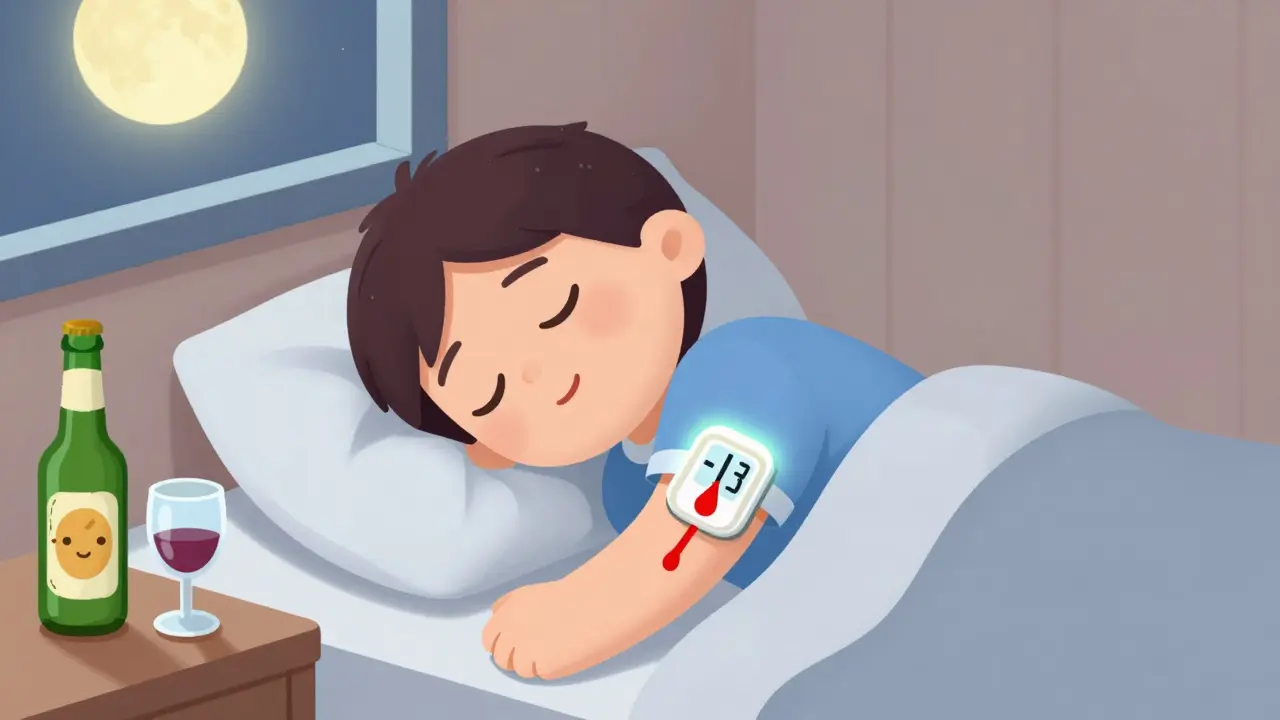
Drinking alcohol while taking diabetes meds isn't just a bad idea-it can land you in the ER. Many people don’t realize that a single beer or glass of wine can send blood sugar crashing hours later, especially while sleeping. This isn’t about willpower or discipline. It’s about chemistry. Alcohol interferes with how your liver releases glucose, and when you’re on insulin or sulfonylureas, that interference can be life-threatening.
Why Alcohol and Diabetes Meds Don’t Mix
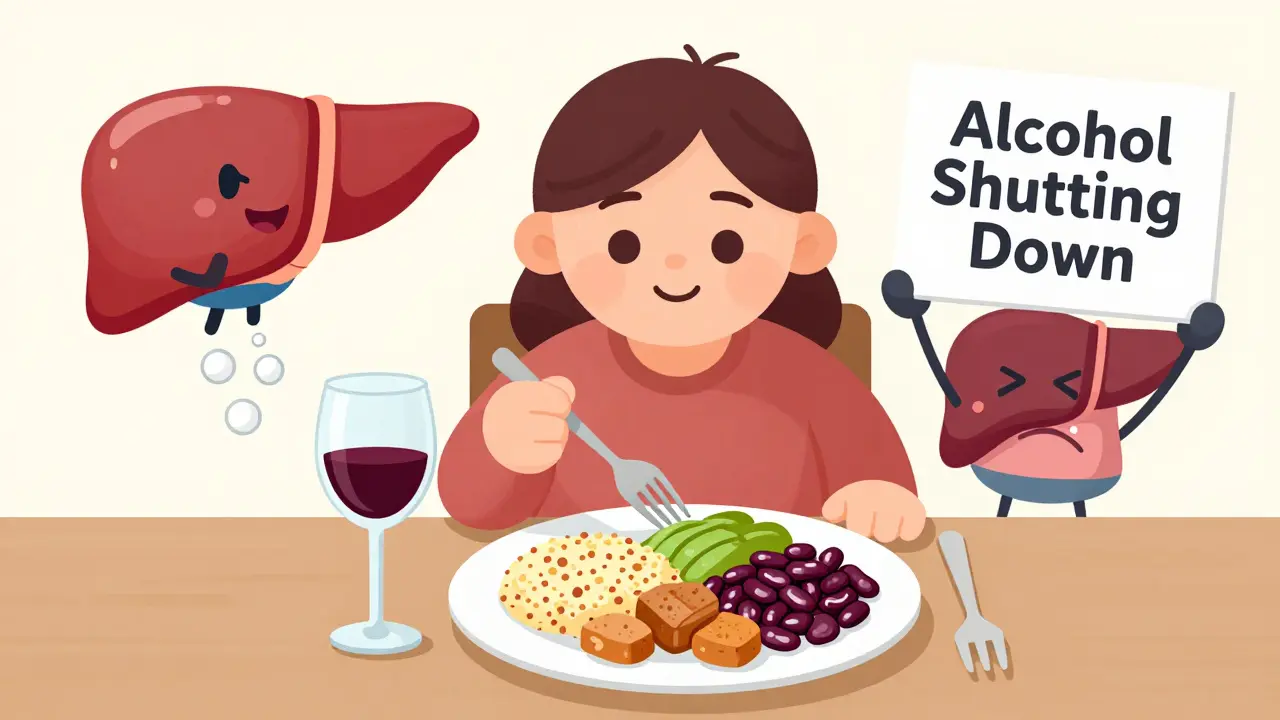
Your liver is your body’s glucose backup system. When blood sugar drops, it steps in and turns stored glycogen or amino acids into glucose. Alcohol shuts that down. Ethanol metabolism floods the liver with NADH, which blocks the enzymes needed to make new glucose. Studies show this can reduce glucose production by up to 37% for up to eight hours after drinking.
Now add diabetes medications into the mix. Insulin and sulfonylureas like glipizide or glyburide force your body to lower blood sugar. Alcohol doesn’t just add to that effect-it delays your body’s ability to recover. The result? A dangerous, unpredictable drop in blood sugar that can hit hours after you’ve stopped drinking.
It’s not just about the drink. A 2020 meta-analysis found that combining alcohol with sulfonylureas increases hypoglycemia risk by 2.3 times. With insulin, the danger lasts up to 24 hours. That’s why so many hospital visits happen between midnight and 6 a.m.-people wake up confused, sweating, or worse, because their blood sugar dropped while they were asleep.
Which Medications Are Most Dangerous with Alcohol?
Not all diabetes drugs carry the same risk. Here’s how they stack up:
- Insulin: Alcohol can cause delayed hypoglycemia, sometimes 12-24 hours after drinking. This is especially risky for those using basal insulin or insulin pumps.
- Sulfonylureas (glyburide, glipizide, glimepiride): These trigger insulin release regardless of blood sugar levels. Alcohol removes your safety net. The risk spikes sharply.
- Chlorpropamide: A rarely used sulfonylurea, but extremely dangerous with alcohol. It can cause flushing, nausea, and rapid heartbeat even with small amounts of ethanol.
- Metformin: Doesn’t directly cause low blood sugar, but alcohol increases lactic acidosis risk by 5.7 times. Symptoms? Muscle pain, fast heartbeat, dizziness, stomach upset. This isn’t just a low sugar issue-it’s a metabolic emergency.
- GLP-1 agonists (like semaglutide) and SGLT2 inhibitors (like empagliflozin): Lower risk for hypoglycemia on their own, but alcohol can still cause drops, especially if you’re eating less or exercising.
The FDA requires a boxed warning on metformin labels for alcohol interactions. That’s the highest level of alert. If your prescription bottle says this, don’t ignore it.
What Counts as a ‘Safe’ Drink?
There’s no such thing as a completely safe drink with diabetes meds-but there are safer choices.
Alcohol itself has no carbs, but mixers do. A mojito? Around 24 grams of sugar. A glass of sweet wine? Up to 14 grams. A vodka soda with lime? Zero grams. The difference isn’t just taste-it’s blood sugar stability.
Here’s what the American Diabetes Association recommends:
- Best options: Dry white or red wine (under 1g sugar per 5 oz), light beer (under 5g carbs per 12 oz), distilled spirits (vodka, gin, whiskey) mixed with soda water and lime.
- Avoid: Sweet wines, cocktails with juice, soda, or syrup. Even ‘sugar-free’ mixers can trigger insulin spikes if they contain artificial sweeteners that affect gut hormones.
- Portion control: One drink per day for women, two for men. One drink = 12 oz beer, 5 oz wine, or 1.5 oz spirits.
And here’s the catch: even these ‘safe’ drinks can drop your blood sugar by 15-20 mg/dL within 2-3 hours. That’s enough to trigger symptoms in someone already near the low end of normal.
How to Drink Safely (If You Choose To)
If you’re going to drink, treat it like a medical procedure. Here’s what actually works:
- Never drink on an empty stomach. Always eat food with carbs-like whole grains, beans, or fruit-before and while drinking. A steak with no sides won’t cut it.
- Check your blood sugar before you start. If it’s below 100 mg/dL, eat something first. Don’t wait.
- Check again 2 hours after drinking. Many people stop checking after the first hour. That’s when the real drop happens.
- Check before bed. If your sugar is below 100 mg/dL, eat a small snack with protein and complex carbs-like peanut butter on whole wheat or a small apple with cheese.
- Wear your medical ID. If you pass out, paramedics need to know you have diabetes. A 2023 Kaiser Permanente study showed this cuts emergency response time by nearly half.
- Tell someone. Make sure a friend or partner knows you have diabetes. Alcohol masks hypoglycemia symptoms. You might look drunk when you’re actually in danger.
And here’s something most people don’t know: alcohol blunts your body’s warning signs. Normally, you’d feel shaky, sweaty, or heart-pounding when your sugar drops. Alcohol dulls those signals. A 2021 study found epinephrine response dropped by 42% after drinking. You won’t feel it until it’s too late.
Real Stories, Real Risks
On Reddit, a user named SugarFreeSince19 wrote: ‘I had three tequila shots at a party. My friends thought I was just drunk. I passed out. Woke up in the ER with a blood sugar of 42.’
A man in his 50s using insulin told his endocrinologist he had ‘two beers on Friday nights for years.’ He never had a problem-until one night he didn’t eat dinner. He woke up at 3 a.m. with confusion, chest pain, and a blood sugar of 31 mg/dL. He needed glucagon. His pump didn’t alert him because the low happened hours after drinking.
Diabetes Daily surveyed 1,245 people in early 2024. Seventy-three percent had at least one alcohol-related low in the past year. Twenty-nine percent needed someone else to help them-because they couldn’t treat themselves.
These aren’t outliers. They’re the norm.
What About New Tech?
Continuous glucose monitors (CGMs) are changing the game. Dexcom’s G7, released in late 2023, now lets users log alcohol intake. The system adjusts alerts based on timing and medication use. It’s not perfect-but it’s better than guessing.
A 2024 pilot study showed that people who drank alcohol within four hours after dinner had 31% fewer nighttime lows than those who drank later. Timing matters. Eating dinner first gives your liver a glucose buffer.
Researchers are also looking at genetic differences. Some people have variations in the CYP2E1 enzyme that break down alcohol faster or slower. This might explain why some people crash after one drink and others don’t. In the future, personalized risk scores may guide advice.
Bottom Line: It’s Not About Abstinence-It’s About Awareness
You don’t have to quit alcohol to manage diabetes. But you do need to treat it like a medication-with rules, timing, and respect.
If you’re on insulin or sulfonylureas, alcohol is a high-risk variable. Don’t assume you know how your body will react. Test. Eat. Monitor. Inform. Repeat.
Every year, over 12% of all hypoglycemia-related ER visits in the U.S. are tied to alcohol. That’s tens of thousands of preventable emergencies. It’s not about fear. It’s about control. You’ve mastered your meds, your diet, your exercise. Don’t let alcohol undo it all.
One drink, with food, with a plan, and with your CGM on-might be okay. Two drinks, on an empty stomach, while sleeping? That’s a gamble you can’t afford to lose.
Can I drink alcohol if I have type 2 diabetes and take metformin?
You can, but with serious caution. Metformin doesn’t cause low blood sugar on its own, but alcohol increases the risk of lactic acidosis-a rare but life-threatening buildup of acid in the blood. The FDA warns that alcohol can raise this risk by 5.7 times. Symptoms include muscle pain, fast heartbeat, dizziness, and stomach upset. If you drink, stick to one drink occasionally, never on an empty stomach, and avoid binge drinking. Talk to your doctor if you drink regularly.
Why does alcohol cause low blood sugar hours after drinking?
Your liver is busy processing alcohol and can’t release glucose for up to 8-12 hours. Normally, your liver steps in when blood sugar drops, but alcohol blocks that process. If you’re on insulin or sulfonylureas, your body keeps lowering glucose while your liver can’t replenish it. That’s why lows often hit at night or the next morning-when your body needs glucose the most.
Are sugar-free cocktails safe for people with diabetes?
Sugar-free mixers like diet soda or club soda don’t add carbs, so they’re better than sugary drinks. But they’re not risk-free. Alcohol still blocks your liver’s glucose production. And some artificial sweeteners may affect insulin sensitivity or gut hormones, potentially influencing blood sugar. The biggest danger isn’t the sugar-it’s the alcohol itself. Always pair even sugar-free drinks with food and check your blood sugar.
Can I drink alcohol if I use an insulin pump?
Yes, but with extra care. Insulin pumps deliver steady basal insulin, which keeps working even when you’re not eating. Alcohol can cause delayed lows that last 24 hours. Many users report unexpected drops during sleep. Set a temporary basal rate reduction (as advised by your doctor), check your glucose before bed, and eat a snack with carbs and protein. Don’t rely on pump alerts-they may not trigger in time.
What should I do if I feel dizzy or confused after drinking?
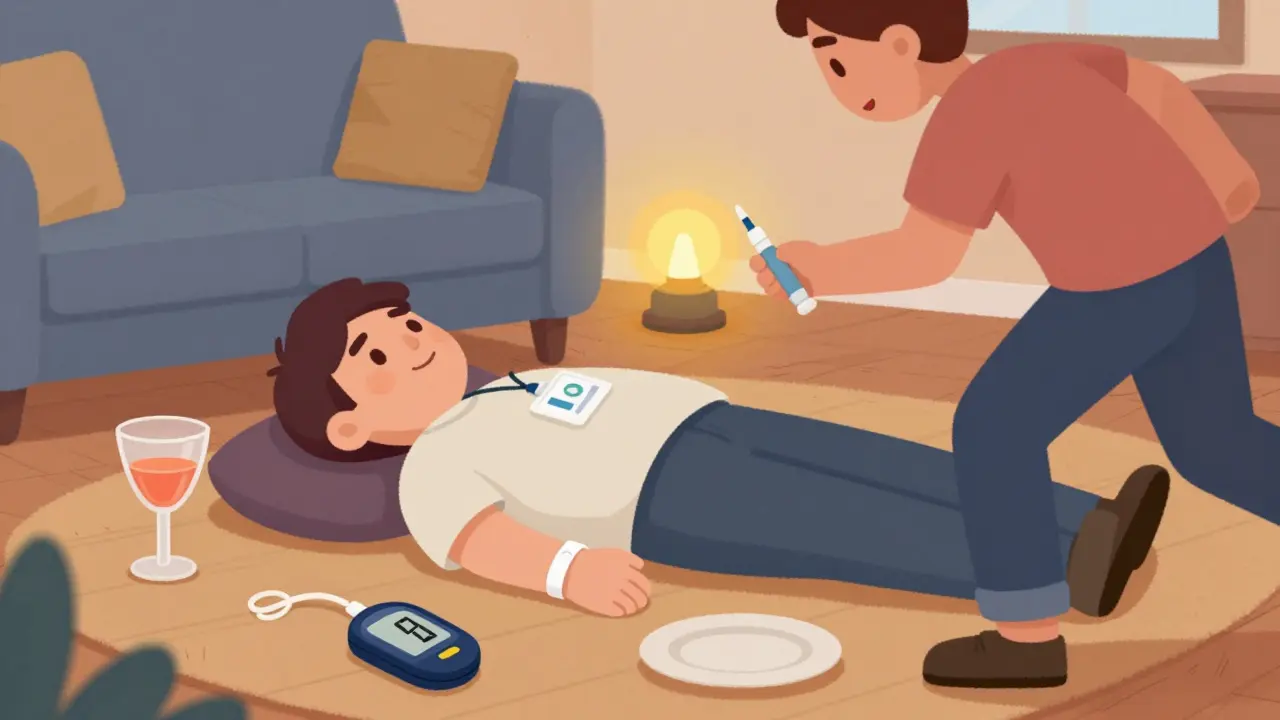
Don’t assume you’re just drunk. Check your blood sugar immediately. If it’s below 70 mg/dL, treat it like a low: consume 15 grams of fast-acting carbs (like 4 oz juice or 3-4 glucose tablets). Wait 15 minutes and recheck. If you can’t test or you’re too confused to treat yourself, get help immediately. Glucagon is the safest option if you’re unconscious or unable to swallow. Always carry it if you drink.
Is it safe to drink alcohol if I’ve never had a low blood sugar episode before?
No. Just because you haven’t had a low doesn’t mean you’re immune. Alcohol’s effect on the liver is the same for everyone. Many people experience their first alcohol-related low after months or years of drinking. Your body’s response can change with age, weight, liver function, or medication adjustments. Always assume risk exists-even if you’ve been ‘fine’ so far.

June Richards
I had a glass of wine last night and my CGM went nuts. Like, 3 hours later it dropped to 58 and I was sweating bullets. Nobody told me this would happen. 🤯
Jaden Green
It's fascinating how the pharmaceutical industry has managed to normalize this risk while simultaneously pushing expensive CGMs and insulin pumps as the sole solution. The liver's metabolic inhibition by ethanol is a well-documented biochemical phenomenon since the 1970s, yet we're still treating it like a newfangled health trend. The real issue? We've outsourced our biological literacy to corporate wellness apps.
Lu Gao
Wait-so sugar-free cocktails aren't safe? 😳 I thought diet soda was the hero here. Guess I’ve been living in a fantasy. Thanks for the reality check. 🍸💔
Angel Fitzpatrick
They don’t want you to know this, but alcohol companies fund half the ADA’s ‘safe drinking’ guidelines. Look at the funding sources. The FDA warning on metformin? A cover-up. They need you drinking so you keep buying meds. The liver doesn’t lie. Your pump doesn’t either. Wake up.
Melissa Melville
So let me get this straight... I can drink, but only if I’m a human glucose monitor with a snack stash and a wingman? Sounds like a VIP pass to the party of doom. 🙃
Bryan Coleman
Been on metformin for 8 years. Had one beer at a BBQ last summer. Woke up at 4am feeling like I’d been kicked by a horse. Checked my BG-49. Learned the hard way. Now I always eat before. And I tell my wife. She’s the reason I’m still here.
Naresh L
In India, we have a phrase: 'Jahan pyar hai, wahan bharosa hai.' Where there is love, there is trust. But with alcohol and diabetes, trust must be earned-through testing, through food, through awareness. Not through habit.
Sami Sahil
Bro just check your sugar before bed!! I used to drink like a champ till I passed out on my couch. Now I got peanut butter on toast before sleep. Life changed. You got this!
franklin hillary
This isn’t a warning it’s a revolution. Your liver is your silent guardian. Alcohol doesn’t just dull your senses-it silences your body’s alarm system. You think you’re just having fun. Your pancreas is screaming. Your brain is fading. Your CGM is flashing red. Don’t wait for the ER to be your teacher. Learn now. Live longer. Period
Ishmael brown
I tried it. One glass. Woke up at 3am with a headache and zero energy. Thought I was hungover. Turns out I was almost dead. Now I don’t even open the bottle. 🤷♂️
Aditya Gupta
One drink = one extra snack. Simple. No stress. No fear. Just plan. You got this bro.
Nancy Nino
It is truly astonishing, and frankly, deeply concerning, that the medical community continues to frame this as a matter of personal responsibility rather than systemic failure in patient education.
Donna Macaranas
I used to think I was fine because I never crashed. Then I read this. Now I check my sugar before every drink. Small change. Big difference. Thanks for the reminder.
Ed Di Cristofaro
Man I drank a six-pack last Friday and woke up fine. So I don’t get all this fear crap. You’re just trying to scare people.