Psoriatic arthritis is an autoimmune disease that affects both skin and joints, often developing in people with psoriasis. Learn how it works, how it's diagnosed, and what treatments can stop joint damage before it's too late.
Read more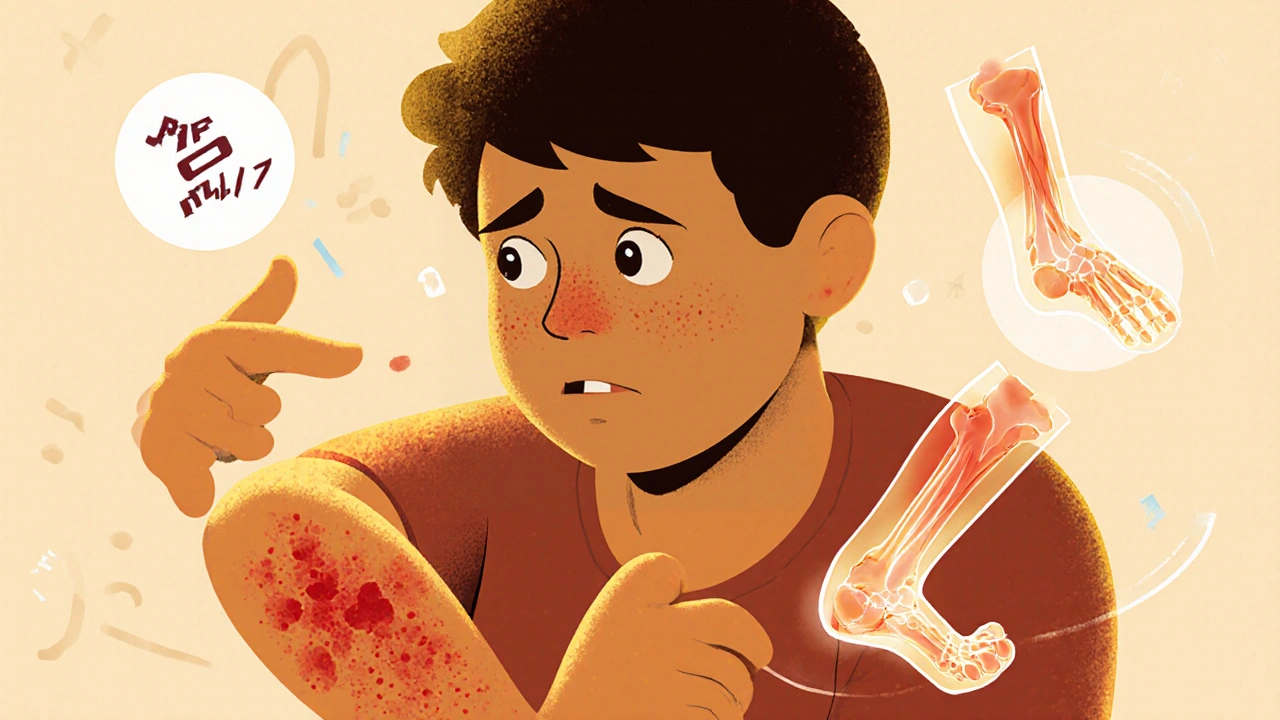
When you have psoriatic arthritis, a type of inflammatory arthritis that affects people with psoriasis. Also known as PsA, it doesn’t just hurt your joints—it’s tied directly to the same immune system mess that causes scaly skin patches. This isn’t just old-age wear and tear. It’s an autoimmune condition where your body attacks its own tissues, mostly in the joints and skin. About 30% of people with psoriasis eventually develop psoriatic arthritis, often years after the skin symptoms show up.
What makes it tricky is that it doesn’t look the same in everyone. Some people get swollen fingers that look like sausages. Others feel stiffness in their lower back, like they’ve slept wrong for weeks. A few even notice pain where tendons attach to bones—like the heel or the bottom of the foot. And yes, your nails might pit, crack, or separate from the nail bed. These aren’t random side effects—they’re all part of the same disease process. joint pain, the hallmark of psoriatic arthritis is often worse in the morning and improves with movement. skin inflammation, the visible trigger tied to the immune response usually shows up as red, scaly plaques on elbows, knees, or the scalp. The two don’t always flare at the same time, but they’re connected at the root.
There’s no cure, but treatments have improved a lot. Some people get relief with simple NSAIDs. Others need stronger drugs that target the immune system—like TNF blockers or IL-17 inhibitors. You might hear about methotrexate or apremilast, both used off-label or FDA-approved for this. Physical therapy helps keep joints moving. Lifestyle changes—like losing weight or cutting out alcohol—can reduce flare-ups. And while some meds are expensive, generic options and patient assistance programs exist. You’re not stuck with pain if you know what to ask for.
What you’ll find below are real, practical guides on how psoriatic arthritis connects to other conditions, what drugs actually help, and how to avoid common mistakes when managing it. Some posts talk about how arthritis meds interact with other treatments. Others break down what works better—biologics vs. pills, cost vs. effectiveness. You’ll see how one person’s joint pain might be linked to something else entirely, like gut health or stress. This isn’t theory. These are stories and facts from people who’ve been there, and doctors who’ve seen the patterns.
Psoriatic arthritis is an autoimmune disease that affects both skin and joints, often developing in people with psoriasis. Learn how it works, how it's diagnosed, and what treatments can stop joint damage before it's too late.
Read more