Swallowing difficulties make it hard to take medicine, but crushing pills can be dangerous. Learn safe alternatives like liquid forms, dissolvable tablets, swallowing techniques, and how to work with your care team to stay on track.
Read more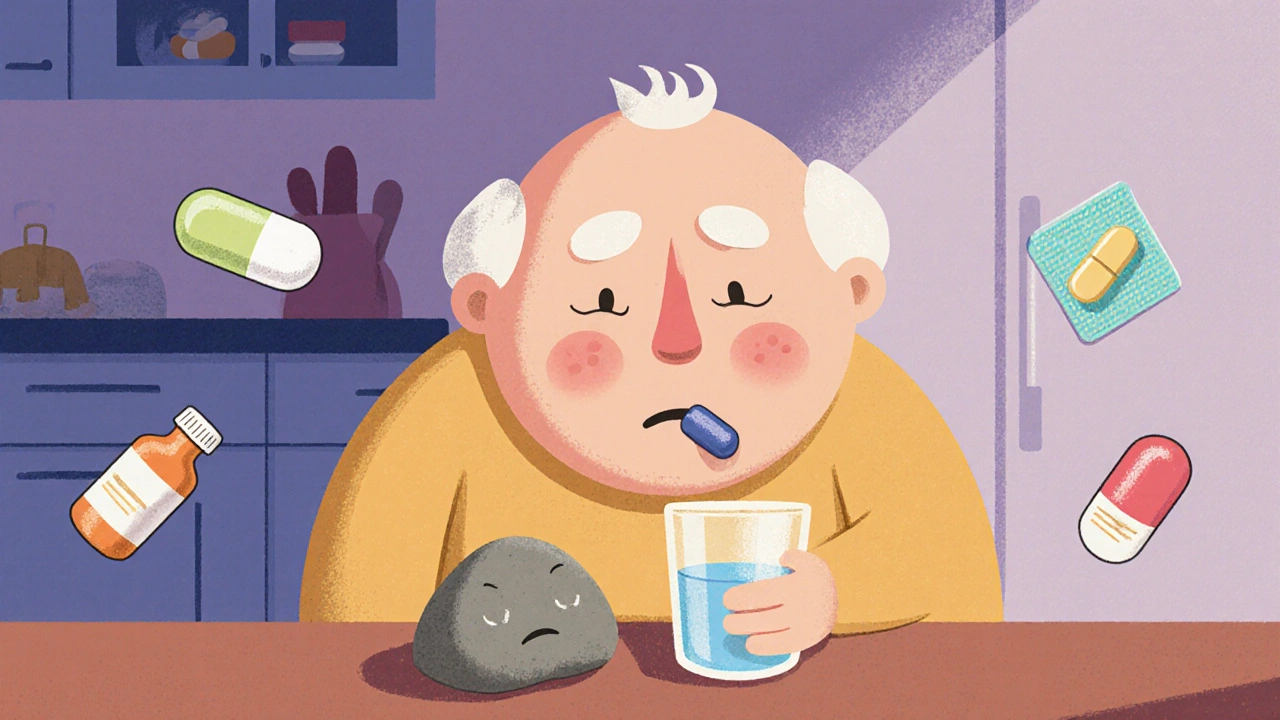
When swallowing difficulties, also known as dysphagia, is the feeling that food or liquid is getting stuck in your throat or chest. It’s not just discomfort—it’s a warning sign that something deeper might be off. This isn’t just about choking on food. It can mean nerve damage, muscle weakness, or even a reaction to a drug you’ve been taking for months. Many people ignore it until they start avoiding meals, losing weight, or coughing after every sip. That’s when it becomes dangerous.
Swallowing difficulties often show up in people with neurological disorders, like multiple sclerosis, Parkinson’s, or stroke, where the brain’s signals to the throat muscles get mixed up. But it’s not just older adults or those with chronic illness. Even healthy people can develop this after starting new medications—especially antipsychotics, muscle relaxants, or certain antidepressants. These drugs can dry out your mouth, slow down throat reflexes, or cause spasms without you realizing it. And if you’re taking generics, you might not know that small differences in fillers or release rates can make a difference in how your body handles them.
It’s also tied to medication side effects, a hidden risk many don’t connect to their daily pills. Think about how many people take multiple drugs for blood pressure, pain, or mental health. Each one adds up. Some medications cause dry mouth, which makes swallowing harder. Others relax the esophageal muscles too much. Even something as simple as a pill that’s too big or coated in a slow-release shell can get stuck. And if you’re on a tight budget, you might not have the luxury of switching to a different brand or formulation—so you just keep taking it, hoping it gets better.
What’s worse, swallowing problems often go undiagnosed because they don’t show up on standard blood tests. Doctors might blame aging or stress. But if you’re struggling to swallow pills, liquids, or even saliva, it’s not normal. Left untreated, it can lead to pneumonia from food entering the lungs, malnutrition, or dehydration. And if you’re managing a chronic condition like MS or diabetes, swallowing issues can throw off your whole treatment plan.
The posts here don’t just list symptoms. They connect the dots between what you’re taking and what your body is telling you. You’ll find real insights on how drugs like those used for MS, depression, or high blood pressure can quietly affect your ability to swallow. You’ll see how bioequivalence studies explain why two generics might behave differently in your throat. You’ll learn how to spot when a medication is the culprit—not just your age or stress. And you’ll get practical advice on what to ask your doctor, how to adjust your pill routine, and which over-the-counter options might help without costing a fortune.
This isn’t about fear. It’s about awareness. Swallowing is something you do without thinking—until it stops working. And when it does, you need clear, honest answers—not marketing or vague warnings. The information below is built from real cases, real studies, and real people who figured out what was wrong before it got worse. You’re not alone. And you don’t have to guess what’s happening to your body.
Swallowing difficulties make it hard to take medicine, but crushing pills can be dangerous. Learn safe alternatives like liquid forms, dissolvable tablets, swallowing techniques, and how to work with your care team to stay on track.
Read more