Pain catastrophizing makes pain worse by amplifying fear and helplessness. CBT tools like thought tracking, cognitive restructuring, and behavioral activation can reduce distress and improve function - even when pain doesn't go away.
Read more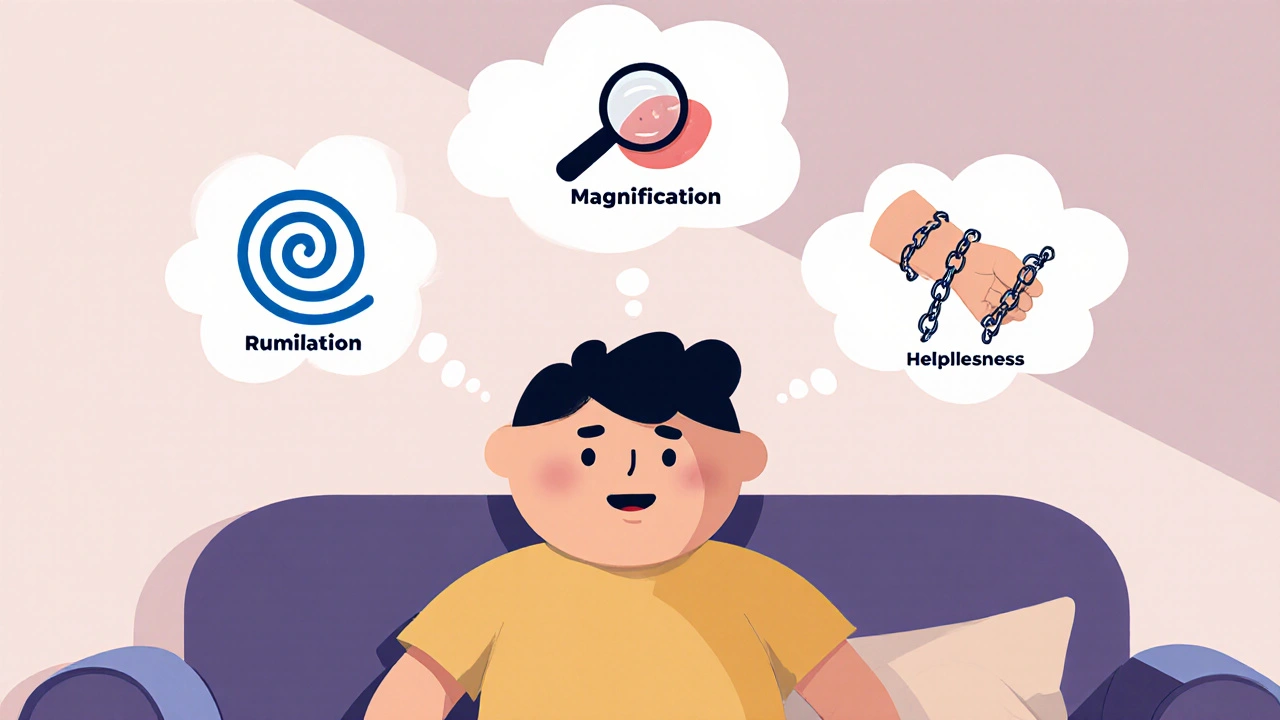
When pain feels unbearable, even when the injury has healed, you might be dealing with pain catastrophizing, a psychological pattern where people magnify the threat of pain, feel helpless about it, and can't stop thinking about it. Also known as pain rumination, it’s not weakness—it’s a measurable brain response that changes how pain signals are processed. This isn’t just "thinking too much" about pain. Studies show people with high pain catastrophizing scores have stronger activity in brain areas linked to emotion and attention when they feel discomfort—even if the physical cause is minor.
Pain catastrophizing often shows up alongside chronic pain, persistent discomfort lasting beyond normal healing time, often tied to conditions like arthritis, back injuries, or nerve damage. It doesn’t cause the injury, but it makes recovery harder. People who catastrophize are more likely to avoid movement, skip meds because they feel they won’t help, or feel isolated because others don’t understand why they still hurt. It also links to psychological pain, the emotional distress that comes from long-term physical discomfort, often overlapping with anxiety and depression. You can’t treat one without the other. That’s why some of the most effective pain strategies—like CBT, mindfulness, and graded activity—focus on rewiring how the brain responds to pain signals, not just numbing the body.
What you’ll find in these posts isn’t just theory. You’ll see real connections: how drug shortages affect people already struggling with pain, why certain medications work better for some than others, and how conditions like arthritis or nerve damage tie into mental patterns. There’s no magic fix, but understanding how your mind and body talk to each other is the first step to taking back control. These articles give you the facts you need to ask better questions, make smarter choices, and stop blaming yourself for pain that won’t go away.
Pain catastrophizing makes pain worse by amplifying fear and helplessness. CBT tools like thought tracking, cognitive restructuring, and behavioral activation can reduce distress and improve function - even when pain doesn't go away.
Read more