Swallowing difficulties make it hard to take medicine, but crushing pills can be dangerous. Learn safe alternatives like liquid forms, dissolvable tablets, swallowing techniques, and how to work with your care team to stay on track.
Read more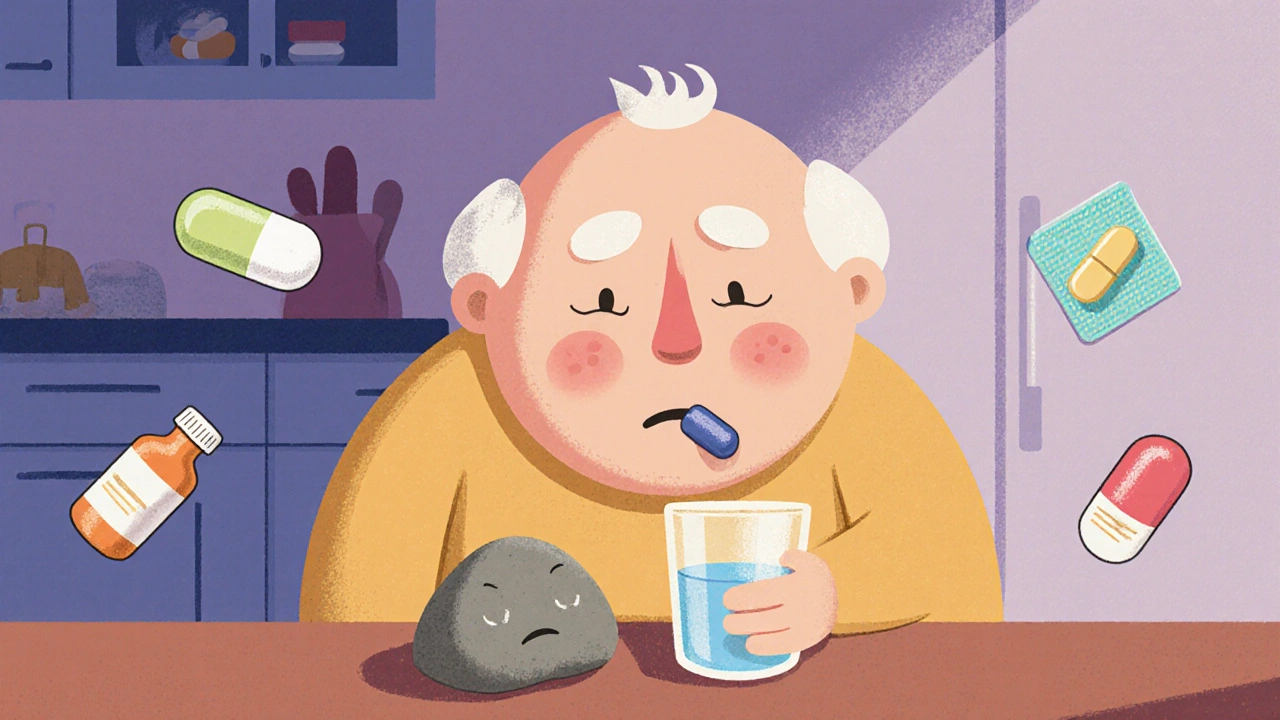
When swallowing becomes hard, painful, or impossible, you're dealing with dysphagia, a condition where food or liquid has trouble moving from the mouth to the stomach. Also known as swallowing difficulty, it’s not just an annoyance—it’s a red flag that something in your nervous system, muscles, or throat isn’t working right. It can happen to anyone, but it’s more common in older adults, stroke survivors, or people with Parkinson’s, MS, or ALS. The real danger isn’t the struggle itself—it’s what happens when food or liquid goes down the wrong pipe. Aspiration pneumonia, malnutrition, and dehydration are real risks, and they often sneak up quietly.
Dysphagia isn’t one thing. It’s a symptom with many roots. neurogenic dysphagia, caused by brain or nerve damage from stroke, dementia, or multiple sclerosis, messes with the signals that tell your throat to swallow. medication side effects, especially from anticholinergics, sedatives, or certain antipsychotics, can dry out your mouth or slow down muscle coordination, making swallowing harder. Even common drugs like calcium channel blockers or bisphosphonates can irritate the esophagus. And if you’re taking multiple meds—common for older adults—their combined effects can turn a mild issue into a serious one.
Some people think dysphagia just means eating slower. It doesn’t. It means food gets stuck, you cough during meals, your voice gets wet or gurgly, or you lose weight without trying. If you’ve noticed any of this, don’t wait. A simple swallow test or a speech-language pathologist’s evaluation can catch problems before they turn into hospital visits. And if you’re on meds that might be contributing, talk to your doctor about alternatives. Generic drugs are just as effective for most conditions, but when it comes to swallowing, even small differences in formulation—like tablet size or coating—can matter. You don’t need to guess what’s causing your trouble. The right questions, and the right team, can find the answer.
Below, you’ll find real stories and science-backed guides on how drugs affect swallowing, what conditions mimic dysphagia, and how to spot when a medication is doing more harm than good. No fluff. Just what you need to know to protect yourself or someone you care about.
Swallowing difficulties make it hard to take medicine, but crushing pills can be dangerous. Learn safe alternatives like liquid forms, dissolvable tablets, swallowing techniques, and how to work with your care team to stay on track.
Read more