Pain catastrophizing makes pain worse by amplifying fear and helplessness. CBT tools like thought tracking, cognitive restructuring, and behavioral activation can reduce distress and improve function - even when pain doesn't go away.
Read more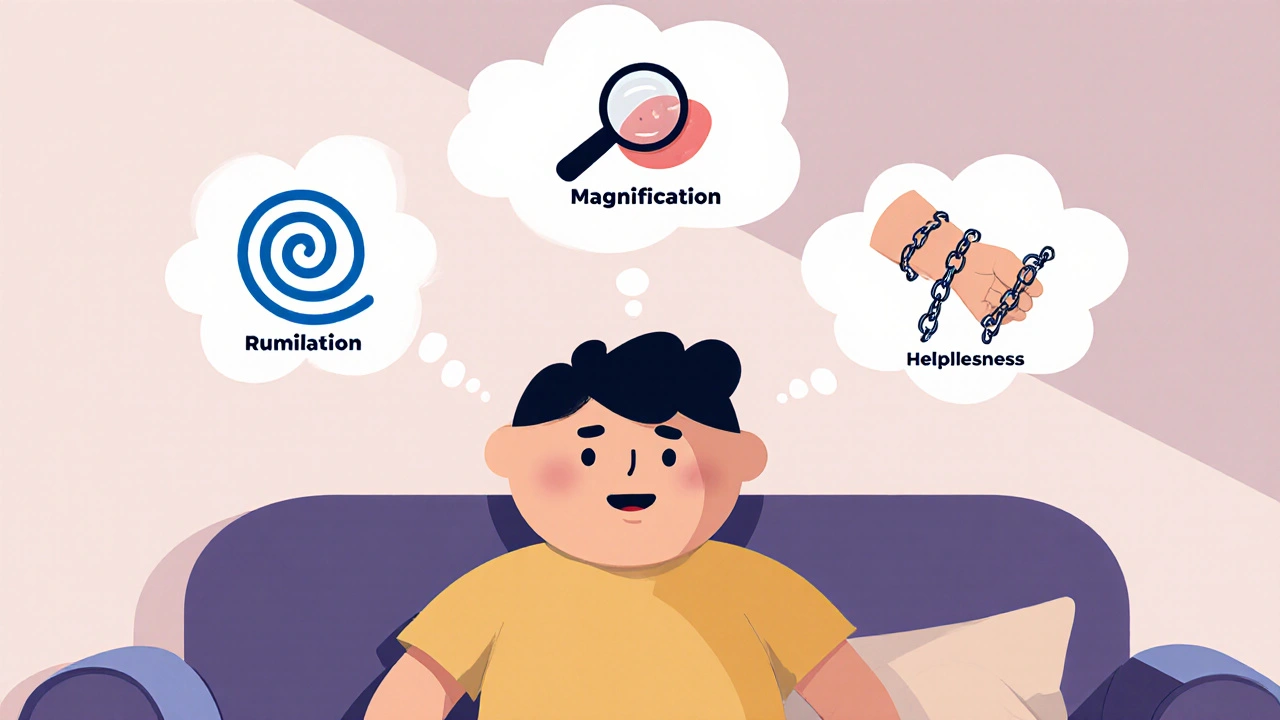
When you're stuck in a loop of negative thoughts—like cognitive behavioral therapy, a structured, goal-oriented form of psychotherapy that helps people change unhelpful thinking and behavior patterns. Also known as CBT, it's one of the most researched and effective treatments for mental health conditions today. It’s not about positive thinking. It’s about spotting the lies your brain tells you and replacing them with facts. Think of it like updating outdated software on your phone: you’re not deleting who you are, you’re fixing the bugs.
CBT doesn’t just talk about feelings—it teaches skills. You learn how to challenge thoughts like "I’m a failure" or "Everyone hates me" by asking: "What’s the evidence?" and "Is there another way to see this?" It works because it’s practical. You don’t wait for weeks to feel better—you start changing how you respond right away. That’s why it’s used for anxiety treatment, a hands-on approach to reducing excessive worry, panic, and avoidance behaviors, depression therapy, a method that breaks the cycle of hopelessness by targeting self-critical thoughts and inactivity, and even chronic pain, insomnia, and OCD. It’s not magic. It’s muscle. You build mental strength through practice, not just talk.
What makes CBT different from other therapies? It’s time-limited. Most people see results in 12 to 20 sessions. It’s not about digging into childhood trauma—it’s about fixing what’s happening now. You get homework: journaling, thought records, exposure exercises. You don’t just talk about fear—you face it, slowly and safely. And it works. Studies show it’s as effective as medication for many types of anxiety and depression, with longer-lasting results. It’s also adaptable. Whether you’re dealing with social anxiety, PTSD, or just feeling stuck, CBT gives you tools you can use long after therapy ends.
You’ll find posts here that connect CBT to real-life situations—like how antidepressants like Lexapro or Paxil work alongside behavioral change, or how managing chronic conditions like psoriatic arthritis or bipolar disorder often needs both medicine and mental tools. Some articles even touch on how medications can influence thought patterns, like how avanafil’s unexpected effects on brain blood flow might relate to OCD. This isn’t just theory. These are real people, real struggles, and real solutions that combine science with daily practice. What you’ll see below isn’t a list of articles—it’s a map. A map showing how your mind, your body, and your meds all fit together.
Pain catastrophizing makes pain worse by amplifying fear and helplessness. CBT tools like thought tracking, cognitive restructuring, and behavioral activation can reduce distress and improve function - even when pain doesn't go away.
Read more