Pain catastrophizing makes pain worse by amplifying fear and helplessness. CBT tools like thought tracking, cognitive restructuring, and behavioral activation can reduce distress and improve function - even when pain doesn't go away.
Read more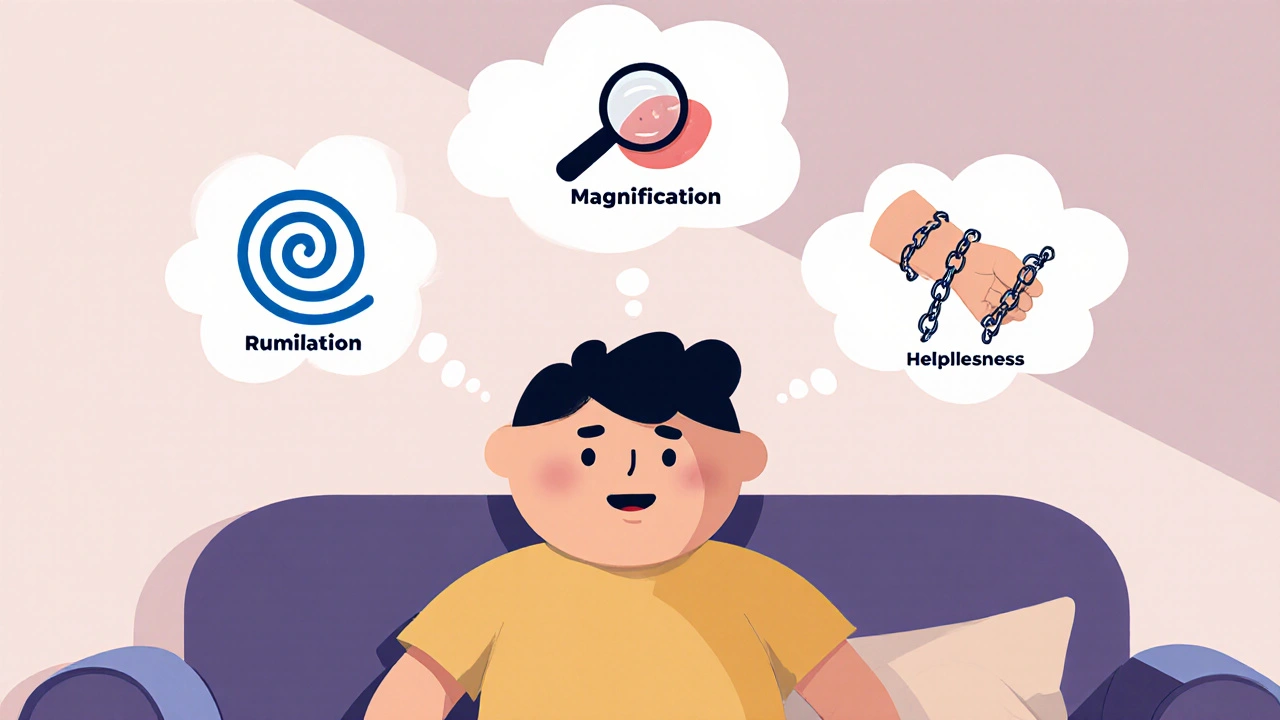
When you live with chronic pain, a persistent physical sensation that lasts beyond normal healing time. Also known as long-term pain, it doesn’t just hurt—it changes how you think, sleep, and move. That’s where cognitive behavioral therapy, a structured, goal-oriented talk therapy that helps people change unhelpful thought patterns and behaviors. Often called CBT, it’s one of the few non-drug treatments backed by solid research for reducing pain’s grip on daily life.
CBT for pain doesn’t pretend the pain isn’t real. Instead, it helps you notice how your mind reacts to it. Do you catastrophize? Do you avoid movement because you fear it’ll make things worse? Do you feel hopeless after months of failed treatments? CBT works on those thoughts and habits. It’s not magic. It’s practice. You learn to spot negative spirals, replace them with calmer responses, and slowly rebuild activity without waiting for pain to disappear first. Studies show people using CBT report less suffering, better sleep, and fewer doctor visits—even when their physical symptoms don’t change much. It’s especially useful when medications lose their edge or come with too many side effects.
CBT for pain often pairs with other tools like gentle movement, breathing exercises, or pacing techniques. It’s not a replacement for medical care, but a powerful complement. You’ll find posts here that explain how CBT fits into real lives—like how someone with back pain started walking again after years of fear, or how a person with fibromyalgia stopped letting pain dictate their schedule. You’ll also see how CBT compares to other psychological approaches, what to expect in a session, and why some people quit too soon. This isn’t about positive thinking. It’s about practical rewiring. The posts below give you real examples, honest struggles, and clear steps—not theory, but what actually works when you’re tired of waiting for a miracle pill.
Pain catastrophizing makes pain worse by amplifying fear and helplessness. CBT tools like thought tracking, cognitive restructuring, and behavioral activation can reduce distress and improve function - even when pain doesn't go away.
Read more