Bioequivalence Criteria: What Makes Generic Drugs Truly Equivalent
When you pick up a generic pill, you’re trusting that it does the same job as the brand-name version. That trust comes from bioequivalence criteria, a set of scientific standards that prove a generic drug releases the same amount of active ingredient into your bloodstream at the same rate as the original. Also known as pharmacokinetic equivalence, it’s not just about having the same ingredients—it’s about proving your body absorbs and uses them the same way. Without these rules, generics could be cheaper but useless—or worse, dangerous.
The FDA generic standards, the official guidelines used in the U.S. to approve generic drugs require two key tests: one for how fast the drug enters your blood (Cmax), and another for how much total drug gets absorbed over time (AUC). If the generic’s results fall within 80% to 125% of the brand’s, it’s approved. But this doesn’t mean all generics are created equal. For drugs with a narrow therapeutic window—like warfarin, lithium, or thyroid meds—even tiny differences in absorption can cause side effects or make the treatment fail. That’s why bioequivalence studies, controlled clinical trials comparing generic and brand-name versions in healthy volunteers are so critical. These aren’t theoretical; they’re done with real people, fasting and fed, to see how food, stomach pH, or even gut bacteria affect the drug’s journey.
And it’s not just about the pill itself. The drug absorption, how quickly and completely the active ingredient enters your bloodstream depends on the tablet’s coating, fillers, and how it breaks down. A generic made in one country might use different binders than one made in another—even if both meet FDA standards. That’s why some patients notice a difference, even when the label says "same active ingredient." The system works most of the time, but it’s not perfect. That’s why posts here dig into real-world cases: why a generic seizure med stopped working for one person, how a generic statin caused muscle pain where the brand didn’t, and why some doctors still prescribe brand-name drugs for certain conditions.
You’ll find real data here—not marketing. We look at clinical studies showing generics work just as well for high blood pressure, depression, and diabetes. We also show where small differences matter, like with epilepsy drugs or blood thinners. You’ll learn how to spot when a generic might not be right for you, what questions to ask your pharmacist, and why some pharmacies switch brands without telling you. Whether you’re saving money or just wondering if your new prescription is really the same, this collection gives you the facts behind the label.
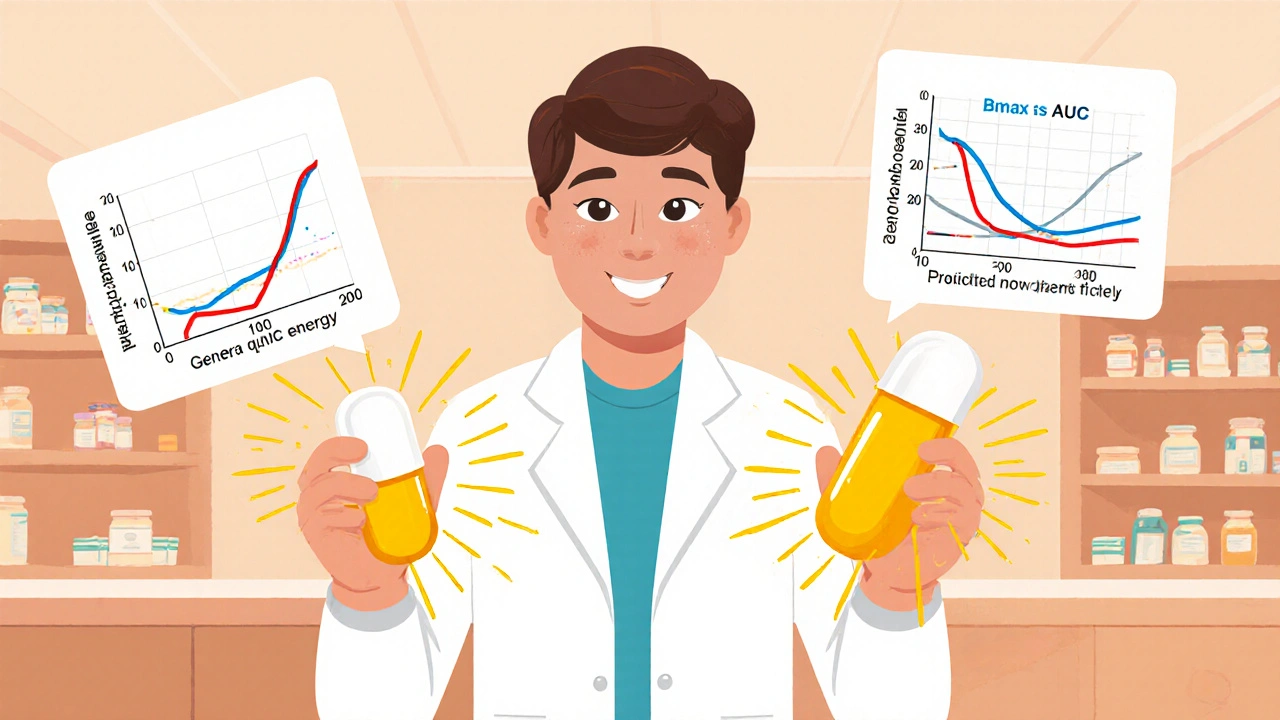
The FDA requires generic drug manufacturers to prove bioequivalence through strict pharmacokinetic studies to ensure their products match the brand-name version in absorption and effectiveness. Learn how the 80/125 rule, biowaivers, and product-specific guidances make generics safe and affordable.
Read more