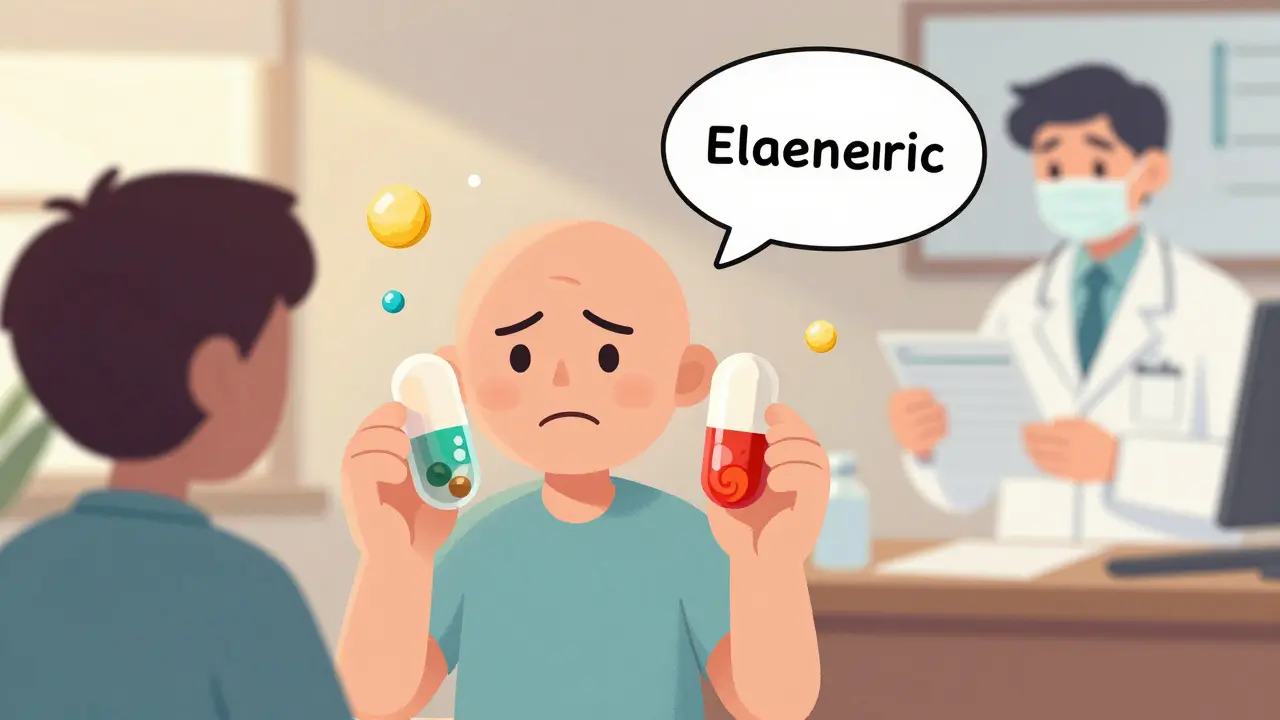
When you pick up a prescription, you might not think twice about whether it’s the brand name or the generic version. But if you’ve ever switched from one to the other and suddenly felt off-more tired, anxious, or nauseous-you’re not alone. Many people report strange new side effects after switching to a generic drug. So, are these reactions real? Or is it all in your head?
What Exactly Is a Generic Drug?
A generic drug is the chemical twin of a brand-name medication. It contains the same active ingredient, same dosage, same way of taking it, and same intended effect. The FDA requires generics to prove they deliver the same amount of medicine into your bloodstream within the same time frame as the original. That’s called bioequivalence. For most drugs, this means the generic’s absorption rate must fall between 80% and 125% of the brand-name version. Sounds strict, right? But here’s the catch: that’s still a 45% range of possible variation.
That’s not a flaw-it’s a regulatory allowance. For drugs like antibiotics or pain relievers, this variation doesn’t matter. But for medications with a narrow therapeutic index-where the difference between a helpful dose and a dangerous one is tiny-those numbers can mean real-world consequences. Think warfarin, levothyroxine, phenytoin, and some seizure meds. In these cases, even small shifts in how your body absorbs the drug can throw off your INR levels, thyroid function, or seizure control.
The Evidence: Do Generics Cause More Side Effects?
Let’s cut through the noise. A major 2018 study in PLOS Medicine looked at 38 clinical trials involving over 100,000 patients. It compared heart disease, stroke, hospitalizations, and death rates between people taking brand-name drugs versus generics. The result? No meaningful difference. Same for diabetes meds, blood pressure drugs, and even antidepressants like sertraline. The study’s lead author, Dr. Aaron Kesselheim, said: “Use of generics was associated with comparable clinical outcomes.”
But then you look at the adverse event reports. The NIH analyzed over 27,000 reports submitted to the FDA’s database. For amlodipine (a blood pressure drug), generics made up nearly 86% of all reports. But here’s the twist: authorized generics-those made by the original brand-name company-had far fewer reports. And when researchers compared generic to authorized generic, the difference mostly disappeared. That suggests it’s not the active ingredient causing trouble-it’s something else.
The Real Culprit: Inactive Ingredients
Generics don’t have to match the brand-name drug’s fillers, dyes, binders, or coatings. These are called inactive ingredients. They don’t treat your condition. But they can affect how your body reacts.
One patient might get a rash from a dye in a generic version of bupropion. Another might feel jittery because the generic uses a different filler that changes how fast the pill dissolves. These aren’t rare. Pharmacists report that patient complaints after switching often come down to changes in color, size, or taste-not the medicine itself.
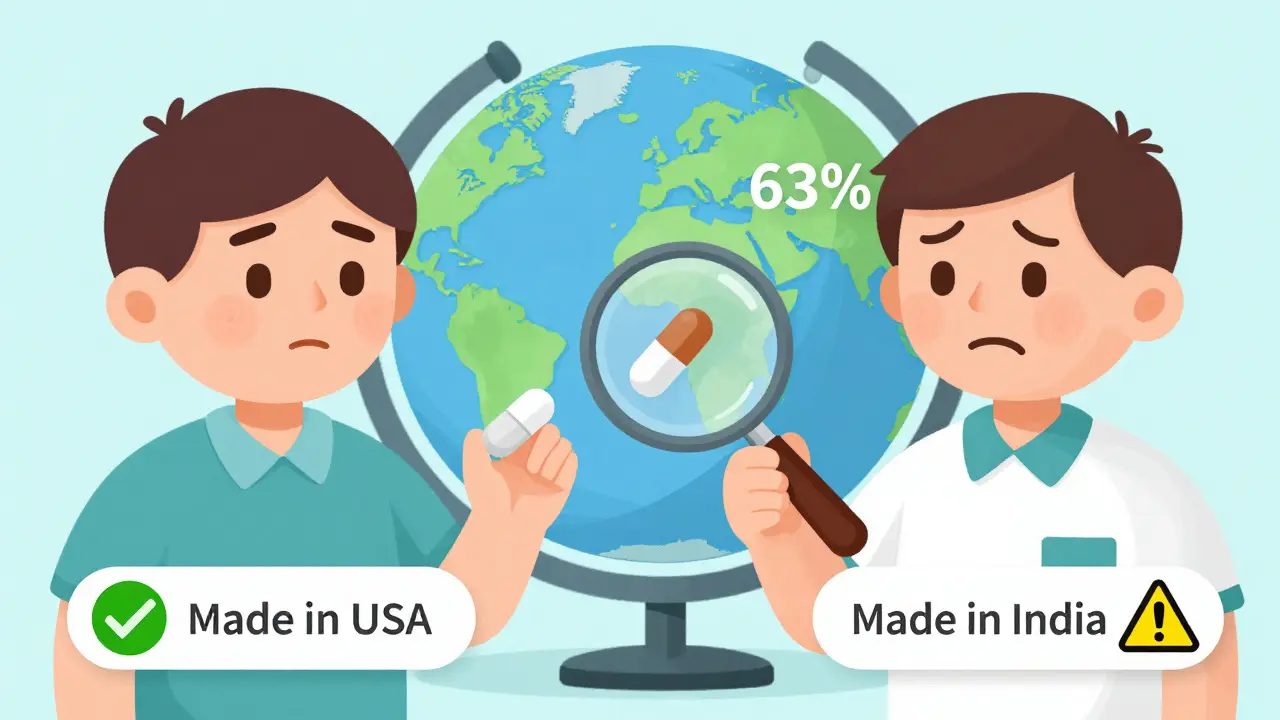
And it’s not just about allergies. A 2022 study from Ohio State University found that generics made in India were linked to 54% more severe adverse events-like hospitalizations and deaths-compared to those made in the U.S. The researchers pointed to older, well-established generics as the main problem. Why? Because once a drug loses its patent, dozens of manufacturers rush in. Some cut corners. Some don’t have the same quality controls. The FDA inspects over 1,700 global manufacturing sites, and 63% of them are outside the U.S. That’s a lot of room for inconsistency.
The Nocebo Effect: When Your Mind Makes You Sick
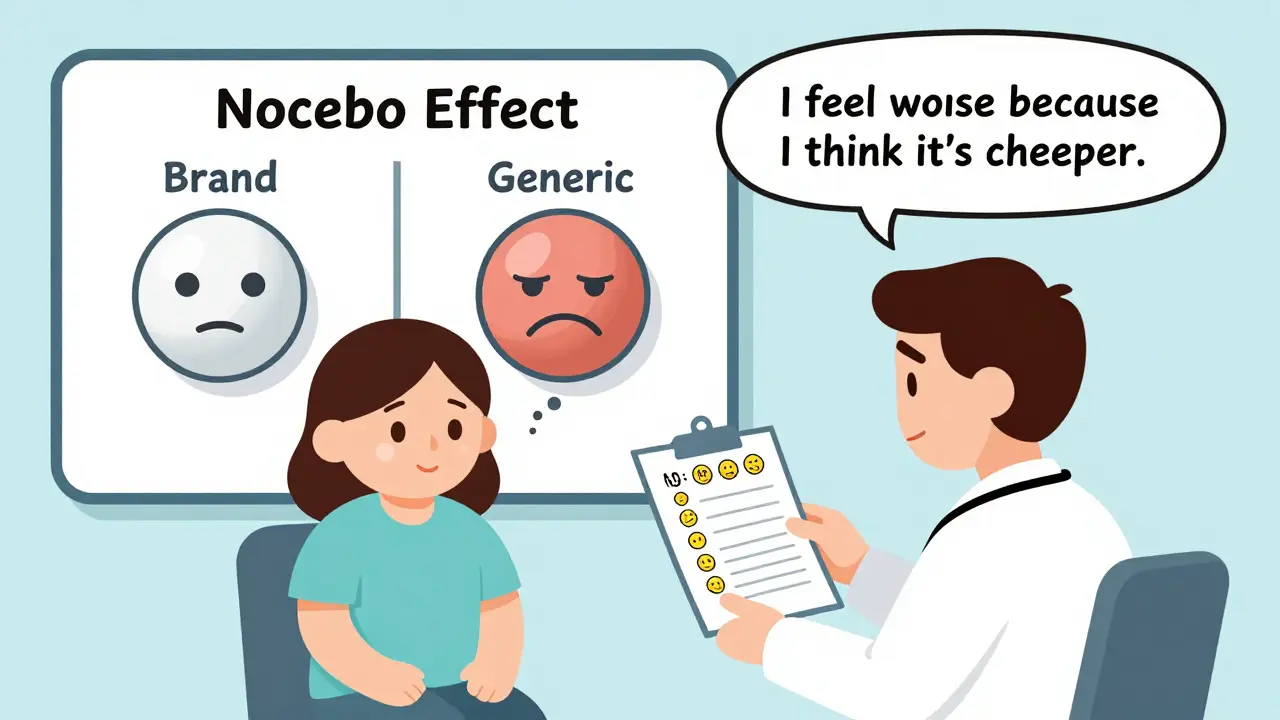
Here’s the weird part: sometimes, you feel worse just because you think you’re on a generic.
A 2012 study gave people identical placebo pills. One group was told they were getting a brand-name drug. The other, a generic. The “generic” group reported significantly more side effects-even though they were all sugar pills. That’s the nocebo effect in action: negative expectations create real symptoms.
Another study showed patients who were told they’d be switching to a cheaper generic were more likely to quit taking their meds. In one 7-day trial, 54% of people on labeled generics stopped before the end. Only 33% of those who thought they were on the brand name did. And those who quit? They reported higher pain levels-even though the pills were identical.
It’s not just psychology. It’s a feedback loop. You switch to a generic. You feel off. You Google it. You find Reddit threads full of people saying the same thing. Now you’re convinced it’s the drug. Your body responds accordingly.
What About Specific Drugs?
Some drugs keep popping up in reports:
- Levothyroxine (Synthroid): Patients switching to generic versions report fatigue, weight gain, or brain fog. Why? Because thyroid hormone levels are super sensitive. Even a 5% difference in absorption can throw off your TSH. The FDA recommends sticking to one manufacturer if possible.
- Warfarin: This blood thinner has a razor-thin safety margin. Patients switching between generic manufacturers have reported unstable INR levels-sometimes leading to clots or bleeding. The FDA’s own database shows this pattern repeatedly.
- Bupropion (Wellbutrin): People report increased anxiety, insomnia, or mood swings after switching. Studies say it shouldn’t happen. But thousands of Reddit users swear it does. One pharmacist on r/pharmacy got 247 upvotes just saying, “I’ve had multiple patients report this.”
- Simvastatin: Surprisingly, brand-name users were more likely to quit taking it. The generic version had lower discontinuation rates. Why? Possibly because the generic caused fewer muscle aches or digestive issues.
There’s no one-size-fits-all answer. For some drugs, the generic is better. For others, the brand might be worth the extra cost.
What Should You Do?
If you’re worried about side effects after switching:
- Check the pill. Look at the imprint code. If it changed, you switched manufacturers. Not all generics are the same.
- Talk to your pharmacist. Ask if your generic came from a different supplier. Ask if the inactive ingredients changed.
- Don’t stop cold. If you feel worse, don’t quit. Call your doctor. Sometimes, switching back to the original brand-or even another generic-helps.
- Ask for “Dispense as Written.” For high-risk drugs like levothyroxine or warfarin, this instruction tells your pharmacist not to substitute. It might cost more, but it avoids guesswork.
- Track your symptoms. Keep a simple log: date, dose, symptoms, mood. Bring it to your next appointment. Data beats anecdotes.
And if you’re being pushed to switch for cost reasons? Ask if your insurance will cover the brand if the generic causes problems. Many plans have exceptions for patients who can’t tolerate generics.
The Bigger Picture
Generics saved the U.S. healthcare system over $300 billion in 2022. They’re not just cheaper-they’re essential. For most people, they work just as well. But for some, the difference matters. The FDA says the variation is “not clinically meaningful.” But patients aren’t statistics. If you feel worse, your experience is real-even if science says you shouldn’t.
The truth? It’s not about brand vs. generic. It’s about consistency. If you’ve been stable on one version, don’t switch unless you have to. If you do switch, monitor yourself. And if something feels off? Speak up. Your body knows.
Are generic drugs less safe than brand-name drugs?
For the vast majority of people, no. Generic drugs must meet the same FDA standards for strength, purity, and performance as brand-name drugs. The active ingredient is identical. But for a small group of patients-especially those on drugs with narrow therapeutic windows like levothyroxine or warfarin-switching between generic manufacturers can cause noticeable changes. These aren’t always due to the medicine itself, but to differences in inactive ingredients or absorption rates.
Why do some people feel worse after switching to a generic?
There are two main reasons. First, the inactive ingredients-fillers, dyes, coatings-can differ between brands and generics. These can affect how fast the drug is absorbed or trigger sensitivities in some people. Second, the nocebo effect plays a big role. If you believe generics are inferior, your brain can amplify physical sensations into full-blown side effects. Studies show people report more side effects when told they’re taking a generic-even when they’re not.
Should I avoid generic drugs altogether?
No. Generics are safe and effective for most people and save billions in healthcare costs. But if you’re on a medication with a narrow therapeutic index-like thyroid hormone, blood thinners, or seizure drugs-stick with one manufacturer if possible. Talk to your doctor about whether "Dispense as Written" is right for you. For common drugs like statins or blood pressure meds, generics are usually fine.
Can generic drugs be made in different countries?
Yes. About 63% of FDA-inspected generic drug manufacturing facilities are outside the U.S., with 32% in India and 18% in China. While the FDA inspects these sites, quality can vary. Some studies suggest generics made overseas, especially older ones, are linked to higher rates of severe side effects. But this doesn’t mean all foreign-made generics are unsafe-it means you should be aware of the source if you have concerns.
How can I find out which company made my generic drug?
Check the pill imprint code on the tablet or capsule. Each manufacturer uses unique markings. You can search these codes on websites like Drugs.com or use the FDA’s National Drug Code Directory. Your pharmacist can also tell you which company produced your batch. If you notice a change in how you feel after a refill, compare the imprint codes.

florence matthews
Ugh I switched to generic levothyroxine last year and suddenly I felt like a zombie 😴... like, I couldn't even make coffee without crying. Switched back and boom-back to normal. FDA says it's 'bioequivalent' but my body says 'nope'.
Kenneth Jones
Stop crying about generics. If you can't afford your meds you deserve to suffer. This isn't a luxury market.
Mihir Patel
bro i switched to generic warfarin and my INR went from 2.4 to 4.8 in 3 days 😱 my doc was like 'wtf' and i was like 'i just bought it from walmart'... now i pay extra for the brand. worth every penny. also the pill looks like a rainbow now lmao 🌈
Amber Gray
USA made drugs are superior period. Why are we letting India and China make our medicine? This is national security. I don't care if it costs 5x more. My life is not a cost-cutting experiment.
Danielle Arnold
So what you're saying is... my brain is making me feel bad because I'm cheap? Cool. I'll just take my placebo pills and call it a day. 😌
Donna Fogelsong
Did you know the FDA doesn't test every batch? They rely on 'certificates of analysis' from manufacturers. That's a letter. Not a test. And 63% of plants are overseas. That's not oversight. That's a gamble with your life. Wake up.
Sean Bechtelheimer
They're hiding something. The nocebo effect? Nah. I think Big Pharma wants you to think it's all in your head so they can keep selling you the brand name at $300 a pill. Generics are the real deal. The system is rigged.
rebecca klady
I’m a pharmacist and I’ve seen this over and over. One patient had a rash from a dye in a generic bupropion. Another couldn’t sleep because the filler changed the release rate. It’s not placebo. It’s chemistry.
Namrata Goyal
Wow you guys are so naive. The real issue? The FDA is a revolving door for pharma execs. They approve generics that would never pass in the EU. And you’re still trusting them? Lmao. My cousin in Germany takes the same drug and it costs 1/3 and is 10x safer. You’re being played.
Brandon Shatley
my grandma takes generic simvastatin and says her legs dont ache like before. she switched from brand and now she walks 2 miles a day. maybe it depends on the person? not all generics are bad. some are better.
Blessing Ogboso
As someone from Nigeria where we get generics from every corner of the globe, I’ve seen both sides. Some pills save lives. Others make people sicker. The real issue isn’t brand vs generic-it’s transparency. People deserve to know where their medicine comes from. Not just the label. The factory. The inspector. The supply chain. We can do better. It’s not about fear. It’s about dignity.
Jefferson Moratin
The philosophical tension here lies not in the chemical equivalence of drugs, but in the epistemological authority we grant to institutions. We are told bioequivalence is sufficient, yet our phenomenological experience-our pain, our fatigue, our anxiety-demands recognition. Science reduces the body to data points. But we are not data. We are narratives. And narratives, however irrational, are real.
Caroline Dennis
For narrow TI drugs, consistency > cost. Period. If you're on warfarin or levothyroxine, ask for 'Dispense as Written'. It's not elitist-it's clinical. Your TSH doesn't care about your insurance deductible.
Zola Parker
What if the whole 'generic is just as good' thing is just corporate propaganda? I mean, who profits from generics? Big Pharma. They own the generics too. It's all the same company. They just rebrand. Wake up.
winnipeg whitegloves
I used to think generics were trash until I tried the generic version of my blood pressure med. Felt better. Less bloating. More energy. Turns out the brand had this weird filler that made my gut scream. Who knew? Sometimes the cheaper one is the better one. Don't assume. Test it. Your body's got a vote too.