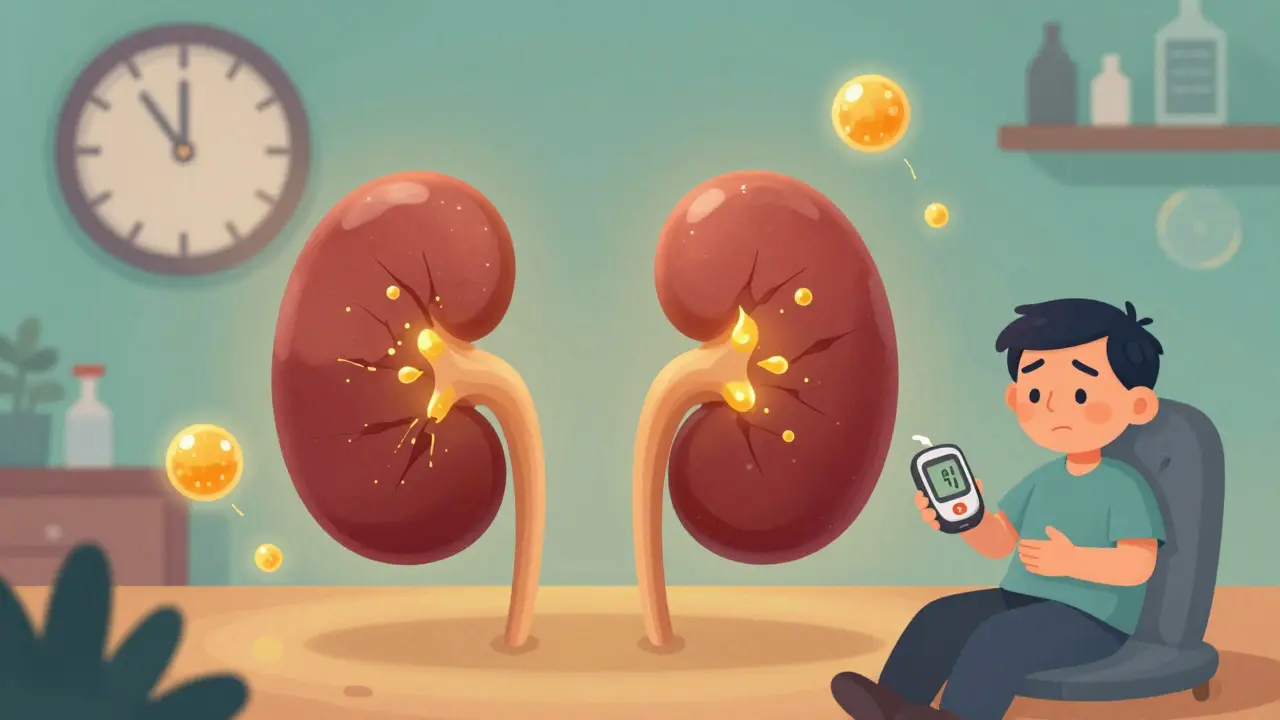
When your kidneys start to fail, it doesn’t happen overnight. It’s a slow leak - a quiet breakdown you might not notice until it’s too late. For millions of people, the root causes are three big, common conditions: diabetes, hypertension, and glomerulonephritis. These aren’t rare outliers. They’re the top three reasons kidneys give out, and together they account for more than 80% of all end-stage renal disease cases in the U.S. and similar high-income countries.
Diabetes: The Silent Kidney Killer
Diabetes doesn’t just mess with your blood sugar. It slowly tears apart your kidneys from the inside. About 44% of new kidney failure cases in the U.S. are caused by diabetes - more than any other single condition. And it’s not just about high sugar. It’s what that sugar does to your tiny kidney filters, called glomeruli.
Within the first year of having diabetes, those filters start swelling. Blood rushes through them faster than normal - a state called hyperfiltration. Your kidneys work overtime, trying to clean the excess glucose. But over time, this strain thickens the basement membrane, crushes the podocytes (the cells that act like sieves), and fills the spaces between filters with scar tissue. By the time you feel symptoms, up to 40% of people with type 2 diabetes already have kidney damage.
The signs are sneaky. You might not feel anything until your urine starts foaming - a sign of protein leaking out. That’s albuminuria. And once you hit macroalbuminuria (more than 300 mg of protein per gram of creatinine), your risk of full kidney failure in five years jumps to 44%. But here’s the good part: catching it early changes everything. If you get your HbA1c under 7% within five years of diagnosis, you cut your risk of kidney disease by more than half.
New drugs like SGLT2 inhibitors (empagliflozin, dapagliflozin) aren’t just for blood sugar. They reduce kidney failure risk by 32% in people with diabetes, even if their sugar is already controlled. They work by making your kidneys dump excess sugar and sodium out in urine - which also lowers blood pressure and reduces kidney strain.
Hypertension: The Pressure That Crushes
High blood pressure is the second biggest cause of kidney failure - responsible for 28% of cases. And it’s often the silent partner to diabetes. In fact, three out of four people with diabetes also have high blood pressure. Together, they’re a deadly combo.
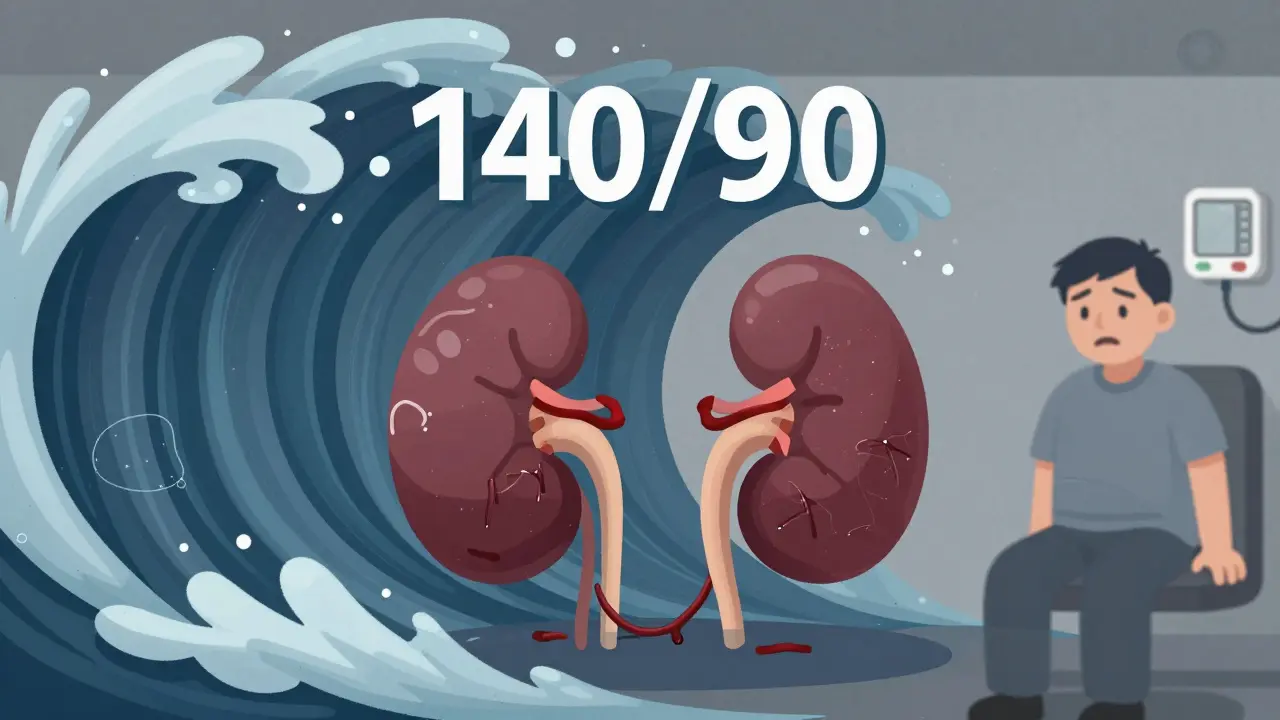
When your blood pressure stays above 140/90 mmHg, the small arteries feeding your kidneys thicken and harden. This is called nephrosclerosis. Less blood gets through. The glomeruli starve. They shrink. They scar. By five years of uncontrolled hypertension, you could already be losing 15-25% of blood flow to your kidneys.
What makes hypertension extra dangerous is how quiet it is. Most people don’t feel it. No headaches. No dizziness. Just slowly declining kidney function. That’s why many don’t get diagnosed until they’re already in kidney failure.
But controlling blood pressure saves kidneys. Targeting systolic pressure below 120 mmHg (not just 130) in high-risk people cuts kidney decline by 27%. ACE inhibitors and ARBs are the go-to drugs - not just because they lower pressure, but because they directly protect the filtering units. They reduce protein leakage and slow scarring. Even if you don’t have diabetes, these drugs are the first line of defense if you have protein in your urine.
Here’s the catch: only 58% of people stick with their blood pressure meds after a year. Side effects, cost, forgetfulness - it adds up. And when you skip doses, your kidneys pay the price. The damage isn’t reversible. But stopping the decline? That’s still possible.
Glomerulonephritis: When Your Immune System Attacks
Unlike diabetes and hypertension, which are metabolic or mechanical, glomerulonephritis is an autoimmune war inside your kidneys. Your immune system, confused or overactive, sends antibodies or immune cells to attack the glomeruli. It’s not caused by lifestyle. It’s not inevitable. But it’s harder to catch early.
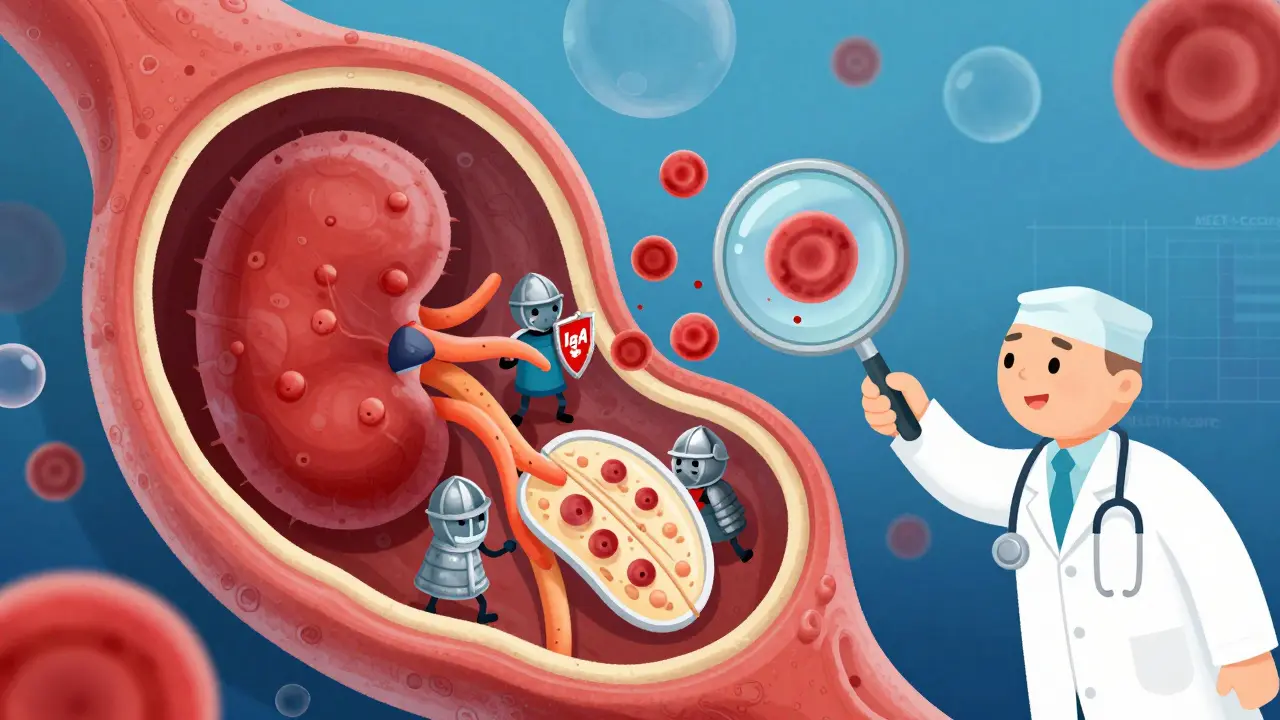
The most common form is IgA nephropathy. It affects 2.5 to 4.5 people per 100,000, depending on where you live - higher in Asia. You might notice blood in your urine after a cold or sore throat. That’s a red flag. But most people see seven doctors over 18 months before someone says, “This isn’t just a bug - it’s your kidneys.”
Under the microscope, you’ll see IgA deposits stuck in the glomeruli. Over 20 years, 20-40% of people with IgA nephropathy end up needing dialysis. But not everyone. Risk depends on how much protein leaks out and how much scarring is already there. The Oxford MEST-C score helps doctors predict who’s likely to fail. Low score? Maybe just watchful waiting. High score? Time for strong meds.
Lupus nephritis, another type, hits about half of people with lupus. Class IV - the most aggressive - has a 29% chance of leading to kidney failure within 10 years. Treatment often means immunosuppressants like rituximab or cyclophosphamide. These drugs shut down the immune attack. One study showed rituximab cuts ESRD risk by 48% compared to just managing symptoms.
But here’s the debate: aggressive treatment in older patients can increase infection risk without saving kidneys. Some doctors say hold off. Others say wait too long, and you lose the window. There’s no one-size-fits-all. That’s why biopsy results and protein levels matter more than ever.
How They Compare: Speed, Signs, and Survival
Not all kidney failure is the same. Here’s how these three causes stack up:
| Cause | Time to ESRD (median) | Key Early Sign | Primary Treatment | 5-Year ESRD Risk (if advanced) |
|---|---|---|---|---|
| Diabetes | 8.7 years | Protein in urine (albuminuria) | SGLT2 inhibitors, ACE/ARBs, strict glucose control | 44% (macroalbuminuria) |
| Hypertension | 12.3 years | High BP + low eGFR | ACE/ARBs, BP targets <120/80 | 25-30% (with proteinuria) |
| Glomerulonephritis | Variable (5-20+ years) | Blood in urine, swelling | Immunosuppressants, steroids, sparsentan (new) | 20-40% (IgA nephropathy, high-risk) |
Diabetes moves fastest if you don’t control it. Hypertension creeps in slower but is harder to detect. Glomerulonephritis is unpredictable - one person holds off kidney failure for decades; another loses function in just a few years.
What You Can Do - Right Now
If you have diabetes or high blood pressure, you’re not powerless. Here’s what actually works:
- Test your urine every year. Ask for a urine albumin-to-creatinine ratio (UACR). Normal is under 30 mg/g. Anything above 30 means you need action.
- Get your blood pressure checked regularly. Don’t wait for symptoms. Home monitors are cheap. Aim for under 130/80 - and under 120/80 if you have protein in your urine.
- Ask about SGLT2 inhibitors. Even if your A1c is fine, these drugs protect your kidneys. They’re now recommended as first-line for diabetic kidney disease at any stage of proteinuria.
- Don’t ignore blood in your urine. Especially after an infection. It’s not normal. Get a nephrologist referral.
- Stick to your meds. Adherence is the biggest gap in kidney care. Set phone reminders. Use pill organizers. Your kidneys are counting on you.
And if you’re already on dialysis? That doesn’t mean you’re done learning. New drugs like finerenone and sparsentan are changing outcomes. Clinical trials are opening up. You might be eligible for something that could delay transplant or improve your quality of life.
Why This Matters More Than Ever
By 2030, the number of people with kidney failure is expected to jump by 52%. Most of that rise comes from diabetes. And while rich countries have dialysis and transplants, low-income nations have less than 10% access. That’s not just a health issue - it’s a justice issue.
But here’s the hopeful part: experts now believe 30-50% of future kidney failures could be prevented. Not with magic pills. Not with expensive tech. With early testing, better blood pressure control, and using drugs we already have - the right way, at the right time.
You don’t need to be a doctor to save your kidneys. You just need to know the signs. And act before it’s too late.
Can kidney failure from diabetes be reversed?
Kidney damage from diabetes can’t be fully reversed once scarring sets in. But early intervention - especially with SGLT2 inhibitors and tight blood sugar control - can stop or dramatically slow further decline. Many people stabilize their kidney function if they act within the first few years of noticing protein in their urine.
Is high blood pressure always the cause of kidney failure?
No. High blood pressure is a major cause - second only to diabetes - but it’s often a contributor, not the only one. Many people with kidney failure have both diabetes and hypertension. In fact, the combination speeds up damage faster than either alone. Sometimes, kidney disease causes high blood pressure, not the other way around. That’s why checking kidney function is critical when BP is high.
What are the first signs of glomerulonephritis?
The earliest signs are often subtle: pink or cola-colored urine (from blood), foamy urine (from protein), swelling in the face or ankles, and high blood pressure. Many people don’t feel sick at first. That’s why it’s often missed. If you’ve had a recent infection and notice these symptoms, get tested - especially if you have a family history of autoimmune disease.
Do I need a kidney biopsy if I have protein in my urine?
Not always. If you have diabetes or long-standing high blood pressure, protein in your urine is likely due to those conditions, and a biopsy isn’t needed. But if you’re younger, have blood in your urine, or don’t have clear risk factors, a biopsy may be necessary to rule out glomerulonephritis or other immune-related diseases. Your doctor will weigh your symptoms, lab results, and medical history before recommending it.
Can I prevent kidney failure if I have diabetes?
Yes - and the data proves it. Keeping your HbA1c under 7%, maintaining blood pressure under 130/80, using an SGLT2 inhibitor if recommended, and getting annual urine tests can reduce your risk of kidney failure by more than 50%. The key is early action. Waiting until you feel tired or swollen means you’re already far along.
What’s the difference between CKD and ESRD?
Chronic Kidney Disease (CKD) means your kidneys are damaged and not working as well as they should - it’s a spectrum from mild to severe. End-Stage Renal Disease (ESRD) is the final stage - when your kidneys have lost 85-90% of function. At that point, you need dialysis or a transplant to survive. Most people with diabetes or hypertension progress from CKD to ESRD over years, not months.
What Comes Next?
If you’re reading this because you or someone you care about has one of these conditions, the next step is simple: don’t wait.
Book a blood test. Ask for a urine test. Check your blood pressure at home. Talk to your doctor about SGLT2 inhibitors or ACE/ARBs - even if you think your numbers are “okay.” Kidney damage doesn’t shout. It whispers. And if you listen early, you might just stop it before it becomes irreversible.

Andy Grace
I had a cousin go through this - type 2 diabetes, didn’t check urine until he was swollen and tired. Turned out his UACR was 890. SGLT2 inhibitor saved his kidneys from dialysis. He’s on it now, feels better than he has in years. Just wish he’d listened earlier.
People think if you don’t feel sick, you’re fine. Not true. Kidneys don’t scream. They whisper until it’s too loud.
Spencer Garcia
ACE/ARBs first. SGLT2i second. BP under 120/80 if proteinuria. Annual UACR. That’s the protocol. No guesswork.
Abby Polhill
As someone who’s been in and out of nephro clinics for IgA nephropathy since 2018 - the MEST-C score is everything. My biopsy said M1E1S1C0. Low risk. My doc said ‘watch and wait.’ Four years later, protein’s still under 1g/day. No meds. Just diet, BP control, and avoiding NSAIDs like the plague.
But if you’re Indian or East Asian? You’re statistically more likely to get IgA. Don’t ignore post-strep hematuria. It’s not ‘just a cold.’
Austin LeBlanc
Why are we giving diabetic patients expensive new drugs like SGLT2 inhibitors when they’re the ones who ate themselves into kidney failure? Stop blaming the kidneys. Blame the donuts.
And why is everyone acting like hypertension is some mysterious villain? It’s just poor lifestyle. Get off the couch. Stop the salt. Do you really need a $300 pill to fix what a 10-minute walk could prevent?
Christine Détraz
I get why people ignore early signs - it’s scary. But the real tragedy isn’t the disease. It’s how many doctors still don’t test urine routinely. I had my dad’s nephrologist tell him, ‘If your sugar’s under 7, you’re fine.’ That’s not how this works.
UACR isn’t optional. It’s the most underused test in medicine. If your doc doesn’t offer it annually, find a new one. Your kidneys don’t care how ‘good’ your HbA1c is if they’re leaking protein.
John Pearce CP
This article reads like a pharmaceutical ad disguised as medical advice. SGLT2 inhibitors? ACE inhibitors? These are expensive, side-effect-ridden drugs pushed by Big Pharma to keep patients dependent. In my father’s time, they used salt restriction, exercise, and discipline - not chemical crutches.
And now we’re telling people in developing nations they need these $800/month drugs? That’s not healthcare. That’s colonialism with a stethoscope.
Ajay Sangani
i read this and thoguht about how we in india dont even have access to basic bp meds in rural areas. how can we talk about sglts2 inhibitors when people cant even get losartan? its not about knowing the signs if you dont have the means to act on them.
the real issue is inequality. not ignorance. we need cheap generics. not new drugs. the science is good but the system is broken.
Pankaj Chaudhary IPS
As a medical professional in India, I’ve seen patients with uncontrolled hypertension and diabetes for over a decade - no screening, no follow-up. The moment they develop edema or fatigue, they come to tertiary centers - already in stage 4 CKD.
This article is not just informative - it’s a call to action. Primary care providers must be trained to order UACR routinely. Community health workers should educate on early signs. Prevention is cheaper, kinder, and more ethical than dialysis.
Let’s stop waiting for crises. Let’s build systems that catch this before it breaks.
Bhargav Patel
There’s a quiet philosophical truth here: modern medicine treats symptoms, not systems. We diagnose diabetes, hypertension, glomerulonephritis - and then we deploy drugs to manage each. But we rarely ask why the immune system turns hostile. Why the microvasculature fails under metabolic stress. Why the social determinants of health make adherence impossible for so many.
The science in this piece is impeccable. But the deeper question remains - are we treating patients, or managing broken systems with Band-Aids and billion-dollar pharmaceuticals?
Perhaps the real cure isn’t a pill - it’s equity, education, and the courage to address root causes before they become renal catastrophes.
Steven Mayer
Interesting how the article mentions SGLT2 inhibitors as if they’re magic, but never mentions the ketoacidosis risk. Or the genital infections. Or how many patients stop taking them because of the ‘urinary urgency’ side effect.
And the ‘stick to your meds’ advice? That’s tone-deaf. People lose jobs. Lose insurance. Can’t afford copays. You don’t just ‘set phone reminders’ when you’re choosing between insulin and rent.
This reads like a pamphlet for the insured middle class. What about the rest of us?
Joe Jeter
Wait - so the article says diabetes causes 44% of kidney failure, then recommends SGLT2 inhibitors… but doesn’t mention that these drugs were originally developed for weight loss? And that the kidney benefit was an accident?
So we’re treating a symptom with a drug meant for something else, because the original cause - sugar - is too politically inconvenient to fix?
Classic medical band-aid logic.
Sidra Khan
So… we’re supposed to get annual urine tests, check BP at home, take meds, avoid NSAIDs, and now add SGLT2 inhibitors? And if we don’t? We’re lazy? 😒
Meanwhile my insurance won’t cover the test, the BP monitor costs $120, and the pill costs $400 with a $500 deductible.
Thanks for the advice, doc. Now go tell that to the guy working two jobs and sleeping 4 hours a night. 🤷♀️