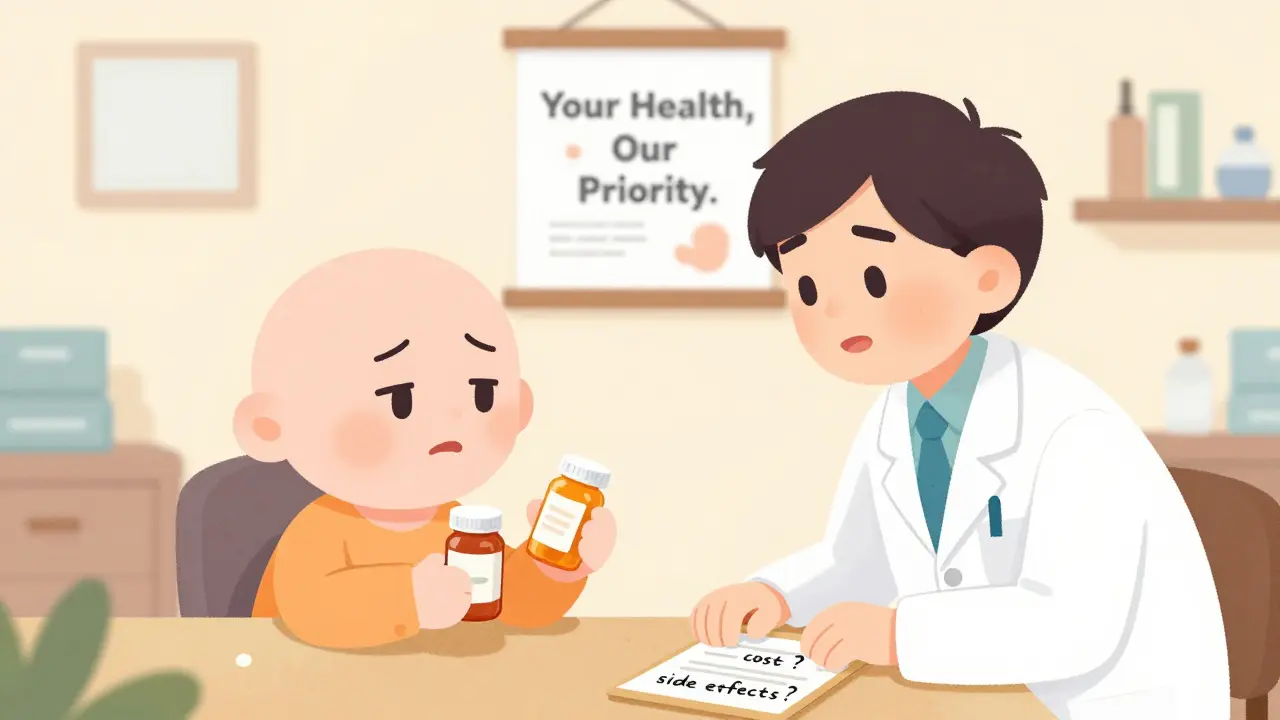
More than half of people with chronic conditions don’t take their medications as prescribed. Not because they’re careless, but because they’re confused, overwhelmed, scared, or just don’t know how to bring it up with their doctor. And that silence? It’s costing lives-and money. Every year in the U.S. alone, poor medication adherence leads to 125,000 deaths and $300 billion in avoidable healthcare costs. The problem isn’t the pills. It’s the conversation.
Why Talking About Medication Compliance Isn’t Just Helpful-It’s Essential
You might think your doctor already knows if you’re skipping doses or stopping early. They don’t. Studies show that up to 50% of patients leave the office without remembering what they were told. Even if you say you’re fine, your doctor won’t know you’re cutting pills in half to save money, or that you stopped your blood pressure med because it made you dizzy, or that you’re too embarrassed to admit you forgot for weeks. The truth? Doctors aren’t mind readers. And if you don’t speak up, they can’t help. Research from the American Medical Association shows that when patients feel safe talking about missed doses, adherence jumps by nearly 20%. That’s not a small win. That’s the difference between a hospital stay and staying home.What Good Communication Looks Like (And What Doesn’t)
Think back to your last doctor visit. Did they ask, “Why aren’t you taking your meds?” That’s a classic trap. It puts you on the defensive. It sounds like blame. And when you feel blamed, you shut down. Good communication flips that script. Instead of asking “Why?”, they say: “Lots of people have trouble keeping up with their meds. Do you ever find that happens to you?” That tiny change-using “lots of people” instead of “you”-makes patients 37% more likely to open up, according to a 2021 JAMA study. Doctors who use this approach don’t just ask. They listen. They notice when you look away. They pause. They say things like, “That makes sense. Many people feel that way.” They don’t rush. They don’t interrupt. And they never shame you.Seven Ways to Talk to Your Doctor About Your Medications
You don’t need to be a communication expert. Just follow these simple steps:- Start with honesty, not guilt. Say: “I’ve been having a hard time taking my meds like I should.” No need to justify. No need to apologize. Just say it.
- Be specific about the problem. Is it the cost? The side effects? The number of pills? The schedule? Write it down before your appointment. “I can’t afford the new insulin.” “I get nauseous after taking the statin.” “I forget because I take six different pills at different times.”
- Ask for simpler options. Can your meds be combined? Is there a generic? Can you switch to a once-daily version? Many doctors don’t know about cheaper alternatives unless you ask.
- Use the “teach-back” method. After your doctor explains something, say: “Just to make sure I got it right-you want me to take this pill every morning with food, right?” If you can’t explain it in your own words, you won’t remember it.
- Bring your pill bottles. Don’t just say “I take my meds.” Show them. You might be surprised how often people mix up names or doses. Seeing the bottles helps your doctor spot errors.
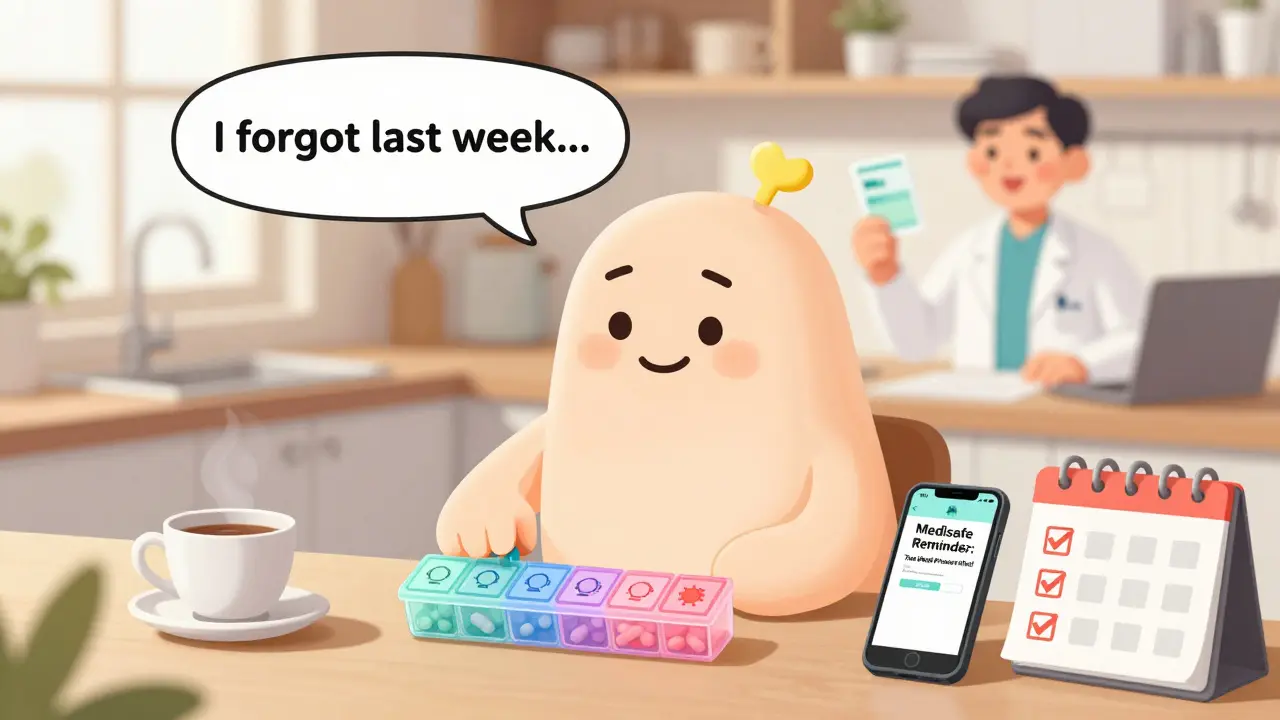
- Ask for help with reminders. Can your pharmacy send texts? Is there a pill box with alarms? Can a family member help? You’re not weak for needing support-you’re smart for asking.
- Ask what happens if you don’t take it. Not to scare yourself, but to understand. “What happens if I skip this for a week?” “What’s the risk if I stop?” Knowing the real consequences helps you make better choices.
What to Do When Your Doctor Doesn’t Listen
Sometimes, the problem isn’t you-it’s the system. Doctors are rushed. Many haven’t been trained in how to talk about adherence. If your doctor brushes you off, says “Just take it,” or gets defensive when you mention side effects, you have options. First, try this: “I really want to follow your advice, but I’m struggling. Can we schedule a follow-up to talk about this? Maybe with a nurse or pharmacist?” Many clinics now have medication therapists or pharmacists on staff who specialize in this exact thing. If that doesn’t work, ask for a referral to a patient advocate or community health worker. These people are trained to help you navigate the system. In Australia, services like Healthdirect and My Health Record can help you track your meds and share notes with your doctor.How Communication Changes Outcomes
The numbers don’t lie. When doctors use patient-centered communication:- Adherence rates jump from 44% to 62%.
- Patients using shared decision-making (where you help choose the treatment) hit 71% adherence.
- Using the “teach-back” method cuts medication errors by 22%.
- Hospital readmissions drop from 22.4% to 14.8%.
Barriers You Might Face (And How to Beat Them)
Not everyone has the same challenges. Here’s what often gets in the way-and how to fix it:- Too many pills → Ask if any can be combined or switched to long-acting versions.
- Cost → Ask for samples, generics, or patient assistance programs. Many drug companies offer free or low-cost meds for those who qualify.
- Side effects → Don’t quit cold turkey. Tell your doctor. Often, side effects fade, or a different dose or med can help.
- Memory issues → Use a pill organizer, phone alarms, or apps like Medisafe. Some pharmacies offer blister packs with days of the week printed on them.
- Language or literacy barriers → Ask for an interpreter or written instructions in plain language. No one should be expected to understand medical jargon.
- Stigma → Especially with mental health meds, addiction meds, or HIV drugs. You deserve care without judgment. Say: “I know this is hard to talk about, but I need your help.”
What’s Changing in Healthcare (And Why It Matters)
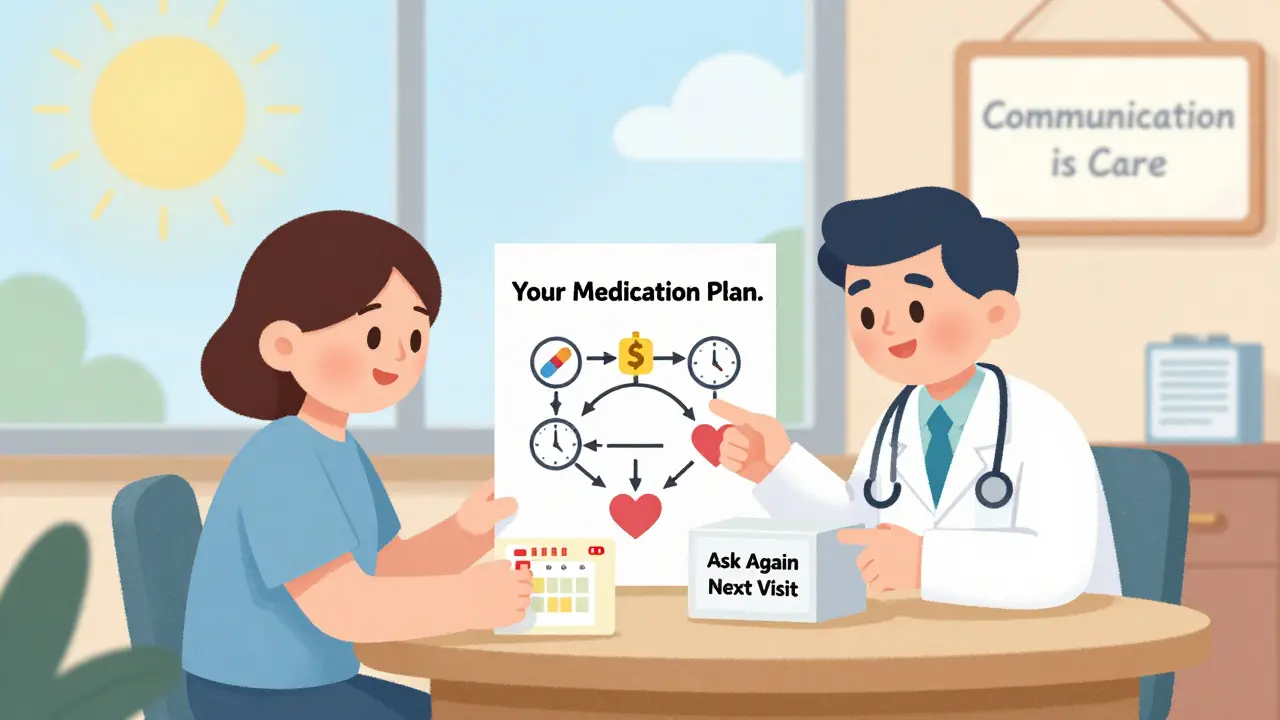
Hospitals and clinics are finally being held accountable for adherence. Medicare and private insurers now penalize hospitals for readmissions caused by patients not taking their meds. That means doctors are under pressure to fix this-and they’re getting better at it. In 2024, the American Medical Association launched a program called “Communication is Care,” requiring doctors in value-based care programs to prove they’ve trained in patient-centered communication. AI chatbots are being used to remind patients, but the best results still come from real human conversations. The most successful clinics now train their nurses and medical assistants to screen for adherence before the doctor even walks in. That means you get more time with your doctor to actually solve problems-not just get a script.Final Thought: You’re Not Alone
You’re not lazy. You’re not failing. You’re human. Taking meds long-term is hard. Life gets busy. Side effects happen. Costs rise. Emotions get in the way. But here’s the thing: your doctor wants you to get better. They just need you to tell them where you’re stuck. The right conversation can turn a failing plan into a working one. It can keep you out of the hospital. It can save your life. Next time you see your doctor, don’t wait for them to ask. Say it first: “I need to talk about my meds.” That’s not being difficult. That’s being smart.What if I forget to take my medication? Should I just skip it?
Never guess. Call your doctor or pharmacist. Some meds are safe to skip if you miss a dose, others need to be taken as soon as you remember, and some require a special schedule. For example, missing a blood pressure pill once might not hurt, but skipping insulin or antibiotics can be dangerous. Always check-don’t assume.
Can I ask my doctor to reduce the number of pills I take?
Absolutely. Many people are on too many medications, especially as they age. Ask: “Are all these pills still necessary?” or “Can any of them be combined?” A medication review with your doctor or pharmacist can often simplify your regimen safely.
I’m embarrassed to admit I’m not taking my meds. What should I do?
You’re not alone. Studies show 50% of patients don’t take their meds as prescribed. Doctors hear this all the time. Say: “I’m worried you’ll think I’m not trying, but I’ve been struggling.” Good doctors will respond with support, not judgment. If they don’t, it’s time to find someone who will.
How do I know if my doctor is really listening to me?
They’ll reflect back what you say. For example, if you say, “I can’t afford this,” they might respond: “So cost is the main barrier. Let’s look at cheaper options.” They’ll ask follow-up questions. They won’t interrupt. If you feel rushed, dismissed, or judged, it’s not you-it’s the system. You deserve better.
Is it okay to bring someone with me to the appointment?
Yes, and it’s often a good idea. A friend or family member can help remember what was said, ask questions you didn’t think of, and support you in sticking to the plan. Some clinics even encourage it. Just let the office know ahead of time.

Curtis Younker
Okay but let’s be real-most doctors don’t have 20 minutes to sit and talk about your pill schedule. They’re running 45 minutes behind, your chart is a mess, and they’re already thinking about their next patient. So yeah, the advice is solid, but the system’s broken. I’ve had docs glance at my meds and say ‘Looks good’ without even asking if I’m taking them. It’s not your fault. It’s the assembly line of healthcare.
And don’t get me started on the ‘teach-back’ method. Try explaining to a 70-year-old with dementia why they need to take a pill at 7 AM and another at 9 PM when they can’t remember if it’s Tuesday or Thursday. The system needs to adapt to people, not the other way around.
Shawn Raja
Let’s not pretend this is about communication. It’s about power. Doctors hold the keys to your health like they’re gatekeepers of some sacred temple, and you’re supposed to grovel and say ‘yes sir’ while they hand you a prescription written in hieroglyphics.
The real fix? Remove the power imbalance. Let pharmacists prescribe. Let AI chatbots triage adherence issues. Let patients access their own medical records without jumping through 17 hoops. Talking nicely won’t fix a system that treats patients like inconveniences. We need structural change, not polite scripts.
Also, ‘lots of people have trouble’? That’s not empathy. That’s gaslighting with a smile.
Karen Droege
OMG YES. I’m a nurse in Vancouver and I’ve seen this play out a hundred times. A patient comes in with 12 meds, looks terrified, and says ‘I think I’m doing okay.’ Then they pull out a Ziploc bag with half-empty bottles, expired pills, and one bottle labeled ‘heart pill’ that’s actually for gout.
Here’s what works: I start every med review with ‘Tell me about your pills.’ Not ‘Are you taking them?’-that’s a trap. I let them tell the story. Sometimes they cry. Sometimes they laugh. Sometimes they say ‘I didn’t know this was supposed to be for my kidneys.’
We don’t need more lectures. We need more time. More trained staff. More empathy. And yes, more pill organizers with alarms. My clinic gives them out for free. It’s not magic-it’s just basic human care.
Allie Lehto
I’m so tired of people acting like this is a new problem. People have been skipping meds since the 1950s. It’s not about ‘communication’-it’s about responsibility. You’re an adult. If you can’t take a pill, maybe you shouldn’t be on it. Or maybe you need to get your life together. I’ve seen people skip insulin because they ‘forgot’ and then blame the doctor. No. You’re not a victim. You’re just lazy.
Also, why do we keep giving people free pill boxes? They throw them out after a week. Use your phone. Set an alarm. It’s 2025. You have a device in your pocket that can call NASA. Use it.
Neil Thorogood
Bro. I used to skip my antidepressants because I thought I was ‘fixed.’ Then I had a panic attack in a Target parking lot. My doctor didn’t ask me why I stopped. He just wrote a new script. I cried in his office. He didn’t even look up.
So I found a new doc. One who asked, ‘What’s the hardest part?’
That one question changed everything. I’m on a lower dose now. I use a pill app. I tell my partner when I’m struggling.
It’s not about being ‘smart.’ It’s about being brave. And if your doc doesn’t make you feel safe? Fire them. 💪💊
Jessica Knuteson
Adherence rates jump? Who funded this study? Pharma? The AMA? The real issue is polypharmacy. Most elderly patients are on 10+ meds because each specialist wrote their own script without talking to anyone else. The solution isn’t better communication. It’s better coordination. Someone needs to audit these regimens. Not a nurse. Not a chatbot. A pharmacist with authority.
Also ‘teach-back’ is just performative medicine. You’re not teaching. You’re checking compliance. Big difference.
Angie Thompson
I’m a 24-year-old with Crohn’s and I take 7 pills a day. I used to feel like a failure every time I missed one. Then I started using Medisafe and told my doctor I was overwhelmed. He didn’t judge. He said ‘Let’s cut this down.’ We got me on a biologic instead of all the little pills. Now I take one shot a month.
Don’t let guilt silence you. Your doctor’s job isn’t to make you feel bad-it’s to help you live. I used to think asking for help meant I was weak. Turns out, asking is the bravest thing you can do. 🙌❤️
Renia Pyles
Ugh. This is such a privileged take. You act like everyone has access to a doctor who has time to listen. I’m on Medicaid. My ‘appointment’ is 8 minutes. My pharmacist doesn’t answer calls. My pills cost $800 a month. The system doesn’t care if I live or die. It cares about margins.
So yes, ‘say it first’-but what if saying it gets you labeled as ‘noncompliant’ and denied future care? That’s not a conversation. That’s a death sentence wrapped in a pep talk.
Napoleon Huere
Isn’t it funny how we treat medication like a moral test? Take your pills = good person. Skip them = lazy, broken, irresponsible. But we don’t do that with exercise or sleep or therapy. Why? Because those things aren’t regulated by profit.
Medication adherence is a socioeconomic issue wrapped in medical jargon. The real question isn’t ‘Why don’t you take your pills?’ It’s ‘Why does your life make it so hard to take them?’
Until we fix housing, food insecurity, and wage theft, no amount of ‘teach-back’ will fix this.
Aishah Bango
This article is dangerous. It tells people to ‘speak up’ like it’s a magic bullet. But what if you’re undocumented? What if you’re scared of being reported? What if your meds are for mental illness and you’re afraid your employer will find out? This isn’t about communication-it’s about privilege.
Don’t shame people for surviving in a broken system. Just because you had a good doctor doesn’t mean everyone did.
Shweta Deshpande
I’m from India and I’ve seen this in my family. My grandma took her blood pressure pills only on days she felt dizzy. She thought the pills were like vitamins-you only take them when you’re sick. No one told her they’re for prevention.
My mom printed out simple pictures: a sun for morning, a moon for night. We put them on the fridge. Now she takes them every day. No doctor needed. Just clarity. And love.
Language matters. But so does culture. You don’t need fancy scripts. You need someone who speaks your truth.
Geoff Miskinis
How quaint. We’re being told to ‘start with honesty’ as if the medical-industrial complex gives a damn. The data is cherry-picked. The 20% adherence increase? Probably from patients who were already compliant and just needed a nudge. The real problem? Overprescribing. Underfunded primary care. Profit-driven formularies.
And yet, here we are, lecturing patients to ‘ask for simpler options’ as if the system wasn’t designed to maximize revenue, not outcomes.
It’s not the patient’s failure. It’s the failure of a system that treats health as a commodity. This article is a Band-Aid on a severed artery.
Dan Nichols
People are too lazy to read the label. That’s the whole problem. I’ve seen patients take antibiotics with milk. Take blood thinners with grapefruit. Mix OTC with prescriptions. No one taught them. But the doctor’s not your babysitter. You’re an adult. If you can’t read a pill bottle, maybe you shouldn’t be taking meds.
Stop blaming the system. Take responsibility. Use a pill organizer. Google the side effects. Stop being a victim. You’re not special. You’re just careless.
Ashley Porter
Adherence metrics are a proxy for healthcare efficiency, not patient well-being. The real KPI should be functional outcomes, not pill counts. If someone’s not taking their statin but their LDL is stable and they’re asymptomatic, why are we pathologizing noncompliance? Maybe they’re optimizing their own health outside the protocol.
Also, ‘teach-back’ is just cognitive load transfer. You’re making the patient memorize jargon so the doctor feels like they did their job. Not exactly patient-centered. More like compliance theater.
Simran Kaur
I’m a caregiver for my mom with Alzheimer’s. She forgets if she ate. She forgets if she took her meds. We tried alarms. We tried charts. We tried pill boxes.
Nothing worked until we started taking them together. Every morning, I sit with her. We take them side by side. I say ‘One for you, one for me.’ She laughs. She remembers.
It’s not about the pill. It’s about presence. You don’t need a script. You need someone who shows up.