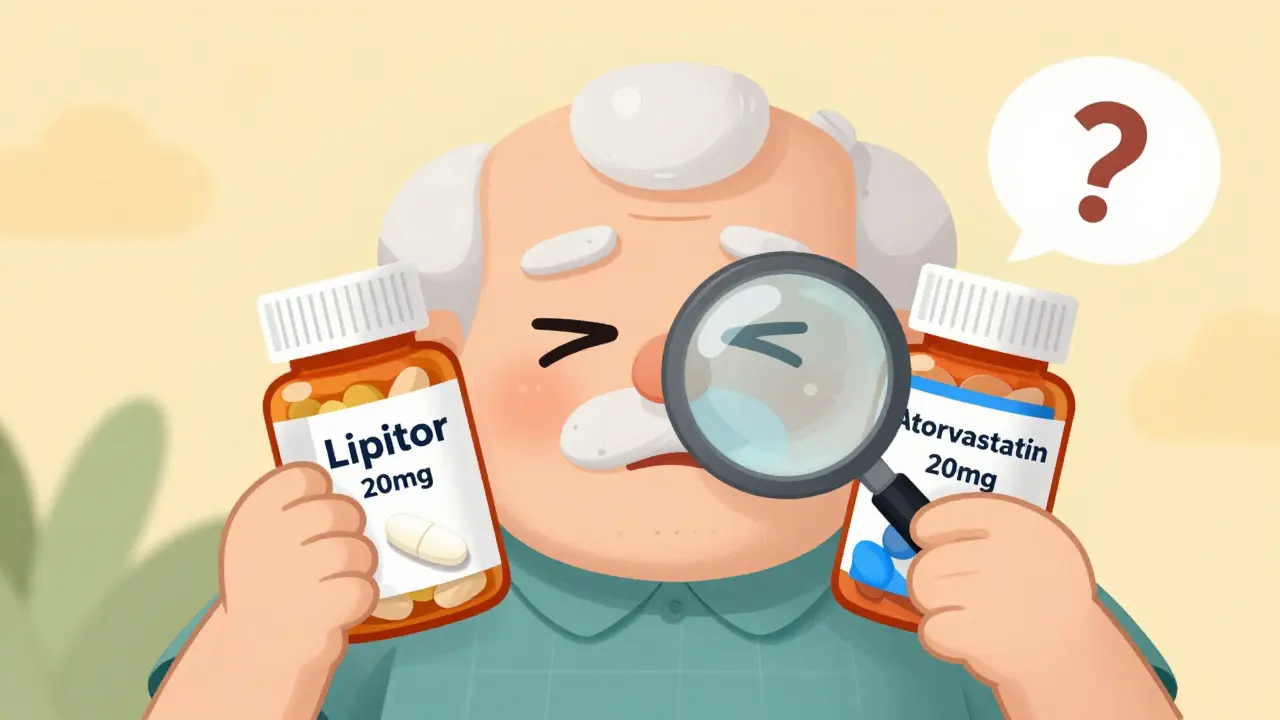
Every time you pick up a refill, your pills might look different. Same medicine. Same dose. But now they’re a different color, shape, or have strange letters stamped on them. It’s not a mistake. It’s the reality of generic drugs. And if you don’t check the label, you could be at risk.
Why Your Pills Look Different Every Time
Generic medications are legally required to have the same active ingredients, strength, and effect as brand-name drugs. But they don’t have to look the same. The FDA allows generic manufacturers to change the color, shape, size, and even the imprint on the pill-as long as the active ingredient matches. That’s why you might get a small white oval one month and a large blue capsule the next. Both are the same drug-just made by different companies. This isn’t just confusing. It’s dangerous. A 2022 survey by the American Pharmacists Association found that 42% of adults over 65 rely on the pill’s appearance to know what they’re taking. If the pill looks different and you don’t check the label, you might think it’s the wrong medicine-or worse, take two pills thinking you missed one.What to Check on Every New Prescription Label
Don’t just grab the bottle and go. Take five minutes. Compare the new label to your old one. Here’s exactly what to look for:- Patient name - Is it spelled right? Is it your name? This is the first line of defense against mix-ups.
- Medication name - Look for both the brand name (like Lipitor) and the generic name (like atorvastatin). They should match what you’ve taken before.
- Dosage strength - Is it 10 mg? 20 mg? 50 mg? Even a small change can be risky, especially with blood thinners, seizure meds, or thyroid drugs.
- Manufacturer - You’ll see something like “Mfg: ACCORD HEALTHCARE” or “Made by Teva.” If this changes from your last fill, it’s a different generic version. Not a problem for most drugs-but critical for narrow-therapeutic-index meds.
- Rx number - This is your unique prescription ID. It should match the one on your old bottle. If it doesn’t, ask why.
- Refills remaining - Is it still 3 refills left? Or did someone accidentally reset it to zero? That could mean your doctor didn’t authorize more.
- Prescriber and date - Your doctor’s name and the date the prescription was written should be correct. If the date is months old, something’s off.
- Brand substitution not permitted - If your doctor checked this box, the pharmacy cannot switch you to a generic. If you see a generic version anyway, call the pharmacy immediately.
When Appearance Changes Matter Most
Not all medications are created equal when it comes to switching generics. For most drugs-like antibiotics, cholesterol pills, or blood pressure meds-switching manufacturers won’t make a difference. But for some, even tiny differences in how the drug is absorbed can cause problems. These are the high-risk drugs where you should stick with the same generic manufacturer:- Warfarin (blood thinner)
- Levothyroxine (thyroid hormone)
- Phenytoin, carbamazepine (seizure meds)
- Lithium (mood stabilizer)
- Cyclosporine (organ transplant drug)
Use the Pill Identifier Tool
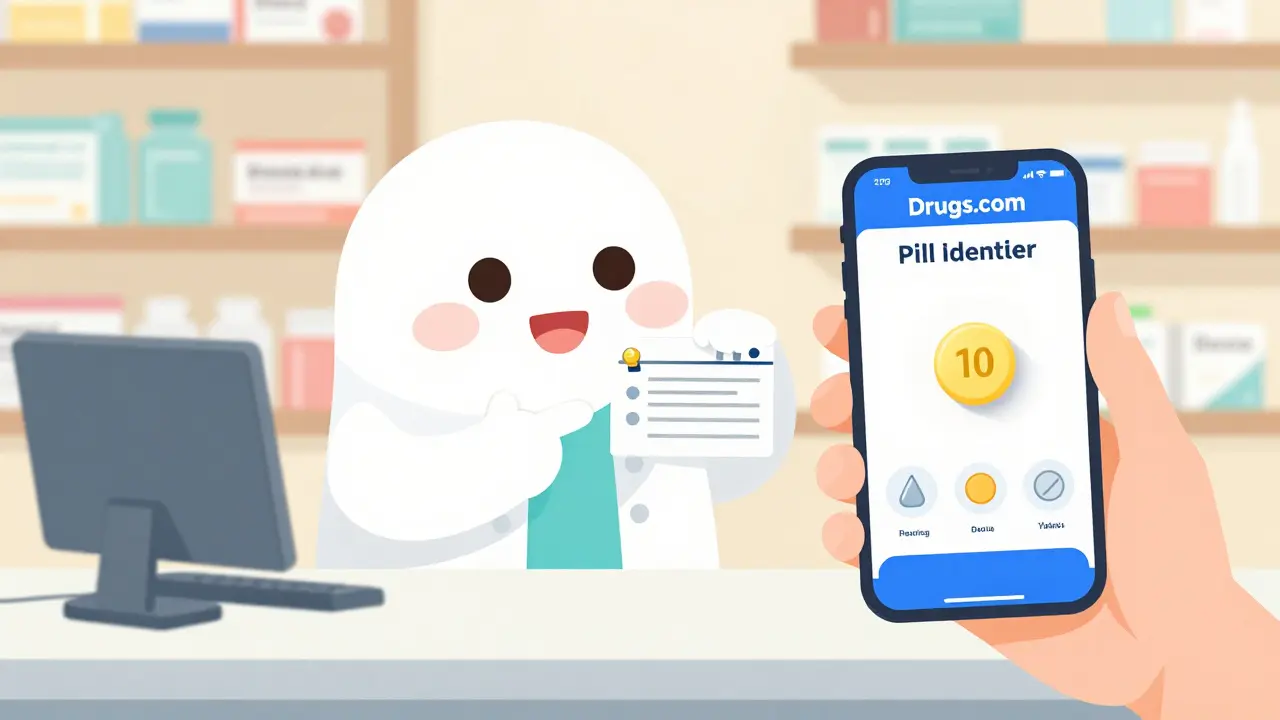
If the pill looks unfamiliar and you’re unsure, don’t guess. Use the Drugs.com Pill Identifier. It’s free, easy, and trusted by pharmacists. Just enter:- Shape (e.g., oval, capsule, round)
- Color
- Imprint (the letters or numbers on the pill)
Red Flags That Mean STOP
Some changes are never okay. If you see any of these, don’t take the medication. Call your pharmacy or doctor right away:- The active ingredient is different (e.g., you’re supposed to take lisinopril, but the label says hydrochlorothiazide)
- The dosage is wrong (e.g., you take 5 mg, but the new bottle says 10 mg)
- The label says “brand substitution not permitted,” but you got a generic
- You’re taking a high-risk drug and the manufacturer changed without warning
- The bottle has no expiration date or refill count
How Pharmacies Are Making It Easier
The good news? Things are improving. Most prescriptions today are sent electronically-over 85% as of 2023. That means fewer handwriting errors, fewer Latin abbreviations like “qd” or “bid,” and fewer misreads. Electronic prescriptions cut labeling mistakes by 90% compared to handwritten ones. Pharmacies like CVS and Walgreens now scan barcodes on your prescription form to automatically pull up your profile. That reduces the chance of giving you the wrong drug. Some pharmacies are even testing QR codes on labels. Scan it with your phone, and you’ll get a video explanation of your medicine, dosage instructions, and side effects. Kaiser Permanente started this pilot in 2022. It’s coming to more places soon.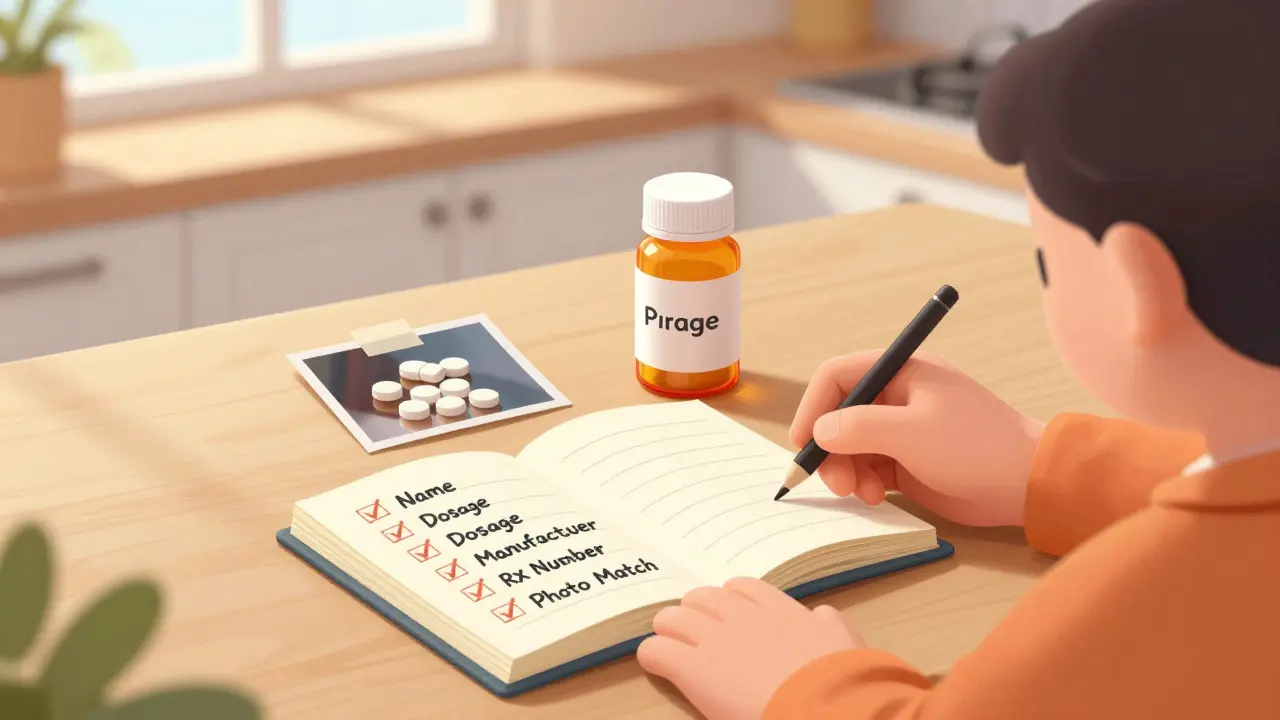
What to Do If You’re Still Unsure
You’re not alone if you feel confused. The Institute for Safe Medication Practices says most patients struggle to read and understand their labels. That’s why pharmacists are trained to help. When you pick up your prescription, ask:- “Is this the same medicine I’ve been taking?”
- “Has the manufacturer changed?”
- “Can you confirm the dosage and active ingredient?”
Keep a Medication Log
Create a simple list: drug name, strength, manufacturer, date filled, and a photo of the pill. Update it every time you refill. You can use a notebook, a note on your phone, or a free app like MyTherapy or Medisafe. This log becomes your personal safety record. If you ever go to the ER or see a new doctor, you can show them exactly what you’ve been taking-even if the labels changed.Final Tip: Trust Your Instincts
If something feels off, it probably is. You know your body. You know your meds. Don’t let a confusing label make you second-guess yourself. Always verify. Always ask. Always double-check. Medication errors are preventable. But only if you’re paying attention.Why do my pills look different even though it’s the same medicine?
Generic drug manufacturers aren’t required to copy the appearance of brand-name pills. They can change the color, shape, size, or imprint as long as the active ingredient, strength, and effect are the same. That’s why your pills might look different each time you refill-even though it’s the exact same medication.
Can switching generic manufacturers cause side effects?
For most medications, no. But for drugs with a narrow therapeutic index-like warfarin, levothyroxine, or seizure meds-even tiny differences in how the body absorbs the drug can lead to serious side effects. If you take one of these, ask your pharmacist to stick with the same manufacturer.
What should I do if the dosage on my new label is different?
Stop taking the medication immediately. Call your pharmacy and your doctor. A dosage change is never an accident. It could mean a labeling error, a wrong refill, or a prescription change you weren’t told about. Never assume it’s correct.
How do I know if my pharmacy switched my generic brand?
Check the manufacturer name on the label. It’s usually listed as “Mfg: [Company Name].” Compare it to your last bottle. If it’s different, they switched. For most drugs, that’s fine. For high-risk meds, ask if you can request the same maker.
Is it safe to take a generic version if my doctor didn’t say I could?
Only if your doctor didn’t write “brand substitution not permitted” on the prescription. If that box is checked, the pharmacy is required to give you the brand-name drug. If you got a generic anyway, contact your pharmacy right away. It’s a violation of your prescription.
What if I can’t read the label clearly?
Ask your pharmacist for a large-print label or a digital copy. Many pharmacies offer this for free. You can also use your phone’s camera to zoom in on the text. Don’t guess-always confirm the details before taking the medication.

Alex Curran
Been a pharmacist for 18 years and let me tell you the biggest killer isn't the pill color it's the complacency. People see the same name on the bottle and assume everything's fine. They don't check the manufacturer. They don't compare the imprint. They don't even glance at the Rx number. That's how you get someone on warfarin switching from Mylan to Teva and ending up in the ER with a PT of 70. Always verify. Always. No exceptions.
Lynsey Tyson
i just took a pic of my pill bottle every time i get a refill and saved it in a folder called 'meds' on my phone. last month my levothyroxine looked totally different and i was about to panic until i pulled up the pic and saw the imprint matched. saved me from calling my doctor for nothing. dumb little habit but it works.
Nina Stacey
oh my god i did this last week and almost took a double dose because the new pills were smaller and i thought i missed one from last week and then i remembered i took a photo and it was the same dosage just a different maker and i was like oh thank god i didnt just overdose on my thyroid med like a total idiot
Jedidiah Massey
It's astonishing how the general populace conflates pharmaceutical aesthetics with pharmacological integrity. The FDA's ANDA framework explicitly permits morphological variance in generics, yet laypersons exhibit pathological reliance on visual heuristics-a cognitive bias bordering on the absurd. One must interrogate the active moiety, not the pill's chromatic disposition. The very notion that a blue capsule is 'different' from a white oval is a symptom of pharmaceutical illiteracy.
Moreover, the anecdotal reliance on smartphone photography as a safety protocol is charmingly archaic. A properly configured EHR-integrated pharmacy system should auto-flag manufacturer changes for NDI drugs. The fact that we still rely on manual photo comparisons speaks volumes about the systemic failures in patient education infrastructure.
Dikshita Mehta
in india we get so many different generics that we all learn to read the imprint code by heart. my mom takes phenytoin and she knows exactly what each manufacturer's pill looks like. she even has a little notebook where she writes down the code and the company name. it's not hard, just a habit. if you're on a high-risk med, treat the pill like a barcode. scan it, know it, trust it.
William Storrs
you guys are doing amazing just by paying attention. most people don't even know they should check. you're not being paranoid-you're being smart. keep doing this. your life depends on it. and if you're ever unsure, call your pharmacist. they're paid to help you, not just hand you a bottle. seriously, they love when you ask questions. it means you care.
James Stearns
It is my solemn duty to inform you that the casualization of pharmaceutical vigilance represents a dangerous erosion of medical discipline. The normalization of photographic record-keeping as a substitute for clinical literacy is not merely inefficient-it is epistemologically unsound. One ought to rely upon the authoritative documentation provided by the prescriber and the pharmacist, not upon the subjective visual memory of a layperson. This trend reflects a broader societal decline in deference to professional expertise.
Edington Renwick
my aunt took a pill she thought was her blood pressure med and it was actually a diabetes drug. she went into a coma for 12 hours. they said the bottle label had a different font. same name. different maker. same color. she almost died because she didn't check the imprint. now i carry a pill identifier app on my phone like it's my third eye. this isn't a suggestion. this is survival.
Guillaume VanderEst
the worst part? pharmacies don't tell you when they switch manufacturers. you just get the bottle and assume. i once asked my pharmacist why my lithium changed and she said 'oh we switched to a cheaper one' like it was a grocery sale. i nearly threw the bottle at her. if you're on a narrow-therapeutic-index drug, you have to demand consistency. don't let them treat your life like a cost-cutting experiment.
Mark Able
wait so if i take a picture of my pill every time and compare it to the one on drugs.com am i basically doing my own pharmacy check? because that sounds like a lot of work but also kind of genius. can i just screenshot the whole label and save it? does anyone else do this? i need a group chat for pill photographers.