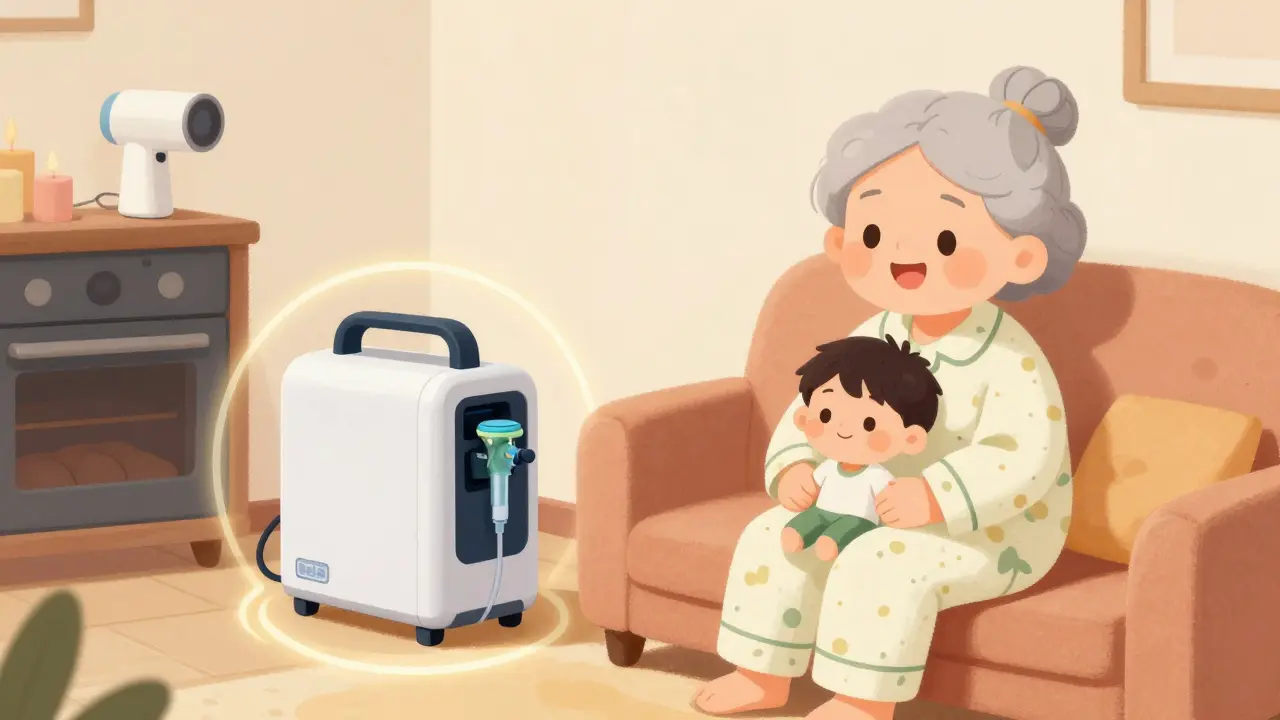
When you’re on home oxygen therapy, your life doesn’t stop-it just changes. You still need to cook, walk the dog, get dressed, and sit on the couch with your grandkids. But now, there’s a silent partner in every room: the oxygen tank or concentrator. And while oxygen itself doesn’t burn, it turns a spark into a flash. One wrong move, one misplaced hair dryer, and the consequences can be deadly.
Why Oxygen Safety Isn’t Optional
Over 1.5 million Americans rely on home oxygen therapy every day, mostly because of COPD, pulmonary fibrosis, or other chronic lung diseases. The goal is simple: keep your blood oxygen levels up so you can breathe easier and live longer. But here’s the hard truth-fire departments in the U.S. respond to nearly 2,500 home fires each year involving oxygen equipment. Fifteen people die. Over a hundred are injured. And millions in property damage vanish in smoke.
Most of these fires aren’t accidents. They’re preventable. The biggest cause? Smoking near oxygen. The second? Electrical devices too close to the tubing. And the third? Not knowing what’s flammable around you. Oxygen doesn’t need to be hot to cause disaster. It just needs to be there-and then something sparks.
The Three Types of Oxygen Systems and Their Risks
Not all oxygen systems are the same. Each comes with its own dangers-and its own rules.
- Oxygen concentrators plug into the wall and pull oxygen from the air. They’re quiet, don’t run out, and don’t explode. But they need electricity. If the power goes out and you don’t have a backup battery, you’re stuck. Medicare requires these units to have at least 30 minutes of battery life. Also, keep them at least 6 inches from walls so they don’t overheat. And never, ever cover them with a blanket or put them in a closed cabinet.
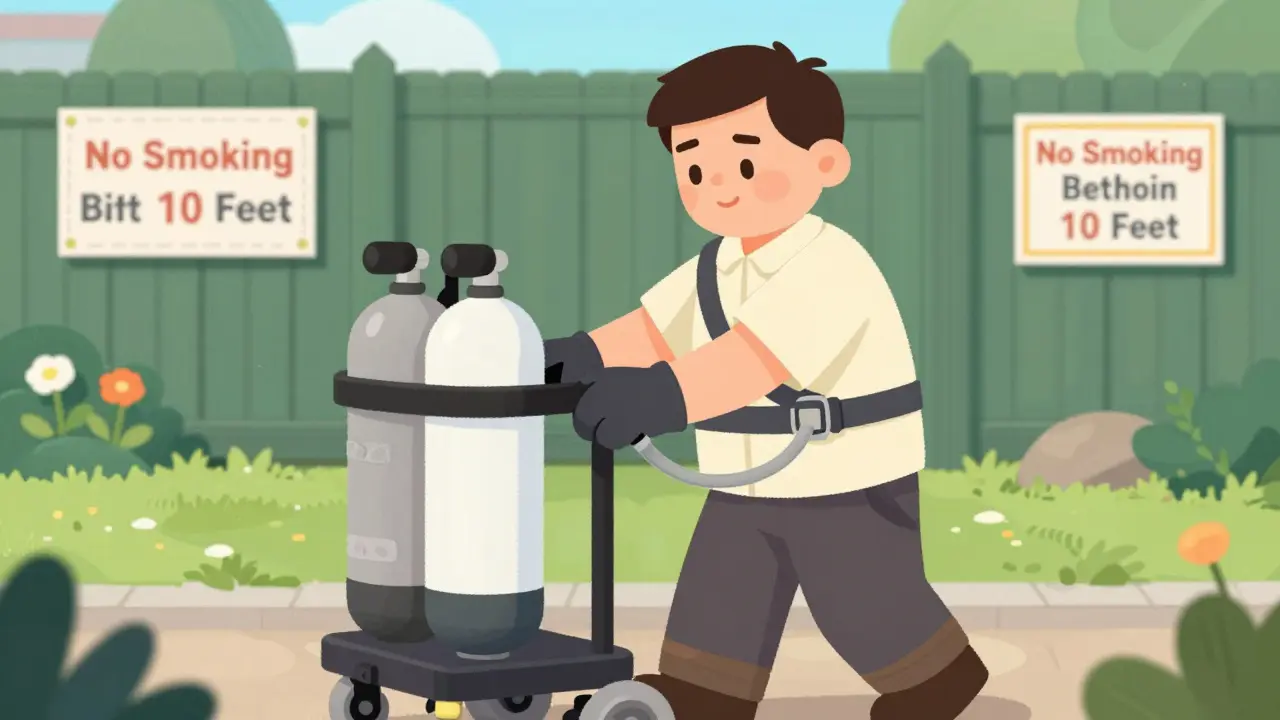
- Compressed gas cylinders are metal tanks filled with pressurized oxygen. They’re portable but dangerous if dropped or heated. A damaged valve can turn the tank into a rocket-flying at 150 mph. These tanks are responsible for 68% of all oxygen-related fires. Keep them upright. Never store them in a hot car. And don’t let anyone smoke within 10 feet.
- Liquid oxygen systems store oxygen as a super-cold liquid. They’re lightweight and hold a lot, but if they leak, they can freeze your skin on contact. Spilled liquid oxygen can turn a carpet into a fire hazard in seconds. These systems are great for active users but require careful handling. Always wear gloves when filling them.
The safest option for most people? An oxygen concentrator with a backup battery. But no matter which system you use, the rules are the same.
The 10-Foot Rule: Fire Prevention That Actually Works
You’ve probably heard the old advice: “Stay 5 feet away from flames.” That’s not enough. A 2021 study from the American Thoracic Society showed that fires spread three times faster in oxygen-rich air. What used to be a 5-foot buffer? Now it’s 10 feet.
That means:
- No candles, fireplaces, or wood stoves within 10 feet of your oxygen equipment.
- No gas stoves or ovens with open flames nearby. If you cook, keep the door closed and turn on the exhaust fan.
- No space heaters, electric blankets, or heating pads within 10 feet. Even if they’re turned off, a faulty wire can spark.
- No hair dryers, curling irons, or electric razors within 10 feet. These devices generate heat and sparks. One user on Reddit described how hairspray sprayed near tubing ignited in under a second.
And yes-that includes your cigarette. Even if you’re outside. Even if you think you’re far enough. Oxygen travels. It clings to clothes, hair, and bedding. The American Association for Respiratory Care found that 92% of oxygen-related deaths involve someone smoking within 5 feet. Don’t be a statistic.
What You Wear and Sleep On Matters
You might not think about your pajamas or your blanket. But you should.
Synthetic fabrics-polyester, nylon, acrylic-build up static electricity. At just 1,000 volts, that static can spark. You won’t even feel it. But in an oxygen-rich room, that spark can ignite your sheets. Johns Hopkins researchers found that cotton bedding reduces this risk by over 80%. So swap out your fleece blanket. Wear cotton pajamas. Choose cotton sheets. It’s that simple.
Also, avoid petroleum-based lotions or oils on your skin. They can soak into fabric and become fuel. Stick to water-based moisturizers.
Keeping Your Oxygen Equipment Running Smoothly
Your concentrator isn’t magic. It needs care.
- Check the air filter every 2 to 4 weeks. If it’s dusty, wash it with mild soap and let it dry completely before putting it back in.
- Have the machine professionally serviced every 6 months. This isn’t optional. A dirty filter or worn-out part can drop oxygen purity below 87%, which means you’re not getting the therapy you need.
- Never use extension cords. Plug directly into the wall. If the outlet feels warm, stop using it. Call an electrician.
- Keep the machine away from water. Don’t put it in the bathroom. Humidity can damage the electronics.
For gas or liquid systems, always secure the tank. Use a stand or a cart. Never leave it lying on the floor. A rolled-over tank can break a valve. And if you’re traveling, make sure you know how to turn it off safely.
Staying Active Without Putting Yourself at Risk
Just because you’re on oxygen doesn’t mean you can’t move. In fact, staying active helps your lungs work better.
Here’s how to do it safely:
- Use a portable concentrator or a lightweight liquid oxygen system for walking. Many modern units weigh under 5 pounds and last 4-6 hours on a single charge.
- Use Velcro straps to secure your tubing to your shirt or backpack. This keeps it from dragging on the ground and tripping you.
- Consider a ceiling-mounted oxygen track system. Mayo Clinic data shows these reduce falls by 43% because the tubing moves with you, not against you.
- Plan your routes. Know where outlets are if you’re using a concentrator. Carry extra batteries if you’re going out for the day.
- Never use oxygen while refueling a car, near a gas pump, or in a garage with running engines. Fumes + oxygen = disaster.
Many users report that once they got used to their equipment, they started walking more, gardening, and even traveling. One woman in Ohio, 76, started taking weekly bus trips to the grocery store after her provider gave her a portable concentrator and a safety checklist. She says it changed her life.
What to Do in an Emergency
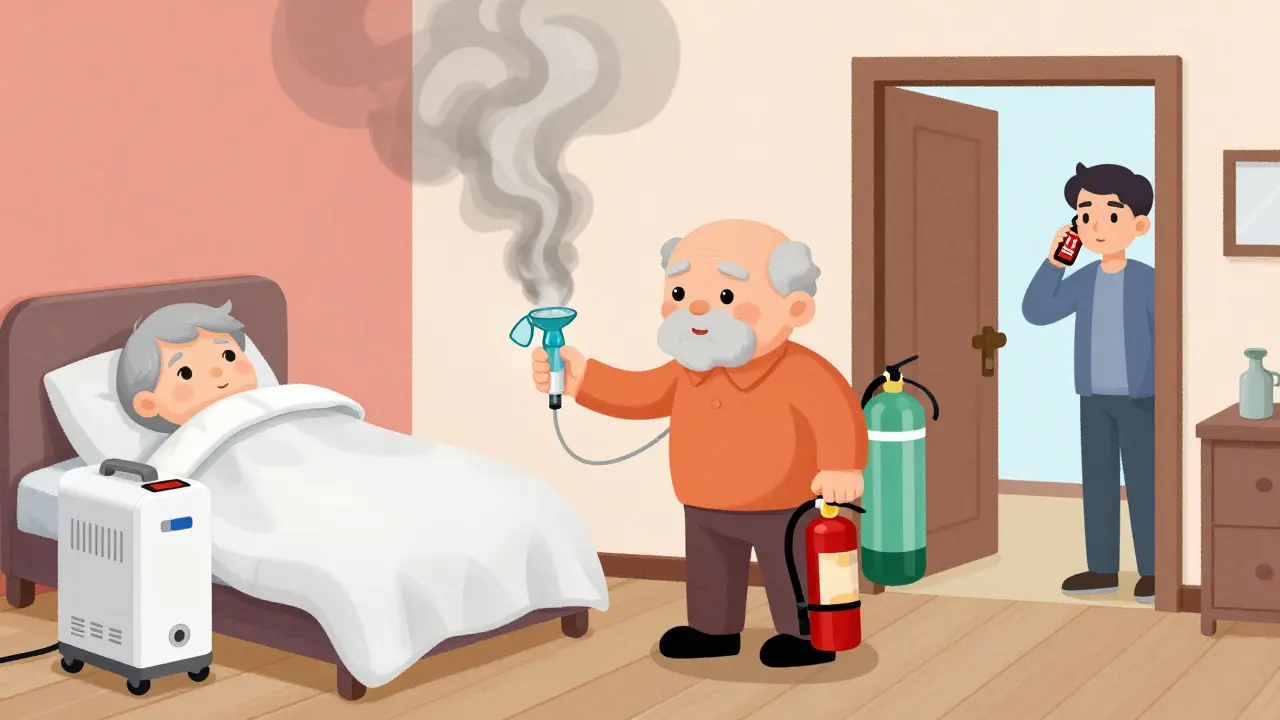
If you see smoke or smell burning:
- Turn off your oxygen system immediately.
- Get out of the house. Don’t stop to grab anything.
- Call 911 from outside.
Never try to put out an oxygen fire with water. It won’t work. And never go back inside. Oxygen makes fires burn hotter and faster than you can imagine.
Keep a fire extinguisher labeled for electrical and flammable liquid fires near your oxygen area. Make sure everyone in the house knows where it is and how to use it.
Training and Support Are Part of Your Treatment
Medicare requires providers to give you at least 3 to 5 hours of safety training before you take your equipment home. But a 2022 survey found that 67% of patients didn’t get enough instruction. Don’t be one of them.
Ask your provider for:
- A printed safety checklist with clear steps
- A demonstration of how to shut off your system
- A list of emergency contacts
- Access to the American Lung Association’s free Oxygen Safety Kit (includes flame-resistant blankets and 10-foot warning signs)
If your provider doesn’t offer this, switch. Your life depends on it.
What’s Changing in 2025
The rules are getting stricter-and smarter.
In 2025, new oxygen equipment sold in the U.S. must shut off automatically within half a second if it detects a flame. Philips and other manufacturers have already rolled out smart concentrators with AI that can spot a fire from 18 inches away and cut the oxygen flow before it spreads.
Medicare is also rolling out an annual safety competency check. You’ll need to prove you know how to handle your equipment safely. It’s not a test you fail-it’s a reminder that this isn’t something you can ignore.
And if you live in a high-risk area-like West Virginia or Kentucky, where oxygen fires are most common-local health programs now offer free home safety inspections. Ask your provider if one is available near you.
You Can Live Well With Oxygen
Home oxygen therapy isn’t the end of your life. It’s a tool that lets you keep living it. People on oxygen still travel, work, volunteer, and hug their grandkids. But they do it with awareness. With preparation. With respect for the invisible force they’re managing.
Follow the 10-foot rule. Wear cotton. Keep your equipment clean. Know your emergency steps. And never, ever smoke near your oxygen.
The technology is getting better. The rules are clearer. The training is more available. But the most important thing? You. Your choices. Your vigilance. That’s what keeps you safe.
Can I use an electric blanket while on oxygen therapy?
No. Electric blankets generate heat and can spark, even when turned off. In an oxygen-rich environment, that spark can ignite bedding or clothing. Use cotton blankets instead. If you need extra warmth, wear layers or use a heated mattress pad that’s certified safe for oxygen use-though even these should be kept at least 10 feet from your oxygen equipment.
Is it safe to smoke in another room if I’m on oxygen?
No. Oxygen doesn’t stay in one room. It lingers in clothing, hair, and furniture. A cigarette lit in another room can still ignite oxygen that’s traveled through the air or on your clothes. The American Association for Respiratory Care reports that 92% of oxygen-related deaths involve smoking within 5 feet. There’s no safe distance. If you smoke, quit. Your provider can help you find support programs.
What should I do if my oxygen concentrator stops working?
First, check the power cord and outlet. If it’s plugged in and the outlet works, look at the filter-it might be clogged. If the machine still doesn’t work, switch to your backup oxygen source (tank or portable unit). Then call your provider immediately. Don’t wait. If you’re without oxygen for more than 15 minutes and feel dizzy or short of breath, call 911. Always keep your backup tank charged and ready.
Can I travel with my oxygen equipment?
Yes, but you need to plan. Portable oxygen concentrators are FAA-approved for air travel. Contact your airline at least 48 hours in advance to notify them. Bring extra batteries-enough for 150% of your flight time. For car trips, secure your equipment so it doesn’t roll. Never leave it in a hot car. Liquid oxygen systems are not allowed on planes. Always carry your doctor’s letter and your equipment’s FDA approval label.
How often should I clean my oxygen tubing?
Clean your tubing once a week with mild soap and warm water. Let it air dry completely before reconnecting. Replace it every 2 to 4 months-or sooner if it cracks, stiffens, or becomes discolored. Dirty tubing can harbor bacteria and reduce oxygen flow. If you’re sick, replace it immediately. Many providers offer free replacement tubing as part of their service plan.
Are there any foods or drinks I should avoid while on oxygen therapy?
No specific foods or drinks are dangerous with oxygen therapy. But alcohol and sedatives can slow your breathing, which reduces oxygen intake. Avoid them if your doctor has advised you to limit them. Also, avoid using aerosol sprays (like deodorant or hairspray) near your oxygen equipment. The fine mist can ignite instantly in high-oxygen air.
Can I use my oxygen system during a power outage?
Only if you have a backup. Concentrators need electricity. Medicare requires them to have at least 30 minutes of battery backup. But that’s not enough for a long outage. Keep a full compressed gas cylinder or portable oxygen unit ready. If you live in an area with frequent outages, consider a generator with a transfer switch. Always test your backup system monthly. Don’t wait for a blackout to find out it doesn’t work.
What signs indicate my oxygen therapy isn’t working properly?
If you feel more short of breath than usual, dizzy, confused, or your lips or fingernails turn blue, your oxygen levels may be too low. Check your equipment: Is the tubing kinked? Is the filter dirty? Is the concentrator making unusual noises? If everything looks fine but you still feel worse, contact your doctor immediately. Don’t assume it’s just your condition getting worse-it could be your equipment failing.

Rulich Pretorius
Oxygen isn't the enemy-it's the silent partner you learn to respect. I've seen people treat it like a convenience, not a lifeline. The 10-foot rule isn't suggestion, it's survival. I used to think smoking outside was enough-until I saw a neighbor's curtains catch fire from oxygen clinging to his sweater. No drama. No warnings. Just smoke. Always assume it's everywhere.
Edward Stevens
So let me get this straight-we’re banning electric blankets but letting people use space heaters that cost $20 and have zero safety features? Brilliant. Next they’ll ban socks because static. At this point, I’m just waiting for the FDA to mandate cotton underwear and forbid blinking too fast.
Sarthak Jain
bro i was on ox for 2 yrs after my pnuemonia and lemme tell u-cotton sheets are a game changer. i used to wake up with my blanket sparking like a damn light show. no joke. also, avoid that petroleum jelly like the plague. my aunt tried it ‘for dry skin’ and her pillow caught fire. she’s fine now but still gets weird looks at family BBQs. pls just use water based stuff. and yeah, keep the tube clean-gunk builds up faster than you think. my concentrator started wheezing like an asthmatic grandpa till i washed the filter. simple fix. big difference.
Tim Bartik
Oh great, another liberal safety pamphlet. Next they’ll ban oxygen because some lazy Americans can’t keep a cigarette 10 feet away. We don’t need ‘smart concentrators’-we need people who don’t act like toddlers around flammable stuff. And why the hell is Medicare making us take a ‘competency test’? Are we children now? I’ve been breathing for 67 years-I don’t need a quiz to tell me not to light a match next to a tank. This is America, not Sweden.
Sinéad Griffin
OMG I just read this and cried 😭 my mom’s on oxygen and I had NO IDEA about the cotton thing!! I bought her this gorgeous fleece blanket last Christmas… I’m throwing it out rn 🙈 also-why isn’t this on every hospital discharge packet?? This info should be mandatory. I’m sharing this with every family group chat. #OxygenSafety #DontLetItHappenToYou 💪❤️
Daniel Thompson
While the article presents a comprehensive overview of oxygen safety protocols, I would argue that the emphasis on material composition (e.g., cotton versus synthetic fabrics) may be overstated in relation to actual incidence data. The CDC’s 2023 report on home oxygen incidents indicates that 89% of fires originated from improper handling of gas cylinders, not static discharge. Furthermore, the 10-foot rule, while prudent, lacks empirical validation in peer-reviewed literature. A more targeted intervention-such as mandatory flame-detection interlocks on all new concentrators-would yield greater risk reduction at lower societal cost.
Alexis Wright
Let’s be honest-this isn’t about safety. It’s about control. They want you afraid. Afraid to move. Afraid to live. They give you oxygen, then treat you like a walking bomb. They ban electric blankets, forbid hairspray, demand cotton pajamas, and now they’re installing AI that watches you sleep? This isn’t healthcare-it’s surveillance wrapped in a safety pamphlet. And don’t even get me started on the ‘competency test.’ You’re not a child. You’re not a hazard. You’re a person who just wants to breathe. Stop treating us like criminals who need to be monitored 24/7.
Thomas Anderson
My grandma’s on oxygen and she’s 82. She still walks to the mailbox every day. She uses a portable unit with a backpack strap. She cleans her tubing every Sunday like clockwork. She doesn’t smoke. She doesn’t use lotions. She wears cotton. And she’s still here. It’s not hard. Just don’t be lazy. Read the damn manual. Your life depends on it.
Wade Mercer
If you’re using oxygen and you still smoke, you’re not just risking your life-you’re risking everyone else’s. That’s not a choice. That’s negligence. And if your provider doesn’t give you the safety kit? Change providers. Immediately. This isn’t about comfort. It’s about responsibility. And if you can’t handle that, maybe you shouldn’t be on oxygen at all.
Jonny Moran
I’m from Kenya and we don’t have much here, but we have community. When someone gets oxygen, we all learn. We teach the kids not to run with plastic bags near the tank. We make sure the auntie with the electric kettle knows to keep it 10 feet away. No fancy tech. Just care. This post? It’s the same everywhere. Simple rules. Big impact. You don’t need a PhD to live safely. You just need to listen.
jeremy carroll
just wanna say this made me feel seen. i’ve been on ox for 4 years and people act like i’m broken. but i still cook, i still dance with my wife, i still take the dog out. yeah, i’m careful. but i’m not dead. this guide? it’s the real deal. thanks for writing it. and hey-if you’re reading this and you’re scared? you’re not alone. we got this 💪
Daniel Wevik
For those using liquid oxygen systems: always check for dew point condensation on the fill port. That’s your first warning sign of a micro-leak. If you see frost forming on the tubing beyond the connector, shut it down. That’s not normal-it’s a breach. Also, never store your dewar in a garage unless it’s temperature-controlled. I’ve seen three tanks fail because someone left theirs in the sun. The vapor cloud doesn’t smell. It doesn’t hiss. It just ignites. And then you’re gone. This isn’t hyperbole. It’s physics.