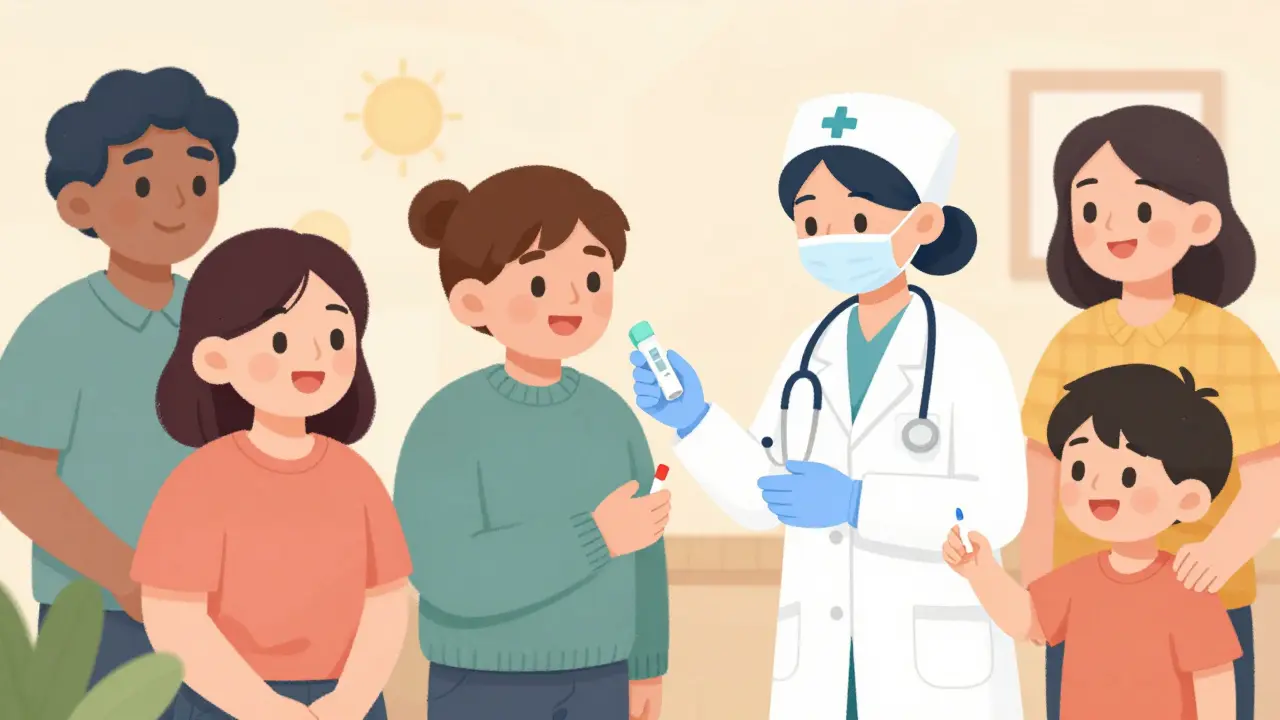
More than 350 million people worldwide are living with hepatitis B or C - and most don’t know it. These two viruses attack the liver silently, often for decades, before causing cirrhosis, liver failure, or cancer. But here’s the good news: we now have tools to stop them in their tracks. The problem isn’t lack of science - it’s lack of access, awareness, and action.
How Hepatitis B and C Spread - And What Doesn’t Spread Them
Hepatitis B and C are both blood-borne viruses, but their transmission patterns are very different.Hepatitis B is one of the most contagious viruses on the planet. It’s 50 to 100 times more infectious than HIV. You can catch it from a drop of blood on a toothbrush, a razor, or even a contaminated needle. In places like sub-Saharan Africa and parts of Asia, most infections happen at birth - mothers pass it to their babies during delivery. That’s why getting the first vaccine dose within 24 hours of birth is critical. In Australia and the U.S., the biggest risks are sex without a condom, sharing needles, and getting tattoos or piercings with unsterilized equipment.
Here’s what you won’t catch hepatitis B from: hugging, sharing food, sneezing, using the same toilet, or being around someone who has it. It’s not airborne. It’s not casual. It’s blood and bodily fluids - and that’s it.
Hepatitis C is even more focused on blood. You won’t get it from sex unless there’s blood involved - like during rough sex or if you have an STI that causes sores. The biggest driver of new hepatitis C cases since 2010? The opioid crisis. People who inject drugs are at the highest risk. A single shared needle can spread the virus. Even sharing a straw to snort drugs can do it if there’s blood on it.
Vertical transmission (mother to baby) happens in about 5-6% of hepatitis C pregnancies. That’s lower than hepatitis B, but still significant. And unlike hepatitis B, there’s no vaccine for hepatitis C. Prevention means avoiding exposure - clean needles, safe sex, and testing if you’ve ever injected drugs, even once.
Who Should Be Tested - And When
Testing is the first step to stopping these viruses. But many people never get tested because they feel fine.For hepatitis B, the CDC now recommends everyone get tested at least once in their life. But some groups need it more urgently:
- People born in countries with high hepatitis B rates (Asia, Africa, Eastern Europe)
- Healthcare workers or first responders
- People with HIV
- Men who have sex with men
- People who inject drugs
- Anyone with a partner who has hepatitis B
- All pregnant women
Testing for hepatitis B isn’t one test. It’s a panel: HBsAg tells you if you’re currently infected, anti-HBs tells you if you’re immune (from vaccine or past infection), and HBV DNA shows how much virus is in your blood. If you’re positive for HBsAg for more than six months, you have chronic hepatitis B.
For hepatitis C, it’s simpler. Start with an antibody test. If it’s positive, you need an RNA test to confirm the virus is still active. About 44% of people with hepatitis C don’t know they have it. That’s why the CDC recommends everyone aged 18 and older get tested once - and pregnant women every time they’re pregnant.
Point-of-care tests now exist for both. The OraQuick HCV test gives results in 20 minutes. New hepatitis B rapid tests are over 98% accurate in field studies. You don’t need a lab anymore. Community clinics, pharmacies, and even outreach vans can test you in minutes.
What’s New in Hepatitis C Treatment
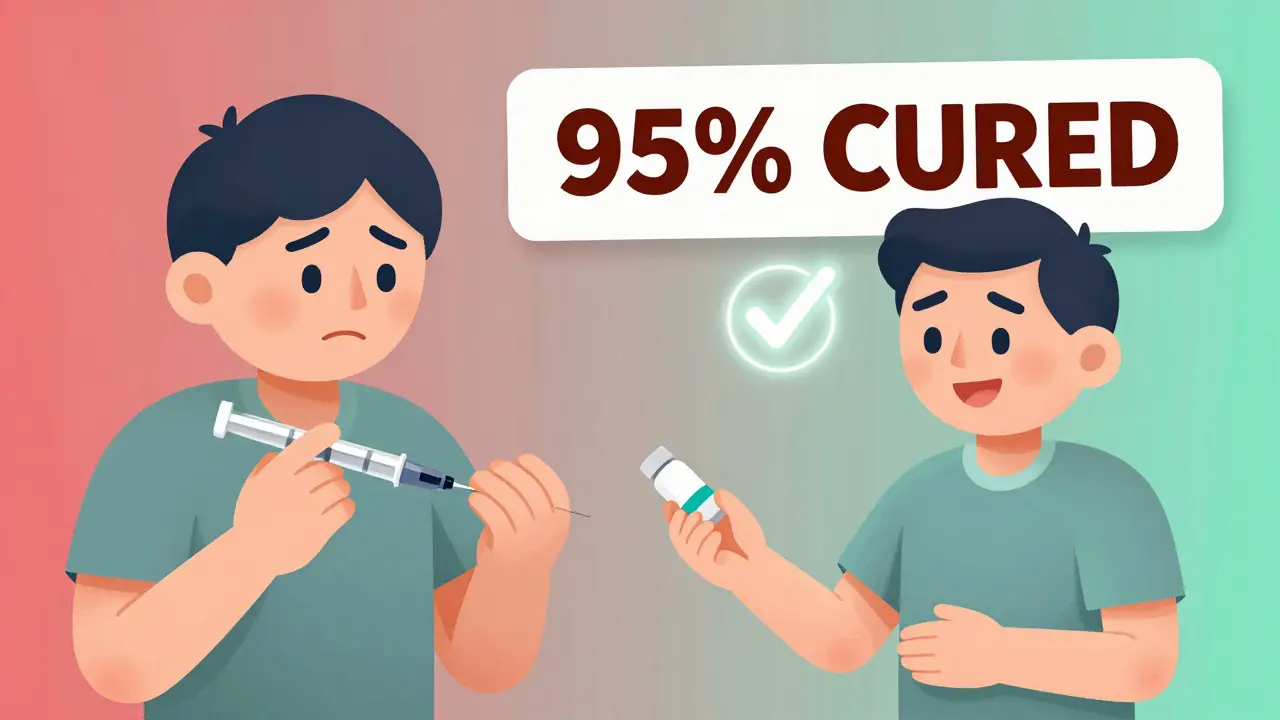
Hepatitis C used to be a death sentence for many. Treatment in the 1990s meant weekly injections of interferon - with brutal side effects: depression, fatigue, fever, and a 40-50% cure rate.Everything changed in 2013 with sofosbuvir. Today, we have direct-acting antivirals (DAAs) - pills you take for 8 to 12 weeks. No shots. No hospital visits. No side effects worth mentioning.
Drugs like Epclusa (sofosbuvir/velpatasvir) and Mavyret (glecaprevir/pibrentasvir) cure more than 95% of people, no matter the genotype. Even if you’ve had liver damage, cirrhosis, or HIV co-infection, these pills still work. You’re cured if the virus is undetectable 12 weeks after finishing treatment. That’s called sustained virologic response (SVR). It’s as good as a cure.
And the cost? It dropped hard. In 2014, a full course of sofosbuvir cost $84,000. Now, in the U.S., it’s $24,000-$30,000. In India, Egypt, or Pakistan, generic versions cost under $300. Egypt cleared hepatitis C from its population by treating 4 million people in five years. Australia did the same - now, less than 1% of people with hepatitis C are untreated.
But here’s the gap: only 21% of people with hepatitis C in the U.S. got treated in 2020. Why? Lack of testing, stigma, and fragmented care. People who inject drugs are often turned away from clinics. That’s changing. Programs now offer treatment in needle exchanges, homeless shelters, and even jails. Treatment is no longer just for doctors - nurses, pharmacists, and community workers can manage it now.
What’s New in Hepatitis B Treatment - And Why It’s Still a Challenge
Hepatitis B is trickier. We have great drugs to control it, but we don’t have a cure.Today’s first-line treatments - tenofovir alafenamide (TAF) and entecavir - suppress the virus in over 90% of people. They’re taken as one pill a day. Side effects are rare. They lower your risk of liver cancer by 70%. But you usually have to take them for life.
Why? Because the virus hides in your liver cells as a mini-DNA circle called cccDNA. It’s like a ghost copy. Current drugs don’t touch it. That’s why functional cure - losing the HBsAg protein and developing protective antibodies - only happens in 1-2% of people per year, naturally.
But new hope is coming. In 2025, over 20 experimental drugs are in late-stage trials:
- siRNA therapies (like JNJ-3989) silence viral genes
- Capsid modulators (like ABI-H0731) block virus assembly
- Therapeutic vaccines train your immune system to fight back
One new test, the Lumipulse G HBcrAg assay, measures a viral protein that predicts who might achieve a functional cure. It’s not available everywhere yet - not in Canada, for example - but it’s a step toward personalized treatment.
For now, if you have hepatitis B, your goal is to keep your viral load low and your liver healthy. That means:
- Taking your meds daily
- Getting liver scans every 6-12 months
- Avoiding alcohol
- Managing diabetes and fatty liver
And if you’re pregnant? Your baby gets the hepatitis B vaccine and hepatitis B immune globulin (HBIG) within 12 hours of birth. That cuts transmission risk from 90% to under 5%.
Why We’re Not Winning Yet - And What Needs to Change
We have the tools. But we’re not using them.Only 66.5% of U.S. adults have completed the full hepatitis B vaccine series. That’s far below the 90% target. In rural areas, clinics don’t stock the vaccine. In prisons, inmates aren’t tested. In emergency rooms, no one asks about risk.
For hepatitis C, we cured thousands - but only those who walked into clinics. People who are homeless, addicted, or undocumented? They’re invisible to the system.
Here’s what works:
- Testing everyone at least once - no exceptions
- Offering treatment in the same place you test - no referrals
- Training nurses and pharmacists to manage both viruses
- Using community health workers to reach high-risk groups
- Making drugs affordable - generics are the key
WHO’s 2030 goal is to cut new infections by 90% and deaths by 65%. We can hit that. But only if we stop treating this like a medical problem and start treating it like a public health emergency.
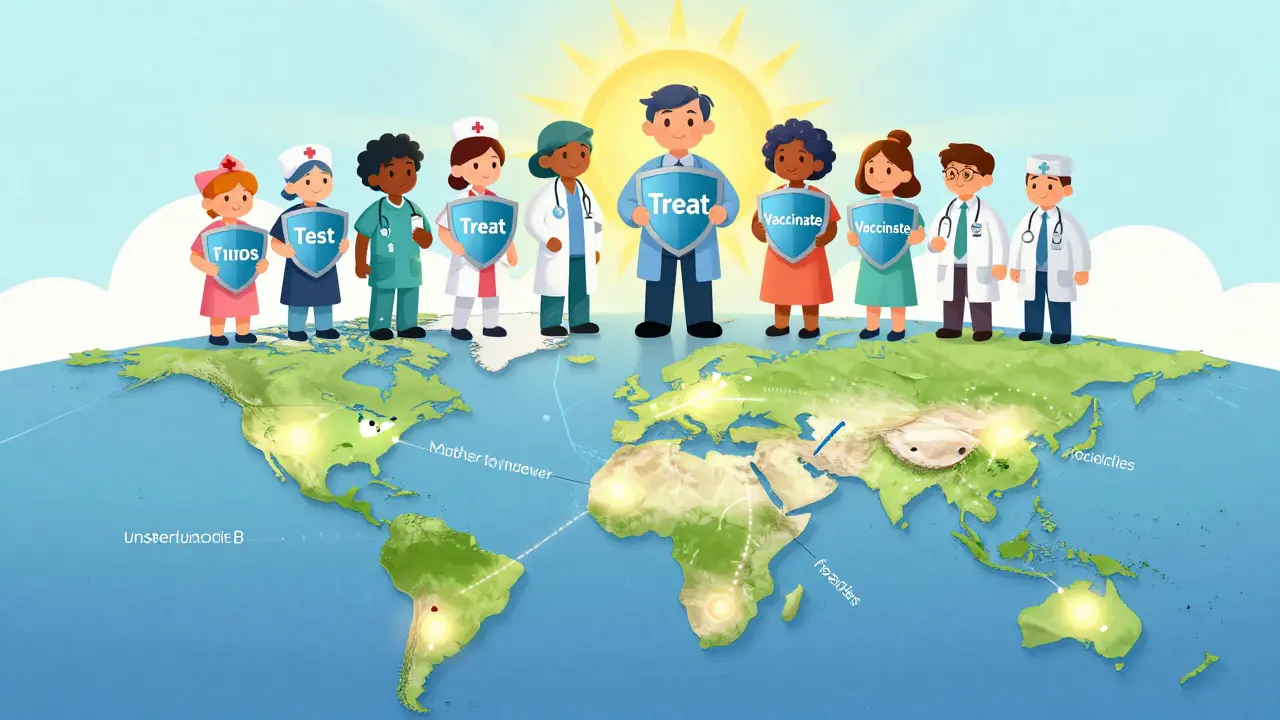
What You Can Do Right Now
You don’t need to be a doctor to help stop hepatitis B and C.- If you’re 18 or older, get tested. One blood test. Five minutes.
- If you’ve ever injected drugs, even once - get tested for both viruses.
- If you’re pregnant, ask your provider for a hepatitis B and C screen.
- If you have hepatitis B, get your family tested. Vaccinate your kids.
- If you know someone with hepatitis C, encourage them to get treated. It’s easy. It’s safe. It’s life-saving.
- Advocate for free testing in your community. Push for vaccines in pharmacies.
The science is there. The cure is here. What’s missing is the will. Don’t wait for symptoms. Don’t wait for a doctor to ask. Take control. Get tested. Stay informed. Help someone else do the same.
Can you get hepatitis B from kissing or sharing food?
No. Hepatitis B is not spread through saliva, hugging, sharing meals, or kissing unless there’s blood involved - like open sores or bleeding gums. The virus needs direct access to the bloodstream. Casual contact is completely safe.
Is hepatitis C curable?
Yes. Modern direct-acting antivirals (DAAs) cure over 95% of people with hepatitis C in just 8 to 12 weeks. The treatment is oral, has almost no side effects, and works even if you have cirrhosis or HIV. Once cured, the virus doesn’t come back.
Can you get hepatitis B even if you’re vaccinated?
It’s extremely rare. The hepatitis B vaccine is 95% effective at preventing infection. Protection lasts at least 20 years - likely for life. You only need the full 3-dose series. No boosters are needed for most people. If you’re unsure, a blood test can check your antibody levels.
Why is hepatitis B harder to cure than hepatitis C?
Hepatitis B hides in liver cells as a stable DNA circle called cccDNA, which current drugs can’t eliminate. Hepatitis C doesn’t integrate into your DNA - it just replicates in the blood. That’s why DAAs can wipe out hepatitis C completely, but hepatitis B requires lifelong treatment to suppress it. Researchers are now testing new drugs to target cccDNA, but a cure isn’t available yet.
Should I get tested if I’ve never had symptoms?
Yes. Both viruses can live in your body for 20-30 years without causing symptoms. By the time you feel sick, liver damage may already be advanced. Testing is the only way to know. The CDC recommends everyone get tested at least once in their lifetime - even if you feel fine.
Are hepatitis B and C tests covered by insurance?
In the U.S., under the Affordable Care Act, both tests are covered at no cost for adults and pregnant women. In Australia, they’re free through Medicare. Many community clinics and pharmacies offer free testing regardless of insurance. If you’re unsure, ask your provider - there’s rarely a cost.
Next Steps: What to Do After Testing
If your test is negative for both viruses:- Get vaccinated for hepatitis B - it’s the best protection.
- Practice safe sex and avoid sharing needles or personal items like razors.
- Get retested if you’re at ongoing risk - every 1-3 years.
If you test positive for hepatitis B:
- See a liver specialist (hepatologist) or infectious disease doctor.
- Start antiviral treatment if recommended - don’t delay.
- Get regular liver scans and blood tests.
- Tell close contacts so they can get tested and vaccinated.
If you test positive for hepatitis C:
- Don’t panic. You can be cured in 8-12 weeks.
- Ask for a referral to a treatment program - many are now available in primary care.
- Stop using drugs if you’re injecting - treatment is more effective if you’re clean.
- Once cured, you’re protected from liver damage - but you can get reinfected.
The next five years will decide whether we end these epidemics - or let them keep killing quietly. You have the power to change that. Get tested. Get informed. Help someone else do the same.