When a brand-name drug hits the market, it doesn’t stay alone for long. Somewhere down the line, a cheaper generic version will show up-usually within a few years. But how long that wait lasts depends entirely on where you live. The rules aren’t the same in the U.S., the EU, Canada, or Japan. And those differences aren’t just technical-they affect who gets access to affordable medicine, how much pharmacies pay, and even whether life-saving drugs become available at all.
How Long Do Patents Last? It’s Not What You Think
Most people assume a drug patent lasts 20 years. That’s technically true-but it’s misleading. The 20-year clock starts ticking the moment the company files the patent, often 10 to 12 years before the drug even hits shelves. By the time the FDA or EMA approves the drug, only 6 to 10 years of patent life are left. That’s not enough to recoup the average $2.3 billion spent on R&D per drug, according to Tufts Center for the Study of Drug Development. That’s why countries built extra layers on top of patents. These are called exclusivity periods. They’re not patents. They’re regulatory protections. They stop generic companies from even trying to copy the drug, even if the patent has expired. Think of them as a buffer zone between innovation and competition.The U.S. System: A Maze of Protections
The U.S. has the most complex system in the world. It’s built around the Hatch-Waxman Act of 1984, which tried to balance innovation and access. But over time, it’s become a playground for legal strategy. Here’s how it works:- New Chemical Entity (NCE) exclusivity: 5 years. No generic can even file an application during this time.
- Orphan Drug Exclusivity: 7 years for drugs treating rare diseases. This one’s been a game-changer-12 new myeloma treatments emerged because of it.
- 3-year exclusivity: For new clinical data, like a new use or formulation. Doesn’t block generics, but delays them.
- Patent Term Extension (PTE): Up to 5 extra years, but total protection after approval can’t exceed 14 years.
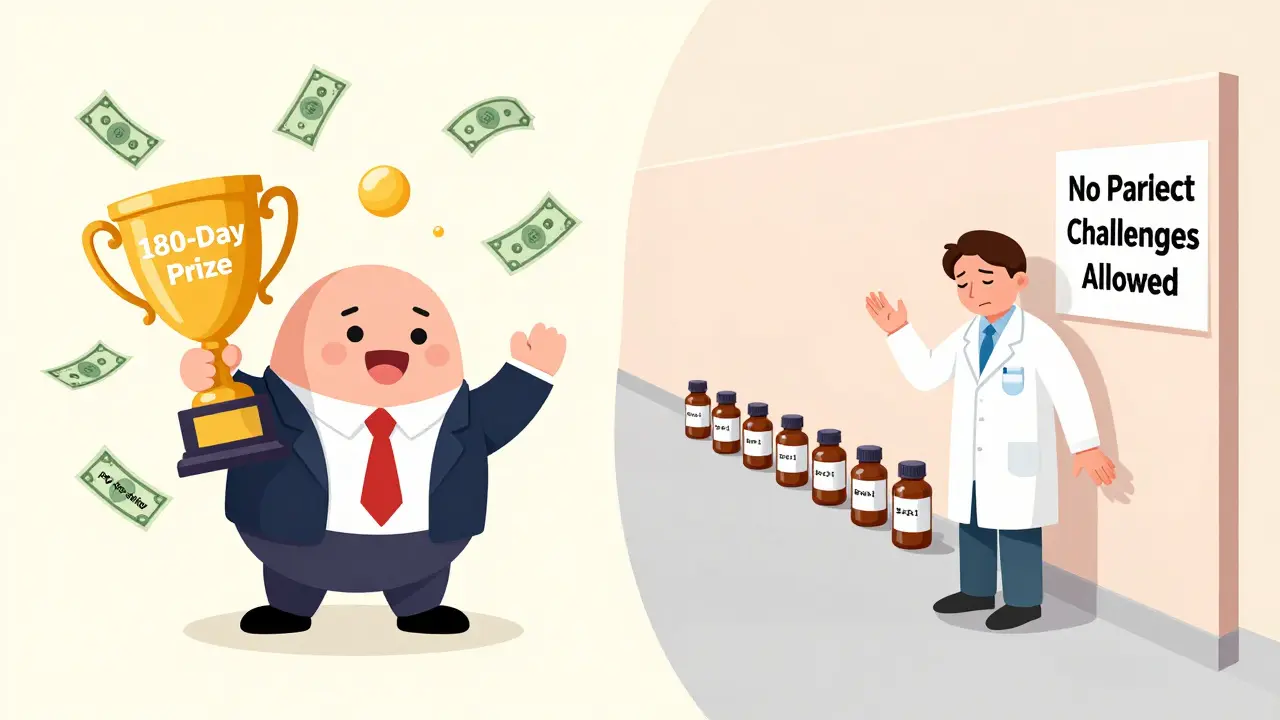
- 180-day exclusivity: The big prize. The first generic company to successfully challenge a patent gets 180 days of exclusive market access. No other generics can enter during that time.
The EU: More Predictable, Less Flexible
Europe’s system is simpler but more rigid. It’s built on an “8+2+1” model:- 8 years of data exclusivity: Generics can’t use the brand’s clinical trial data to get approval.
- 2 years of market exclusivity: Even if a generic gets approved, it can’t be sold.
- 1-year extension: If the brand company adds new, significant clinical data during the first 8 years.
Canada, Japan, and Other Major Markets
Canada’s system looks a lot like the EU’s: 8 years of data protection, 2 years of market exclusivity. No 180-day prize. No patent term extensions. That makes it easier to predict when generics will arrive-but it also means less pressure on brands to innovate. Japan is different. It gives 8 years of data exclusivity, but 4 years of market exclusivity. That’s longer than the EU’s market-only window. The Japanese regulator, PMDA, is now trying to streamline its patent system to speed up generic entry. In October 2023, they announced plans to cut red tape for generics. China and Brazil have been catching up fast. China raised its data exclusivity from 6 to 12 years in 2020. Brazil followed with 10 years in 2021. These moves are meant to attract drugmakers-but they’re also making generics harder to launch in countries where cost matters most.Why This Matters: Real-World Impact
By 2028, $356 billion in global drug sales will face patent expiration. That’s a tidal wave of savings waiting to happen-if generics can get through the legal barriers. In the U.S., the average price drop after generic entry is 80-90% within a year. That’s why generics saved the system $471 billion in 2023 alone, according to IQVIA. But that savings doesn’t happen if the generic is blocked. Take Keytruda, Merck’s cancer drug. Its effective market life was extended from 8.2 years to 12.7 years through patent stacking and exclusivity tricks. That’s 4.5 extra years where patients paid full price. Meanwhile, in countries with weaker protections, the same drug became generic much sooner. The World Health Organization found that in low-income countries, it takes an average of 19.3 years for a drug to go generic-compared to 12.7 years in high-income countries. That gap isn’t about patents. It’s about data exclusivity rules pushed through trade deals. Rich countries got their protections. Poor countries got stuck with them.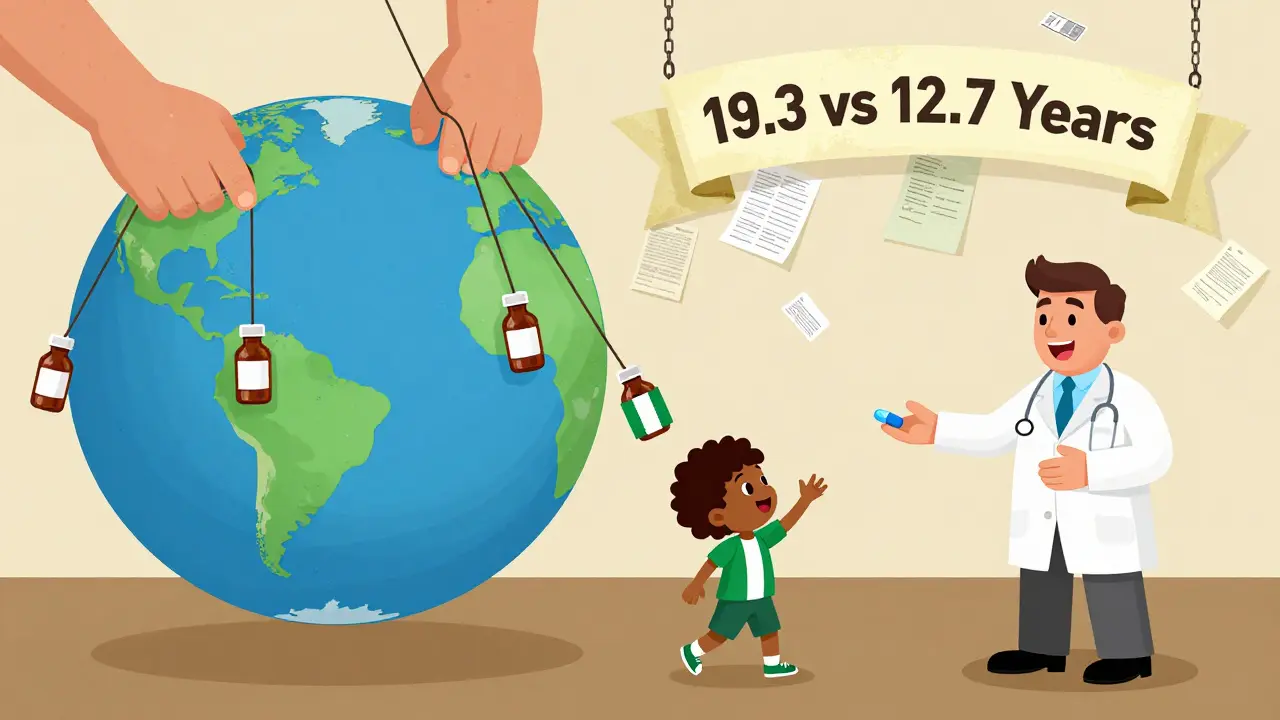
What’s Changing? The Future of Exclusivity
There’s pressure to fix this. In the U.S., the Preserve Access to Affordable Generics and Biosimilars Act is back in Congress. It would make “pay-for-delay” deals automatically illegal unless the brand can prove they’re not anti-competitive. The EU is also reviewing its rules. A 2023 proposal suggests cutting data exclusivity to 5 years for some drugs-especially those with low innovation value. But big pharma is fighting back. PhRMA argues that without these protections, drug development would collapse. Their point? Only 14% of drugs make it through Phase III trials. The cost of failure is huge. McKinsey predicts that by 2027, patent extensions will account for 45% of total exclusivity-up from 32% in 2020. That means the system is getting more complex, not less. But the real question isn’t about legal technicalities. It’s about fairness. Should a cancer drug stay expensive for 15 years because a company filed 142 patents? Should a child with a rare disease wait 10 years for a generic because of orphan drug rules? Should a diabetic in Nigeria pay 10 times more than a diabetic in Germany just because of where they live? There’s no perfect system. But the current one favors lawyers and lobbyists more than patients.What Patients and Providers Should Know
If you’re a patient: Don’t assume a drug is generic just because the patent expired. Check with your pharmacist. Ask if exclusivity is still in effect. If you’re a prescriber: Know the difference between patent expiration and market entry. A drug may be legally available as a generic, but not yet on pharmacy shelves. If you’re a pharmacist: Track exclusivity timelines. Use tools like the FDA’s Orange Book or EU’s EMA database. Delayed generics aren’t random-they’re planned. The bottom line? Generic drugs aren’t just cheaper. They’re essential. But their arrival isn’t automatic. It’s fought over in courtrooms, negotiated in trade deals, and delayed by paperwork. Understanding the rules isn’t just academic-it’s how you get the medicine you need.How long does a drug patent last before generics can enter the market?
A patent lasts 20 years from the filing date, but since patents are often filed 10-12 years before approval, the effective market protection is usually only 6-10 years. Additional regulatory exclusivity periods-like data exclusivity or orphan drug protection-can extend that delay by several more years, depending on the country.
What’s the difference between a patent and exclusivity?
A patent protects the invention itself-like the chemical structure or method of making the drug. Exclusivity is a regulatory protection granted by health agencies that blocks generics from using the brand’s clinical data to get approved. You can lose a patent but still be protected by exclusivity-and vice versa.
Why does the U.S. have 180-day exclusivity for generics?
It’s an incentive. The first generic company to successfully challenge a brand’s patent gets 180 days of exclusive sales. That’s meant to reward the risk and cost of litigation. But it’s also led to abuse, with some companies settling to delay entry-known as “pay-for-delay.”
Can a generic drug enter the market before the patent expires?
Yes, but only if the generic company files a legal challenge proving the patent is invalid or won’t be infringed. In the U.S., this is done through a Paragraph IV certification. If they win, they can enter early-and get 180 days of exclusivity. In the EU, there’s no equivalent system, so generics usually wait until the patent expires.
Do developing countries have the same exclusivity rules?
No. Many low- and middle-income countries have weaker enforcement or shorter exclusivity periods. But trade agreements like CETA or USMCA often force them to adopt stricter rules from the U.S. or EU. This has delayed generic access for HIV, hepatitis, and cancer drugs in places like South Africa and India, even after patents expired.
What’s the biggest barrier to generic drug entry today?
It’s not patents anymore-it’s regulatory and legal complexity. In the U.S., the average drug has over 140 patents listed. Generic companies must navigate patent challenges, data exclusivity, and litigation risks. Many run out of money or time before they can launch. The system favors large players with legal teams, not small generics.

Ambrose Curtis
Yo so i just read this whole thing and holy crap the us system is a mess. 142 patents on one drug? that’s not innovation, that’s legal spam. i work in pharma and i’ve seen generics get buried under paperwork for years. the 180-day thing? more like 180 days of monopoly theater. big pharma just pays off the first challenger and everyone waits. again. again. again. why are we letting lawyers run healthcare?
James Dwyer
This is one of the clearest breakdowns of drug exclusivity i’ve ever read. The difference between patent expiration and market entry is something no one talks about. Patients think ‘patent expired = cheap drug’ and then wonder why their prescription still costs $800. This needs to be shared with every medical student.
jonathan soba
Let’s be honest - the EU’s 8+2+1 model isn’t ‘simpler,’ it’s just slower. And the fact that they don’t incentivize patent challenges means innovation stagnates. The U.S. system is chaotic, yes, but at least it forces competition. The EU’s model is a velvet cage for monopolies.
Jess Bevis
Canada’s system is actually the most sensible. 8+2, no extensions, no lawsuits. Generics come in predictably. Why can’t we just copy that?
Rose Palmer
As a clinical pharmacist, i’ve watched patients delay insulin refills because they can’t afford the brand-name version - even though the patent expired three years ago. The delay isn’t technical. It’s financial. The system is designed to maximize profit, not patient access. This isn’t policy. It’s exploitation dressed up as IP law.
Howard Esakov
Look, if you can’t afford a $10,000 cancer drug, maybe you shouldn’t have been born in a country that doesn’t produce innovation. The fact that you expect generics to magically appear after 10 years is naive. R&D costs billions. If you want cheap drugs, move to Bangladesh. Or stop complaining about capitalism.
Mindee Coulter
the orange book is a joke. 142 patents on one drug? someone’s gaming the system. i saw a drug with 3 patents for different colored pills. that’s not protecting innovation - that’s protecting rent-seeking. and the 180-day window? it’s a bribe waiting to happen. fix the law, not the blame.
Rhiannon Bosse
so let me get this straight - the same companies that lobbied for 12-year exclusivity on biologics are now crying about ‘innovation’? lol. they’re not saving lives. they’re saving stock prices. and the ‘pay-for-delay’ deals? yeah, they’re still happening. the ftc doesn’t even try anymore. this isn’t broken. it’s working exactly as intended. for them.
Linda O'neil
if you’re a patient, check your pharmacy’s stock. if you’re a provider, ask your rep if exclusivity is still active. if you’re a pharmacist - track the orange book like it’s your job. because it is. generics aren’t magic. they’re legal battles. and we’re the ones paying the price.
Amber Daugs
people who think patents should expire faster are just anti-innovation. if you want free medicine, go live in a cave. these companies risk everything to make drugs. you don’t get to demand cheapness and then complain when the system works.
Katie Mccreary
the real villain? the fda. they let this happen. they’re the gatekeepers. why don’t they just say no to patent stacking? because they’re paid off. just like everyone else.