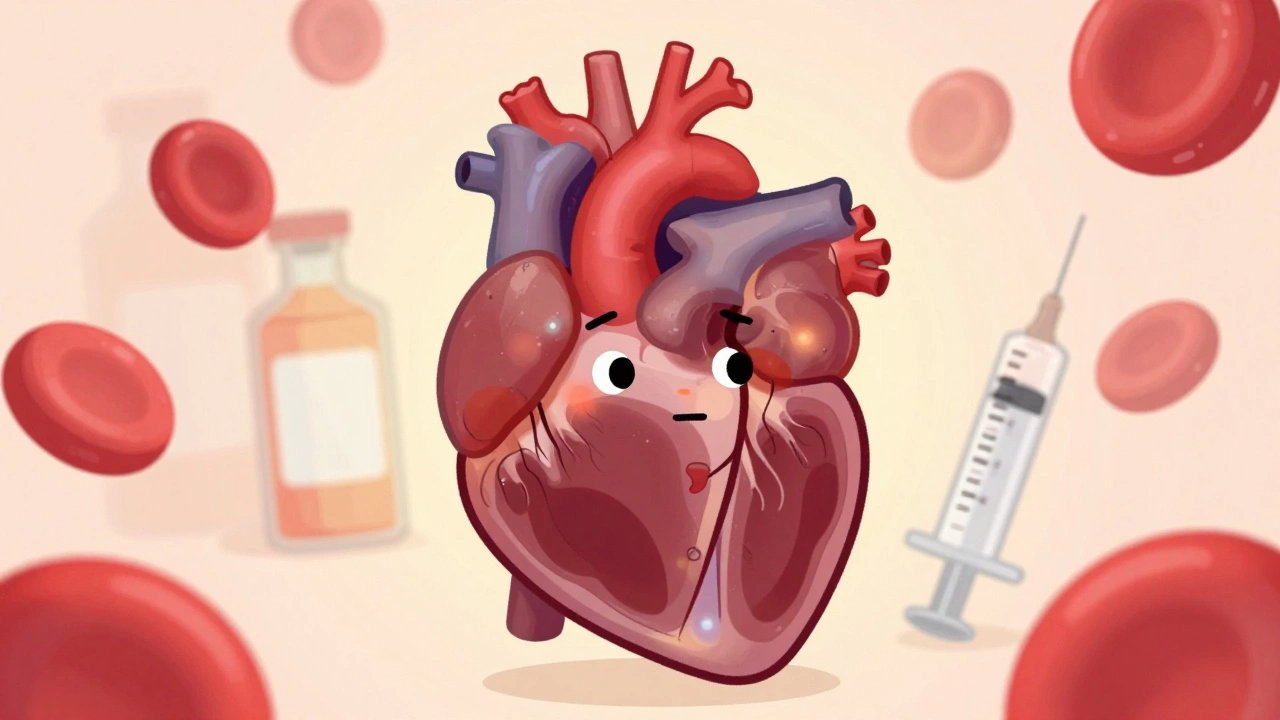
When your heart muscle weakens or stiffens, it doesn’t just feel like fatigue-it can be life-threatening. Cardiomyopathy isn’t one disease. It’s a group of conditions that directly attack the heart muscle, making it harder to pump blood. And while many people hear about heart attacks or clogged arteries, fewer know about the three main types of cardiomyopathy: dilated, hypertrophic, and restrictive. Each behaves differently, has unique causes, and demands its own treatment plan. Getting them mixed up can delay care. Here’s what you need to know-clear, direct, and backed by current medical data.
Dilated Cardiomyopathy: The Heart That Expands and Fails
Dilated cardiomyopathy (DCM) is the most common form, making up about half of all cases. Think of it as a heart that’s stretched too thin. The left ventricle-the main pumping chamber-gets enlarged, its walls thin out, and it loses strength. Normal ejection fraction (how much blood it pushes out with each beat) is 55-70%. In DCM, it drops below 40%. Some people don’t feel symptoms until they’re in heart failure.
Why does this happen? In 25-35% of cases, it’s inherited. Mutations in genes like TTN (titin) or LMNA are often to blame. But lifestyle and environment play a big role too. Heavy alcohol use over years-more than 80 grams daily-can trigger it. Chemotherapy drugs like doxorubicin, especially after a cumulative dose over 450 mg/m², damage heart cells. Viruses like coxsackievirus B3 can cause myocarditis that turns chronic. Autoimmune diseases like sarcoidosis also creep in and scar the muscle.
Diagnosis starts with an echocardiogram. If the left ventricle is over 55 mm in men or 50 mm in women, and the ejection fraction is low, DCM is likely. Cardiac MRI adds detail-showing fibrosis patterns that confirm the diagnosis. Genetic testing is recommended if there’s family history. Treatment? It’s not about fixing the stretch-it’s about slowing the decline. Guideline-directed medical therapy (GDMT) includes ARNIs like sacubitril/valsartan, beta-blockers, SGLT2 inhibitors, and mineralocorticoid receptor antagonists. In the PARADIGM-HF trial, ARNIs cut NT-proBNP (a heart stress marker) by 20% more than older drugs. For some, an ICD (implantable defibrillator) prevents sudden death. About 70-80% of patients survive five years with proper care.
Hypertrophic Cardiomyopathy: The Heart That Thickens Too Much
If DCM is a stretched-out heart, hypertrophic cardiomyopathy (HCM) is a heart that’s grown too thick-without reason. The walls, especially the septum between the ventricles, become abnormally large, often over 15 mm. This isn’t from high blood pressure or athlete training. It’s genetic. About 60% of cases come from mutations in sarcomere genes like MYH7 or MYBPC3. It’s passed down in an autosomal dominant pattern, meaning one parent with the gene has a 50% chance of passing it on.
HCM affects roughly 1 in 500 people in the U.S. and Europe, but in Japan, it’s even more common-1 in 200. The scary part? It’s the top cause of sudden cardiac death in young athletes under 35. In the U.S., it accounts for 36% of those tragedies. Why? The thickened muscle can block blood flow out of the heart (obstructive HCM), or just make the heart stiff, so it can’t fill properly (non-obstructive). Both types can cause irregular heartbeats, chest pain, or fainting during exercise.
Diagnosis relies on echocardiography and cardiac MRI. If the septum is more than 1.3 times thicker than the back wall, and there’s no other cause like hypertension, it’s HCM. Genetic testing finds a mutation in about 60% of cases. A 17-gene panel costs $1,200-$2,500 in the U.S., but it’s critical for family screening. Treatment isn’t one-size-fits-all. Beta-blockers help 70% of patients with symptoms. For those with obstruction, drugs like disopyramide or invasive procedures like septal myectomy or alcohol ablation can reduce the blockage. In 2022, the FDA approved mavacamten (Camzyos), a first-of-its-kind drug that targets the heart’s contractile machinery. It reduces outflow tract gradients by 80% in trials. Still, many patients live with symptoms despite treatment. About 95% of non-obstructive HCM patients survive five years; for obstructive, it’s around 70%.
Restrictive Cardiomyopathy: The Heart That Won’t Fill
Restrictive cardiomyopathy (RCM) is rare-only 5-10% of cases-but one of the toughest to diagnose. The heart muscle isn’t thick or stretched. It’s stiff. Like a rubber band that’s lost its bounce. The ventricles can’t relax enough to fill with blood between beats. Ejection fraction stays normal or near-normal (over 50%), but the heart still fails because it’s not getting enough blood in.
RCM doesn’t come from genes alone. It’s usually caused by something invading the heart tissue. Amyloidosis is the biggest culprit-60% of cases. Tiny misfolded proteins (light chains) build up like scar tissue. Sarcoidosis, hemochromatosis (iron overload), and Fabry disease (a rare genetic storage disorder) are other common causes. Without treatment, RCM progresses fast. The 5-year survival rate? Only 30-50%, depending on the cause.
Diagnosing RCM is tricky because it looks a lot like constrictive pericarditis-a condition where the sac around the heart hardens. The key difference? RCM is a muscle problem. Constrictive pericarditis is a wrapper problem. Echocardiography shows a restrictive filling pattern: a high E/A ratio (more than 2) and a very short deceleration time (under 150 ms). Cardiac MRI picks up late gadolinium enhancement in a non-coronary pattern, and extracellular volume over 35% confirms fibrosis. Endomyocardial biopsy is often needed to spot amyloid deposits.
Treatment targets the root cause. For light-chain amyloidosis, drugs like daratumumab or bortezomib attack the abnormal plasma cells. Hemochromatosis? Regular phlebotomy (blood removal) to lower iron. For some, tafamidis slows amyloid progression and improves walking distance by 25 meters in trials. But these drugs are expensive-tafamidis costs $225,000 a year in the U.S. Many patients go years undiagnosed. One Reddit user wrote: “I had shortness of breath for 4 years. Four doctors said it was anxiety.” That’s why RCM is often called the silent killer.
How They Compare: Side by Side
Here’s how these three types stack up in key areas:
| Feature | Dilated (DCM) | Hypertrophic (HCM) | Restrictive (RCM) |
|---|---|---|---|
| Primary Problem | Chamber enlargement, weak pumping | Thickened muscle, poor filling | Stiff muscle, can’t fill |
| Wall Thickness | Thin or normal (<10 mm) | Thick (≥15 mm) | Normal or mildly thick (<12 mm) |
| Ejection Fraction | <40% | Normal or high | Normal or high (>50%) |
| Main Cause | Genetic, alcohol, viruses, chemo | Genetic (sarcomere mutations) | Amyloidosis, sarcoidosis, iron overload |
| Key Diagnostic Tool | Echocardiogram + MRI | Echocardiogram + genetic test | Echocardiogram + MRI + biopsy |
| Typical Treatment | ARNI, beta-blockers, SGLT2 inhibitors | Beta-blockers, disopyramide, mavacamten, septal reduction | Treat underlying disease (e.g., daratumumab, phlebotomy) |
| 5-Year Survival | 70-80% | 70-95% | 30-50% |
Notice how RCM doesn’t show thickening or dilation-yet still causes heart failure. That’s why it’s so often missed. And while DCM and HCM have newer targeted drugs, RCM treatment still depends on managing the underlying disease. That’s a major reason outcomes lag behind.
What’s New in 2025
Cardiomyopathy care is changing fast. In 2024, CRISPR-based gene editing entered early trials for HCM. VERVE-201 is testing a single-dose therapy to permanently turn off the faulty MYBPC3 gene. If successful, it could stop the disease before symptoms start. For DCM, gene therapies like AAV1/SERCA2a are being revisited after earlier failures, now with better delivery methods. The NHLBI has invested $120 million into early detection, including blood biomarkers that might catch heart muscle damage before it’s visible on scans.
But access remains uneven. Only 35% of community hospitals correctly classify cardiomyopathy types. In rural areas, 45% of U.S. counties have no specialist. Genetic testing isn’t covered everywhere. And drugs like mavacamten or tafamidis? They’re out of reach for many without insurance. The biggest barrier isn’t science-it’s equity.
What You Should Do
If you have a family history of sudden cardiac death before age 50, unexplained heart failure, or a known genetic condition like Marfan syndrome, get screened. An echocardiogram takes 20 minutes and can rule out or confirm the most common types. Athletes should consider screening before intense training. If you’re diagnosed with any type, don’t wait. Start treatment early. Even if symptoms are mild, these conditions can worsen silently.
And if you’ve been told your heart is “just tired” or “stress-related,” but you’re still short of breath climbing stairs, push for more. Ask for an echocardiogram. Ask about cardiac MRI. Ask if your symptoms could be cardiomyopathy. Early detection saves lives.
Can you have cardiomyopathy without symptoms?
Yes. Many people with hypertrophic or even dilated cardiomyopathy have no symptoms for years. That’s why family screening matters. Some only find out after a relative collapses during sports or after a routine EKG shows abnormalities. Silent progression is common, especially in HCM and RCM.
Is cardiomyopathy hereditary?
About half of all cases have a genetic link. Dilated cardiomyopathy has 25-35% familial cases, hypertrophic up to 60%, and restrictive less often-but still in conditions like Fabry disease. If a close relative has it, you should be screened. Genetic testing isn’t perfect, but it can identify risk before symptoms appear.
Can lifestyle changes reverse cardiomyopathy?
In some cases, yes-if caught early. Stopping alcohol can improve DCM. Controlling high blood pressure or diabetes helps prevent worsening. For RCM caused by iron overload, regular blood removal can stabilize the heart. But once the muscle is scarred or severely weakened, lifestyle alone won’t fix it. Medication and sometimes devices or surgery are needed.
What’s the difference between cardiomyopathy and heart failure?
Cardiomyopathy is a disease of the heart muscle. Heart failure is the result-when the heart can’t pump enough blood. Think of it this way: cardiomyopathy is the engine problem. Heart failure is the car breaking down. You can have cardiomyopathy without heart failure (early stage), and heart failure without cardiomyopathy (like from a valve leak).
Can you exercise with cardiomyopathy?
It depends. For dilated cardiomyopathy, light to moderate aerobic activity is often safe and even helpful. For hypertrophic cardiomyopathy, intense competitive sports are dangerous and usually restricted. For restrictive cardiomyopathy, activity is limited by symptoms. Always get personalized advice from a cardiologist. Never assume it’s safe-some forms can trigger sudden death during exertion.
Are there new drugs for cardiomyopathy?
Yes. Mavacamten (Camzyos) for obstructive HCM was approved in 2022. It’s the first drug that directly targets the heart’s overactive muscle contraction. For DCM, SGLT2 inhibitors like dapagliflozin, originally for diabetes, now show strong heart benefits. For amyloidosis-related RCM, tafamidis and daratumumab are game-changers. Gene therapies are in early trials. The field is moving from general heart failure drugs to targeted treatments.
Next Steps If You’re Concerned
If you’re worried about your heart, start with your primary doctor. Ask for an echocardiogram. If it’s unclear, ask for a referral to a cardiologist who specializes in cardiomyopathy. Don’t wait for symptoms to get worse. If you have a family history, get tested-even if you feel fine. Genetic counseling can help you understand risks for your children. And if you’ve been told your heart is “normal” but you still feel unwell, get a second opinion. Too many cases are missed because the symptoms look like something else.

Kevin Estrada
yo so i just got diagnosed with DCM last month and honestly i thought i was just stressed out from work... turns out my dad had it too and never told me. now i'm on ARNI and SGLT2i and honestly? it's wild how much better i feel. still scared shitless but at least i'm not dying in silence anymore.
also fuck yeah for mavacamten, i read the trial data and it's like magic for HCM. why isn't this in every pharmacy yet?
Katey Korzenietz
This post is sooooooo detailed i almost cried. Like wow. Finally someone who doesn't just say 'your heart is tired' and hand you a Xanax. I've been told i have anxiety for 3 years before my MRI showed amyloidosis. RCM is the silent killer and no one talks about it. #WakeUpPeople
Ethan McIvor
It's funny how we treat the heart like a mechanical pump, but it's so much more than that. It holds grief, stress, trauma... and sometimes, it just breaks quietly. We fix the muscle, but what about the soul that carried the weight? I wonder if healing the heart starts with listening to it before it screams. 🤔
Michael Bene
Okay but let’s be real-this whole ‘gene therapy is the future’ thing is just Big Pharma’s way of selling us a $2M cure while the rest of us can’t even afford a $150 co-pay for beta-blockers. Mavacamten costs more than my car. Tafamidis? You need a second mortgage. Meanwhile, my cousin in rural Kentucky still gets told her shortness of breath is ‘just being out of shape.’ The science is glowing, but the system? It’s on life support. 💀
Paul Corcoran
To anyone reading this and feeling overwhelmed: you’re not alone. I’ve been there. I had HCM and thought I’d never run again. But with the right team, meds, and a little patience, I’m hiking mountains now. Don’t give up. Ask for the MRI. Push for genetic testing. Find a cardiomyopathy specialist-even if you have to drive 3 hours. Your life matters more than the inconvenience. You got this. ❤️
Colin Mitchell
Hey everyone, just wanted to say this post was seriously helpful. I shared it with my mom who’s been having weird symptoms for months. She’s finally getting an echo next week. If you’ve been dismissed by doctors before-keep going. You know your body better than anyone. And if you’re lucky enough to find good info like this? Pay it forward.
Justin Hampton
Let’s not pretend this is about medicine. This is about insurance companies deciding who gets to live. If you don’t have good coverage, you’re basically being told to die quietly. The fact that we have gene editing but only the rich can access it isn’t progress-it’s a crime. And don’t give me that ‘it’s experimental’ crap. It’s experimental because they’re too busy billing to care.
Pooja Surnar
People need to stop being lazy. If your family has heart issues, get tested. No one cares if you’re ‘too busy.’ Your kids deserve a chance. And stop blaming alcohol or stress-half of you are just in denial. I had a cousin die at 28 from HCM because he ‘didn’t want to be dramatic.’ Drama? Nah. That’s just ignorance with a pulse.
Sandridge Nelia
I’m a nurse in cardiology and I can’t tell you how many times I’ve seen RCM misdiagnosed as COPD or anxiety. The E/A ratio and deceleration time? That’s the key. If your echo shows that and EF is normal? Push for MRI + biopsy. Don’t let them dismiss it. And yes, tafamidis is expensive-but it’s saving lives. Advocate for your patients. We need more people like you sharing this.
Gerald Nauschnegg
So wait-so if I have a cousin who died at 32 during a marathon, and my EKG shows borderline thickening… am I basically a walking time bomb? Do I need to quit my job? Cancel my wedding? Should I just move to a cabin in the woods and meditate until I die? 😭
Joanne Rencher
I read this and thought ‘wow, someone finally got it right’-then i saw the part about CRISPR and i just facepalmed. Of course they’re doing gene editing. Meanwhile, my GP still thinks ‘exercise and omega-3’ is a cure for everything. We need better primary care, not sci-fi tech. Fix the basics first.
Adrianna Alfano
As a first-gen immigrant from Mexico, I didn’t even know cardiomyopathy was a thing until my abuela collapsed. We didn’t have insurance. We didn’t know to ask for an echo. She died waiting. This post? It’s a lifeline for people like us. Thank you for writing this in English and Spanish terms. I’m printing it out for my family. 💪❤️
Casey Lyn Keller
I think this whole cardiomyopathy thing is a distraction. The real problem? 5G radiation and glyphosate. Why do you think it’s rising? It’s not genetics-it’s poison in the water. I’ve been researching this for 7 years. The FDA won’t admit it because they’re in bed with Big Pharma. But I know. And now you know too.
Jessica Ainscough
I just wanted to say thank you. I’ve had DCM for 5 years. I’m on meds. I’m alive. I still have bad days. But reading this made me feel seen. You didn’t just list facts-you gave people hope. That’s rare. Keep going.