Patent Term Restoration lets drugmakers recover time lost during FDA approval, extending market exclusivity by up to five years. Learn how it works, who qualifies, and why it's both essential and controversial.
Read more
When a drug company gets a patent term restoration, a legal extension granted by the FDA to make up for time lost during drug approval. Also known as patent extension, it lets the original maker keep selling their drug without competition—often for years longer than the standard 20-year patent. This isn’t a loophole—it’s part of the Hatch-Waxman Act, a 1984 law designed to balance innovation with access to cheaper generics. The idea was simple: reward companies for the years spent in clinical trials and FDA review, so they’d keep investing in new drugs. But in practice, it’s become a tool to delay generics, keeping prices high.
Here’s how it works: if a drug takes five years to get approved, the company can apply to add that time back onto the patent. That means instead of 15 years left on the patent after approval, they might get 20. During that extended window, no generic version can enter the market—even if the formula is public. This directly affects you. generic drugs, copies of brand-name meds that are chemically identical but cost 80% less. Without patent term restoration, many life-saving drugs would have become affordable years earlier. But because of it, drugs like insulin, asthma inhalers, and blood thinners stay expensive long after their patents should have expired.
Some companies stretch this system even further by filing multiple patents on minor changes—like a new pill shape or coating—called "evergreening." The FDA and courts are starting to push back, but it’s still happening. Meanwhile, patients and pharmacies see the cost. The pharmaceutical exclusivity, the period when no other company can sell the same drug, even if the patent has expired. often overlaps with patent term restoration, creating a double barrier to generics. This isn’t just about big pharma profits—it’s about whether someone can afford their daily meds.
What you’ll find in the posts below are real stories and facts about how this system shapes what’s on pharmacy shelves. From how bioequivalence studies prove generics work just as well, to why supply chains collapse when generics finally arrive, to how patent law affects your access to drugs like Paxil or Ozempic—this isn’t theory. It’s daily reality for millions. You’ll see how the same laws meant to protect innovation are sometimes used to protect profits instead. And you’ll learn how to spot when you’re paying more than you should.
Patent Term Restoration lets drugmakers recover time lost during FDA approval, extending market exclusivity by up to five years. Learn how it works, who qualifies, and why it's both essential and controversial.
Read more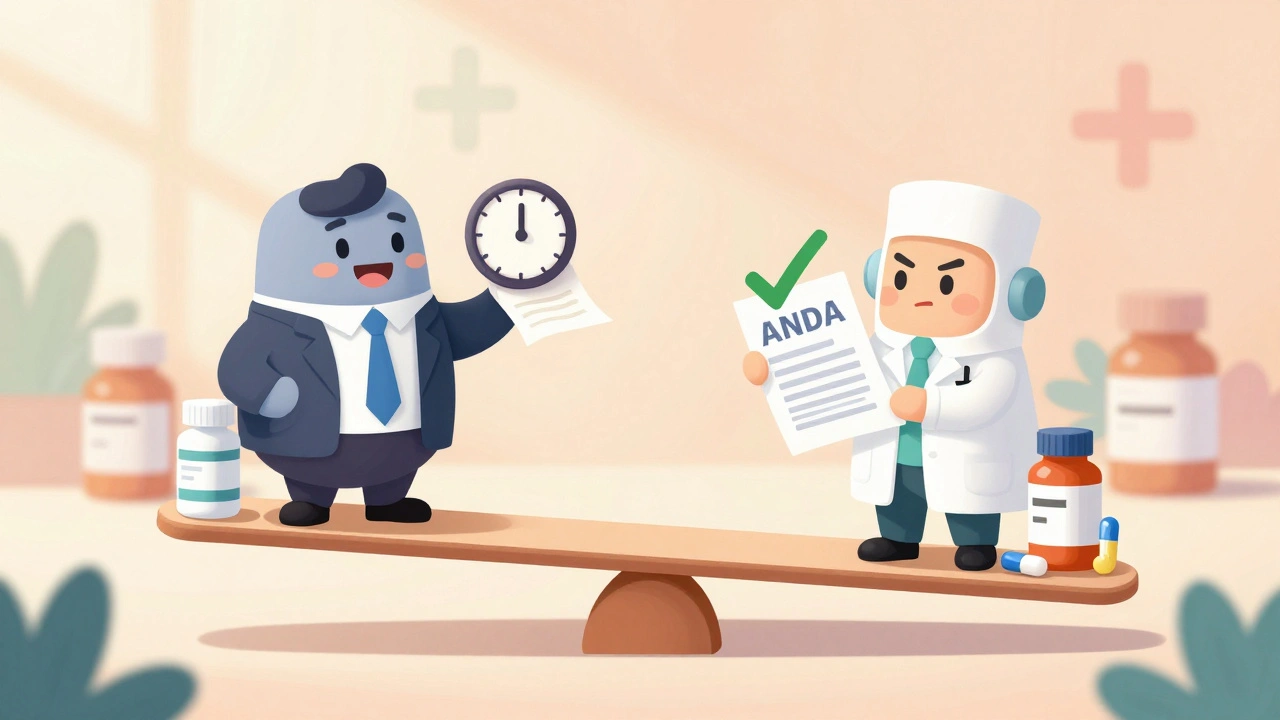
The Hatch-Waxman Amendments of 1984 created the modern generic drug industry by letting companies approve cheaper versions of brand-name drugs without repeating clinical trials. It balanced innovation incentives with faster access to affordable medicines.
Read more