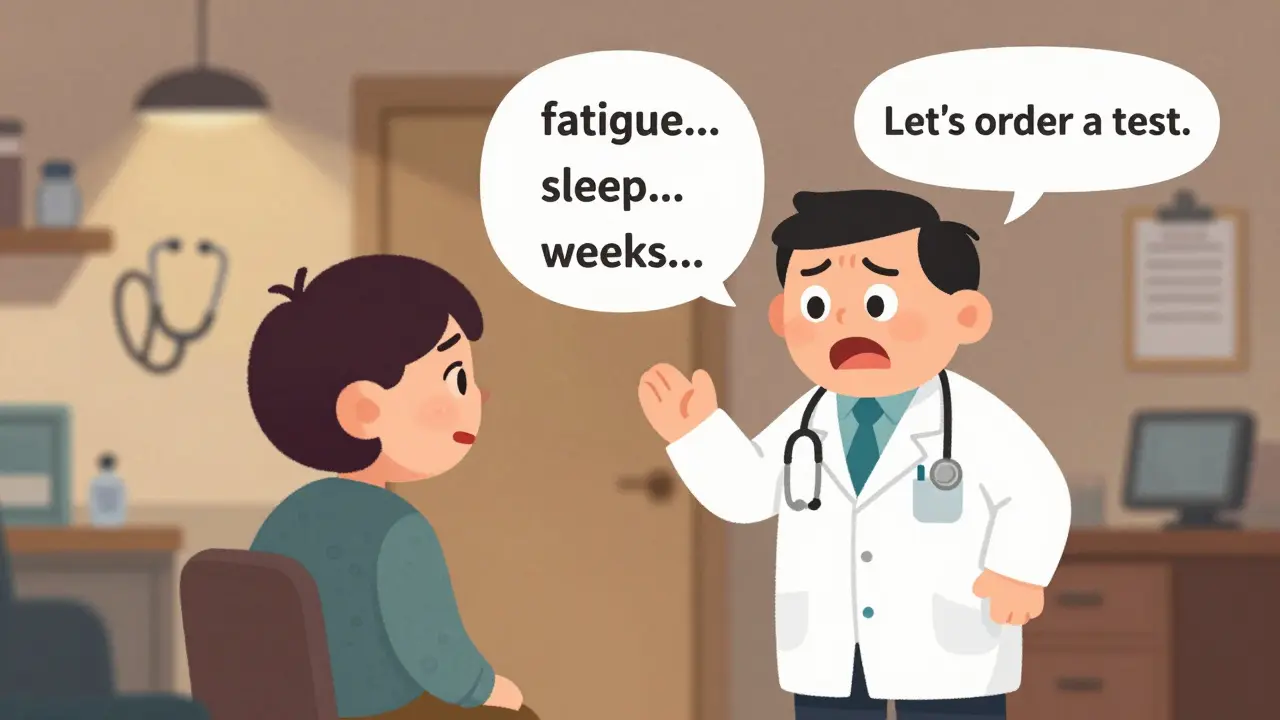
Imagine you’re sitting in a doctor’s office. You’ve been feeling off for weeks. You start to explain your symptoms, but after just 13 seconds, the doctor interrupts. You feel rushed. Confused. Like your voice doesn’t matter. This isn’t rare. It’s the norm in too many clinics. And it’s not just frustrating-it’s dangerous. Poor communication in healthcare contributes to 80% of medical errors, according to The Joint Commission. That’s not a guess. It’s data. And it’s why institutional generic education programs in healthcare communication are no longer optional. They’re essential.
Why Communication Training Isn’t Just Nice to Have
For years, hospitals focused on technology: better scanners, faster labs, electronic records. But the biggest gap wasn’t in machines-it was in conversations. Studies show that 15-20% of adverse patient outcomes are tied to communication breakdowns. That means someone didn’t understand their diagnosis. A nurse missed a critical symptom. A pharmacist misread a hand-written note. These aren’t accidents. They’re preventable.
Here’s what happens when communication improves:
- Patient satisfaction scores jump by up to 78% when providers use empathy and active listening.
- Hospitals with trained staff see 30% fewer malpractice claims.
- Teams that communicate clearly reduce errors in medication orders by nearly half.
It’s not about being polite. It’s about safety. And that’s why institutions are now building formal programs-not just one-off workshops, but structured, repeatable training tied to real clinical outcomes.
What These Programs Actually Teach
These aren’t fluff courses. They’re evidence-based, skill-focused, and built on years of research. The most effective ones teach specific behaviors-not vague ideas like “be a good listener.”
Take the Program for Excellence in Patient-Centered Communication (PEP) at the University of Maryland. It trains clinicians to do two things: elicit the patient’s story and respond with empathy. That sounds simple, but it’s not. Most doctors jump to solutions before patients finish explaining. PEP uses video recordings of real patient visits to show clinicians exactly where they cut people off. Then they practice-again and again-until it becomes second nature.
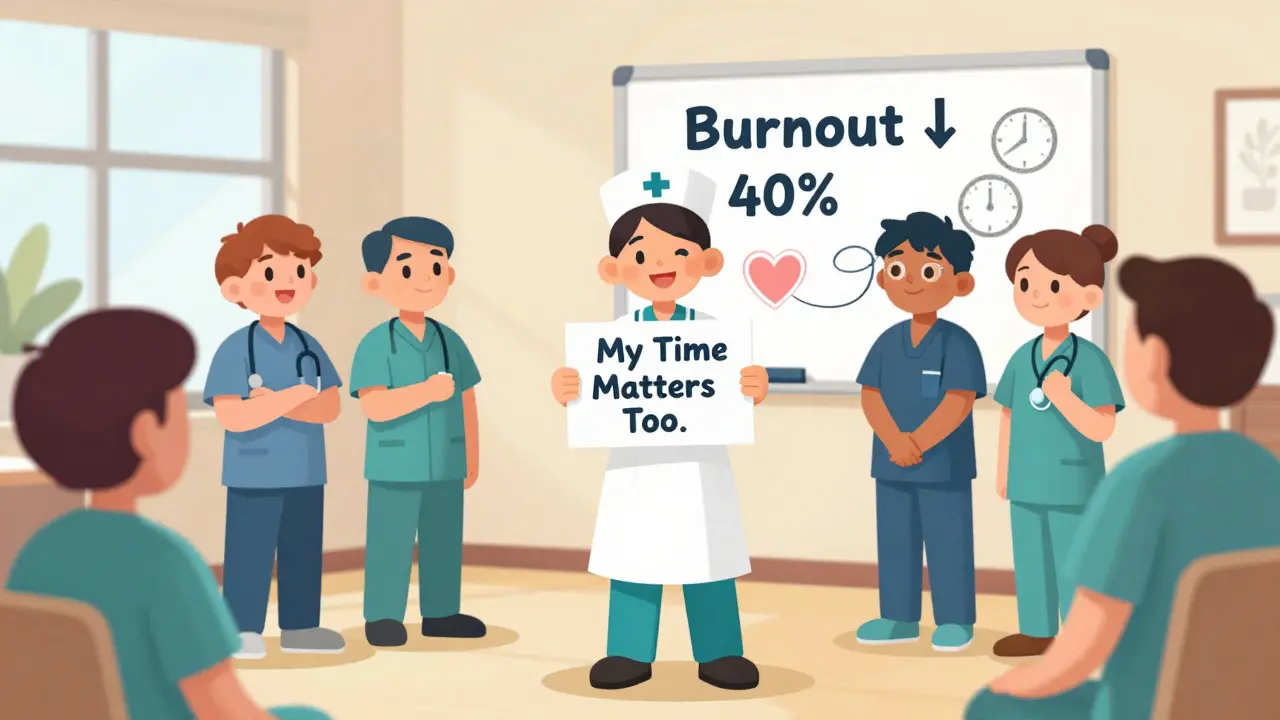
At Mayo Clinic, nurses and doctors learn how to set boundaries. Not to be cold, but to protect their own well-being. One nurse told me, “The boundary setting module cut my burnout by 40% in three months.” That’s not a coincidence. When staff feel heard and supported, they listen better to patients.
Northwestern University’s program goes further. It uses mastery learning. Students don’t move on until they hit 85% proficiency on simulated patient encounters. They practice with actors who react like real people-angry, scared, confused. Then they get feedback. Then they try again. The result? 37% higher skill retention after six months compared to traditional lectures.
Who These Programs Are For
Not every program is for every clinician. Different roles need different skills.
For infection control specialists, SHEA offers a targeted course on policy advocacy and social media. Why? Because during the pandemic, misinformation spread faster than the virus. One infection preventionist in Cleveland used what she learned to correct false vaccine claims that had reached 50,000 people. That’s impact.
Public health workers? The Health Communication Training Series (HCTS) from UT Austin teaches how to communicate during emergencies. After the pandemic, the CDC found that 40% of delays in outbreak response came from poor messaging. HCTS fixes that by training teams to create clear, consistent messages-even under pressure.
And then there are the master’s programs. Johns Hopkins and the University of Pennsylvania now offer full degrees in health communication. These aren’t for frontline staff. They’re for leaders-people who design hospital policies, write public health campaigns, or train future clinicians. They need the theory, the research, and the strategy.
The Real Bottlenecks
Even the best programs fail if they’re not implemented right.
One big problem? Time. A 2023 survey found that 58% of healthcare workers say they know the right communication skills-but they don’t have time to use them. A 15-minute appointment doesn’t leave room for deep listening. So the best programs don’t just teach skills. They change workflows.
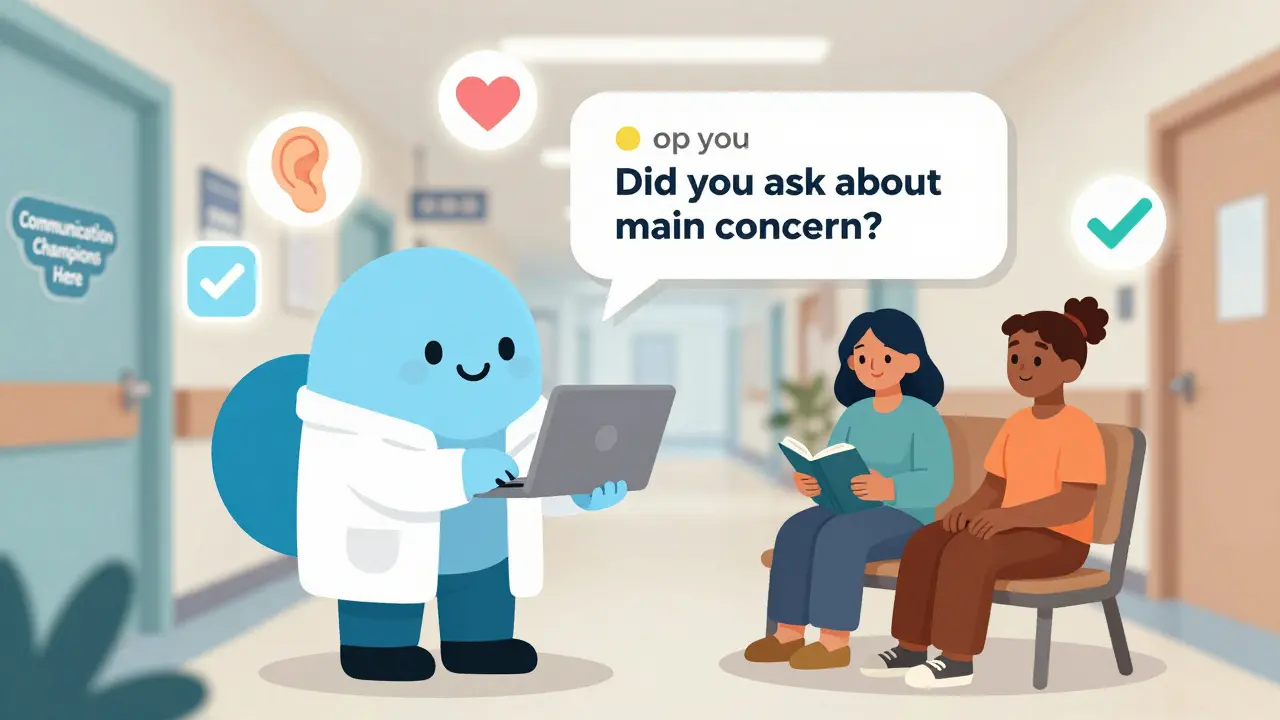
Northwestern embeds communication prompts into their EHR system. When a clinician opens a patient’s chart, a pop-up says: “Did you ask about their main concern?” It’s subtle. But it works. Adoption jumped to 73% when units had “champions”-respected staff members who modeled the behavior.
Another issue? Resistance. About 15-20% of clinicians believe communication skills can’t be taught. “I’ve been doing this for 20 years,” they say. But data doesn’t lie. When senior doctors lead training sessions-like Mayo Clinic does-resistance drops. Peer influence beats top-down mandates every time.
And then there’s funding. Only 42% of hospital programs have dedicated budgets. That’s why partnerships are growing. Mayo Clinic teamed up with SHEA. UT Austin works with Texas health agencies. These aren’t just cost-saving moves-they’re survival tactics.
What’s Next? Technology, Equity, and Long-Term Tracking
The field is evolving fast.
AI is stepping in. ACH, the leading organization in this space, is testing AI tools that give real-time feedback on communication. In pilot tests, learners picked up skills 22% faster. Imagine a system that tells you mid-visit: “You interrupted three times. Try asking one more open-ended question.”
Equity is no longer optional. AHRQ found a 28% gap in communication satisfaction between white patients and minority patients. New programs now include cultural humility training. They teach how to talk about race, language barriers, and distrust in the system-not as an add-on, but as core content.
And long-term tracking? That’s the missing piece. Only 12% of programs check if skills stick beyond six months. But that’s changing. Some hospitals are now analyzing EHR notes to see if clinicians are using empathy phrases, asking open questions, or documenting patient concerns. It’s not perfect. But it’s progress.
What You Can Do
If you’re a patient: Ask if your provider has had communication training. If they haven’t, it’s not a reflection of their skill-it’s a system failure. Push for better.
If you’re a clinician: Don’t wait for your hospital to act. Start small. Watch one of the free HCTS modules. Try the “elicit the patient’s story” technique in your next visit. See what changes.
If you’re a leader: Stop treating communication as a soft skill. Treat it like infection control. Measure it. Reward it. Tie it to performance. And fund it.
Healthcare isn’t broken because we lack technology. It’s broken because we forgot how to talk to each other. The good news? We can fix it. Not with more money. Not with more apps. But with better conversations.

Laura Gabel
This whole thing is just buzzwords with a PowerPoint slide deck. Everyone knows communication matters. But nobody has time or money to actually fix it. We’re just spinning wheels while patients suffer. 🤷♂️
Jeremy Van Veelen
I mean… this is *exactly* why I left clinical practice. The system doesn’t care about nuance-it cares about metrics. You train clinicians to ‘elicit the patient’s story’? Brilliant. Now tell me how that fits into a 9-minute EHR-driven visit where you’re penalized for going over 12 minutes. The real tragedy? This article reads like a TED Talk written by someone who’s never scrubbed in. 💅
jerome Reverdy
I’ve seen this play out in rural ERs. The training works-but only if you have champions. One nurse at my old hospital started using the ‘pause and reflect’ technique after her PEP module. Within months, patient complaints dropped. She didn’t get a bonus. But people started asking for her. That’s the real ROI. Not the slides. The shift in culture. 🌱
Andrew Mamone
AI feedback tools? YES. 🙌 Imagine a system that tells you mid-visit: 'You interrupted 3 times. Try one more open-ended question.' This isn’t sci-fi-it’s happening. And honestly? It’s the only thing that might scale. We can’t train 10M clinicians manually. But bots? They don’t get tired. They don’t roll their eyes. They just… help. 🤖❤️
MALYN RICABLANCA
Oh. My. GOD. This is the most important thing I’ve read since the pandemic. Did you know? I once had a doctor who didn’t even LOOK at me. Just typed. I cried in the parking lot. I’ve been advocating for this since 2018. I wrote a 14-page manifesto. I emailed 17 hospital boards. I started a podcast. And now? Now someone finally gets it. I’m not crying. I’m not. 😭😭😭
gemeika hernandez
They’re all just saying the same thing over and over. Communication. Empathy. Active listening. Whatever. I’ve been to three hospitals. All of them were the same. Rushed. Cold. I just want someone to say ‘I hear you’ and mean it. Not a training module.
Nicole Blain
The part about cultural humility? Needed this. 🙏 I work in a clinic with 18 languages spoken daily. We had zero training until last year. Now? We have a phrasebook, a translator app, and a quiet space for families. Small stuff. But it changed everything.
Kathy Underhill
The data is clear. The methods are proven. The resistance is human. Training alone won’t fix a system designed to optimize efficiency over humanity. We need structural change-not just behavioral tweaks. But this is a start. And that’s something.
Stephen Habegger
This is the kind of thing that actually saves lives. Not gadgets. Not drugs. Just someone taking a breath and listening. 💪
Justin Archuletta
I’m a nurse. I’ve been doing this 12 years. I’ve seen 3 different ‘communication initiatives’. All died after 6 months. Why? Because leadership says ‘we support this’… then cuts the budget next quarter. This article? It’s beautiful. But it’s not real. 😔
Kendrick Heyward
I’ve been waiting for someone to say this. The real problem? People think communication is about being nice. It’s not. It’s about power. Who gets heard? Who gets dismissed? The system favors the confident, the white, the educated. Training won’t fix that. We need to burn it down. 🔥
Ryan Voeltner
The integration of mastery learning with simulated patient encounters represents a paradigmatic shift in professional competency development within the healthcare domain. The empirical evidence supporting sustained skill retention-particularly when juxtaposed against didactic pedagogical models-warrants institutional prioritization. Furthermore, the operational embedding of communication prompts within clinical workflows constitutes a systemic intervention of considerable efficacy.