Pharmacists must clearly explain generic medications to patients to prevent confusion, improve adherence, and avoid dangerous misunderstandings. Learn the essential counseling points backed by law and evidence.
Read more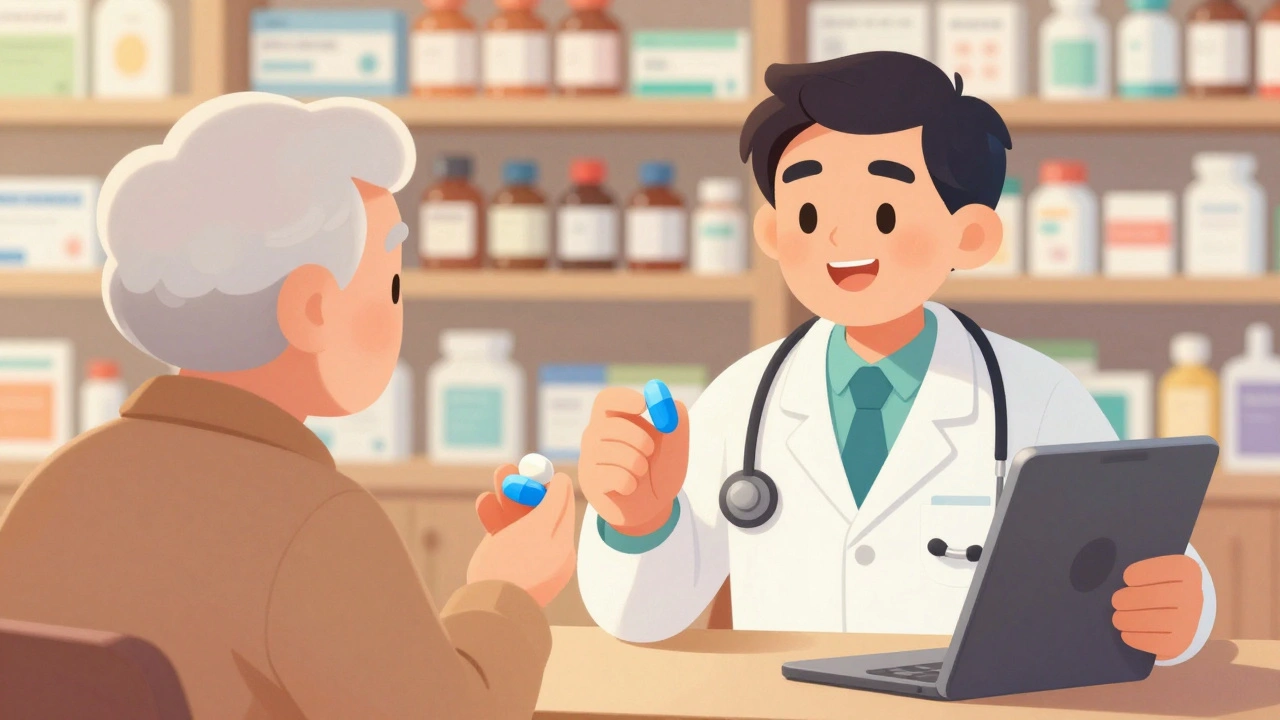
When you pick up a prescription, pharmacist patient advice, the practical, real-world guidance pharmacists give to help you use medications safely and effectively. Also known as medication counseling, it’s not just about reading the label—it’s about understanding how your drugs work together, what to watch for, and when to speak up. Too many people assume their doctor handles everything, but pharmacists are the last line of defense before you swallow that pill. They see your full list of meds, spot dangerous overlaps, and know which ones might clash with your food, supplements, or even your morning coffee.
Good pharmacist patient advice, the practical, real-world guidance pharmacists give to help you use medications safely and effectively. Also known as medication counseling, it’s not just about reading the label—it’s about understanding how your drugs work together, what to watch for, and when to speak up. is what stops a heart patient from mixing ibuprofen with blood thinners, or a diabetic from accidentally taking a sugar-filled cough syrup. It’s why you should always ask, "Is this safe with what else I’m taking?"—even if you’ve taken the drug for years. medication safety, the practice of preventing harm from drugs through proper use, monitoring, and communication. Also known as drug safety, it’s the foundation of every good pharmacy visit. And it’s not just about avoiding bad reactions. It’s about making sure you actually take your meds the right way. Studies show nearly half of people don’t follow their prescription instructions correctly—whether they skip doses, crush pills they shouldn’t, or stop early because they "feel better." That’s where medication adherence, the extent to which a patient follows their prescribed treatment plan. Also known as compliance, it’s often the difference between recovery and hospitalization. comes in. A pharmacist can suggest easier-to-swallow forms, set up pill organizers, or even call you to check in.
And don’t ignore drug interactions, when one medication affects how another works in your body. Also known as medication interactions, they can turn a harmless drug into a dangerous one. You might think herbal supplements are safe because they’re "natural," but St. John’s wort can make your birth control useless. Grapefruit juice can turn a common cholesterol pill into a heart risk. Even over-the-counter pain creams can cause burns if used the wrong way. These aren’t rare cases—they’re everyday mistakes that pharmacists see all the time. That’s why the best pharmacist patient advice doesn’t come from Google. It comes from someone who’s seen your full history, knows your lifestyle, and can tell you what actually matters.
Below, you’ll find real-world guides that cover exactly these issues: how to avoid medication errors in hospitals, what to watch for with generic drugs, how to handle swallowing problems, and why some supplements can undo your prescriptions. These aren’t theory pieces—they’re practical, no-fluff advice from people who’ve seen the mistakes happen and know how to stop them.
Pharmacists must clearly explain generic medications to patients to prevent confusion, improve adherence, and avoid dangerous misunderstandings. Learn the essential counseling points backed by law and evidence.
Read more