Panic disorder involves sudden, intense panic attacks and often leads to agoraphobia. Learn what causes it, how it affects daily life, and the most effective treatments - including CBT and medication - backed by science.
Read more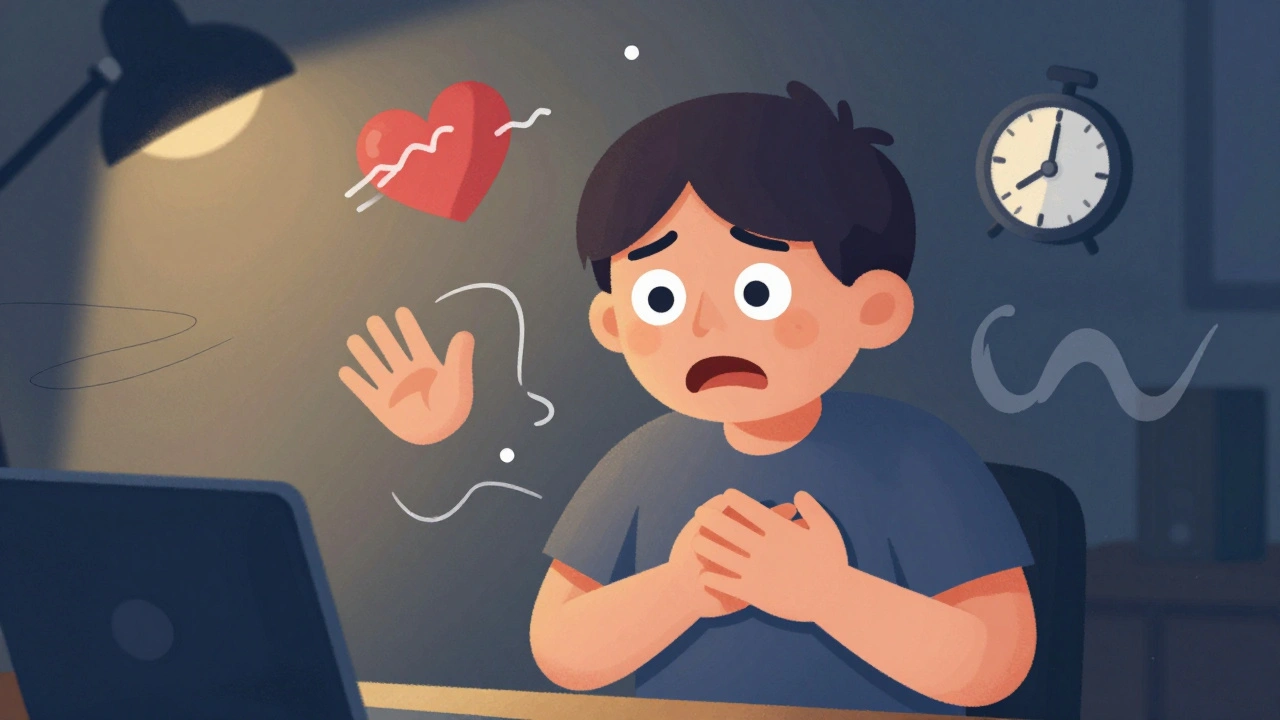
When your heart races out of nowhere, your chest tightens, and you feel like you’re dying—panic attacks, sudden episodes of intense fear that trigger severe physical reactions even when there’s no real danger. Also known as acute anxiety episodes, they’re not just "being nervous"—they’re a real neurological response that can hijack your body and mind. These episodes often come with dizziness, sweating, shaking, or a feeling of losing control. Many people mistake them for heart attacks, which is why so many end up in emergency rooms. But panic attacks aren’t life-threatening—they’re just terrifying.
Panic disorder, a condition where panic attacks happen repeatedly and lead to constant fear of the next attack affects about 2-3% of adults each year. It doesn’t care if you’re successful, healthy, or calm on the outside—it can strike anyone. Triggers vary: stress, caffeine, sleep loss, or even certain medications. Some people develop agoraphobia, avoiding places where they’ve had attacks before. The good news? Cognitive behavioral therapy, a proven method that rewires how your brain responds to fear works as well as, or better than, medication for many. It teaches you to recognize early signs, breathe through the surge, and stop fearing the fear itself.
Medications like SSRIs and benzodiazepines are commonly prescribed, but they’re not one-size-fits-all. SSRIs take weeks to work but help long-term. Benzodiazepines work fast but carry risks of dependence. Some people find relief with beta-blockers to calm physical symptoms. And while herbal supplements like kava or valerian get talked about, they can interact with other meds or even worsen anxiety. The key is working with a doctor to match the treatment to your body and lifestyle—not just chasing quick fixes.
What you’ll find below are real, practical guides on how medications interact with panic symptoms, why therapy works better than you think, how to spot when a panic attack is really something else, and what to do when your current treatment stops working. These aren’t theoretical articles—they’re written for people who’ve been there and need clear, no-fluff answers.
Panic disorder involves sudden, intense panic attacks and often leads to agoraphobia. Learn what causes it, how it affects daily life, and the most effective treatments - including CBT and medication - backed by science.
Read more