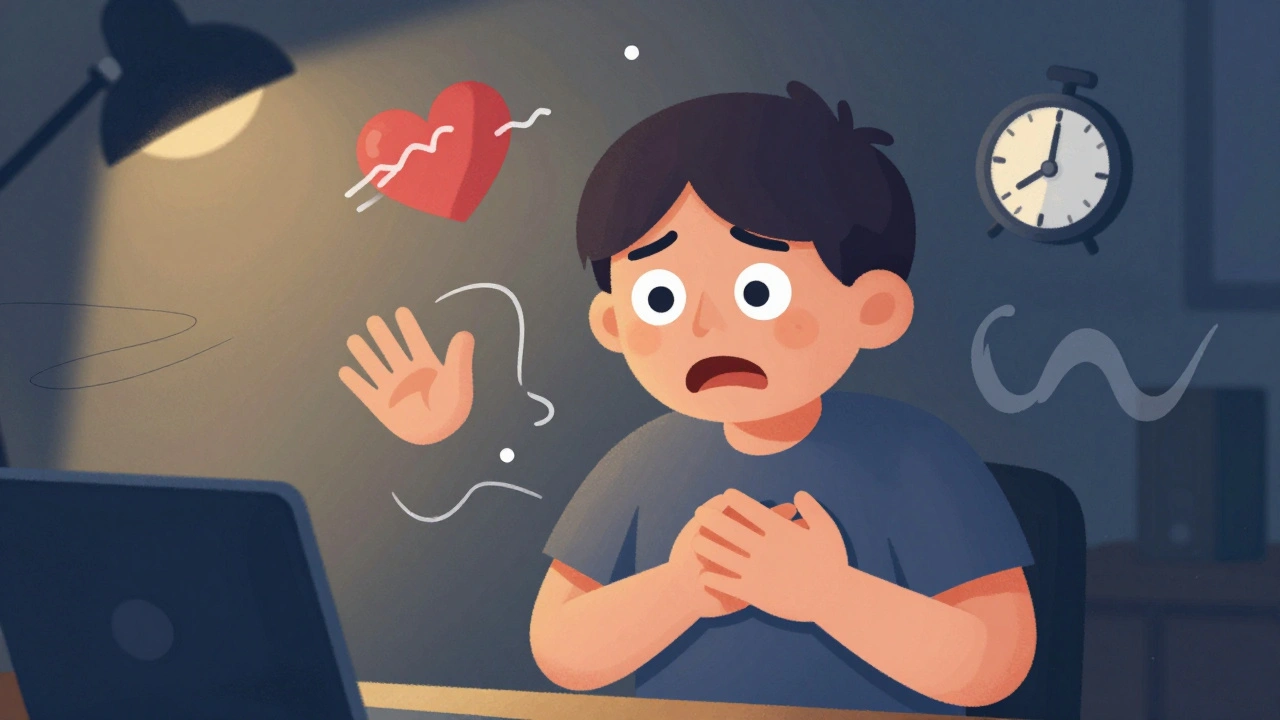
It starts with a racing heart. Then your chest tightens. You can’t catch your breath. Your hands shake. You think, This is it. I’m having a heart attack. I’m going to die. But you’re not. You’re having a panic attack - and it’s not dangerous, even though it feels like it is. For people with panic disorder, these attacks come out of nowhere, often without warning. And after the first few, the fear of the next one becomes just as paralyzing as the attack itself.
What Exactly Is a Panic Attack?
A panic attack isn’t just feeling nervous. It’s a sudden, intense flood of fear that hits like a wave, peaking within minutes. The body goes into full survival mode - even when there’s no real threat. You might feel your heart pounding so hard it hurts. Sweat pours out. You feel dizzy, shaky, or like you’re going to pass out. Some people feel like they’re choking, or that their body is numb. Others feel detached from reality - like they’re watching themselves from outside their body. And nearly everyone feels an overwhelming fear: I’m losing control. I’m going to die. These symptoms aren’t imaginary. They’re real physical reactions. During an attack, your heart rate can spike above 120 beats per minute. Your breathing becomes shallow and fast. Your muscles tense. All of this is driven by your sympathetic nervous system - the same system that kicks in when you’re running from a bear. Only here, there’s no bear. Just your brain misfiring. According to clinical data, 98% of people in panic attacks report palpitations. About 80% fear they’re dying. And 85% feel like they’re losing control. The attack usually lasts between 5 and 20 minutes. Sometimes it lingers longer, but it never lasts hours. It will pass. But knowing that doesn’t help when you’re in the middle of it.When Panic Attacks Become Panic Disorder
Having one or two panic attacks doesn’t mean you have panic disorder. Many people experience them after a stressful event - a breakup, job loss, or accident. But if you start worrying constantly about having another attack, if you change your life to avoid situations where one might happen, or if you spend weeks in fear of the next episode - then you’re likely dealing with panic disorder. The official diagnosis, according to the DSM-5-TR, requires:- Recurrent, unexpected panic attacks
- At least one month of persistent worry about more attacks
- Or significant behavioral changes to avoid situations linked to panic
Agoraphobia: The Invisible Cage
About half of people with panic disorder develop agoraphobia. It’s not just fear of open spaces. It’s fear of being trapped, helpless, or unable to escape if a panic attack strikes. Common avoided situations include:- Public transportation (62% avoid buses or trains)
- Crowded places like malls or concerts (59%)
- Being outside the house alone (72%)
- Enclosed spaces like theaters or elevators (48%)
- Open spaces like parking lots or bridges (55%)
Why Does This Happen?
No one causes panic disorder by being “too sensitive.” It’s not your fault. Science shows it’s a mix of biology, genetics, and environment. Your brain’s alarm system - the amygdala - is overactive. Brain scans show it lights up 25% more in people with panic disorder when they see threatening images. Your body’s stress chemicals, especially norepinephrine, are running on high. And if someone in your family has anxiety, you’re 30-48% more likely to develop panic disorder. Stress plays a big role too. Two out of three first-time panic attacks happen within six months of a major life change - divorce, moving, job loss, or the death of a loved one. Then there’s anxiety sensitivity. That’s the fear of fear itself. People with high anxiety sensitivity believe physical symptoms like a racing heart mean something terrible is happening - a heart attack, a stroke, going crazy. They don’t realize these are just normal body reactions. And that belief turns a physical sensation into a full-blown panic attack.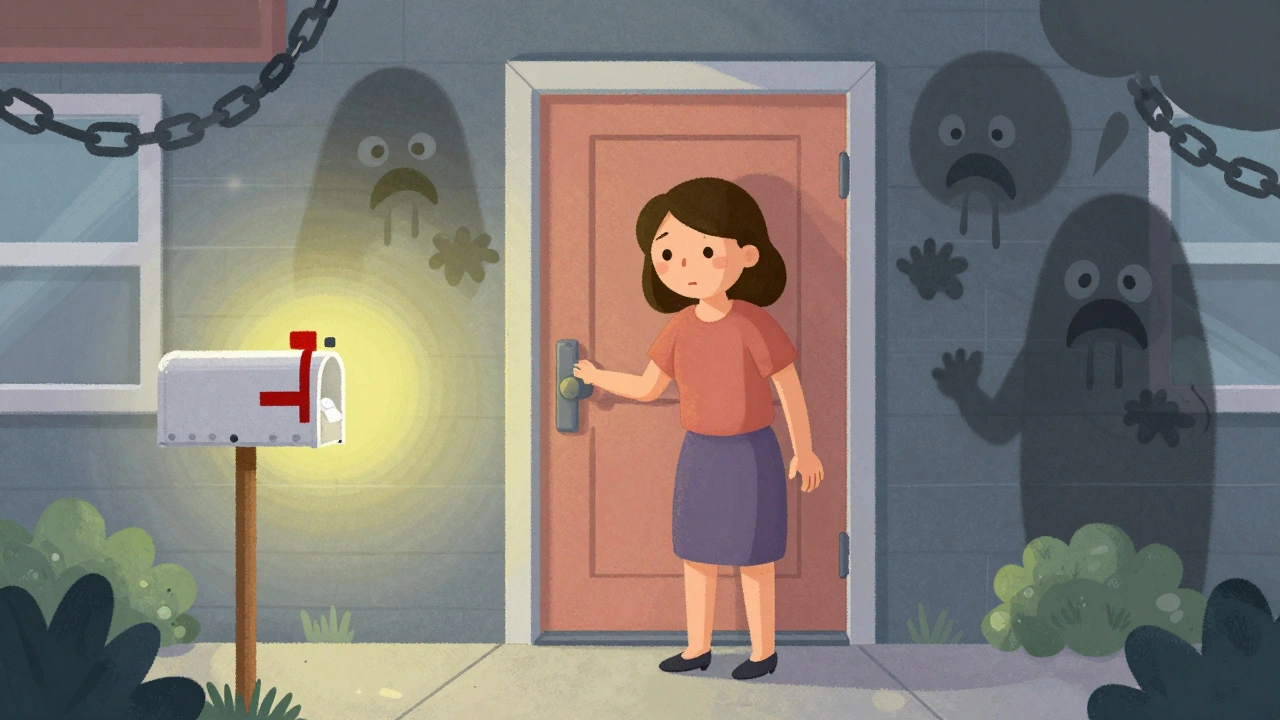
What Actually Works: Evidence-Based Treatment
The good news? Panic disorder is one of the most treatable anxiety disorders. You don’t have to live like this forever. CBT - Cognitive Behavioral Therapy - is the gold standard. It’s not talk therapy. It’s training. You learn how your brain tricks you, and how to rewire those patterns. CBT for panic includes three key parts:- Cognitive restructuring: You learn to challenge catastrophic thoughts. Instead of “My heart is racing - I’m having a heart attack,” you practice: “My heart is racing - that’s just anxiety. It’s uncomfortable, but it’s not dangerous.”
- Interoceptive exposure: You deliberately bring on the physical sensations you fear - spinning in a chair to feel dizzy, breathing through a straw to feel short of breath, running in place to make your heart race. You sit with the fear until it fades. Over time, your brain learns: These sensations don’t mean I’m dying.
- In vivo exposure: You slowly face the places you’ve been avoiding - starting with the easiest, like standing outside your house, then walking to the corner store, then riding the bus for one stop. Each step is practiced until the panic drops.
Medication: When It Helps - and When It Doesn’t
Medication isn’t the first step, but it can be a helpful tool - especially if panic is severe or you’re too overwhelmed to start therapy right away. SSRIs like sertraline or paroxetine are the most commonly prescribed. They don’t work overnight. It takes 4 to 8 weeks to feel the full effect. But once they do, they reduce panic attacks by 60-75%. Side effects? Nausea, weight gain, emotional numbness - common in about 40% of users. But these usually fade after a few weeks. Benzodiazepines like alprazolam (Xanax) work fast. They can stop a panic attack in minutes. But they’re risky. After a few months, your body gets used to them. You need more to get the same effect. And quitting cold turkey can trigger severe withdrawal - including rebound panic attacks. About 30-40% of long-term users become dependent. That’s why experts say: Use medication as a bridge, not a destination. Combine it with CBT. Don’t rely on pills alone. Otherwise, when you stop them, the panic often comes back - and fast.What About New Treatments?
There’s exciting progress. In 2023, the FDA approved the first digital therapeutic for panic disorder: CalmWave. It’s a prescription app that delivers CBT with real-time heart rate feedback. In a trial of 347 people, 62% reached full remission after 24 weeks. Another promising tool is d-cycloserine, a drug that helps the brain learn faster during exposure therapy. When taken before a therapy session, it boosts results by 28%. And apps like Panic Relief (developed by Columbia University) offer 40-minute weekly modules on breathing and thought restructuring. People using them regularly saw results almost as strong as in-person therapy.What Doesn’t Work
Avoidance doesn’t work. It makes panic stronger. Drinking to calm down? Alcohol may help in the moment, but it worsens anxiety long-term. It disrupts your nervous system and increases panic frequency. Ignoring it? Waiting for it to go away on its own? Most people wait over 7 years before getting help. By then, agoraphobia has taken root. Treatment is harder. Recovery takes longer.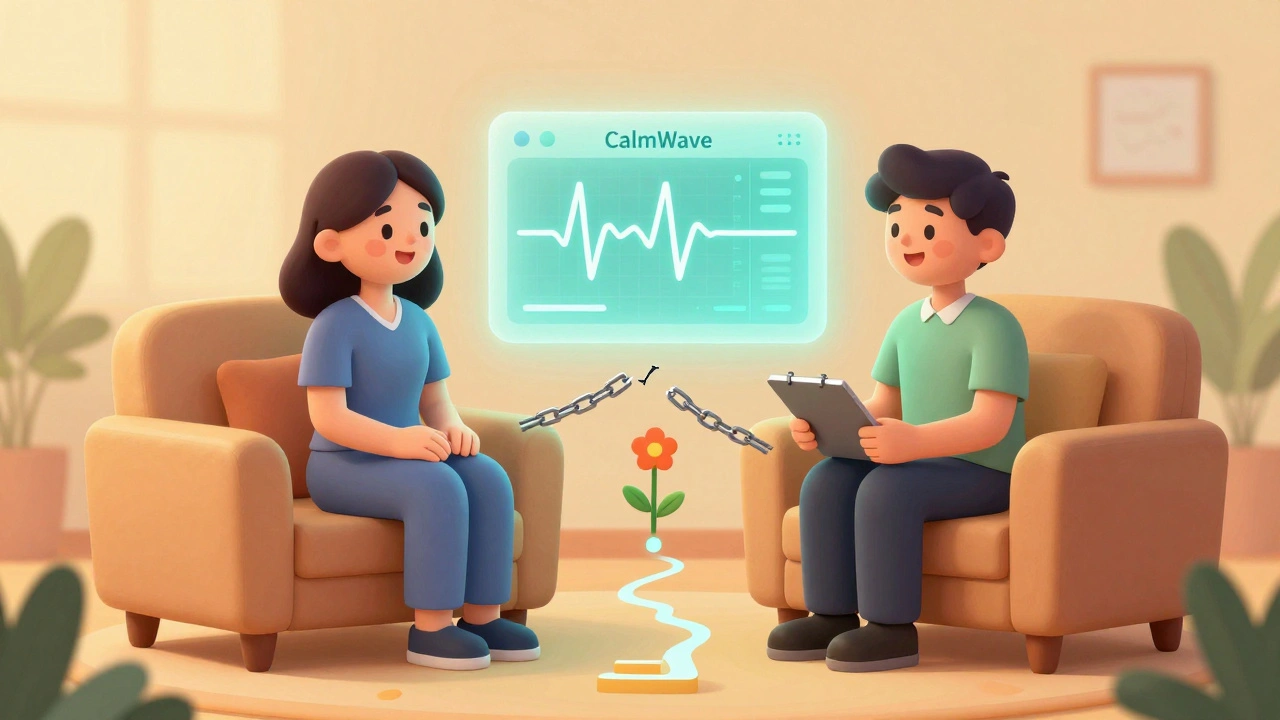
Real Stories: How People Got Their Lives Back
One man, 34, stopped driving after his first panic attack in a tunnel. He took taxis for two years - spending $12,000 a year. His CBT therapist had him sit in his parked car for 10 minutes. Then start the engine. Then drive one block. Then to the corner store. It took 11 weeks. Now he drives to work. A woman in her 50s, who hadn’t left her home in 18 months, started by texting her therapist from her bedroom. Then she opened the window. Then stood on the balcony. After 6 months, she went to a coffee shop. She sat at the counter for 10 minutes. She cried. She was terrified. But she did it. These aren’t miracles. They’re science. You don’t need to be brave. You just need to show up - even when you’re shaking.How to Start Getting Help
If you think you have panic disorder:- See your doctor. Rule out heart or thyroid issues. Panic symptoms mimic serious conditions.
- Ask for a referral to a psychologist trained in CBT. Look for someone who specializes in anxiety.
- Consider a digital CBT app if therapy is hard to access. Apps like Panic Relief or CalmWave have good data behind them.
- Don’t wait. The longer you avoid, the harder it gets.
- Track your panic attacks. Note time, place, thoughts, and what you did afterward. This helps your therapist.
What to Expect in Recovery
Recovery isn’t linear. Some days are good. Some days you feel like you’re back at square one. That’s normal. After treatment, 65% of people stay in remission. But 25% have a relapse - usually after a big life stressor. That’s why maintenance matters. A monthly check-in with your therapist. Keeping up with breathing exercises. Not letting avoidance creep back in. You don’t have to be “cured.” You just have to be in control.Final Thought
Panic disorder doesn’t define you. It’s not a weakness. It’s not something you chose. It’s a misfiring alarm - and alarms can be reset. You don’t need to be fearless. You just need to be willing to feel the fear - and do it anyway. One step. One breath. One day at a time.Can panic attacks cause a heart attack?
No, panic attacks do not cause heart attacks. While the symptoms - chest pain, rapid heartbeat, shortness of breath - feel identical to a heart attack, they are caused by anxiety, not blocked arteries. Emergency rooms see thousands of people each year who believe they’re having a heart attack, only to find their heart is perfectly healthy. That said, if you’ve never had a panic attack before and are over 40 or have heart risk factors, always get checked out. It’s safer to rule out physical causes.
How long does CBT take to work for panic disorder?
Most people start seeing improvement within 4 to 6 weeks. After 12 to 15 weekly sessions, 70-80% report a 50-70% reduction in panic attacks. Some people need fewer sessions if their panic is mild. Others with severe agoraphobia may need 20 or more. The key is consistency - showing up for each session and doing the homework between them.
Can I overcome panic disorder without medication?
Yes. Many people fully recover with CBT alone. In fact, studies show CBT has longer-lasting results than medication. People who rely only on pills often relapse after stopping them. But those who learn CBT skills tend to stay better - even years later. Medication can help jumpstart recovery, especially if symptoms are severe, but it’s not required.
Why do I feel like I’m going crazy during a panic attack?
You don’t feel like you’re going crazy - you feel like you’re losing control. That’s because your brain is flooded with fear signals. The part that normally tells you “this is just anxiety” isn’t working right. The fear feels real, so your mind jumps to the worst conclusion: “I’m losing my mind.” But this is a common symptom of panic disorder, not psychosis. People with panic disorder are often hyper-aware, not disconnected from reality. You’re not going crazy. You’re having a panic attack.
Is agoraphobia permanent?
No. Agoraphobia is reversible. It’s learned behavior - and it can be unlearned. People who avoid public places for years have gone on to travel, work, and live full lives after CBT. The key is gradual exposure. You don’t have to go to a crowded mall on day one. Start with sitting in your car outside the mall. Then walk to the entrance. Then stand there for a minute. Progress is slow, but it’s possible. Agoraphobia is a cage - but it’s one you can walk out of, one step at a time.
Can panic disorder come back after treatment?
Yes, in about 25% of cases - usually after major life stress like a breakup, job loss, or illness. That’s why maintenance matters. After completing therapy, many people benefit from occasional “booster” sessions - once every few months. Keeping up with breathing exercises, staying active, and avoiding avoidance helps prevent relapse. Panic disorder doesn’t have to be a life sentence. But like any chronic condition, it needs ongoing management.

Maria Elisha
why do people act like panic attacks are just bad anxiety? it’s not the same. i had one in a grocery store and thought i was dying. no one gets it until it happens to them.
also why is everyone so obsessed with CBT like it’s magic? it’s hard as hell when you’re shaking and can’t even breathe.
Katherine Chan
you’re not alone i promise
it took me 3 years to even leave my apartment but i did it one step at a time
opening the door counted as a win
walking to the mailbox was a victory
now i take the bus to work and sometimes even go to concerts
your brain is lying to you but you can teach it new tricks
you got this
Steve Sullivan
bro the amygdala is just a scared toddler with a fire alarm 🤡
it’s not you it’s your brain overreacting like it’s 2003 and you’re being chased by a bear
cbt isn’t magic it’s just rewiring your dumb lizard brain
and yeah benzos are a trap i was on xanax for 2 years now i’m off and my panic is actually lower lmao
also if you’re reading this and scared to leave your house… just stand outside for 10 seconds. that’s it. that’s the whole secret
George Taylor
Interesting. So we’re supposed to believe that 98% of people experiencing palpitations during panic attacks are misinterpreting physiological responses… yet when they go to the ER, 100% of cardiac workups come back normal? That’s statistically improbable. And yet, you dismiss the possibility of underlying cardiovascular pathology as irrelevant. How convenient. Also, CBT is not a panacea. It’s an expensive, time-consuming placebo for people who can’t afford real medicine. And don’t even get me started on digital therapeutics-apps are not therapy. They’re monetized distraction. And the FDA approval? A regulatory loophole. This post reads like pharmaceutical marketing disguised as science.
Ajit Kumar Singh
in india we dont have this luxury of calling it panic disorder
people say you are weak or you have bad thoughts
my sister had panic attacks for 5 years and no one believed her
she started with breathing exercises and now she teaches yoga
you dont need expensive apps or therapy
just breathe and keep going
your body is not your enemy
Lisa Whitesel
Let’s be real. This is just anxiety theater. People treat panic attacks like some mystical trauma experience. It’s not. It’s just poor coping mechanisms wrapped in medical jargon. You don’t need CBT. You need discipline. You need to stop indulging in the fear. Stop watching the clock. Stop carrying pills. Stop treating yourself like a fragile doll. You’re not broken. You’re just lazy. And now we have apps for it? This is the end of society.
Larry Lieberman
wait so d-cycloserine boosts exposure therapy by 28%? 🤯
that’s wild
anyone tried it? is it like a nootropic or what?
also does calmwave actually work or is it just another wellness scam?
also why do all the success stories involve people walking to the mailbox? why not just… go to a party? 😅
Courtney Black
It’s fascinating how we’ve medicalized the human condition to the point where every moment of discomfort must be pathologized, labeled, treated, monetized, and then repackaged as a digital product. We used to say, ‘Breathe through it.’ Now we say, ‘Download the app.’ We used to say, ‘You’re strong.’ Now we say, ‘Your amygdala is overactive.’ The irony is that the more we explain it, the more powerless we make people feel. Maybe the real cure isn’t in rewiring the brain, but in relearning how to trust it. Or maybe I’m just overthinking it again. I don’t know anymore.
iswarya bala
i had panic attacks after my dad died
no one talked about it so i thought i was crazy
then i found a free online group with people from india and usa and uk
we just shared stories
no advice
just ‘me too’
that helped more than any app
you are not broken
you are just hurting
and that’s okay
om guru
Respected colleagues, it is with profound humility that I acknowledge the depth of suffering endured by individuals afflicted with panic disorder. The scientific rigor presented in this exposition is commendable. However, I must emphasize that cultural context remains paramount. In many traditional societies, including my own, the expression of psychological distress is often internalized or expressed somatically. Therefore, while CBT and pharmacological interventions are efficacious in Western clinical frameworks, their universal applicability requires careful adaptation. I urge practitioners to integrate culturally resonant practices-such as mindfulness rooted in ancestral wisdom-with evidence-based modalities. Recovery is not merely neurological; it is spiritual, communal, and deeply human.
Olivia Portier
omg i just cried reading this
my bestie went from never leaving the house to hiking in scotland last summer
she said the first time she stood in line at a coffee shop she felt like she was gonna die
but she ordered a latte and sat down and it was fine
now she travels alone and i’m so proud of her
you’re not weak
you’re just healing
and every tiny step counts
even if you just opened the window today
that’s enough
Jennifer Blandford
when i had my first panic attack i thought i was dying
then i had 17 more
then i realized… they’re not trying to kill me
they’re just screaming for attention
like a toddler throwing a fit because you didn’t notice them
so now when it happens i say ‘hey buddy, i see you’
and i breathe
and i let it pass
it’s not magic
it’s just… not fighting it
and that’s the whole damn secret