Hatch-Waxman Amendments: How Generic Drugs Got Legal Access and Saved Billions
When you pick up a generic pill at the pharmacy, you’re benefiting from a law passed in 1984 called the Hatch-Waxman Amendments, a U.S. law that created a legal pathway for generic drugs to enter the market without repeating costly clinical trials. Also known as the Drug Price Competition and Patent Term Restoration Act, it’s the reason you can buy metformin for $4 instead of $400. Before this law, brand-name companies held a monopoly—no one could make a copy until their patent expired, and even then, the FDA didn’t have a clear way to approve the copy. Hatch-Waxman fixed that by letting generic makers prove their drug was bioequivalent, a scientific term meaning the generic delivers the same amount of active ingredient into the bloodstream at the same rate as the brand, without running full human trials again.
This law didn’t just help patients—it balanced two competing needs: rewarding innovation and making medicine affordable. The patent law, the system that gives drug makers exclusive rights to sell a new medicine for up to 20 years was getting abused. Companies would file dozens of minor patents on packaging or dosing schedules just to delay generics—what’s called "evergreening." Hatch-Waxman let generic companies challenge those weak patents and gave brand-name makers a short extension (up to 5 years) to make up for time lost during FDA review. It’s why you see generic versions of drugs like Lipitor or Nexium appear right after their patents expire. And because generics must meet the same strict FDA approval, the process that ensures drugs are safe, effective, and manufactured to high-quality standards as the brand, there’s no safety trade-off.
But the system isn’t perfect. Some drugs—like those with a narrow therapeutic index—still face delays because insurers or doctors worry about tiny differences in absorption. That’s why you’ll find posts here about NTI drugs, prior authorization battles, and how pharmacists explain generics to patients. You’ll also see how supply chain issues and manufacturing problems can still cause shortages, even when the law says generics should be widely available. This collection dives into the real-world impact of Hatch-Waxman: from clinical studies proving generics work, to how patients get caught in insurance red tape, to why some pharmacies still push brand names. Whether you’re paying out of pocket, fighting an insurance denial, or just wondering why your prescription cost dropped overnight, these stories show the law in action—flaws and all.
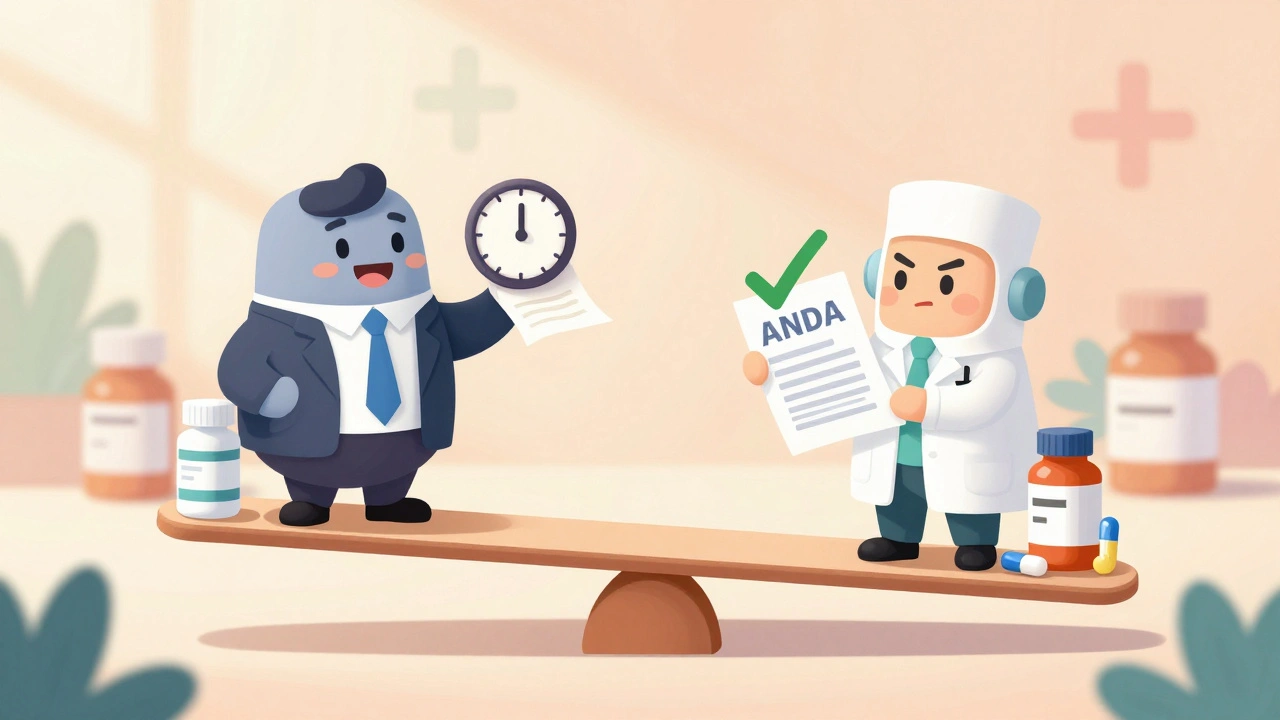
The Hatch-Waxman Amendments of 1984 created the modern generic drug industry by letting companies approve cheaper versions of brand-name drugs without repeating clinical trials. It balanced innovation incentives with faster access to affordable medicines.
Read more