FDA Approval: What It Really Means for Generic Drugs and Your Health
When you see FDA approval, the U.S. Food and Drug Administration’s official green light that a drug is safe, effective, and meets quality standards. Also known as drug authorization, it’s the reason your $4 generic pill works just like the $100 brand-name version. This isn’t bureaucracy—it’s your safety net. Every pill, patch, or injection with FDA approval has been tested under strict rules to prove it does what it claims, without hidden dangers.
The real magic behind FDA approval for generics lies in bioequivalence, the scientific proof that a generic drug releases the same amount of active ingredient into your bloodstream at the same rate as the brand-name drug. The FDA doesn’t demand new clinical trials for generics—instead, they require studies showing the body absorbs the drug within 80% to 125% of the original. That’s not a loophole; it’s a smart system. It’s how we get affordable meds without sacrificing results. You’ll find this exact standard in ANDA approval, the Abbreviated New Drug Application process that lets generic makers skip repetitive testing while still proving safety and effectiveness. This is why millions of people rely on generics for blood pressure, cholesterol, depression, and more.
But FDA approval isn’t the end of the story. It’s the start of your right to know. The same agency that approves your pills also tracks recalls, monitors side effects, and shuts down unsafe suppliers. That’s why some drugs vanish from shelves—because the FDA found contamination or manufacturing flaws. And that’s why you need to understand drug safety, the ongoing process of ensuring medications remain safe after they hit the market. A drug can be approved, then later flagged for rare risks like liver damage or dangerous interactions. That’s not a failure of the system—it’s proof it’s working.
What you’ll find in these posts isn’t just theory. It’s real talk about how generic drugs stack up against brands, why some pills work better than others even with the same name, and how supply chain cracks can leave you without your medicine—even if it’s FDA-approved. You’ll learn how the FDA enforces its rules, what bioequivalence studies actually look like, and why some drugs slip through the cracks despite approval. No fluff. No marketing. Just what you need to know to make smarter, safer choices with your prescriptions.
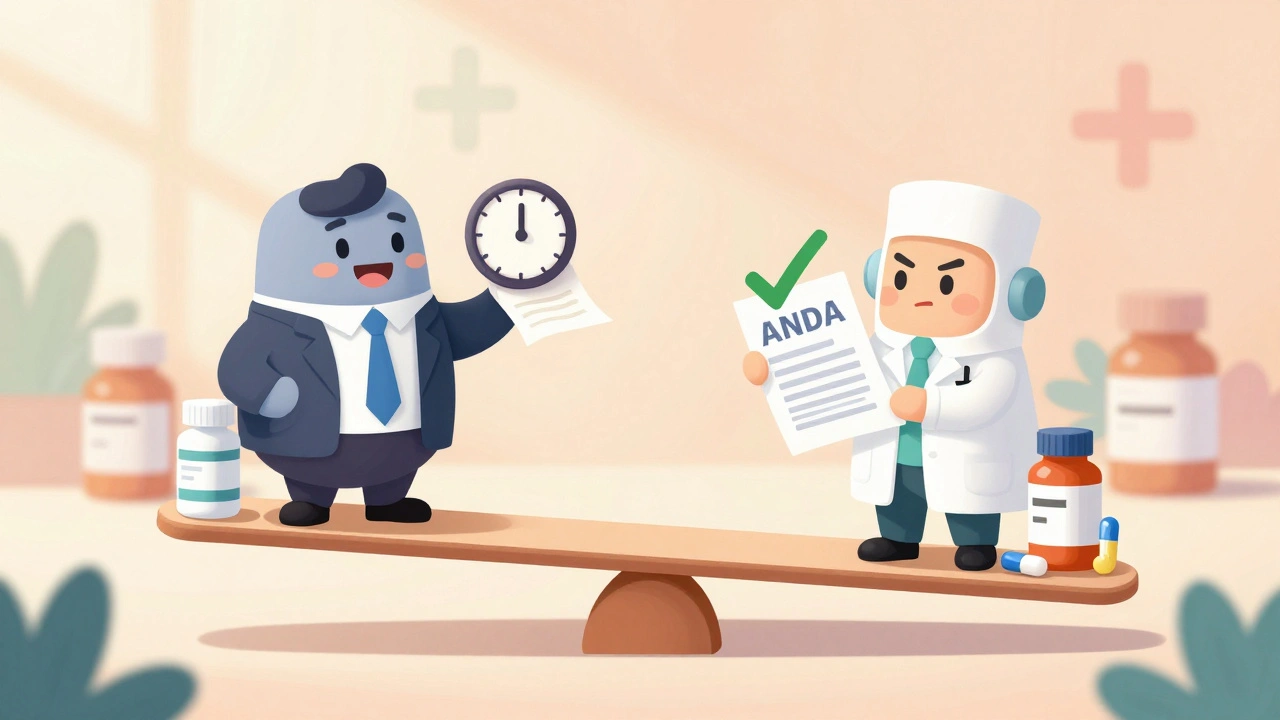
The Hatch-Waxman Amendments of 1984 created the modern generic drug industry by letting companies approve cheaper versions of brand-name drugs without repeating clinical trials. It balanced innovation incentives with faster access to affordable medicines.
Read more