ANDA: What It Is and How It Makes Generic Drugs Affordable
When you pick up a generic pill at the pharmacy and pay a fraction of what the brand-name version costs, you’re seeing the result of an ANDA, a regulatory application submitted to the U.S. Food and Drug Administration to approve a generic version of a brand-name drug. Also known as an Abbreviated New Drug Application, it’s the legal shortcut that lets drugmakers skip expensive clinical trials and prove their product works just as well as the original. This isn’t guesswork—it’s science backed by strict rules. The FDA requires every generic drug to match the brand in strength, dosage, safety, and how fast it gets into your bloodstream. That’s called bioequivalence, and it’s not optional.
Behind every cheap generic is a process built on data, not luck. Manufacturers don’t just copy the pill—they reverse-engineer it, test it in labs, and run studies comparing how your body absorbs it versus the brand. The bioequivalence, a measure of how quickly and completely a drug enters the bloodstream compared to its brand-name counterpart must fall within 80% to 125% of the original. That’s tight. Too far outside that range, and the FDA rejects it. And if the drug has a narrow therapeutic window—like warfarin or lithium—the rules get even stricter. You can’t afford a 10% difference when your life depends on precision.
ANDA isn’t just about cost. It’s about access. Without it, millions wouldn’t be able to afford insulin, blood pressure meds, or antidepressants. The system was designed by the Hatch-Waxman Act to balance innovation with affordability. Brand-name companies get their 20-year patent protection. Once it expires, generic makers step in with ANDAs, and prices drop fast—often by 80% or more. But it’s not foolproof. Supply chain issues, manufacturing failures, or single-source API suppliers can still cause shortages. That’s why you see headlines about drugs disappearing: it’s not the ANDA failing, it’s the system around it.
What you’ll find in these articles is the real-world impact of ANDA and everything tied to it. You’ll read about how bioequivalence studies are done, why some generics still cost too much, how the FDA enforces quality, and what happens when a drug doesn’t meet the standard. You’ll learn how manufacturers cut corners, how pharmacies handle expiration dates, and why some people notice differences even when the science says they shouldn’t. This isn’t theory. It’s what’s on your prescription label, in your medicine cabinet, and in your bank account.
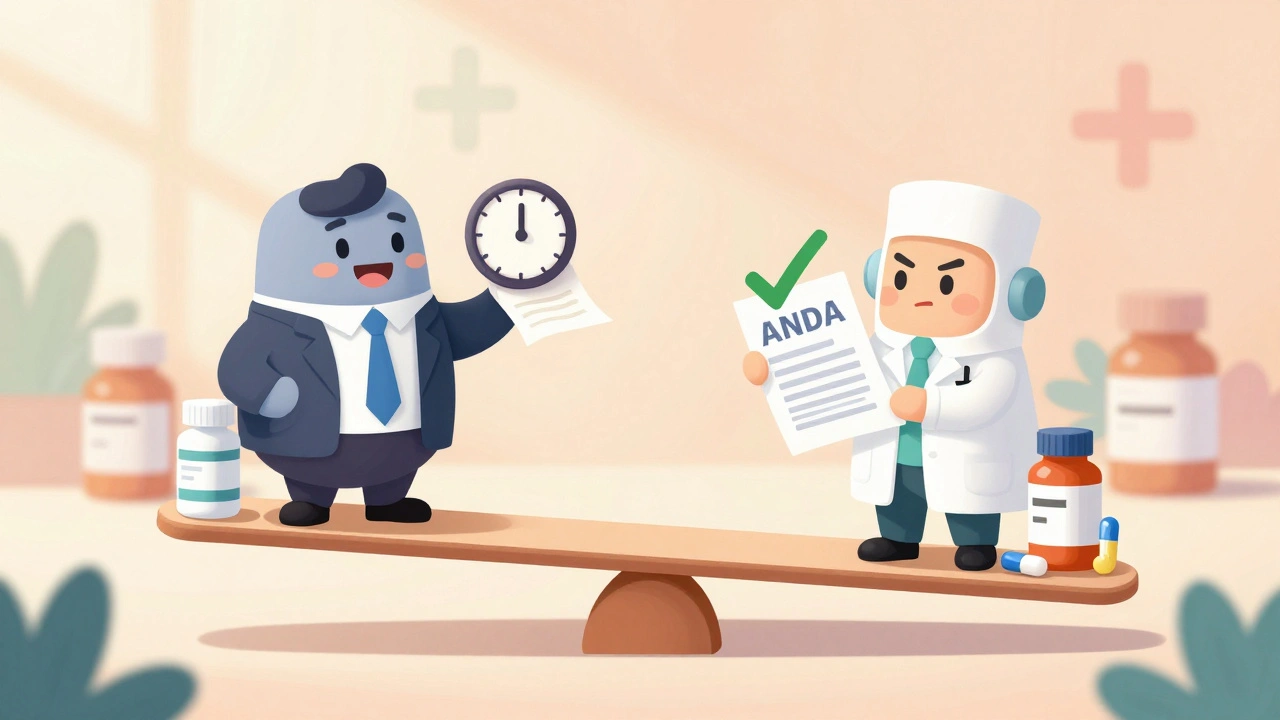
The Hatch-Waxman Amendments of 1984 created the modern generic drug industry by letting companies approve cheaper versions of brand-name drugs without repeating clinical trials. It balanced innovation incentives with faster access to affordable medicines.
Read more