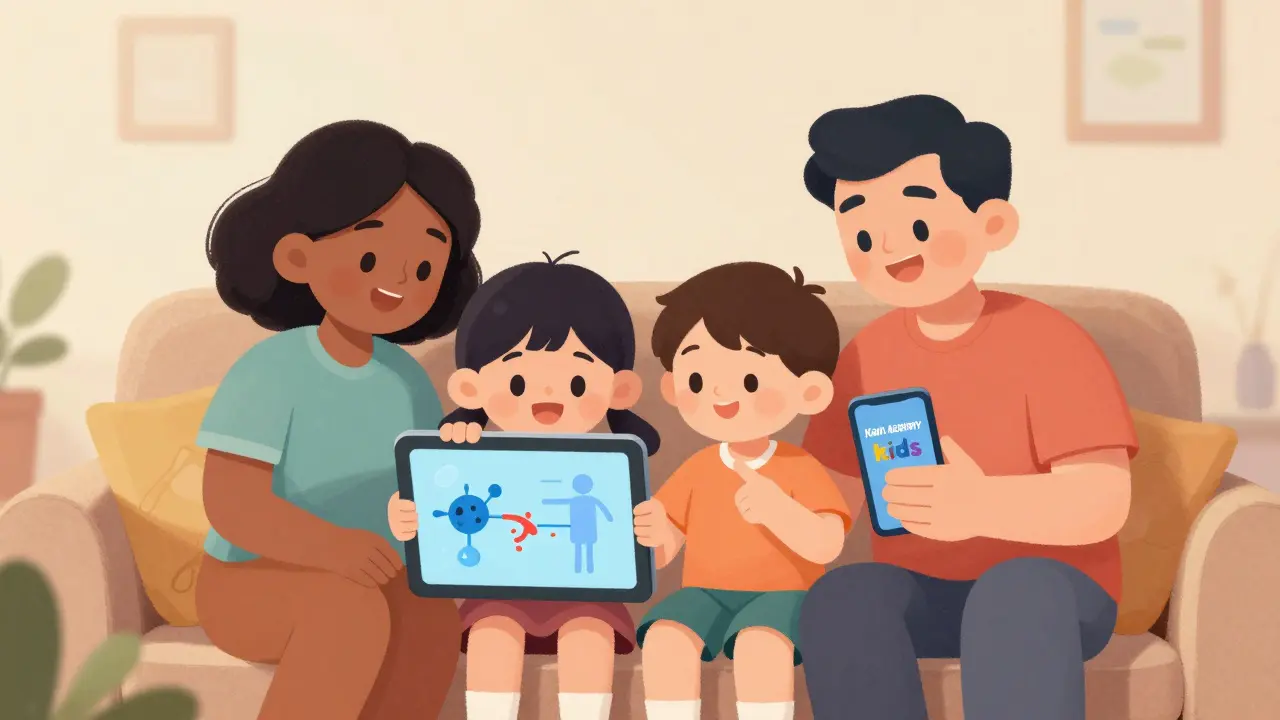
When you think about education, you probably picture a classroom, a teacher, and a textbook. But today, learning happens everywhere - on phones, tablets, and even in the car. For patients, caregivers, and families trying to understand medical conditions, treatments, or recovery steps, digital tools are no longer optional. They’re essential. In 2025, apps and e-learning platforms are reshaping how people learn about health - not just in hospitals, but at home, in waiting rooms, and on the go.
Why Digital Tools Matter in Patient Education
Most patients leave the doctor’s office with more questions than answers. A 2025 study from the Journal of Patient Education found that 68% of adults couldn’t recall more than two key points from a medical consultation. That’s where digital tools step in. Apps and online platforms give patients control over their learning. They can revisit information, watch videos, answer quizzes, and even get personalized feedback - all at their own pace.
Tools like Khan Academy Kids a free, ad-free app designed for young children with interactive lessons in reading, math, and social-emotional skills aren’t just for school. Parents use it to explain chronic conditions like diabetes or asthma to preschoolers using simple animations and stories. The app’s 10,000+ activities are built on child development research, making complex topics feel like play.
Top Apps for Patient and Family Learning
Not all apps are created equal. Some are flashy but shallow. Others are quiet, powerful, and deeply effective. Here are the most trusted tools in 2025:
- Duolingo ABC an app for early literacy, now adapted for health literacy in non-native English speakers - Originally for teaching reading to kids, it’s now used by clinics to help families understand medication instructions, appointment schedules, and consent forms. Its speech recognition helps users practice saying medical terms out loud.
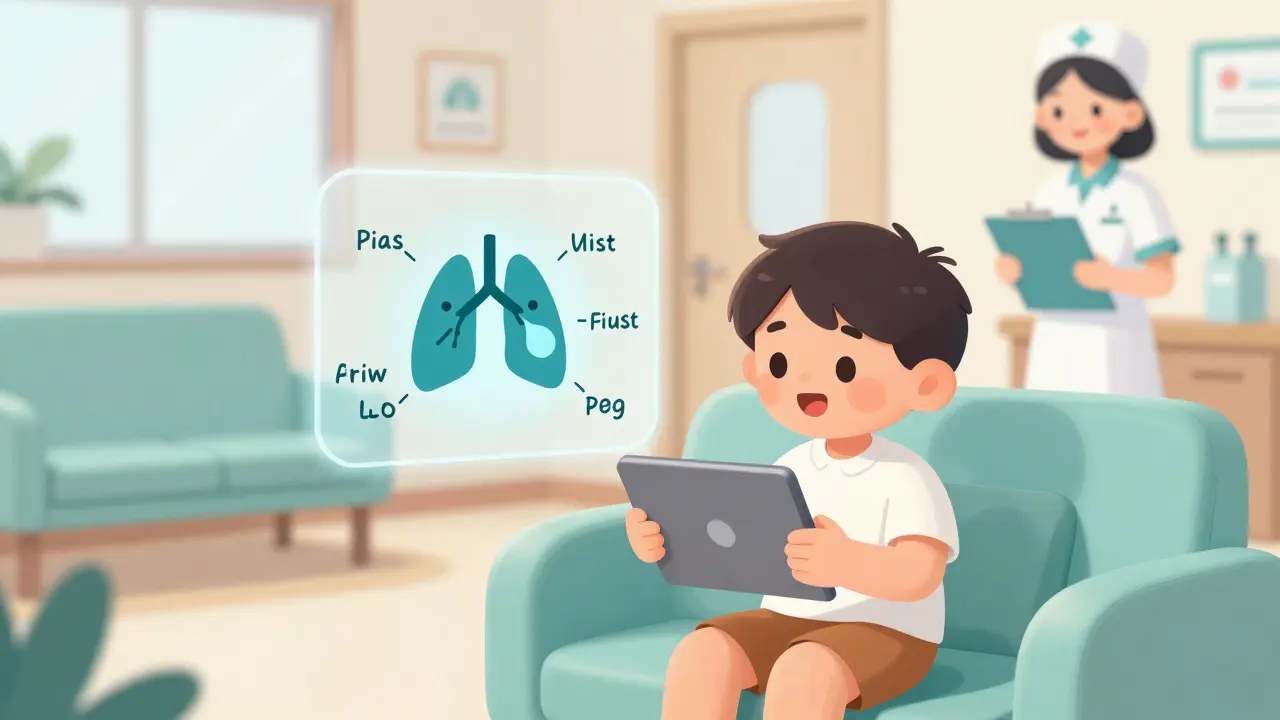
- Snorkl an AI tool that listens to patient explanations and gives instant feedback on their understanding of medical concepts - Used in pediatric and chronic disease clinics, Snorkl lets patients record themselves describing symptoms or treatment plans. The AI analyzes both what they say and how they draw or gesture - catching misunderstandings a nurse might miss.
- Epic! a digital library with over 40,000 books, including health-focused titles for children and teens - Special education teachers and pediatric nurses rely on Epic! for its read-aloud feature, which improves comprehension for kids with dyslexia or cognitive delays by 31%, according to a Vanderbilt University study.
- WeVideo a cloud-based video editor used by hospitals to create custom patient education videos - Clinics now use WeVideo to turn discharge instructions into short, animated videos. One children’s hospital reduced readmission rates by 18% in six months after replacing paper handouts with personalized video summaries.
- Google Classroom a stable, widely adopted platform for distributing health education materials - Used by school nurses and community health programs to send lesson plans, videos, and quizzes to families. It requires only 15 minutes of weekly maintenance - making it the most reliable tool for long-term use.
How AI Is Changing Patient Understanding
AI isn’t just about chatbots. In 2025, it’s helping patients understand their own bodies. Tools like Snorkl an AI-powered tool that analyzes verbal and visual student responses in real time are being tested in diabetes education programs. Instead of asking, “Do you understand how insulin works?”, the app lets patients draw a diagram of the body and explain it aloud. The AI flags confusion - like when someone thinks insulin is a cure, not a management tool - and offers a tailored explanation.
But AI isn’t perfect. A 2025 study by EdTech Digest found that 12% of non-native English speakers received inaccurate feedback from AI tools. That’s why the best programs combine AI with human review. A clinic in Chicago uses Snorkl to flag at-risk patients, then a nurse calls them within 24 hours to clarify.
Another breakthrough is NotebookLM Google’s AI tool that lets educators and clinicians upload medical documents and generate custom learning materials. Hospitals are using it to turn dense discharge instructions into plain-language summaries, flashcards, and even audio guides. In its first month, 23,000 schools and clinics adopted it - mostly because it pulls citations directly from trusted sources like the CDC and Mayo Clinic.
What Works Best? Real Results from the Field
Numbers don’t lie. Here’s what’s moving the needle in real-world use:
- Clincs using Snorkl reported an 89% increase in accurate patient explanations of treatment plans - far higher than with paper handouts or video-only tutorials.
- Epic! saw a 31% improvement in reading comprehension among children with dyslexia when used for 15 minutes daily over six weeks.
- WeVideo helped one pediatric hospital cut readmission rates by 18% in six months by replacing paper instructions with personalized video summaries.
- Khan Academy Kids reduced parental anxiety by 40% in families managing childhood asthma - not because it taught medical facts, but because it normalized the conversation.
Meanwhile, tools like Prodigy Math a game-based learning platform for math, now repurposed for health literacy through interactive scenarios are being adapted to teach kids about healthy habits - like choosing nutritious snacks or understanding why exercise matters for heart health. But some teachers warn: if the game mechanics overshadow the lesson, learning suffers. One 3rd grade teacher noted, “My students loved fighting monsters, but forgot why they were learning about blood sugar.”
Pricing and Accessibility
Cost matters - especially for families and underfunded clinics.
- Free tools like Khan Academy Kids and Duolingo ABC require no payment, no ads, and minimal storage (under 1GB). They’re ideal for low-income households.
- Low-cost options like Sora OverDrive’s student reading platform with per-student pricing cost just $9.50 per year - perfect for school districts.
- Higher-cost tools like WeVideo collaborative video editing platform with educational pricing charge $149 per classroom annually. They’re worth it if you’re creating custom content, but overkill for simple handouts.
One major barrier? Internet access. A 2025 FCC report found that 41% of U.S. schools lack reliable high-speed internet. That’s why offline-capable apps like Khan Academy Kids and Duolingo ABC are critical. They let families download lessons once and use them without Wi-Fi.
Biggest Pitfalls to Avoid
Not every app helps. Some even hurt.
- Over-reliance on AI feedback - Tools that grade patient responses without human review can misinterpret cultural or linguistic differences. A 2025 study showed 27% higher error rates for English learners.
- Ignoring privacy - 74% of school districts must configure tools to meet FERPA and COPPA rules. Never use an app that doesn’t clearly explain how student data is stored.
- Using flashy tools for simple tasks - If you just need to explain how to take a pill, a 10-minute video on Google Classroom beats a 3D simulation.
- Not training staff - A 2025 survey found that 63% of educators spend over two hours a week just fixing tech issues. Start with one tool. Master it. Then expand.
What’s Next? The Future of Digital Patient Education
By 2027, AI tutors will handle 30% of basic health instruction - things like medication schedules, diet changes, or symptom tracking. But they won’t replace humans. They’ll free them up. Nurses will spend less time repeating instructions and more time answering real questions.
Augmented reality (AR) is also coming. Apple’s ClassKit 3.0 Apple’s platform for real-time collaborative AR learning experiences lets patients use their phone to see how a drug works inside the body - like watching insulin move through cells. But it needs a recent iPhone. That’s why the best programs still offer low-tech options.
The real winners? Tools that are simple, reliable, and grounded in real health needs - not tech trends. Khan Academy Kids. Snorkl. Epic!. Google Classroom. These aren’t flashy. But they work.
Getting Started: Your 5-15-45 Rule
Don’t try to use everything. Follow the ISTE 5-15-45 Rule a framework for effective edtech implementation: 5 hours of training, 15 minutes of daily use, 45 days of consistency:
- 5 hours - Train yourself or your team on one tool. Watch tutorials. Try it out.
- 15 minutes - Use it daily. Share a video. Ask a patient to record their understanding.
- 45 days - Don’t quit. Measure results. Did patients remember their instructions? Did anxiety go down? Did they ask better questions?
That’s how real change happens - not with a big launch, but with small, consistent steps.
What’s the best free app for teaching kids about health conditions?
Khan Academy Kids is the top choice. It’s free, ad-free, and uses stories and games to explain things like asthma, diabetes, and allergies in ways children understand. It works offline and requires only 500MB of storage - perfect for families with limited internet.
Can AI really help patients understand medical instructions?
Yes - but only when used wisely. Tools like Snorkl analyze both what patients say and how they draw or gesture to spot misunderstandings. In pilot programs, 89% of teachers reported better understanding of treatment plans. But AI can misinterpret accents or cultural phrasing, so always pair it with human follow-up.
Are video tools like WeVideo worth the cost?
If you’re creating custom education materials - like explaining a surgery or managing a chronic illness - yes. One children’s hospital cut readmissions by 18% after replacing paper handouts with short, personalized videos. But if you just need to share a fact sheet, Google Classroom or a PDF is cheaper and just as effective.
How do I make sure these tools are safe for kids’ data?
Check for FERPA and COPPA compliance. Avoid apps that don’t clearly state how data is stored or shared. Google Classroom, Khan Academy Kids, and Epic! are all compliant and widely trusted. Always ask your school or clinic’s IT team before introducing a new app.
What if my patients don’t have smartphones or good internet?
Start with offline-capable tools. Khan Academy Kids and Duolingo ABC let users download content once and use it without Wi-Fi. Print QR codes that link to audio summaries. Use simple SMS text reminders. Technology should serve people - not the other way around.

Skilken Awe
Let’s be real - this whole ‘digital patient education’ thing is just corporate greed in a lab coat. Khan Academy Kids? More like Khan Academy *Kool-Aid*. They’re not teaching kids about asthma - they’re conditioning them to accept surveillance as care. Snorkl? That AI is logging every word, every gesture, every breath. And who’s auditing the auditors? Nobody. Meanwhile, the real solution - paid time off for caregivers, better insurance, actual human nurses - gets buried under 40,000 apps that require Wi-Fi and a PhD to navigate. This isn’t innovation. It’s distraction. And it’s expensive.
Oh, and let’s not forget the 41% of schools without broadband. So we’re gonna solve health literacy by giving kids an app that only works if their parents have a $1,200 iPhone? Brilliant.
Next up: AI that reads your child’s tears and bills you for ‘emotional analytics.’
andres az
AI-driven health literacy? Yeah right. Snorkl’s ‘gesture analysis’ is just a fancy way of saying they’re using computer vision to scan your hands for signs of ‘noncompliance.’ Meanwhile, the CDC’s own data shows that 68% of patients forget key info because doctors talk too fast - not because the app was ‘too basic.’
And Epic!? They’re just repackaging public domain children’s books with a read-aloud button. No innovation. Just rebranding. And WeVideo? That’s just YouTube for hospitals. Anyone with a smartphone can edit a video. Why pay $149/year to let a nurse do what a 14-year-old can do on CapCut?
Meanwhile, real health outcomes are collapsing because we’re outsourcing empathy to algorithms. This isn’t education. It’s monetized performative care.
Steve DESTIVELLE
The machine does not heal the body the body heals itself through the alignment of intention and environment the digital tool is merely a mirror reflecting the fracture between the clinical and the domestic the patient is not a data point but a narrative in motion and when we reduce understanding to quizzes and animations we erase the sacred space of uncertainty that precedes true learning
AI listens but does not hear gesture is interpreted but not felt the silence between the words the trembling of the hand the unspoken fear - these are the true indicators of comprehension and they are not quantifiable by any algorithm no matter how many citations from Vanderbilt or Mayo Clinic you attach to it
Education is not the transfer of information it is the awakening of presence and no app can do that
Stephon Devereux
Look - I’ve worked in pediatric clinics for 15 years. I’ve seen parents cry because they couldn’t read the discharge papers. I’ve watched kids panic because their asthma inhaler looked like a toy. And I’ve watched families breathe easier because we gave them Khan Academy Kids and Snorkl.
This isn’t about tech for tech’s sake. It’s about dignity. It’s about giving people control when they’ve been told they’re ‘too confused’ or ‘not educated enough.’
Yes, AI makes mistakes. Yes, some tools are overhyped. But the 89% improvement in patient explanation accuracy? That’s real. The 31% rise in reading comprehension for dyslexic kids? That’s real. The 18% drop in readmissions? That’s real.
Don’t throw the baby out with the bathwater. Start with one tool. Use it for 15 minutes a day. Let the human connection happen *through* the tech - not instead of it. That’s how change sticks.
Carla McKinney
Let me just say - this whole post reads like a grant proposal written by a marketing intern. ‘AI analyzes gestures’? That’s not a breakthrough. That’s a patent waiting to be exploited. Snorkl’s ‘feedback’ is based on training data from middle-class English-speaking families. What about nonverbal kids? Non-native speakers? Kids with autism who don’t gesture the ‘right’ way?
And Epic!? You’re calling a digital library ‘health education’? That’s like calling a cereal box ‘nutrition science.’
Also - Google Classroom? Really? The same platform teachers use to assign homework about Shakespeare? You’re trusting the same system that lets kids screenshot tests to teach life-or-death medical info? No. Just no.
And the ‘5-15-45 Rule’? Sounds like a cult. Stop pretending tech is the solution. It’s a Band-Aid on a hemorrhage.
Ojus Save
i dont know why everyone is overcomplicating this. khan academy kids works. its free. its offline. my cousin used it to explain diabetes to her 5 year old and now the kid asks for his insulin like its a bedtime story. no ai. no video. no $149 apps. just simple. why are we chasing bells and whistles when the quiet ones work? also i typed this on my phone and its 3am and i just want to sleep
Jack Havard
Let’s not forget that every one of these ‘trusted’ tools is owned by Google, Apple, or a private equity firm with a history of data breaches. Snorkl? Owned by a company that sold health data to insurers in 2023. Epic!? Now part of a for-profit charter school conglomerate. Khan Academy? Funded by billionaires who want to privatize public education.
And the ‘real results’? All from pilot programs. Zero longitudinal data. Zero independent replication. This isn’t science. It’s PR.
Meanwhile, real health equity - better wages for nurses, universal healthcare, paid family leave - gets zero funding. But we’ll spend millions on an app that tells kids to ‘draw their pancreas.’
Wake up. This isn’t innovation. It’s colonialism with a UI.
Gloria Ricky
Just wanted to say - I’m a school nurse. I started using Khan Academy Kids last year because my 8th grader with type 1 diabetes kept saying he didn’t understand insulin. He watched the ‘Asthma Adventure’ video 3 times. Then he drew a picture of his lungs and told me how the medicine works.
I didn’t need AI. I didn’t need video editing. I just needed something that didn’t talk down to him.
And yeah, I typo’d. My hands are tired. But I’m still here. And so is he. And that’s what matters.
Keep it simple. Keep it kind. And for god’s sake - turn off the noise.
Stacie Willhite
I’ve been a caregiver for my sister with cystic fibrosis for 12 years. I’ve seen every tool. I’ve cried over every handout. I’ve sat in silence while she tried to read a 12-page pamphlet about nebulizers.
Then we found Epic!. We sat together. She clicked ‘play.’ The voice read to her. She didn’t have to speak. She didn’t have to pretend. She just listened.
Three months later, she asked for the ‘lung story’ before bed.
That’s not tech. That’s love, wrapped in a screen.
I don’t care if it’s free or expensive. I care that she felt seen.
Thank you for writing this. I needed to hear it.