
Vitamin K Consistency Calculator
Track Your Vitamin K Intake
Enter your daily portions of vitamin K-rich foods to monitor consistency. Aim for 90-120 µg daily for stable INR.
Important: This calculator helps you track consistency. The goal is to maintain intake within 90-120 µg daily, not to reduce total vitamin K. Consistency is key to stable INR.
As explained in the article: "You don't need to eat perfectly. You need to be predictable."
When you're on warfarin, your diet isn't just about eating healthy-it's about eating consistent. Many people hear they need to avoid green vegetables altogether, but that advice is outdated, misleading, and even dangerous. The real goal isn't to cut out vitamin K. It's to keep your intake steady every single day. This simple shift-from restriction to consistency-can mean the difference between a stable INR and a trip to the ER.
Why Vitamin K Matters With Warfarin
Warfarin works by blocking vitamin K from helping your blood clot. That’s why it’s so effective at preventing strokes and dangerous clots. But here’s the catch: vitamin K doesn’t just come from supplements. It’s in your spinach, kale, broccoli, and even some oils. Every time you eat a serving of these foods, you’re directly countering part of warfarin’s effect. If you eat a big salad one day and none the next, your INR will swing up and down. That’s not just inconvenient-it increases your risk of clotting or bleeding.The science is clear. A 2010 study found that people eating more than 250 micrograms of vitamin K per day needed higher warfarin doses to stay in range. But those who ate around 90-120 micrograms daily, consistently, had the most stable INRs. That’s not a coincidence. It’s a pattern backed by the American Heart Association, the American College of Cardiology, and the American Society of Hematology-all of which now say: don’t restrict. Stabilize.
Which Foods Are High in Vitamin K?
Not all greens are created equal. Some pack a huge punch. Here’s what you’re really dealing with:- One cup of cooked spinach: 889 µg
- One cup of cooked kale: 547 µg
- One cup of cooked collard greens: 772 µg
- One cup of cooked broccoli: 220 µg
- Half a cup of asparagus: 70 µg
- Half a cup of green beans: 14 µg
Notice the difference? Cooking spinach concentrates its vitamin K. Raw spinach has about 145 µg per cup. Cooked? Nearly six times more. That’s why people who switch from raw to cooked greens without realizing it see their INR crash.
Other sources include Brussels sprouts, cabbage, soybean oil, and even some cheeses and meats (which contain vitamin K2). But the biggest culprits? Leafy greens. And the biggest mistake? Eating them inconsistently.
Consistency Over Restriction: The Proven Strategy
For years, patients were told to avoid green vegetables. Some doctors still give this advice. But here’s what actually happens: when you suddenly eat a big serving of kale after weeks of avoiding it, your INR can drop from 2.5 to 1.8 in one day. That’s a major risk for clotting. On the flip side, if you skip your usual spinach for a week, your INR can rise dangerously high.The solution? Pick one or two high-vitamin-K foods you like, and eat the same amount every day. For example:
- One cup of cooked spinach every morning with eggs
- Half a cup of broccoli with dinner, five days a week
- One tablespoon of soybean oil in your salad dressing daily
You don’t need to eat these every day. But if you eat them on Monday, eat them on Tuesday. If you skip them Wednesday, you’ll likely need a dose adjustment Thursday. That’s the chaos you’re trying to avoid.
Studies show patients who follow this approach spend 75-80% of their time in the therapeutic INR range (2.0-3.0). Those who eat vitamin K randomly? Only 55-65%. That’s a 20% gap in safety-and it’s entirely preventable.
What About Supplements and Smoothies?
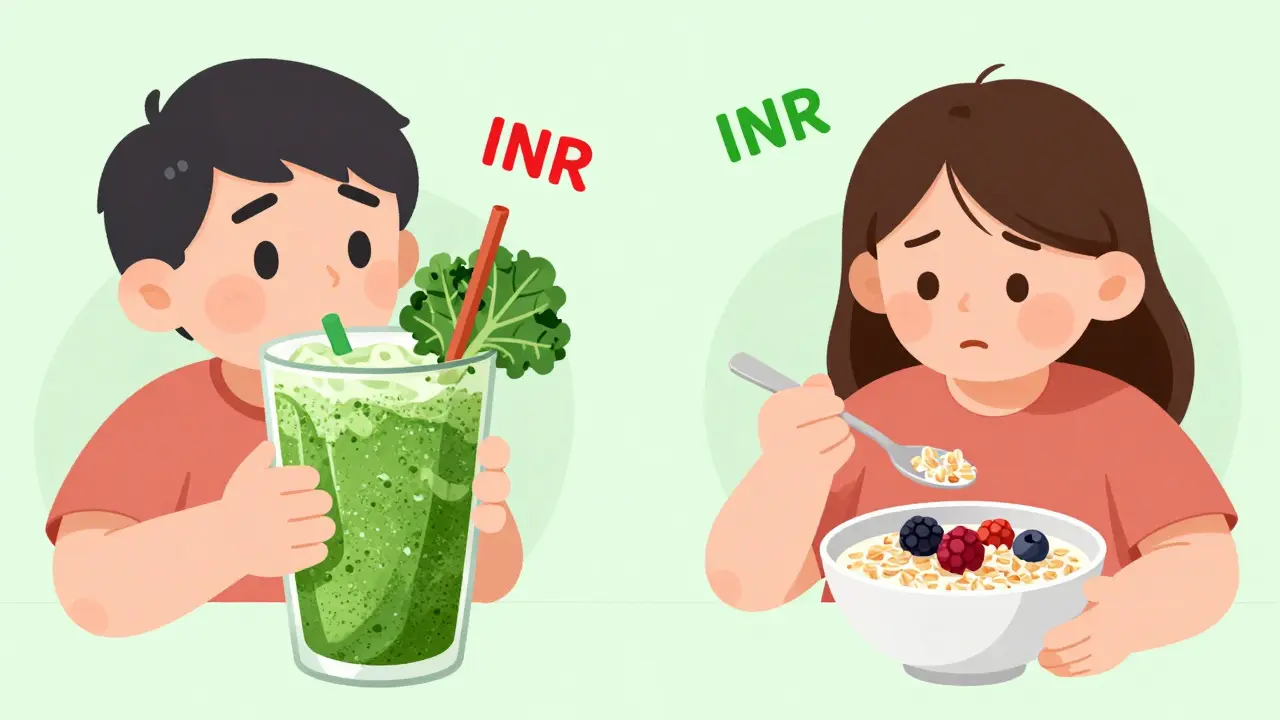
Many people think they’re being smart by taking a multivitamin or drinking a green smoothie. But that’s where things go wrong.Supplements labeled “vitamin K” can contain 50-150 µg per dose. That’s a full day’s worth in one pill. If you’re on warfarin, you should avoid them unless your anticoagulation clinic specifically tells you otherwise. Even “natural” supplements like spirulina or wheatgrass can spike your vitamin K intake.
Smoothies are another trap. One cup of kale, one banana, one apple, a spoon of almond butter, and a splash of juice? That’s over 600 µg of vitamin K-more than half a day’s worth. And if you drink it once a week? Your INR will bounce around like a ping-pong ball.
Instead, if you like smoothies, stick to low-K ingredients: berries, bananas, oats, yogurt, and milk. Skip the kale, spinach, and parsley. Save the greens for your cooked meals, where you can control the portion.
Other Factors That Throw Off Your INR
Vitamin K isn’t the only thing that affects your warfarin. Antibiotics can kill the bacteria in your gut that make vitamin K2. That means even if you eat the same food every day, your body might suddenly have less vitamin K-causing your INR to rise. That’s why people on antibiotics often need more frequent INR checks.Illness matters too. If you get the flu, skip meals, or lose your appetite, your INR can climb because you’re not getting vitamin K from food. One study showed INR levels rose by 0.3-0.6 units within 48 hours of reduced food intake. That’s why it’s smart to have a backup plan: if you’re sick, eat what you can, even if it’s plain rice or toast, and call your clinic.
And don’t forget about alcohol. Heavy drinking can increase warfarin’s effect. Even moderate drinking-more than one drink a day-can interfere. Stick to one glass of wine or beer max, and keep it consistent.
Tools That Actually Help
Tracking your vitamin K intake doesn’t have to be complicated. You don’t need to count every microgram. But you do need to be aware.- Food diary: Write down what you eat each day, especially greens. Just noting “spinach” or “kale” helps you spot patterns.
- MyFitnessPal: It has a database of vitamin K values for over 10,000 foods. Enter your meals, and it gives you the total. Most stable patients use this daily.
- CoumaDiet app: Designed specifically for warfarin users, it tracks vitamin K and predicts INR trends based on your diet and dose. Used by over 20,000 people.
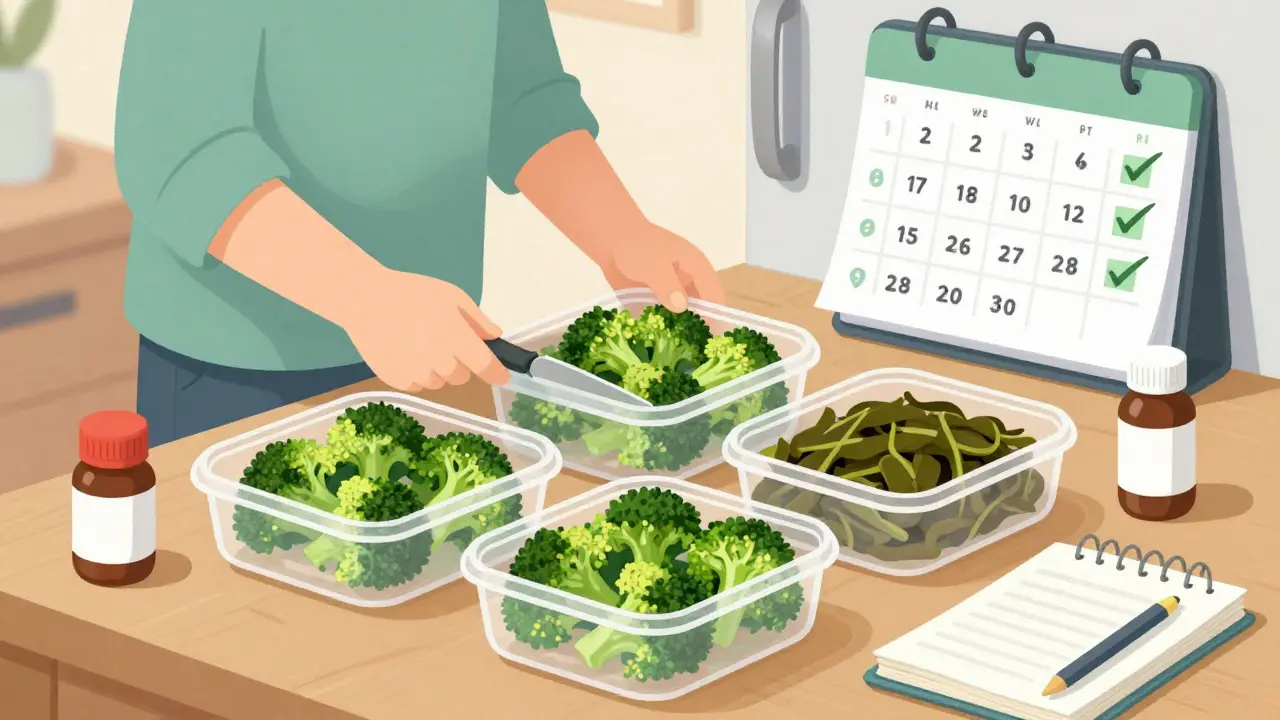
- Weekly meal prep: Cook your greens on Sunday, portion them into containers, and eat the same amount each day. No guessing. No surprises.
Anticoagulation clinics report that patients who keep a food diary are 89% more likely to stay in range. That’s not magic. That’s data.
What to Do If Your INR Changes
If your INR drops too low (below 2.0), you’re at risk for clots. If it rises too high (above 3.5), you’re at risk for bleeding. Either way, don’t panic. Don’t stop your warfarin. Don’t drastically change your diet.Instead:
- Check your recent meals. Did you eat more or less vitamin K than usual?
- Were you sick? On antibiotics? Drinking more alcohol?
- Did you start or stop a new supplement?
Call your anticoagulation clinic with this info. They’ll adjust your dose if needed. But if you’ve been consistent with your diet, they’ll know it’s not your food-it’s something else.
Common Mistakes (And How to Avoid Them)
- Mistake: Avoiding all greens. Fix: Eat the same amount daily. Consistency beats avoidance.
- Mistake: Eating kale once a week. Fix: If you eat kale, eat it every day-or not at all. No binges.
- Mistake: Taking vitamin K supplements. Fix: Skip them unless your doctor says otherwise.
- Mistake: Not telling your pharmacist about new medications. Fix: Always ask: “Will this affect my warfarin?”
- Mistake: Believing you need to eat perfectly. Fix: You don’t need to be perfect. You need to be predictable.
One patient in Brisbane told me: “I used to stress over every leaf. Now I eat one cup of spinach every morning. My INR hasn’t been out of range in over a year.” That’s the power of consistency.
Final Thought: You’re Not Alone
You’re not the first person on warfarin to worry about food. And you’re not the first to feel confused by conflicting advice. But you’re now one of the few who know the truth: vitamin K isn’t your enemy. Inconsistency is.Stick to your plan. Track your meals. Talk to your clinic. And remember-your goal isn’t to eat less vitamin K. It’s to eat the same amount, every day. That’s how you stay safe, stable, and in control.
Can I eat spinach if I’m on warfarin?
Yes, you can-and you should, if you eat it consistently. One cup of cooked spinach contains about 889 µg of vitamin K. If you eat that same amount every day, your body adapts, and your INR stays stable. The problem isn’t spinach. It’s eating it one day and skipping it the next.
Should I avoid all green vegetables on warfarin?
No. Avoiding all green vegetables is outdated advice. Major medical groups like the American Heart Association and American College of Cardiology now recommend consistent intake instead. Cutting out greens entirely can lead to dangerous INR swings when you accidentally eat them. Stick to your usual portions.
Does cooking affect vitamin K levels?
Yes, cooking concentrates vitamin K. Raw spinach has about 145 µg per cup. Cooked spinach has nearly 900 µg. That’s because cooking reduces water volume. So if you switch from raw to cooked greens without adjusting your portion, you’re likely eating way more vitamin K than you think.
Can I drink alcohol while on warfarin?
Moderate alcohol is okay-one drink per day max. But heavy or binge drinking can increase warfarin’s effect and raise your INR. Consistency matters here too. If you usually have one glass of wine on weekends, keep doing that. Don’t suddenly drink three on Friday night.
Why does my INR change when I’m sick?
When you’re sick, you often eat less. Less food means less vitamin K, which makes warfarin work harder. That can cause your INR to rise. Also, some illnesses and antibiotics affect how your body processes warfarin. If you’re sick, try to eat even small amounts of your usual vitamin K foods, and call your clinic for advice.
Are vitamin K supplements safe with warfarin?
Generally, no. Supplements can contain 50-150 µg of vitamin K-enough to significantly lower your INR. Unless your anticoagulation clinic specifically prescribes a supplement to stabilize your levels, avoid them. Even “natural” products like spirulina or wheatgrass can interfere.
How long does it take to get stable on warfarin with diet changes?
Most people see improvement in 8-12 weeks. Your INR stability typically improves by about 5% per month as you build consistent habits. The key is daily repetition-not perfection. Stick with your routine, track your meals, and give your body time to adjust.
Next steps: Start a simple food log today. Write down your daily intake of greens. Pick one high-vitamin-K food to eat consistently. Talk to your anticoagulation clinic about your plan. You’ve got this.

Teresa Marzo Lostalé
I used to stress over every bite of kale until I realized consistency is the real magic. Now I eat one cup of cooked spinach with my eggs every morning. No more panic attacks before blood tests. My INR hasn’t budged in 14 months. 🙌
ANA MARIE VALENZUELA
This is why people die on warfarin. You don’t just ‘eat consistently’-you track it like your life depends on it. If you’re not using MyFitnessPal or CoumaDiet, you’re gambling with your organs. Stop winging it.
Bradly Draper
I didn’t know cooking spinach made it so much stronger. I’ve been eating raw salads for years thinking I was being healthy. Guess I was just making my INR crazy. Thanks for the clarity.
Gran Badshah
In India we use mustard oil and curry leaves daily. Wonder if that messes with warfarin? My uncle had a stroke last year after switching to spinach curry. Maybe it’s not just the greens?
Ellen-Cathryn Nash
People think they’re being ‘smart’ by drinking green smoothies? Honey. That’s not wellness. That’s a warfarin nightmare wrapped in a $12 juice bar delusion. You’re not a influencer. You’re a patient. Act like it.
Samantha Hobbs
OMG I just realized my daily kale smoothie is why my INR keeps spiking! I’ve been doing that for 3 years 😭 I’m switching to berries now. Thank you for saving me from myself.
Nicole Beasley
I started tracking my greens with CoumaDiet and now I’m in range 90% of the time 🎉 Also, I eat 1/2 cup broccoli every night. No more guessing. So. Much. Peace.
sonam gupta
America thinks vitamin K is a problem. In India we eat 100 grams of spinach daily since childhood. No warfarin needed. Maybe your diet is the real issue not the medicine.
Julius Hader
I used to think I had to eat nothing green. Then I started eating the same amount of cooked collard greens every Tuesday and Thursday. My doctor said my INR is the most stable he’s seen in years. Turns out, I just needed routine.
Vu L
So you’re telling me I don’t have to give up kale? But I like it. And I like my INR being unpredictable. This whole ‘consistency’ thing sounds like corporate wellness propaganda.
James Hilton
You don’t need to be perfect. Just predictable. Like a damn alarm clock. 📅 Eat the same spinach. Same broccoli. Same soy oil. And stop treating your blood like a mood ring.
Mimi Bos
i just started using myfitnesspal for vit k and omg it changed everything. i had no idea how much was in broccoli. also i typoed ‘vitamin’ as ‘vitanim’ like 5 times but you get the point 😅