Learn how mood stabilizers like lithium and antipsychotics like quetiapine work to manage bipolar disorder, their real-world side effects, and what newer treatments are changing the game in 2025.
Read more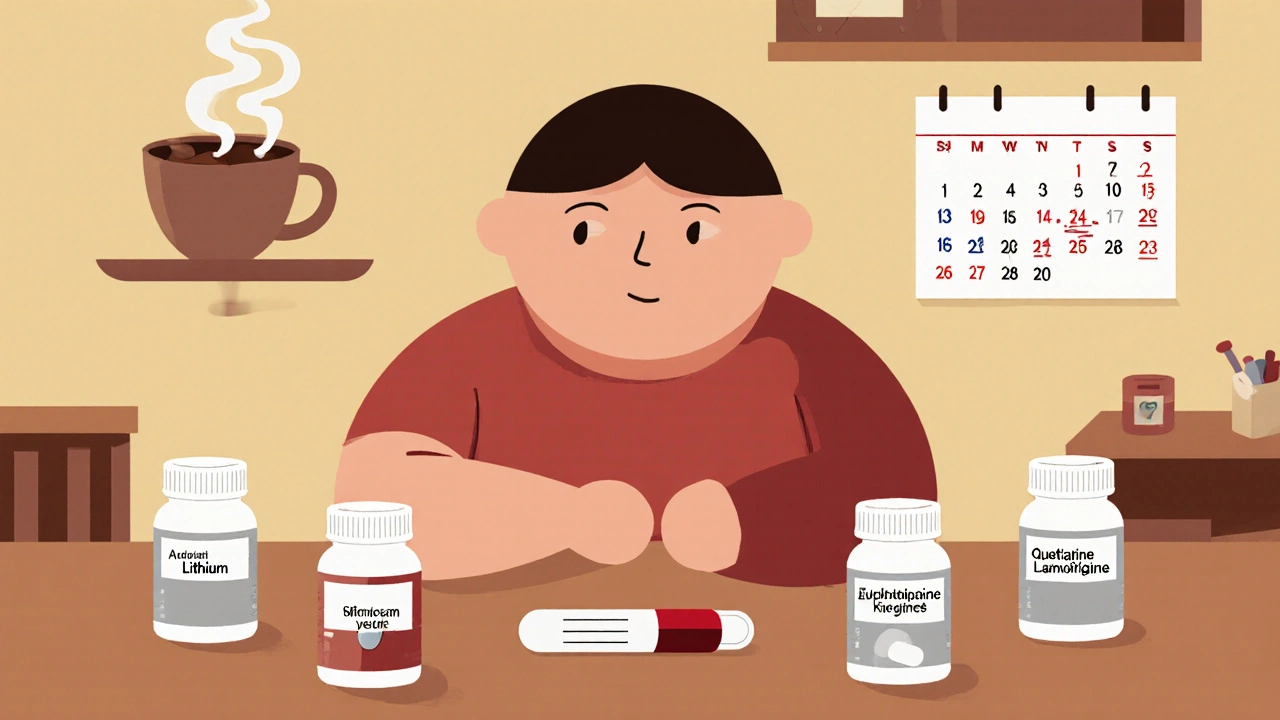
When you hear quetiapine, a second-generation antipsychotic used to treat schizophrenia, bipolar disorder, and major depression. Also known as Seroquel, it works by balancing dopamine and serotonin in the brain to reduce hallucinations, stabilize mood swings, and ease depressive episodes. Unlike older antipsychotics, it’s less likely to cause stiff muscles or tremors—but it can make you sleepy, put on weight, or raise blood sugar if used long-term.
Quetiapine doesn’t work the same for everyone. Some people feel better in days; others need weeks. It’s often prescribed when other antidepressants fail, especially for bipolar depression. But it’s not the only option. lithium, a mood stabilizer used for decades to control manic and depressive episodes in bipolar disorder is cheaper and has fewer metabolic side effects, though it needs regular blood tests. olanzapine, another antipsychotic similar to quetiapine but more likely to cause weight gain might be chosen if sleep is a major issue, since it’s stronger in that area. And for some, sertraline, a common SSRI antidepressant often used alone or with quetiapine for treatment-resistant depression works better without the sedation or metabolic risks.
People often mix up quetiapine with sleep aids because of how drowsy it makes them—but it’s not meant for insomnia unless it’s tied to a mental health condition. Doctors usually start low (25–50 mg at night) and go slow to avoid crashes or dizziness. If you’re on it long-term, watch your waistline, blood pressure, and blood sugar. It’s not a quick fix, and stopping suddenly can cause nausea, headaches, or even rebound psychosis.
The posts below cover real-world stories and science behind drugs like quetiapine, from how they compare to alternatives like Lexapro and Seroquel to what happens when you combine them with other meds. You’ll find clear breakdowns of side effects, cost differences, and what actually works for people managing bipolar disorder, depression, or anxiety. No fluff. Just what you need to know before you talk to your doctor—or order online.
Learn how mood stabilizers like lithium and antipsychotics like quetiapine work to manage bipolar disorder, their real-world side effects, and what newer treatments are changing the game in 2025.
Read more