Learn how mood stabilizers like lithium and antipsychotics like quetiapine work to manage bipolar disorder, their real-world side effects, and what newer treatments are changing the game in 2025.
Read more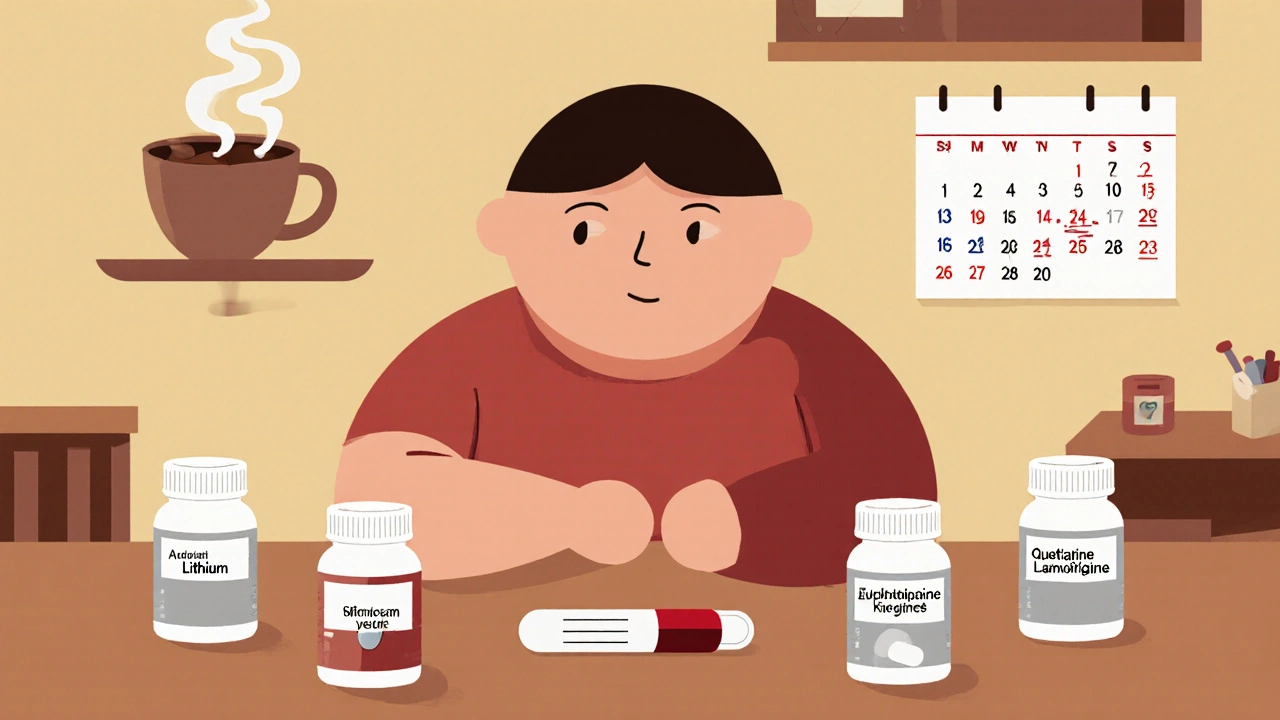
When your moods swing wildly—from high-energy highs to deep, crushing lows—you might be dealing with mood stabilizers, a class of medications designed to even out extreme emotional shifts, especially in bipolar disorder. Also known as psychotropic agents for affective disorders, these drugs don’t just calm you down or lift your spirits—they help your brain maintain a more consistent baseline, day after day. Unlike antidepressants that target low mood alone, mood stabilizers work on the whole emotional spectrum, reducing both mania and depression without triggering the other.
One of the most common lithium, a naturally occurring salt used for over 70 years to treat bipolar disorder is still the gold standard for many doctors. It’s not flashy, but it works—especially for preventing full-blown manic episodes. Then there’s valproate, an anticonvulsant repurposed as a mood regulator, often used when lithium doesn’t fit or causes side effects. Both require regular blood tests to stay safe, which is why they’re not just picked off a shelf—they’re managed.
What’s less talked about is how these drugs connect to others you might be taking. For example, if you’re on an antidepressant like Lexapro without a mood stabilizer, you could accidentally flip into mania. That’s why many people with bipolar disorder take both—a combo that needs careful timing and monitoring. You’ll also find that some newer antipsychotics, like quetiapine or olanzapine, are now used as mood stabilizers too, especially when older options fail. And while these aren’t magic pills, they’re often the difference between living with chaos and finding stability.
Side effects matter. Weight gain, tremors, thyroid issues, kidney strain—these aren’t just footnotes. They’re real trade-offs. That’s why people switch. Why they try lamotrigine, which is gentler on the weight but slower to kick in. Why some avoid lithium entirely because of how it affects their kidneys. And why you need to know what’s in your prescription, not just take it because your doctor said so.
The posts below cover real stories and practical comparisons—from how generic versions of mood stabilizers stack up against brand names, to how they interact with other meds like statins or blood pressure drugs. You’ll find advice on managing side effects, spotting warning signs, and understanding what works for others in similar situations. No fluff. No hype. Just clear, grounded info to help you make smarter choices about your treatment.
Learn how mood stabilizers like lithium and antipsychotics like quetiapine work to manage bipolar disorder, their real-world side effects, and what newer treatments are changing the game in 2025.
Read more