Learn how mood stabilizers like lithium and antipsychotics like quetiapine work to manage bipolar disorder, their real-world side effects, and what newer treatments are changing the game in 2025.
Read more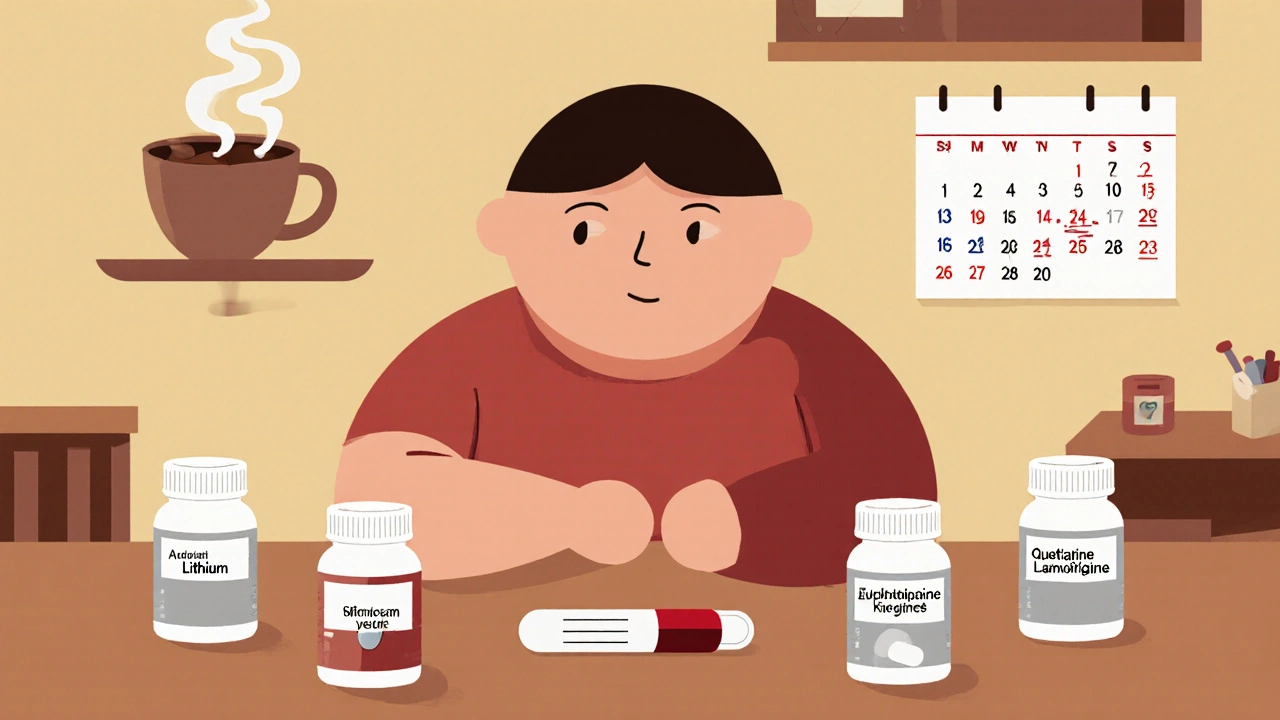
When doctors talk about lithium, a naturally occurring salt used as a mood-stabilizing medication, primarily for bipolar disorder. Also known as lithium carbonate, it’s one of the oldest and most studied psychiatric drugs still in regular use today. Unlike newer antidepressants, lithium doesn’t just lift mood—it helps prevent the extreme highs and lows that define bipolar disorder. It’s not a quick fix. It takes weeks to work, and it requires regular blood tests to keep levels safe. But for many, it’s the only thing that brings real stability.
What makes lithium different is how it affects the brain’s chemistry. It doesn’t just boost serotonin like SSRIs. Instead, it modulates neurotransmitters, reduces overactive nerve signals, and may even protect brain cells from stress damage. That’s why it’s used not just for mania, but also to prevent future episodes. People who take it long-term often report fewer hospital visits and more consistent daily function. But it’s not for everyone. Side effects like hand tremors, weight gain, or frequent urination are common. And if your kidneys or thyroid aren’t healthy, lithium can make things worse. That’s why doctors monitor thyroid function, a gland that regulates metabolism and is often affected by lithium use and kidney health, the main organ responsible for clearing lithium from the body with regular blood work.
There’s a reason lithium remains a first-line treatment decades after its discovery: it works where other drugs fail. Many patients who tried multiple antidepressants or antipsychotics still struggled—until lithium came along. But it’s not a magic pill. You need patience, discipline, and a good doctor. It’s also not the only option. Some people switch to anticonvulsants like valproate or lamotrigine, especially if lithium side effects are too much. But for those who respond, lithium offers something rare: long-term control without constant medication changes.
In the posts below, you’ll find real-world insights on lithium use, how it compares to other mood stabilizers, what to watch for when starting, and how to manage the side effects without giving up on treatment. Whether you’re considering lithium, already taking it, or just trying to understand why your doctor recommended it, these articles give you the facts—not the hype.
Learn how mood stabilizers like lithium and antipsychotics like quetiapine work to manage bipolar disorder, their real-world side effects, and what newer treatments are changing the game in 2025.
Read more