Learn how mood stabilizers like lithium and antipsychotics like quetiapine work to manage bipolar disorder, their real-world side effects, and what newer treatments are changing the game in 2025.
Read more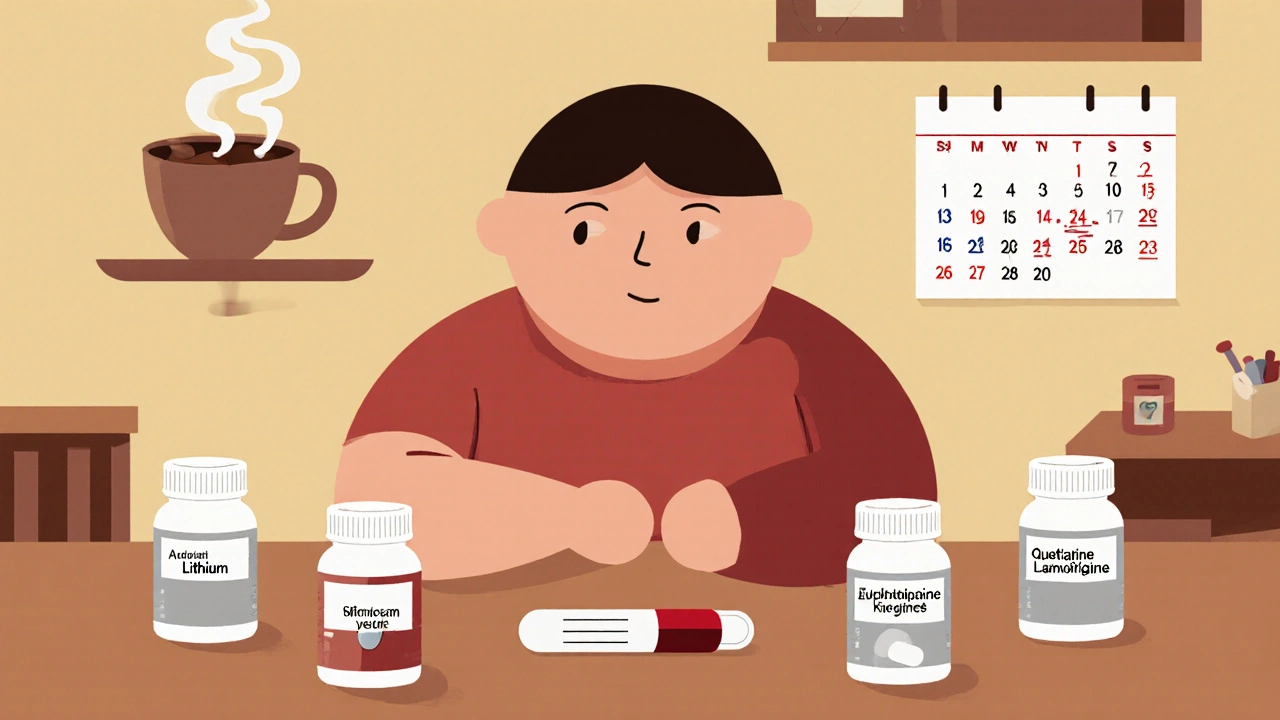
When someone has bipolar disorder, a mental health condition marked by extreme shifts in mood, energy, and activity levels. Also known as manic-depressive illness, it’s not just being moody—it’s cycles of intense highs and deep lows that disrupt sleep, work, and relationships. These aren’t just bad days. One moment you’re unstoppable, talking fast, sleeping little, spending recklessly. The next, you can’t get out of bed, feel worthless, or even think clearly. It’s a real medical condition, not a personality flaw.
Most people with bipolar disorder need long-term treatment. Lithium, a mood stabilizer used for decades to prevent manic and depressive episodes is still one of the most common choices. But it’s not the only one. Antidepressants, medications that lift mood but can trigger mania if used alone are often paired with mood stabilizers to avoid that risk. Other drugs like valproate, lamotrigine, and atypical antipsychotics are also used depending on symptoms. The right mix isn’t one-size-fits-all—it’s found through trial, monitoring, and patience.
What you won’t find in most articles is how often people stop taking their meds because of side effects—weight gain, tremors, brain fog—or because they feel fine and think they don’t need them anymore. That’s when relapse hits hardest. Managing bipolar disorder isn’t just about pills. It’s about routines: sleeping at the same time, avoiding alcohol, tracking moods, and knowing your triggers. Therapy helps too, especially CBT and family-focused approaches. And yes, some people do better with natural support like omega-3s or mindfulness, but never as a replacement for proven treatment.
You’ll find posts here about medications that overlap with bipolar care—like how Lexapro is used for depression (but can be risky without a mood stabilizer), or how Paxil affects serotonin levels in ways that might trigger mania. There’s also info on drug interactions, generic options, and how to buy these meds safely online without risking your health. This isn’t about quick fixes. It’s about knowing what works, what doesn’t, and how to stay in control when your brain feels like it’s running on its own.
Learn how mood stabilizers like lithium and antipsychotics like quetiapine work to manage bipolar disorder, their real-world side effects, and what newer treatments are changing the game in 2025.
Read more