Learn how mood stabilizers like lithium and antipsychotics like quetiapine work to manage bipolar disorder, their real-world side effects, and what newer treatments are changing the game in 2025.
Read more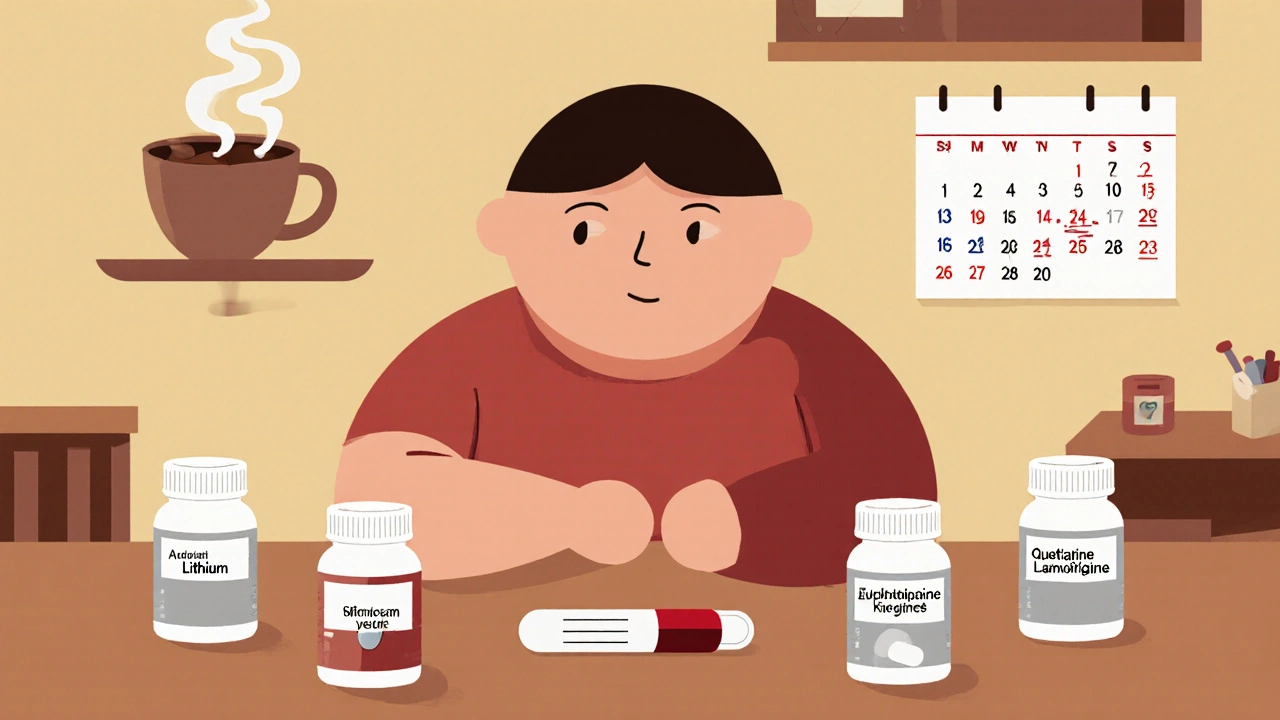
When someone struggles with antipsychotics, medications used to treat severe mental health conditions like schizophrenia and bipolar disorder by balancing brain chemicals. Also known as neuroleptics, they don’t cure illness—but they can stop hallucinations, calm racing thoughts, and help people live more stable lives. These aren’t mood boosters or sleep aids. They’re targeted tools for when the brain’s signaling goes off track.
There are two main types: first-generation and second-generation antipsychotics. First-gen drugs like haloperidol work fast but often bring stiff muscles, tremors, and other movement issues. Second-gen drugs—like risperidone, olanzapine, and quetiapine—are more common today because they’re less likely to cause those side effects, though they can lead to weight gain, drowsiness, or higher blood sugar. schizophrenia, a chronic brain disorder that affects how a person thinks, feels, and behaves is the most frequent reason these drugs are prescribed. But they’re also used for bipolar disorder, a condition involving extreme mood swings between highs and lows, severe depression with psychotic features, and sometimes even severe agitation in dementia.
People often worry about taking these meds long-term. That’s fair. Some side effects show up slowly—like tardive dyskinesia, where uncontrollable facial movements appear after years of use. Others, like feeling foggy or tired, hit fast but may fade as your body adjusts. Blood tests and regular check-ins with your doctor aren’t optional—they’re essential. These drugs interact with other meds too. If you’re on something for heart issues, diabetes, or even common painkillers, your pharmacist needs to know. What works for one person might not work for another. It’s trial, error, and patience.
You won’t find miracle cures here. But you will find real talk about what these drugs actually do, how they compare, and what to watch for. The posts below cover everything from how generic versions stack up against brand names, to how they’re used alongside therapy, to what happens when people stop them too soon. Some stories are about managing side effects. Others are about finding the right dose after years of trial. There’s no one-size-fits-all answer—but there’s plenty of practical info to help you ask better questions, spot red flags, and make smarter choices with your care team.
Learn how mood stabilizers like lithium and antipsychotics like quetiapine work to manage bipolar disorder, their real-world side effects, and what newer treatments are changing the game in 2025.
Read more